



Saccharolipids
- 1
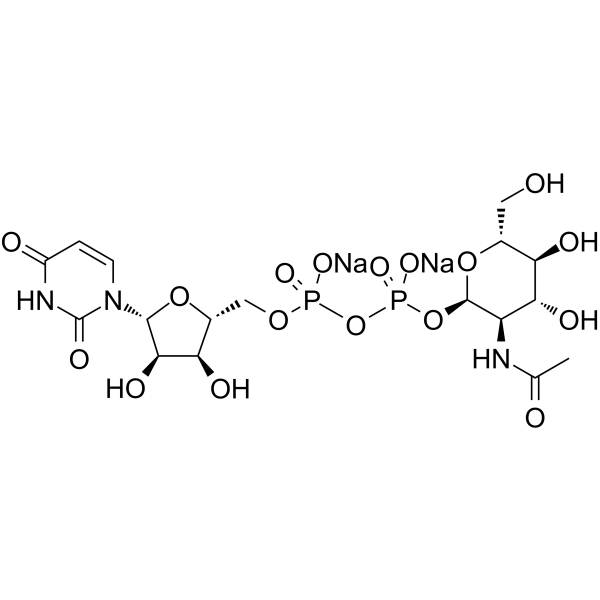
- Formel: C17H25N3Na2O17P2
- Molecular Weight: 651.32
UDP-GlcNAc Disodium Salt (UDP-α-D-N-Acetylglucosamine Disodium Salt) is a donor substrate of O-GlcNAc transferase (OGT).
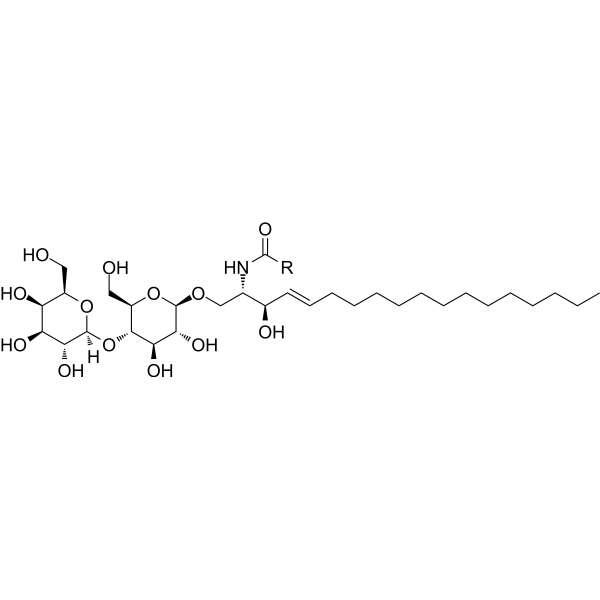
Lactosylceramide (bovine buttermilk) (LacCer (bovine buttermilk)) is a natural lactosylceramide (LacCer) mixture derived from bovine buttermilk, belonging to neutral glycosphingolipids, and composed of a lactose polar head group and a ceramide backbone. LacCer is an important component of cell membrane glycosphingolipids and is associated with processes such as signal transduction, cell recognition, cell adhesion, and cell growth. LacCer derived from bovine buttermilk contains multiple molecular species composed of different long-chain bases and fatty acyl groups. Lactosylceramide (bovine buttermilk) can be used for research related to lactosylceramide and glycosphingolipids.
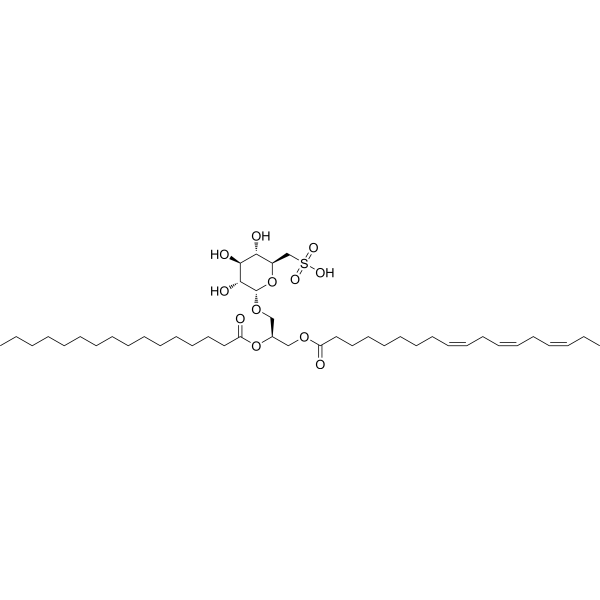
- Formel: C43H76O12S
- Molecular Weight: 817.12
SQDG inhibits topoisomerase I and P-selectin receptor, exhibits anti-inflammatory, antiviral and antitumor activities. SQDG is a glycolipid that possesses sugar moieties in their head groups. SQDG is a membrane lipid that can be used to investigate the effects of structural lipid in LNP formulations.
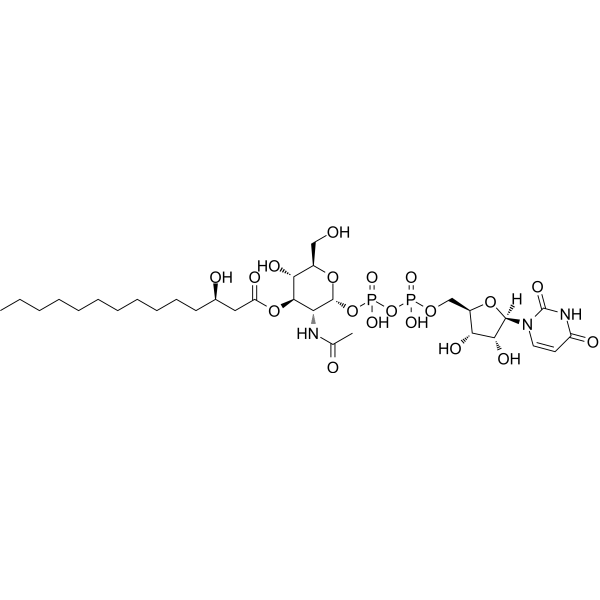
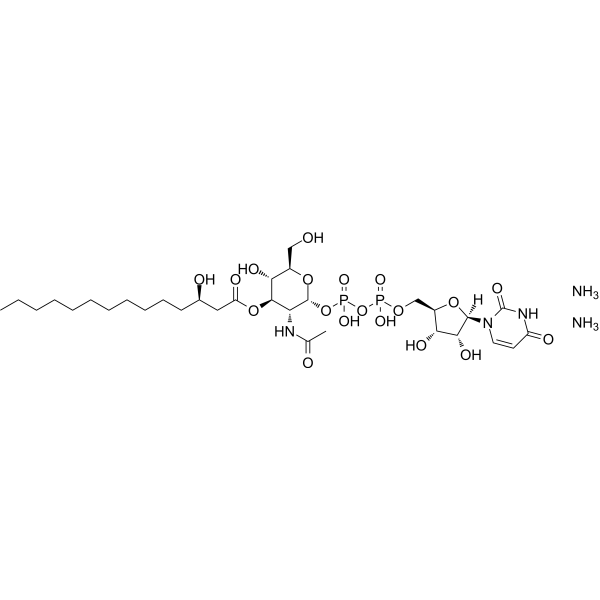
- Formel: C31H53N3O19P2
- Molecular Weight: 833.71
UDP-3-O-acyl-GlcNAc (UDP-3-O-(3-hydroxytetradecanoyl)-N-acetylglucosamine) is an E. coli metabolite that is involved in 3-deoxy-D-manno-octulosonate (KDO) biosynthesis pathway.
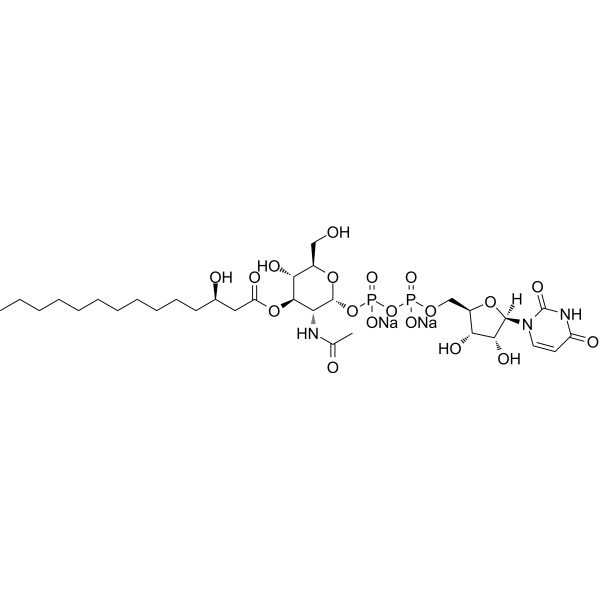
- Formel: C31H51N3Na2O19P2
- Molecular Weight: 877.67
UDP-3-O-acyl-GlcNAc (UDP-3-O-(3-hydroxytetradecanoyl)-N-acetylglucosamine) disodium is an E. coli metabolite that is involved in 3-deoxy-D-manno-octulosonate (KDO) biosynthesis pathway.

- Formel: C45H74O10
- Molecular Weight: 775.08
Panaxcerol C (1,2-Di-O-α-linolenoyl-3-O-β-galactopyranosyl-sn-glycerol) is a plant galactolipidwith anti-inflammatory activity. It protects animals from septic shock by regulating the dynamic of oxidized lipid mediators through the MAPK-cPLA2 signaling pathway.

- Formel: C37H72NaO9P
- Molecular Weight: 714.93
1,2-Dipalmitoyl-sn-glycero-3-phospho(ethylene glycol) (sodium) is a biochemical reagent.
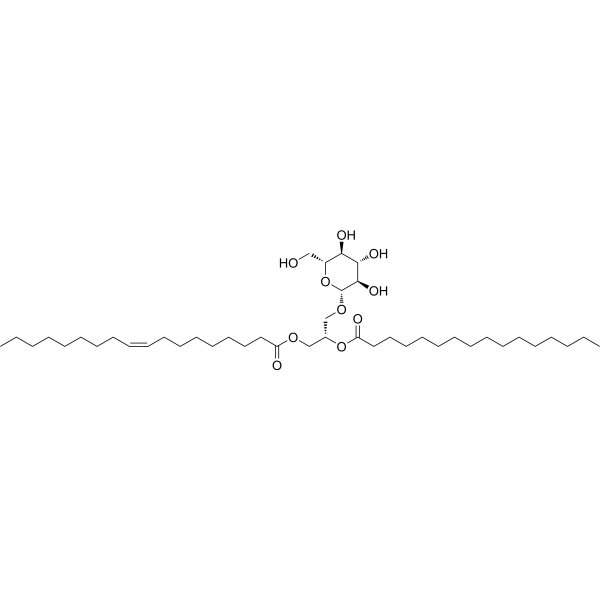
- Formel: C43H80O10
- Molecular Weight: 757.09
MGlc-DAG, a glycoglycerolipid, can be used for the synthesis of drug delivery compound.
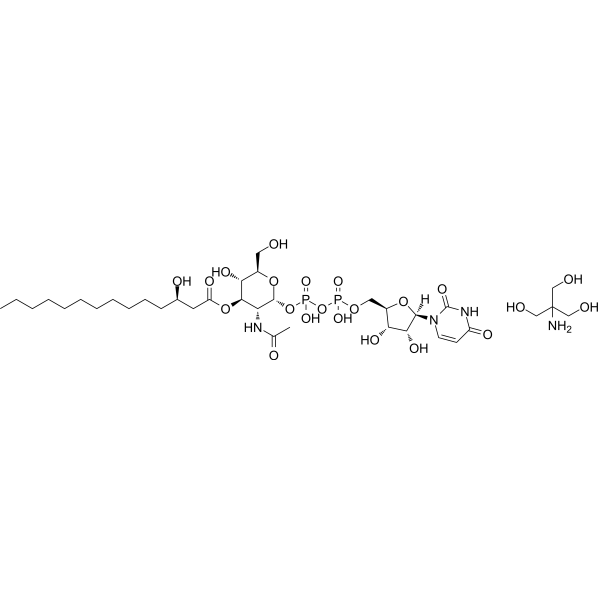
- Formel: C35H64N4O22P2
- Molecular Weight: 954.84
UDP-3-O-acyl-GlcNAc Tris (UDP-3-O-(3-hydroxytetradecanoyl)-N-acetylglucosamine Tris) serves as a deacetylation substrate and biosynthetic intermediate in the biosynthetic pathways of lipid A and Kdo2-lipid A in Escherichia coli. UDP-3-O-acyl-GlcNAc Tris undergoes enzymatic deacetylation via LpxC to produce UDP-3-O-[(R)-3-hydroxymyristoyl]glucosamine and release acetate. UDP-3-O-acyl-GlcNAc Tris accumulates in Escherichia coli extracts in the absence of [(R)-3-hydroxymyristoyl]-acyl carrier protein. UDP-3-O-acyl-GlcNAc Tris can be used in studies related to Gram-negative shock.
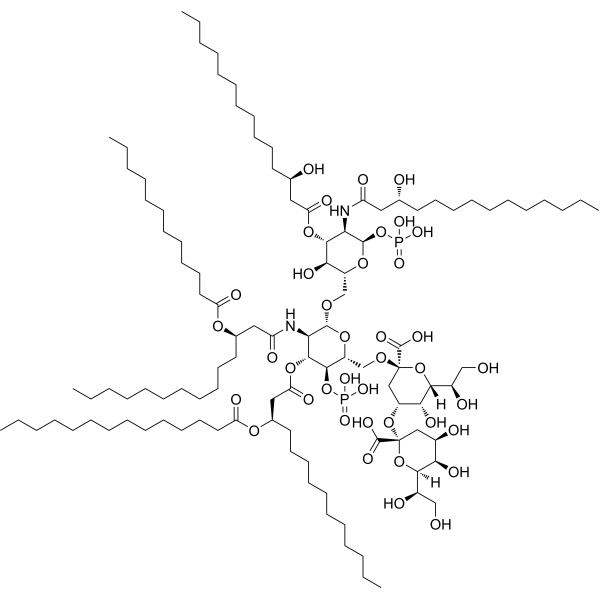
- Formel: C110H202N2O39P2
- Molecular Weight: 2238.72
Kdo2-Lipid A is a biochemical reagent that can be used as a biological material or organic compound for life science related research.

- Formel: C45H82O10
- Molecular Weight: 783.13
18:1 MGDG is a lipid that can be used to prepare lipid nanoparticles (LNPs) for drug delivery.

- Formel: C45H78O10
- Molecular Weight: 779.09
18:2 MGDG (synthetic) is a lipid that can be used to prepare lipid nanoparticles (LNPs) for drug delivery.

- Formel: C48H86O13
- Molecular Weight: 871.20
6,6′-Trehalose dioleate is a glycolipid that can be used to prepare lipid nanoparticles (LNPs) for drug delivery.

- Formel: C17H27N3O17P2
- Molecular Weight: 607.35
UDP-GlcNAc (UDP-N-Acetyl-D-glucosamine) is an important component and precursor of bacterial peptidoglycan. UDP-GlcNAc is a nucleotide sugar used by Glycosyltransferases to synthesize glycoproteins, glycosaminoglycans, glycolipids, and glycoRNA. UDP-GlcNAc also serves as the donor substrate for forming O-GlcNAc, a dynamic intracellular protein modification involved in diverse signaling and disease processes. UDP-GlcNAc is the sugar nucleotide donor for the synthesis of O-GlcNAc modified proteins. UDP-GlcNAc also acts as a full agonist of the P2Y14 receptor and inhibits the formation of cAMP. UDP-GlcNAc can be used in studies related to bacterial infections.
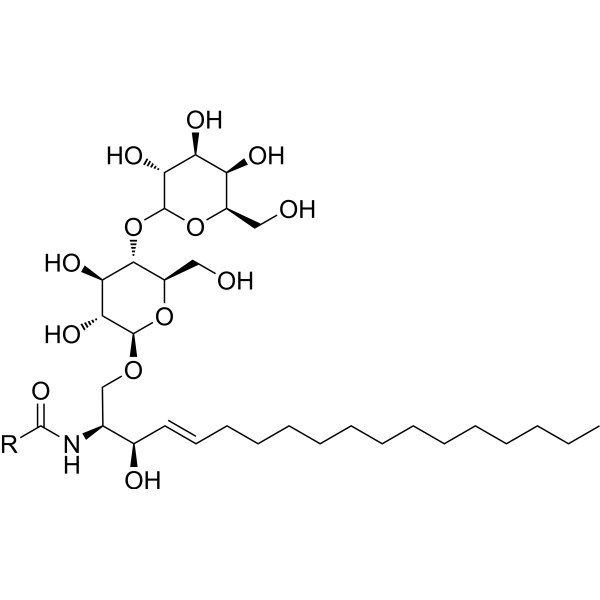
Lactosylceramide (LacCer) (porcine RBC) is an endogenous bioactive sphingolipid. Lactosylceramide (porcine RBC) plays a pivotal role in mediating innate immune functions.

- Formel: C43H82O10
- Molecular Weight: 759.12
Hydrogenated MGDG is a type of glycolipid. Monogalactosyldiacylglycerol (MGDG), a galactosylglycerolipid, is a major lipid in the thylakoid membrane of the chloroplast of leaves. It is also localized in the roots, fruits and grains. MGDG is synthesized from Monogalactosyldiacylglycerol synthase 1 (MGD1). It is a precursor for digalactosyldiacylglycerol (DGDG).
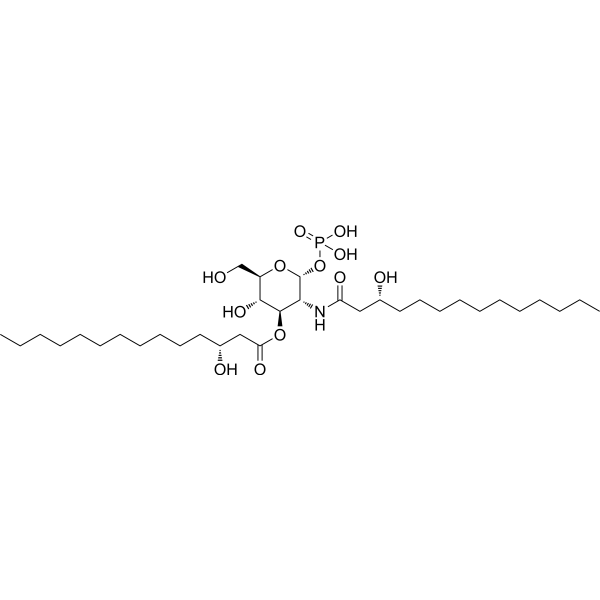
- Formel: C34H66NO12P
- Molecular Weight: 711.86
Lipid X is a 2,3-diacylglucosamine-1-phosphate that serves as the monosaccharide precursor of lipid A, possessing both LPS antagonist and weak agonist activities. Lipid X exerts protective effects by inhibiting tumor necrosis factor production, monocyte procoagulant activity, and neutrophil priming. Lipid X may induce transient pulmonary hypertension, neutropenia, and mild pyrogenic effects in laboratory animals. Lipid X has low toxicity and no in vitro antibacterial activity, but it significantly reduces mortality following Gram-negative bacterial infection and endotoxin exposure. Lipid X tends to accumulate in liver tissue, binds to circulating cellular components, and can be converted to lipid Y through transesterification. Lipid X can be used in research on Gram-negative bacterial sepsis, endotoxemia, and associated pulmonary hypertension.
- 1



