



UDP-GlcNAc disodium
Based on 8 publication(s) in Google Scholar
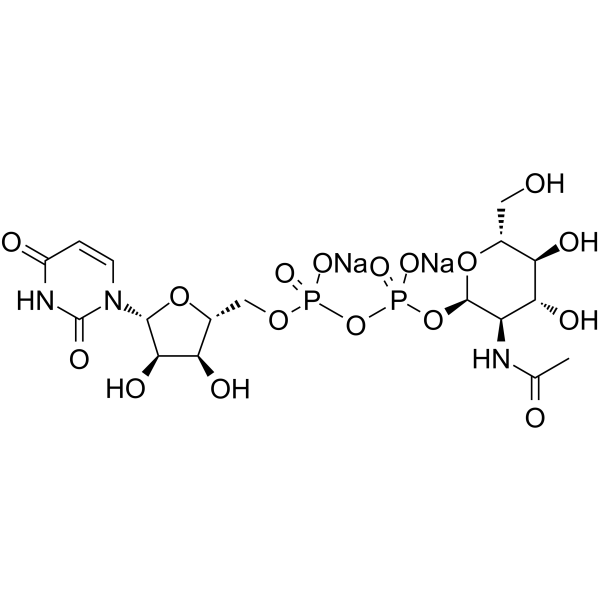
UDP-GlcNAc Disodium Salt (UDP-α-D-N-Acetylglucosamine Disodium Salt) is a donor substrate of O-GlcNAc transferase (OGT).
For research use only. We do not sell to patients.
- Purity : 99.92%
- CAS No.: 91183-98-1
- Formula: C17H25N3Na2O17P2
- Molecular Weight:651.32
-
Storage:
-20°C, sealed storage, away from moisture
* The compound is unstable in solutions, freshly prepared is recommended.

To place orders, for customer services and technical support, please contact: MedChemExpress USA
Tel: 609-228-6898 E-mail: [email protected] [email protected]


-
 Biological Activity
-
Chemical Information
-
Solvent & Solubility
- Purity & Documentation
- References
-
 Help & FAQs


-
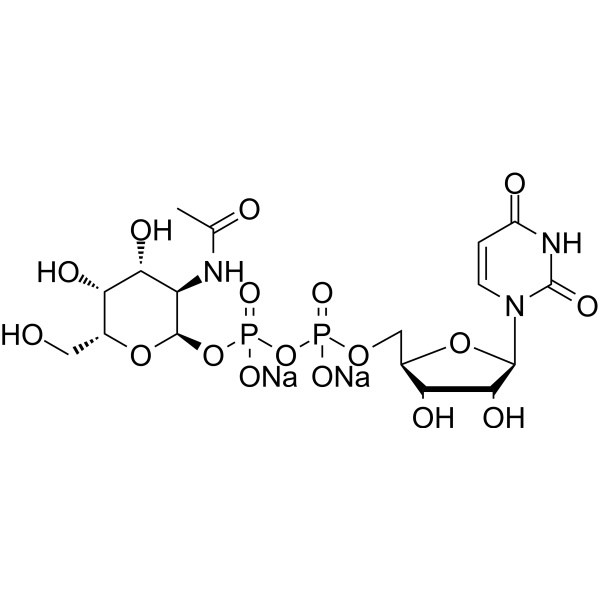
HY-114365
UDP-GalNAc disodiumEpsC115 Substrate -
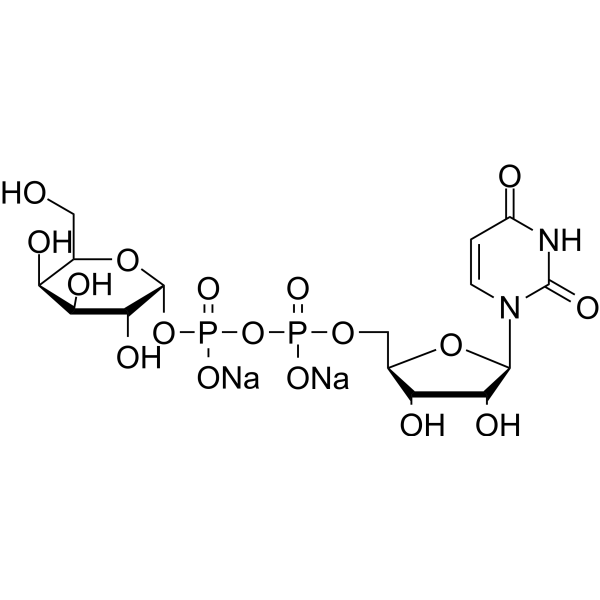
HY-114364
UDP-Galactose disodiumP2Y14 Receptor Agonist -
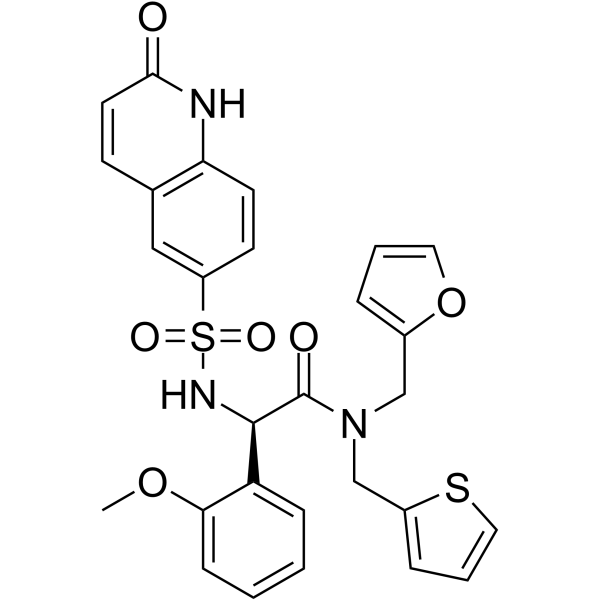
HY-119738
OSMI-1O-GlcNAc Transferase Inhibitor -
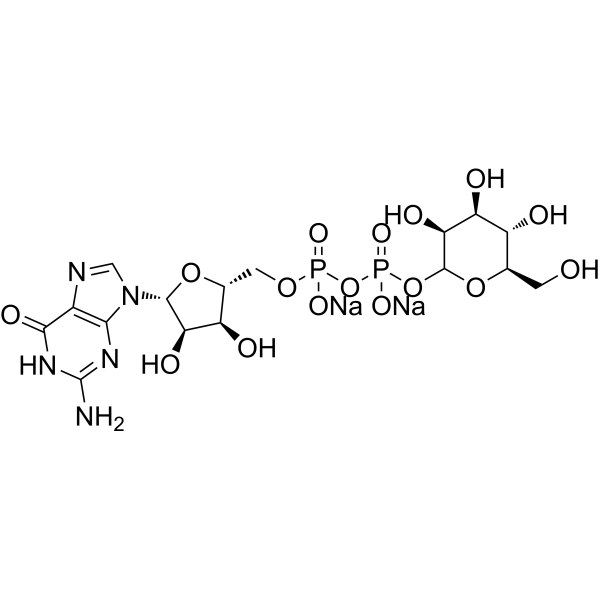
HY-N7389A
GDP-D-mannose disodiumGDP-L-fucose Precursor -
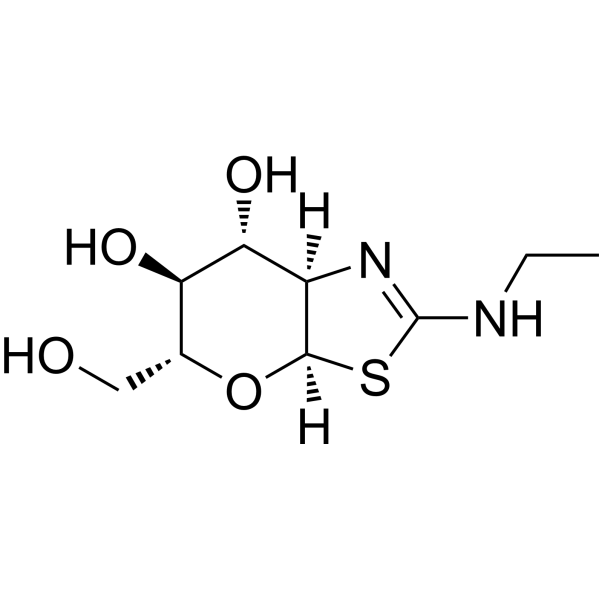
HY-12588
Thiamet GO-GlcNAcase Inhibitor -
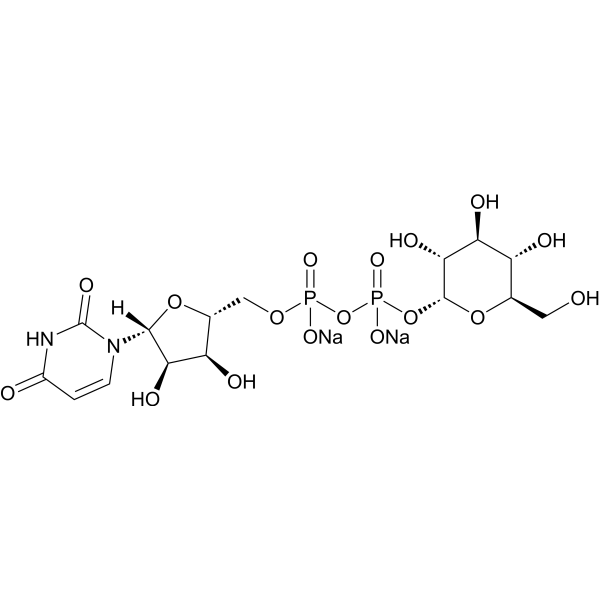
HY-N7032
Uridine 5′-diphosphoglucose disodiumP2Y14 Agonist -
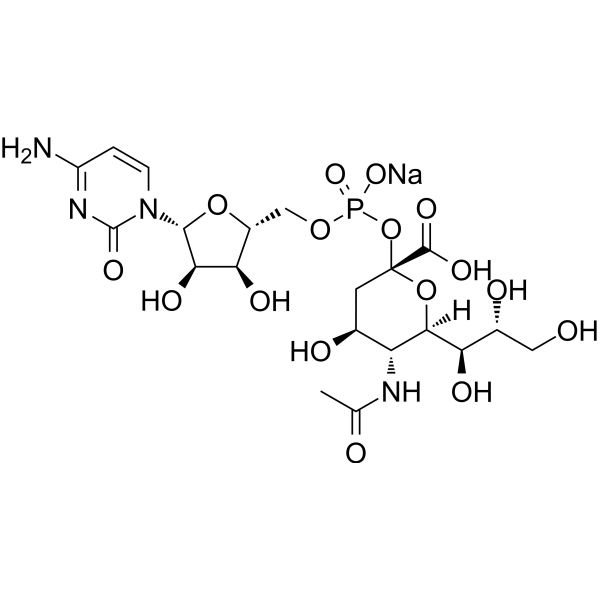
HY-112942A
CMP-Sialic acid sodium saltUDP-GlcNAc 2-Epimerase Inhibitor -
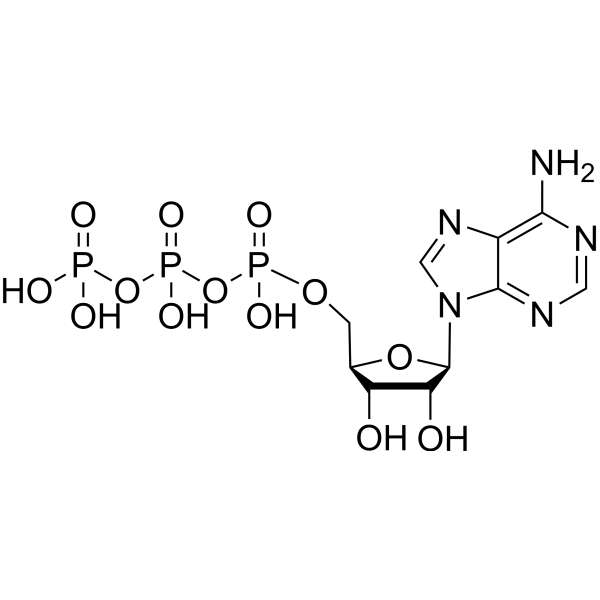
HY-B2176
ATPEndogenous Metabolite -
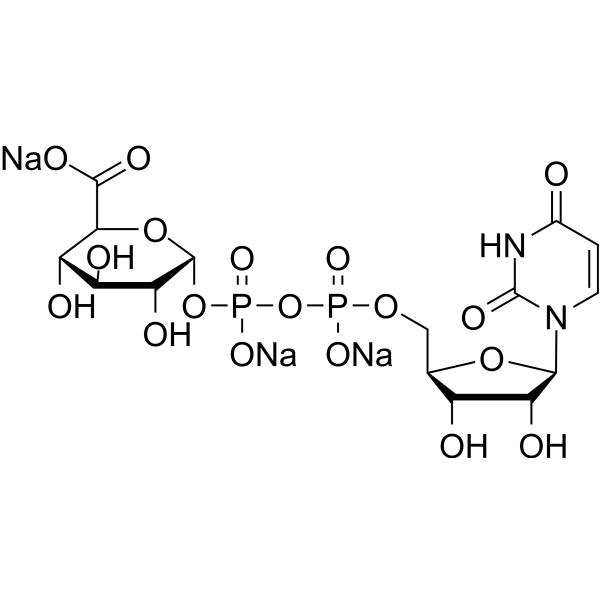
HY-N7033
UDP-glucuronic acid trisodiumGlycoconjugates Precursor -
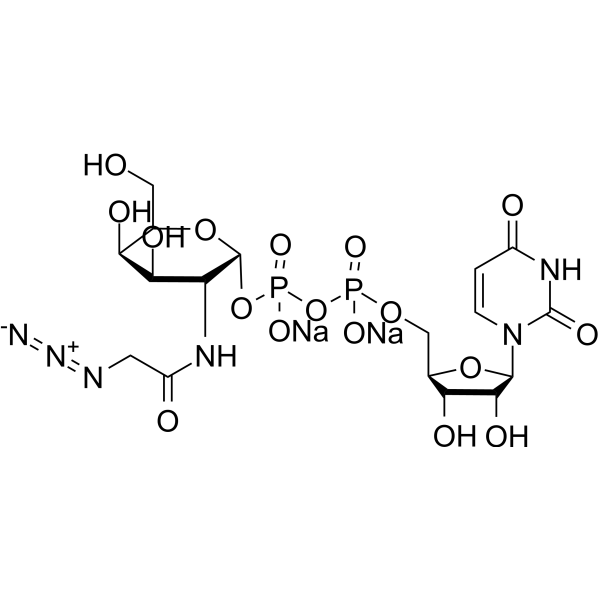
HY-145934
UDP-GalNAz disodiumUDP-GalNAc Analog -
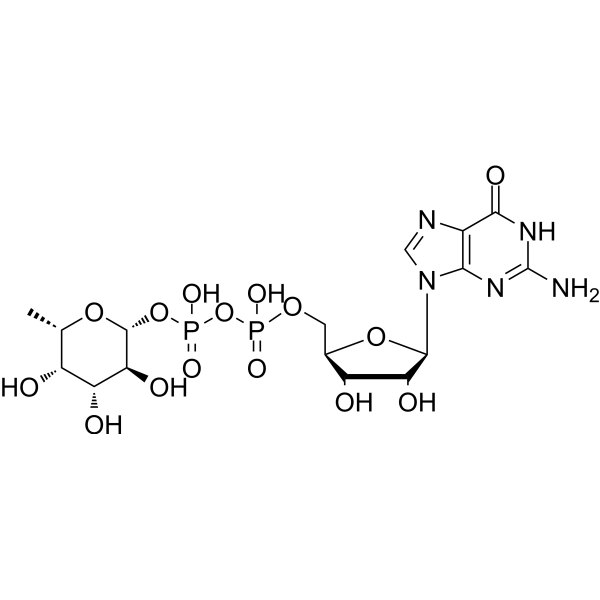
HY-134433
GDP-L-fucoseFucoidan Oligosaccharide Substrate -
HY-A0132
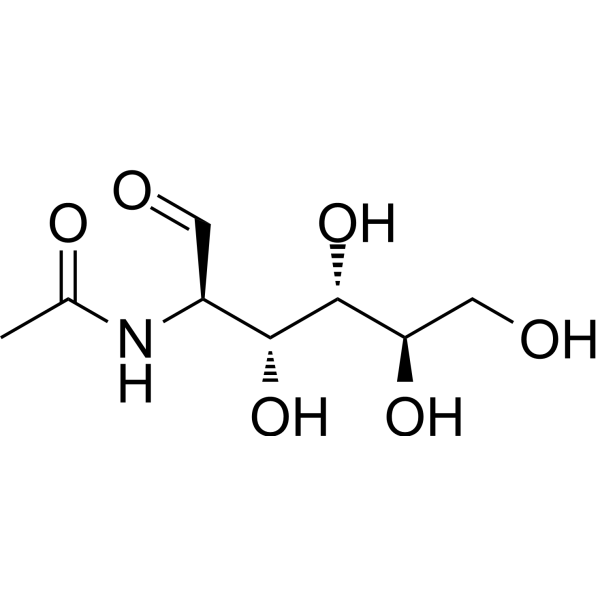
N-Acetyl-D-glucosamineEndogenous Metabolite
Publications Citing Use of MedChemExpress (MCE) UDP-GlcNAc disodium
More- Signal Transduct Target Ther. 2023 Feb 10;8(1):63. [Abstract]
- Cancer Res. 2025 Mar 14;85(6):1113-1129. [Abstract]
- Plant Cell. 2026 May 14:koag144. [Abstract]
- Int J Biol Sci. 2022 Jun 21;18(10):4135-4150. [Abstract]
- Dev Cell. 2025 Sep 3:S1534-5807(25)00530-1. [Abstract]
- Mol Med. 2024 Oct 18;30(1):180. [Abstract]
- PLoS Pathog. 2026 Jun 25;22(6):e1014301. [Abstract]
- Laurea Magistrale in Biomedical Engineering, Politecnico di Milano. 2019 Jun.
 Customer Validation & Images

-
Cell Proliferation/Viability Assay
-
Apoptosis Analysis
-
WB


Biological Activity
Description
In Vitro
OGT is a nucleocytoplasmic glycosyltransferase (uridine diphospho-N--acetylglucosamine:polypeptide β-N-acetylglucosaminyltransferase or O-GlcNAc transferase) assigned to the GT41 family in the CAZY (Carbohydrate-Active enZYme) database. Using UDP-GlcNAc Disodium Salt (UDP-GlcNAc) as the donor substrate, this enzyme modifies thousands of proteins by adding a unique N-acetylglucosamine residue onto acceptor substrates mainly confined within cytosol and nucleus[1].
MedChemExpress (MCE) has not independently confirmed the accuracy of these methods. They are for reference only.


Chemical Information
-
CAS No. 91183-98-1
-
Appearance Solid
-
Molecular Weight 651.32
-
Formula C17H25N3Na2O17P2
-
Color White to off-white
-
SMILES
O=C(C=CN1[C@H]2[C@H](O)[C@H](O)[C@@H](COP(OP(O[C@H]3O[C@@H]([C@H]([C@@H]([C@H]3NC(C)=O)O)O)CO)(O[Na])=O)(O[Na])=O)O2)NC1=O
-
Synonyms
UDP-α-D-N-Acetylglucosamine disodium
-
Shipping
Room temperature in continental US; may vary elsewhere.
-
Storage
-20°C, sealed storage, away from moisture
* The compound is unstable in solutions, freshly prepared is recommended.


Publications (8)
-
Journal Impact Factor
-
Most Recent
-
Signal Transduct Target Ther
O-GlcNAcylation of YTHDF2 promotes HBV-related hepatocellular carcinoma progression in an N6-methyladenosine-dependent manner. [Abstract]2023 Feb 10;8(1):63. PMID: 36765030 -
Cancer Res
MTHFD2 Enhances cMYC O-GlcNAcylation to Promote Sunitinib Resistance in Renal Cell Carcinoma. [Abstract]2025 Mar 14;85(6):1113-1129. PMID: 39804969
UDP-GlcNAc disodium purchased from MedChemExpress. Usage Cited in: Cancer Res. 2025 Mar 14;85(6):1113-1129. [Abstract]
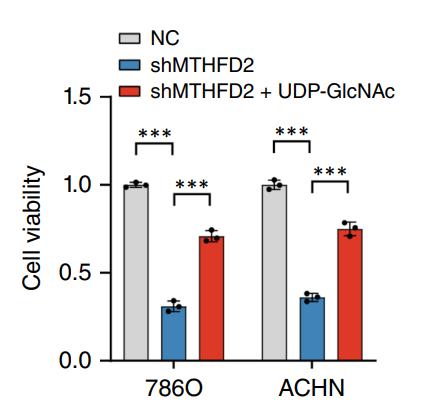
MTHFD2 knockdown cells and control cells were treated with sunitinib (10 μM) and UDP-GlcNAc (10 μM) for 48 hours. Cell viability (n = 3).
UDP-GlcNAc disodium purchased from MedChemExpress. Usage Cited in: Cancer Res. 2025 Mar 14;85(6):1113-1129. [Abstract]
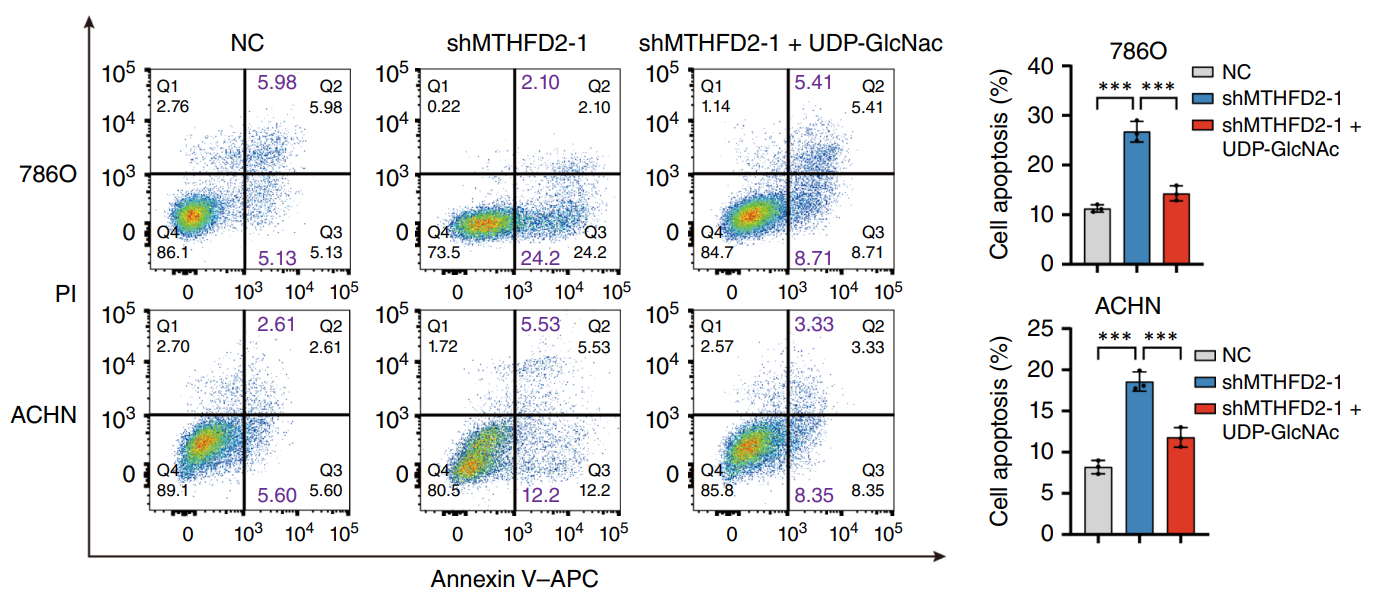
MTHFD2 knockdown cells and control cells were treated with sunitinib (10 μmol/L) and UDP-GlcNAc (10 μmol/L) for 48 hours. Cell apoptosis (n = 3) were used to assess the killing capacity of sunitinib. PI, propidium iodide. G, Relative levels of metabolites in MTHFD2 knockdown cells measured by untargeted metabolomics (n = 6). F6P, fructose-6-phosphate;
UDP-GlcNAc disodium purchased from MedChemExpress. Usage Cited in: Cancer Res. 2025 Mar 14;85(6):1113-1129. [Abstract]
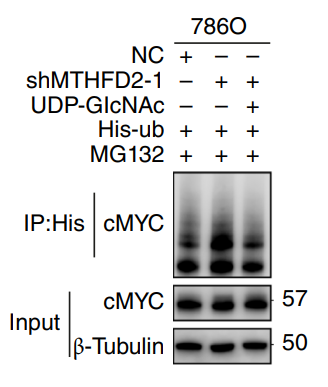
Immunoblotting analysis of whole cell lysate (input) and His pull-down products derived from 786O cells transfected with indicated constructs and treated with MG132 (10 μmol/L) for 6 hours after cells were treated with or without UDP-GlcNAc (10 μM) for 24 hours. NC, negative control. The results showed that UDP-GlcNAc could reverse the increased c-MYC ubiquitination resulting from the silencing of MTHFD2 expression.
-
Plant Cell
SlSEC1- and SlSPY-mediated O-glycosylation stabilizes the transcription factor SlNOR to promote tomato fruit ripening. [Abstract]2026 May 14:koag144. PMID: 42135064 -
Int J Biol Sci
2022 Jun 21;18(10):4135-4150. PMID: 35844792 -
Dev Cell
A pathological role of O-GlcNAcylation-driven TR11B production and function in lung adenocarcinoma. [Abstract]2025 Sep 3:S1534-5807(25)00530-1. PMID: 40930100 -
Mol Med
New perspectives on YTHDF2 O-GlcNAc modification in the pathogenesis of intervertebral disc degeneration. [Abstract]2024 Oct 18;30(1):180. PMID: 39425013 -
PLoS Pathog
2026 Jun 25;22(6):e1014301. PMID: 42348500 -


Solvent & Solubility
In Vitro:
H2O : 125 mg/mL (191.92 mM; Need ultrasonic)
Please refer to the solubility information to select the appropriate solvent. The compound is unstable in solutions, freshly prepared is recommended.
* Note: If you choose water as the stock solution, please dilute it to the working solution, then filter and sterilize it with a 0.22 μm filter before use.
Please refer to the solubility information to select the appropriate solvent. The compound is unstable in solutions, freshly prepared is recommended.
* Note: If you choose water as the stock solution, please dilute it to the working solution, then filter and sterilize it with a 0.22 μm filter before use.
Concentration (start) × Volume (start) = Concentration (final) × Volume (final)


Purity & Documentation
-
Data Sheet (289 KB)
-
SDS (394 KB)
- English - EN (394 KB)
- Français - FR (394 KB)
- Deutsch - DE (394 KB)
- Norwegian - NO (394 KB)
- Español - ES (394 KB)
- Swedish - SV (394 KB)
- Italian - IT (394 KB)
- Korean - KR (394 KB)
- Portuguese - PT (394 KB)
-
Handling Instructions (2659 KB)
References


Complete Stock Solution Preparation Table
Please refer to the solubility information to select the appropriate solvent. The compound is unstable in solutions, freshly prepared is recommended.
| Optional Solvent | Concentration Solvent Mass | 1 mg | 5 mg | 10 mg | 25 mg |
|---|---|---|---|---|---|
| H2O | 1 mM | 1.5353 mL | 7.6767 mL | 15.3534 mL | 38.3836 mL |
| 5 mM | 0.3071 mL | 1.5353 mL | 3.0707 mL | 7.6767 mL | |
| 10 mM | 0.1535 mL | 0.7677 mL | 1.5353 mL | 3.8384 mL | |
| 15 mM | 0.1024 mL | 0.5118 mL | 1.0236 mL | 2.5589 mL | |
| 20 mM | 0.0768 mL | 0.3838 mL | 0.7677 mL | 1.9192 mL | |
| 25 mM | 0.0614 mL | 0.3071 mL | 0.6141 mL | 1.5353 mL | |
| 30 mM | 0.0512 mL | 0.2559 mL | 0.5118 mL | 1.2795 mL | |
| 40 mM | 0.0384 mL | 0.1919 mL | 0.3838 mL | 0.9596 mL | |
| 50 mM | 0.0307 mL | 0.1535 mL | 0.3071 mL | 0.7677 mL | |
| 60 mM | 0.0256 mL | 0.1279 mL | 0.2559 mL | 0.6397 mL | |
| 80 mM | 0.0192 mL | 0.0960 mL | 0.1919 mL | 0.4798 mL | |
| 100 mM | 0.0154 mL | 0.0768 mL | 0.1535 mL | 0.3838 mL |
* Note: If you choose water as the stock solution, please dilute it to the working solution, then filter and sterilize it with a 0.22 μm filter before use.


UDP-GlcNAc disodium Related Classifications
HY-112174 Related Classifications
 Powered by Bioz