



Gene Sequencing and Synthesis

Nucleic acids are present in all living organisms and are categorized into two major types: ribonucleic acid (RNA) and deoxyribonucleic acid (DNA). They serves as a carrier of genetic material,with DNA and RNA encode genetic information through nucleic acid sequences, thereby directing protein synthesis. Consequently, nucleic acids are the foundation of biological research.
MCE provides a variety of nucleic acid synthesis raw materials, including modified nucleotide materials, which can be used for nucleic acid biosynthesis, labeling, and gene sequencing.
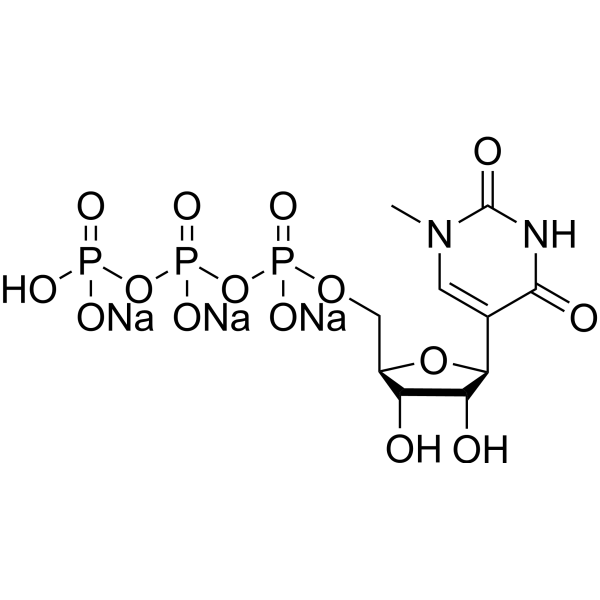
- Formula: C10H14N2Na3O15P3
- Molecular Weight: 564.11
N1-Methylpseudouridine-5′-triphosphate (1-Methylpseudouridine-5′-triphosphate) trisodium solution (100 mM) is a nucleobase-modified nucleotide. N1-Methylpseudouridine-5′-triphosphate (1-Methylpseudouridine-5′-triphosphate) trisodium solution (100 mM) is used for synthesizing mRNA with reduced immunogenicity and improved stability.
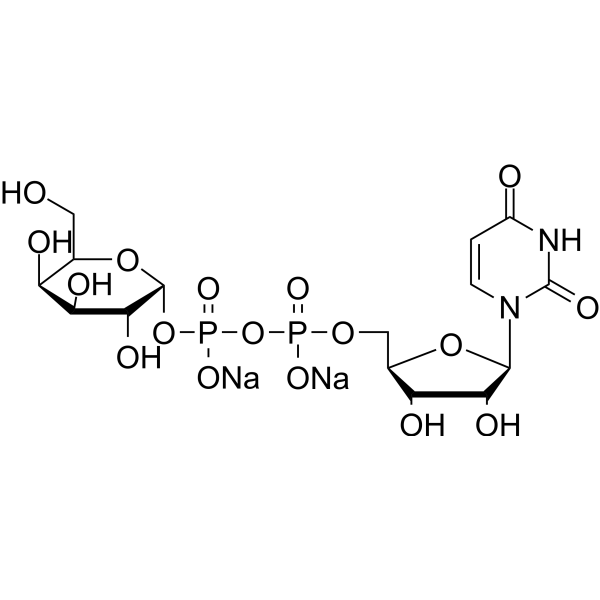
- Formula: C15H22N2Na2O17P2
- Molecular Weight: 610.27
UDP-Galactose disodium is a monosaccharide and a key glycosyl donor molecule in cells that participates in nucleotide sugar metabolism. UDP-Galactose disodium is the natural agonist of the P2Y14 receptor coupled to Gi proteins in the immune system (IC50 = 0.67 μM, hP2Y14). UDP-Galactose disodium can be used to study cell signal transduction and substance metabolism.
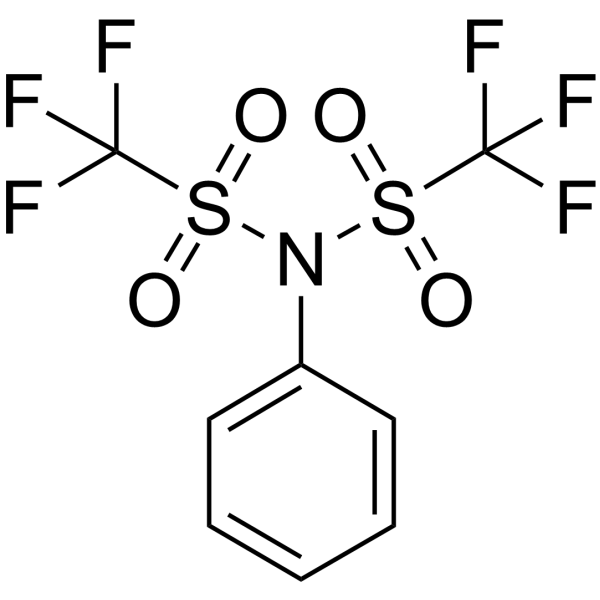
- Formula: C8H5F6NO4S2
- Molecular Weight: 357.25
N,N-Bis(trifluoromethylsulfonyl)aniline (N-Phenyltrifluoromethanesulfonimide) is a sulfonylation reagent. N,N-Bis(trifluoromethylsulfonyl)aniline can be used for the synthesis of organic compounds.
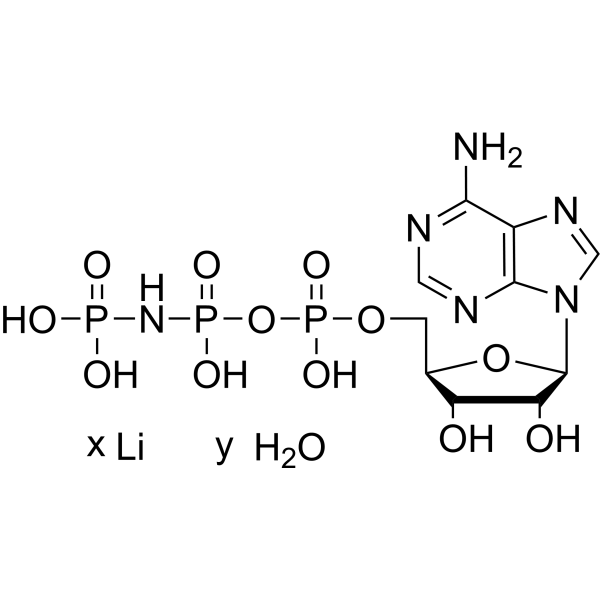
- Formula: C10H17N6O12P3·xLi·yH2O
- Molecular Weight: 506.20 (free acid)
AMP-PNP (Adenylyl imidodiphosphate) lithium hydrate is a non-hydrolyzable ATP analog. AMP-PNP lithium hydrate binds to ATP binding sites competely but is not hydrolyzed by enzymes, providing stable experimental conditions for studying ATP-dependent processes. AMP-PNP lithium hydrate can also be used to study enzyme activity, kinase regulation, DNA/RNA metabolism, ion channel function, and protein complex assembly.
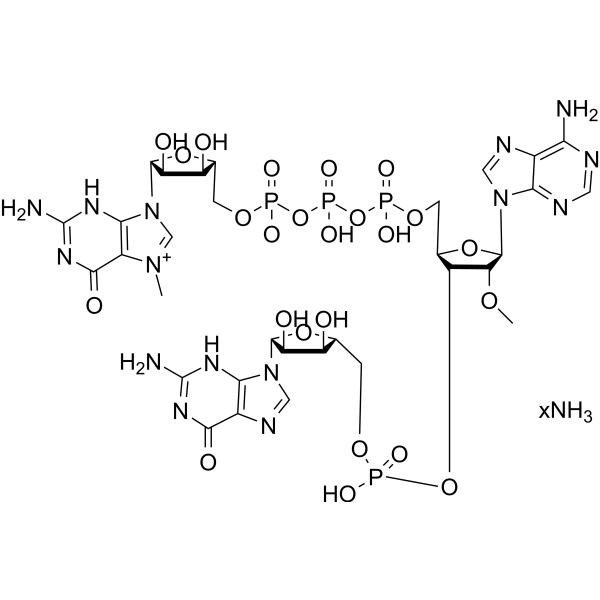
- Formula: C32H43N15O24P4.xNH3
m7GpppAmpG ammonium (m7G(5')ppp(5')(2'OMeA)pG ammonium) is a trinucleotide 5′ end cap analog. m7GpppAmpG ammonium binds to eIF4E with a KD value of 45.6 nM. m7GpppAmpG ammonium caps RNA with a capping efficiency of 90%. m7GpppAmpG ammonium enhances mRNA stability and translation efficiency. m7GpppAmpG ammonium is used in mRNA therapeutic research.
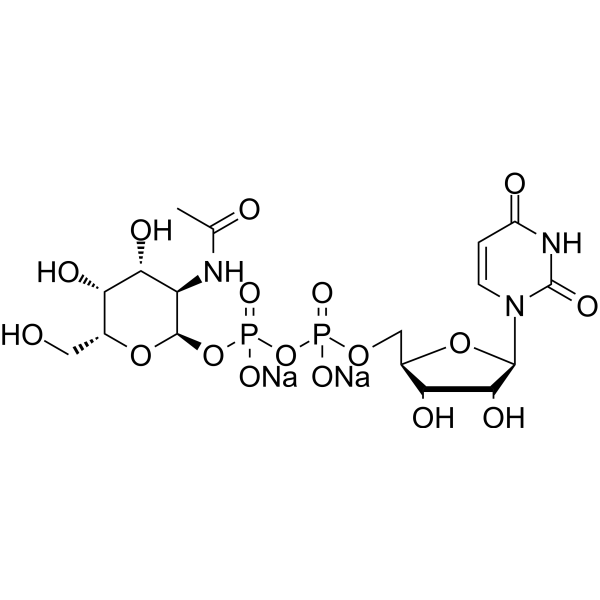
- Formula: C17H25N3Na2O17P2
- Molecular Weight: 651.32
UDP-GalNAc (UDP-N-acetyl-D-galactosamine) disodium is a sugar nucleotide and a substrate for EpsC115. EpsC115 is a mutant with N-terminal residues 1-115 deleted from the exopolymeric substance (EPS). UDP-GalNAc disodium is a donor substrate for many N-acetylgalactosaminyltransferases, which transfer GalNAc from nucleotide sugars to sugar or peptide acceptors. UDP-GalNAc disodium provides a sugar group donor for glycosylation reactions. UDP-GalNAc disodium can be used in cancer research, such as colorectal and breast cancer.
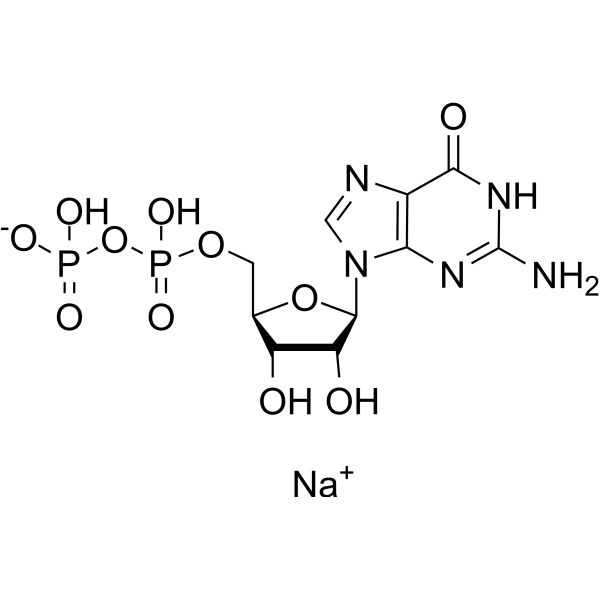
- Formula: C10H14N5NaO11P2
- Molecular Weight: 465.18
Guanosine 5'-diphosphate (GDP) sodium, 96% (HPLC) is a nucleoside diphosphate that activates adenosine 5'-triphosphate-sensitive K+ channel. Guanosine 5'-diphosphate sodium, 96% (HPLC) is an iron mobilizer, which forms a complex with hepcidin to inhibit the hepcidin-ferroportin (FPN) interaction and modulates the IL-6/stat-3 pathway. Guanosine 5'-diphosphate sodium, 96% (HPLC) ameliorates the Turpentine-induced anemia of inflammation (AI) in mice when combined with FeSO4. Guanosine 5'-diphosphate sodium, 96% (HPLC) can be used in the research of AI.
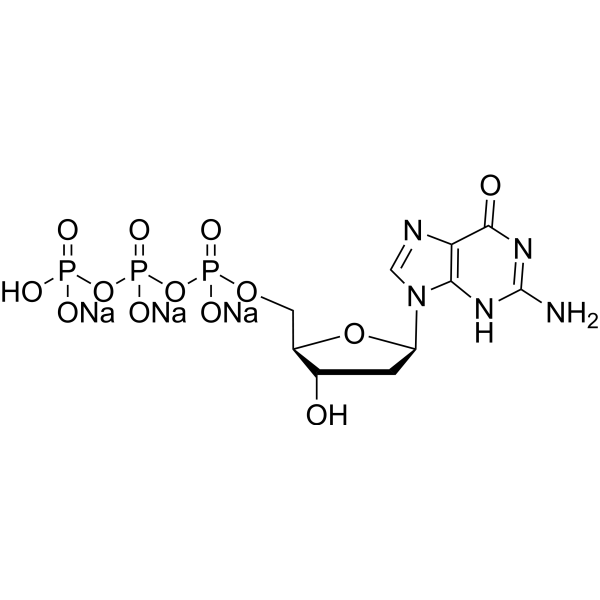
- Formula: C10H13N5Na3O13P3
- Molecular Weight: 573.13
Deoxyguanosine triphosphate (dGTP) trisodium solution (100 mM) is a nucleotide precursor in cells for DNA synthesis. Deoxyguanosine triphosphate trisodium is used in reverse transcription-polymerase chain reaction (RT-PCR) for DNA amplification.

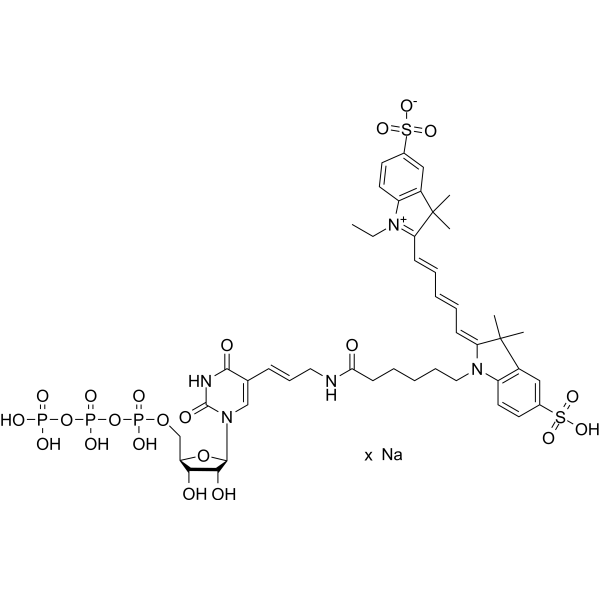
- Formula: C45H58N5O22P3S2.xNa
Cy5-UTP sodium (10 mM in water) is a fluorescently labeled ribonucleotide triphosphate that can be used as a substrate for terminal deoxynucleotide transferase (TdT). Cy5-UTP sodium can be used to label RNA probes generated in vitro (Ex/Em: 650/665 nm). Cy5-UTP sodium can be applied in FISH, multi-color fluorescence analysis, especially in dual-color expression arrays combined with Cy5-UTP.
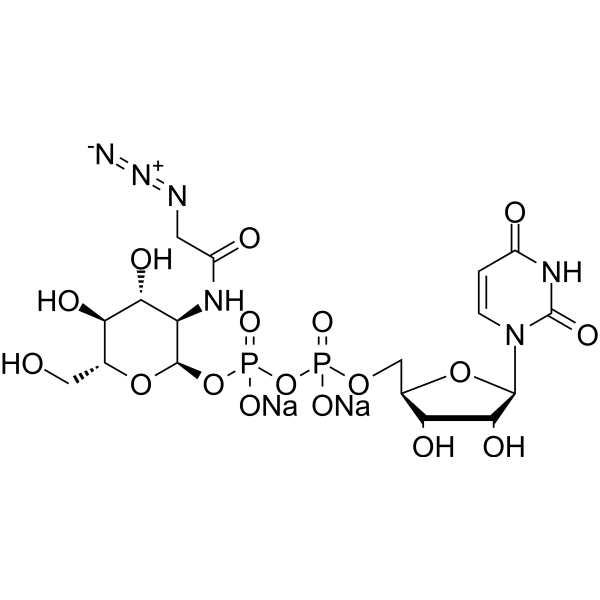
- Formula: C17H24N6Na2O17P2
- Molecular Weight: 692.33
UDP-GlcNAz disodium is the analogue of UDP-GlcNAc disodium (HY-112174). UDP-GlcNAc disodium is the donor substrate of many N-acetylgalactosaminyltransferases, enzymes which transfer GlcNAc from the nucleotide sugar to a saccharide or peptide acceptor. UDP-GlcNAc disodium is a click chemistry reagent, it contains an Azide group and can undergo copper-catalyzed azide-alkyne cycloaddition reaction (CuAAc) with molecules containing Alkyne groups. It can also undergo strain-promoted alkyne-azide cycloaddition (SPAAC) reactions with molecules containing DBCO or BCN groups.

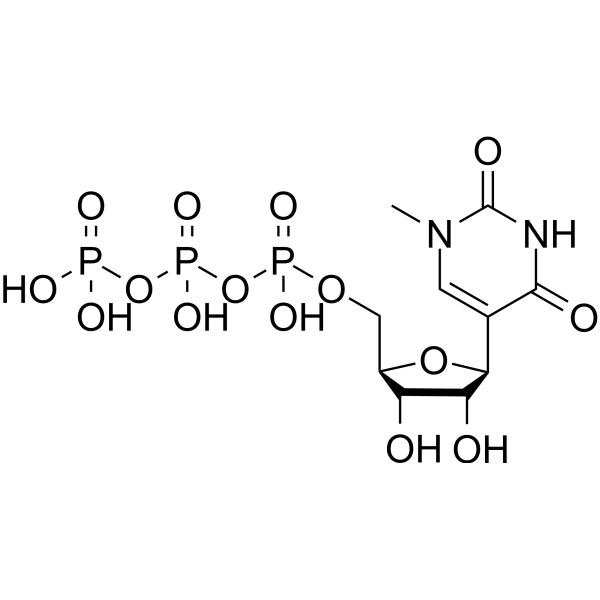
- Formula: C10H17N2O15P3
- Molecular Weight: 498.17
N1-Methylpseudouridine-5′-triphosphate (1-Methylpseudouridine-5′-triphosphate) is a nucleobase-modified nucleotide, used for synthesizing mRNA with reduced immunogenicity and improved stability.
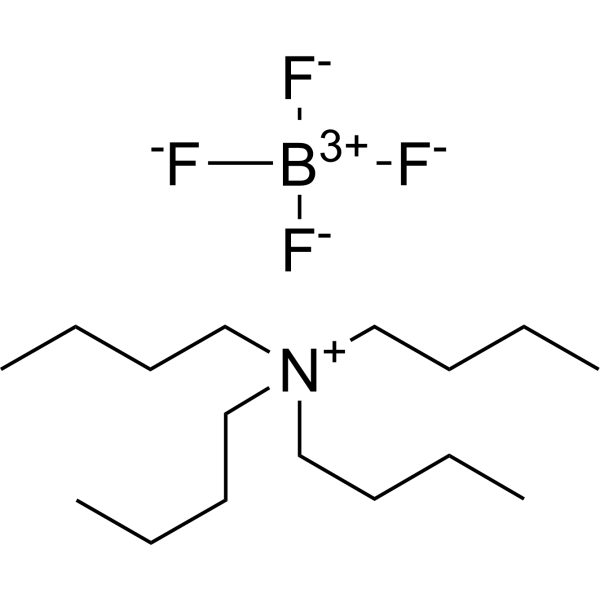
- Formula: C16H36BF4N
- Molecular Weight: 329.27
Tetrabutylammonium tetrafluoroborate is an inorganic salt commonly used in organic synthesis reactions and electrochemical applications. It is usually used as a catalyst or reagent, and is widely used in the field of organic synthesis, such as fluorination reaction, olefin addition and cyclization reaction, etc. In addition, it can also be used in electrochemical deposition and electroplating, and plays an important role in some electronic devices. Although it has no direct application in the medical field, it plays an important role in chemical research and industrial production.
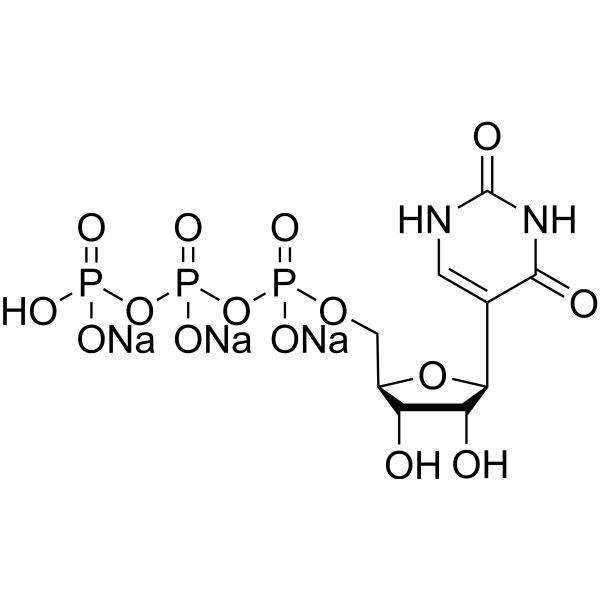
- Formula: C9H12N2Na3O15P3
- Molecular Weight: 550.09
Pseudouridine 5'-triphosphate (Pseudo-UTP) trisodium solution (100 mM) is a modified ribonucleoside triphosphate and uracil base-modified UTP derivative. Pseudouridine 5'-triphosphate trisodium solution (100 mM) enhances translational properties and stability of mRNA, reduces innate immune responses in mammalian cells, and inhibits signal-dependent transcription termination of vaccinia virus early gene transcription while supporting transcription elongation. Pseudouridine 5'-triphosphate trisodium solution (100 mM) can be used for the research of vaccinia virus infection.

- Formula: C9H16N2Na3O17P3
- Molecular Weight: 586.12
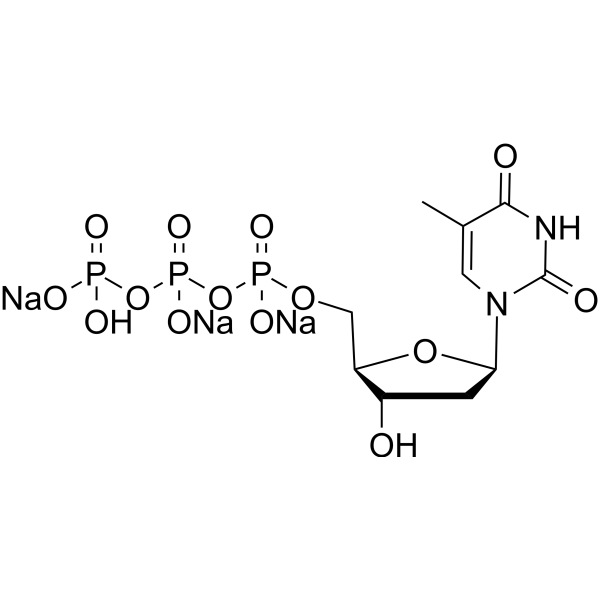
- Formula: C10H14N2Na3O14P3
- Molecular Weight: 548.11
Deoxythymidine-5'-triphosphate trisodium solution (100 mM) (dTTP trisodium solution (100 mM)) is a deoxyribonucleoside triphosphate and a thymidine analog, which serves as a direct precursor for DNA synthesis. Deoxythymidine-5'-triphosphate trisodium solution (100 mM) can be used for DNA amplification in the DNA polymerase chain reaction (PCR). Deoxythymidine-5'-triphosphate trisodium solution (100 mM) is also applicable to research related to diseases such as leukemia.
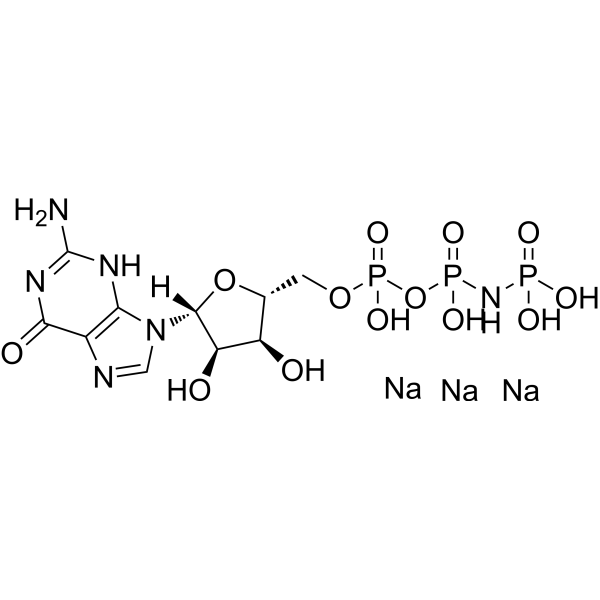
- Formula: C10H14N6Na3O13P3
- Molecular Weight: 588.14
Guanylyl Imidodiphosphate (Guanosine 5'-[β,γ-imido]triphosphate) trisodium is a non-hydrolysable GTP analogue, an activator of ADP-ribosylation factor (ARF) and a potent stimulator of adenylate cyclase. Imidodiphosphate trisodium can be used in protein synthesis studies.
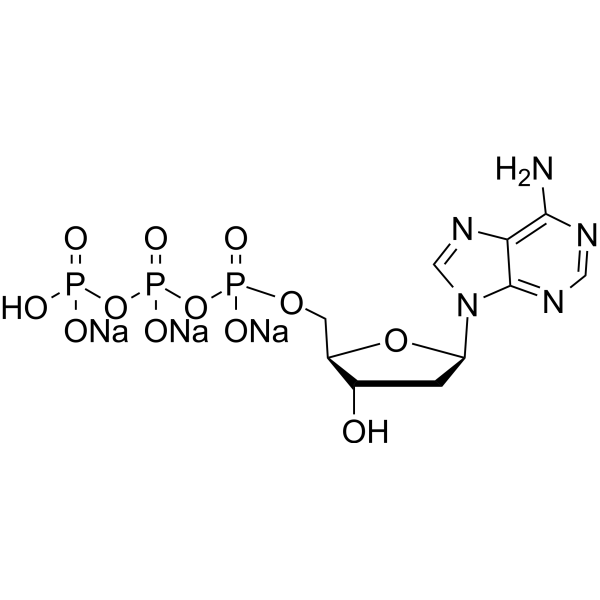
- Formula: C10H13N5Na3O12P3
- Molecular Weight: 557.13
2'-Deoxyadenosine-5'-triphosphate (dATP) trisodium is a nucleotide used in cells for DNA synthesis (or replication), as a substrate of DNA polymerase. 2'-Deoxyadenosine-5'-triphosphate is promising for research of genetic immunodeficiency diseases adenosine deaminase deficiency and purine nucleotide phosphorylase deficiency .

- Formula: C9H12N2O5S
- Molecular Weight: 260.27
2-Thiouridine is an orally active modified nucleobase. 2-Thiouridine stabilizes U:A base pairs and destabilizes U:G wobble base pairs. 2-Thiouridine significantly improves the efficiency and accuracy of nonenzymatic replication of mixed-sequence A/U-containing RNA templates. 2-Thiouridine exhibits antiviral activity against multiple positive-sense single-stranded RNA viruses (DENV2, ZIKV, YFV, JEV, WNV, CHIKV, human coronaviruses ( [HCoV]-229E, HCoV-OC43, SARS-CoV), and MERS-CoV).



