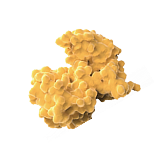
Glutathione Magnetic Agarose Beads
Based on 2 publication(s) in Google Scholar
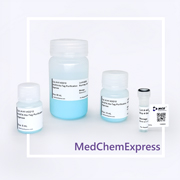
MCE Glutathione Magnetic Agarose Beads have high protein-binding capacity and stability, making it ideal for high performance purification of GST-tagged fusion proteins expressed in E. coli, yeast, insect and mammalian expression systems.
-
Storage :
4°C, 2 years. Do not dry or freeze.



To place orders, for customer services and technical support, please contact: MedChemExpress USA
Tel: 609-228-6898 E-mail: [email protected] [email protected]



-
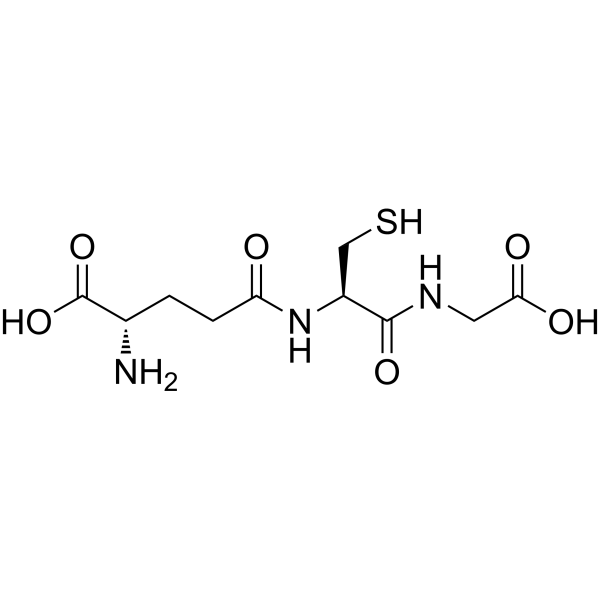
HY-D0187
L-Glutathione reduced -

HY-K0222
Anti-GST Magnetic Beads -

HY-K0246
Anti-GFP Magnetic Agarose Beads -

HY-K0241
Ni-NTA Magnetic Agarose Beads -

HY-K0236
Anti-Flag Magnetic Agarose Beads -
HY-K0209
Anti-His Magnetic Beads -
HY-K0208
Streptavidin Magnetic Beads -
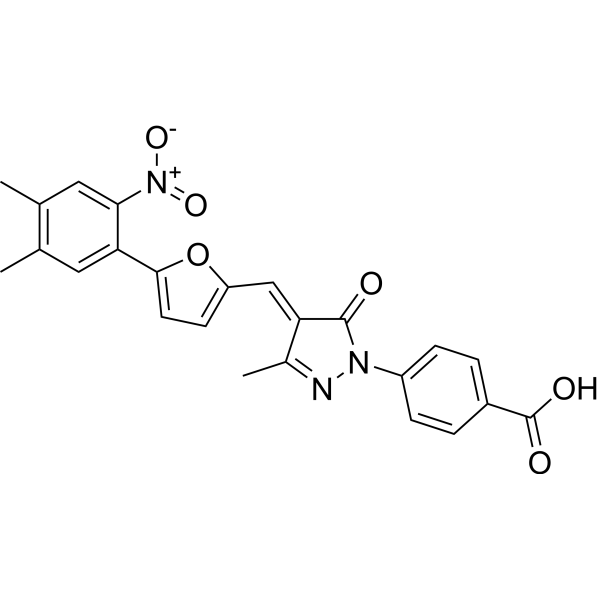
HY-13823
C646 -
HY-K0010
Protease Inhibitor Cocktail (EDTA-Free, 100× in DMSO) -
HY-K0201
Anti-HA Magnetic Beads -
HY-K0207
Anti-Flag Magnetic Beads -
HY-K0210
Ni-NTA His-Tag Purification Agarose


Description & Advantages
MCE Glutathione Magnetic Agarose Beads are based on magnetic cross-linked agarose, effectively purify high levels of overexpressed GST-tagged fusion proteins at a variety of scales. MCE Glutathione Magnetic Agarose Beads have high protein-binding capacity and stability, making it ideal for high performance purification of GST-tagged fusion proteins expressed in E. coli, yeast, insect and mammalian expression systems.
• Convenient and time saving.
• Low non-specific binding.
• Minimal sample loss.
• Protein binding capacity up to 5-10 mg/mL Settled Beads.
• Stable, one bottle solution.
The specifications of the product correspond to the actual beads volume, with the beads content of 20%.


Protocol
Recommended Buffers (Not Provided)
| Buffer | Composition |
|---|---|
| Binding/Wash Buffer | 1× PBS, pH 7.4; or 50 mM Tris-HCl, 150 mM NaCl, pH 7.4 |
| Elution Buffer | 50 mM Tris-HCl, 10 mM reduced glutathione, pH 8.0 |
| Storage Buffer | 1× PBS containing 20% ethanol |
Note: Prepare all buffers with ultrapure water and filter them through a 0.22 μm or 0.45 μm membrane.
Sample Preparation
Lyse samples containing GST-tagged proteins from bacterial, yeast, insect, or mammalian expression systems under cold conditions and clarify them by centrifugation. Filter through a 0.22 μm or 0.45 μm membrane before loading. Dialyze or dilute samples containing high concentrations of detergents or denaturants.
GST-Tagged Protein Purification
1. Bead Pretreatment: Thoroughly resuspend the Glutathione Magnetic Agarose Beads, transfer the required volume into a tube, perform magnetic separation, discard the storage solution, and wash with 5 bead volumes of binding/wash buffer 2-3 times.
2. Sample Binding: Add the clarified GST-tagged protein sample and incubate on a rotator at 4°C for 1-2 h or overnight. Perform magnetic separation and retain the flow-through for analysis if required.
3. Washing: Wash with 5-10 bead volumes of binding/wash buffer 3-5 times.
4. Elution: Add 3-5 bead volumes of elution buffer, incubate at room temperature for 5-10 min, perform magnetic separation, and collect the supernatant. Repeat 2-3 times if necessary. For SDS-PAGE or Western blotting only, add SDS-PAGE Loading Buffer, heat at 95°C for 5 min, perform magnetic separation, and collect the supernatant.
5. SDS-PAGE Analysis: Analyze the original sample, flow-through, wash, and elution fractions to assess purification.
6. Storage: If the beads will be reused, wash thoroughly with binding/wash buffer and ddH2O, resuspend in storage buffer, and store at 2-8°C. Do not freeze, dry, or expose the beads to a magnetic field for an extended period.


Publications
-
Journal Impact Factor
-
Most Recent
-
Hortic ResMADS-domain transcription factor AGAMOUS LIKE-9 participates in the gibberellin pathway to promote bud dormancy release of tree peony. [Abstract]2025 Feb 10;12(5):uhaf043. PMID: 40236736

Glutathione Magnetic Agarose Beads purchased from MedChemExpress. Usage Cited in: Hortic Res. 2025 Feb 10;12(5):uhaf043. [Abstract]
The interaction between PsAGL9 and PsRGL1 was confirmed using in vitro pull-down assays. PsAGL9 fused with an MBP tag was incubated with GST-PsRGL1 or GST (control). The signal was detected using immunoblotting with anti-MBP or anti-GST antibodies.
Storage
4°C, 2 years.
Do not dry or freeze.


Components
| Components | HY-K0234- 1 mL | HY-K0234- 5 mL | HY-K0234- 25 mL |
|---|---|---|---|
| Glutathione Magnetic Agarose Beads (Settled Beads) | 1 mL | 5 mL | 5 mL × 5 |


 Please enter the correct Lot Number