



Hemoglobin
Hemoglobin
Hemoglobin is an iron-containing protein responsible for transporting oxygen and carbon dioxide. Hemoglobin in the blood transports oxygen from the respiratory organs (lungs or gills) to other tissues of the body, where it releases oxygen to enable aerobic respiration, thus powering the animal's metabolism. In addition, hemoglobin has the function of buffering the pH of the blood. When acidic or alkaline substances increase in the blood, hemoglobin can maintain the relative stability of the blood pH by binding to or releasing hydrogen ions, ensuring the normal activity of various enzymes in the body. Abnormalities in the structure or function of hemoglobin are related to blood diseases such as sickle cell anemia[1].
All Product Categories
-
Hemoglobin Related Products (14)
Related Products (14)

- 1
-
FHD-609
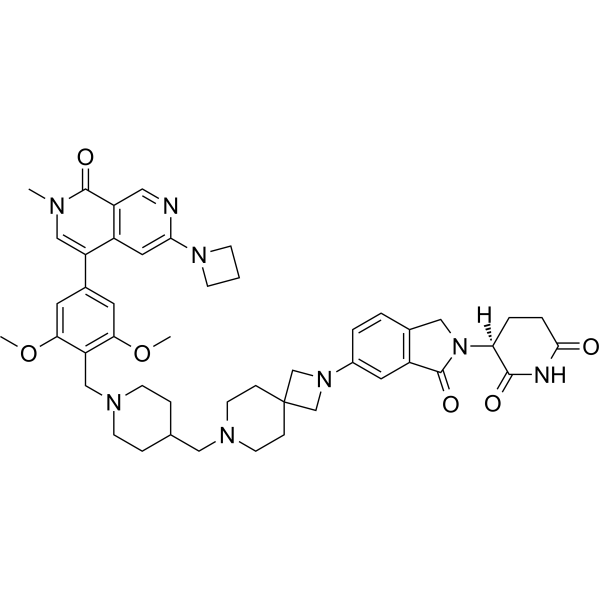 0 ImagesFHD-609 is a BRD9 PROTAC degrader. FHD-609 induces BRD9 degradation, downregulates primary transcripts of HBG/HBD, Myc expression and proliferation gene sets, reduces the levels of synovial sarcoma tumor proliferation markers, and inhibits tumor growth. FHD-609 can be used in research related to advanced synovial sarcoma, SMARCB1-deficient tumors and adrenocortical carcinoma.
-
Voxelotor
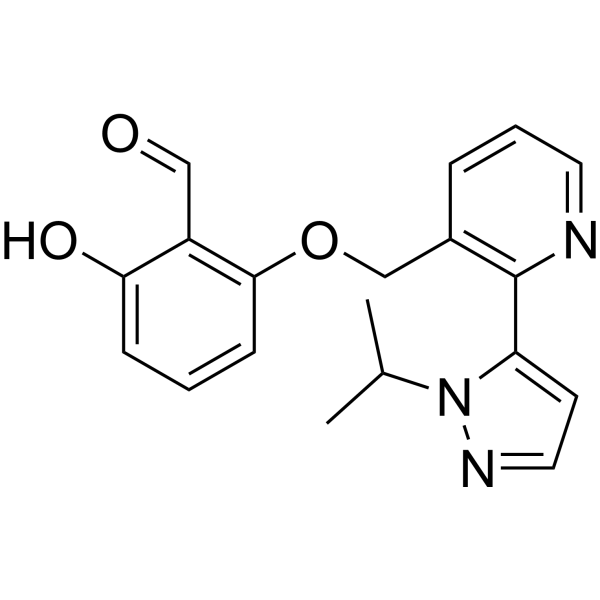 0 ImagesSynonyms: GBT 440Voxelotor (GBT 440) is a potent inhibitor of haemoglobin S (HbS) polymerization. Voxelotor has the potential for sickle cell disease (SCD) treatment.
-
Osivelotor
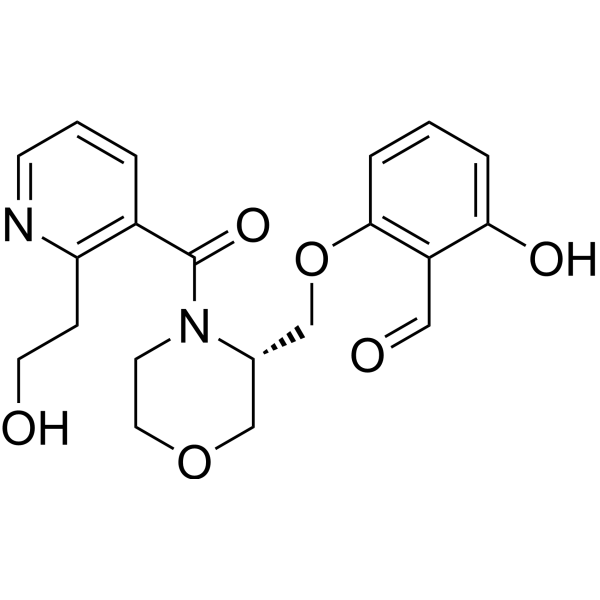 0 ImagesSynonyms: GBT-601; GBT-021601Osivelotor is an orally effective small molecule. Osivelotor is an allosteric regulator of deoxyhemoglobin S (HbS). Osivelotor increases the affinity of HbS to oxygen, inhibits HbS polymerization, and thus prevents erythrocyte sickling in the blood. Osivelotor can be used for research of sickle cell disease (SCD) .
-
Hypoxystat
 0 ImagesHypoxystat is an orally active hypoxia mimetic. HypoxyStat increases Hemoglobin’s oxygen affinity, limiting oxygen offloading to the tissues and inducing local tissue hypoxia. Hypoxystat reduces Iba1+ cells. HypoxyStat causes systemic hypoxia. Hypoxystat effectively rescues hyperglycemia in mouse models of type 1 and type 2 diabetes. HypoxyStat not only extends lifespan but also rescues key neuropathological and behavioral deficits in the premier mouse model of Leigh syndrome.
-
Efaproxiral
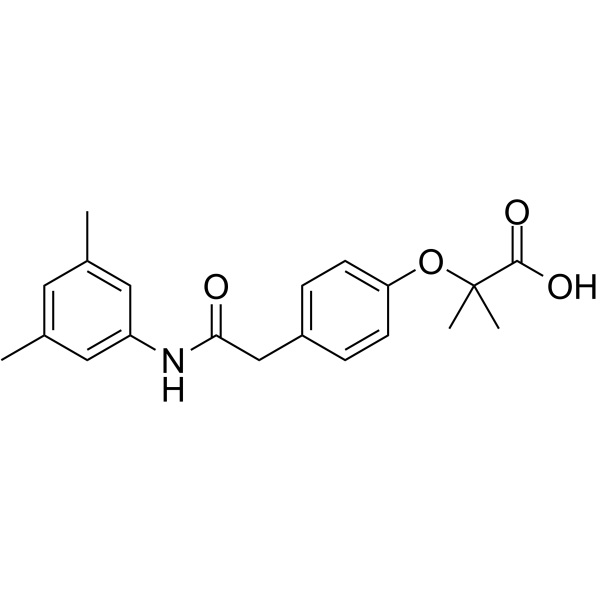 0 ImagesSynonyms: RSR13Efaproxiral (RSR13) is a haemoglobin (Hb) synthetic allosteric modifier. Efaproxiral decreases Hb-oxygen (O2) binding affinity and enhances oxygenation of hypoxic tumours during radiation therapy .
-
WIZ degrader 1
 0 ImagesCat. No.: HY-162665CAS No.: 2839552-68-8WIZ degrader 1 is a degrader for widely interspaced zinc finger motifs (WIZ) with an AC50 of 2 nM. WIZ degrader 1 induces the expression of fetal hemoglobin (HbF) with an EC50 of 6 mM. WIZ degrader 1 is used in research of inherited blood disorders.
-
KDS12025
 0 ImagesKDS12025 is a blood-brain barrier-permeable, orally active H2O2-decomposing peroxidase enhancer. KDS12025 enhances the H2O2-decomposing pseudoperoxidase activity of Hb without altering oxygen transport function, and reduces intracellular H2O2 load. KDS12025 reduces abnormal H2O2 levels and inhibits the production of COL1. KDS12025 restores cerebral blood flow, maintains neuronal excitability, membrane properties, synaptic connections and corticospinal tract fibers, reduces cerebral edema and exerts neuroprotective effects. KDS12025 improves motor function and overall neurological function. KDS12025 can be used in the research of ischemic stroke, Alzheimer's disease, Parkinson's disease, amyotrophic lateral sclerosis, aging-related neurodegenerative diseases and rheumatoid arthritis.
-
Efaproxiral sodium
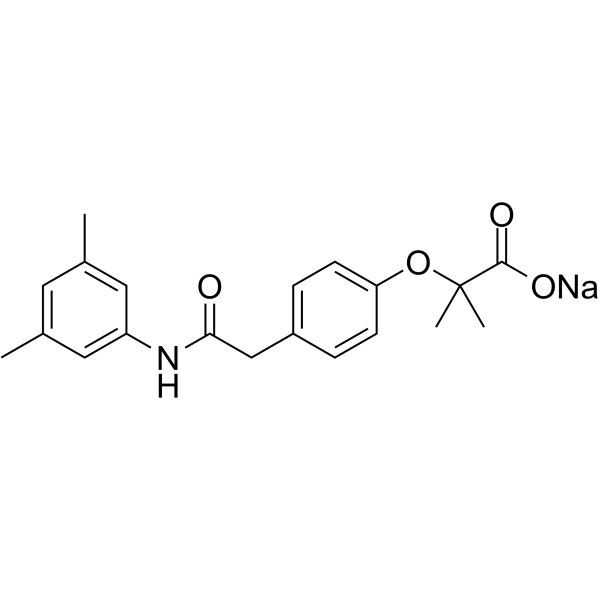 0 ImagesSynonyms: RSR13 sodiumEfaproxiral (RSR13) sodium is a haemoglobin (Hb) synthetic allosteric modifier. Efaproxiral sodium decreases Hb-oxygen (O2) binding affinity and enhances oxygenation of hypoxic tumours during radiation therapy .
-
N-Acetyl-2-pyrrolidone
 0 ImagesN-Acetyl-2-pyrrolidone (No.20) is an N-acetylated amide. N-Acetyl-2-pyrrolidone can induce the differentiation of mouse erythroleukemia cells and has the activity of stimulating proliferation. N-Acetyl-2-pyrrolidone can be used in the research of leukemia differentiation therapy.
-
Velaresol
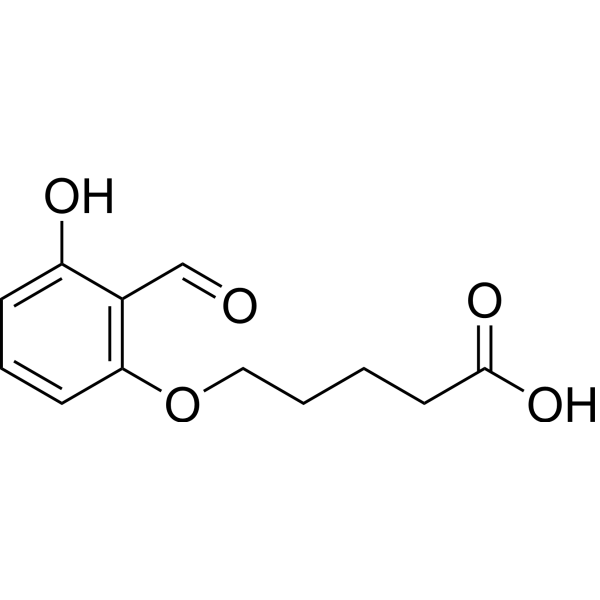 0 ImagesSynonyms: BW 12C; 12C79; BW 12C79Velaresol (BW 12C) is a small molecule oxyhemoglobin stabilizer. Velaresol stabilizes hemoglobin’s oxy-conformation, shifts oxygen dissociation curves left, induces tumor hypoxia, alters radiosensitivity, protects normal tissues from radiation damage, and reduces sickled cell counts. Velaresol can be used for the research of cancer and sickle cell disease.
-
TN1
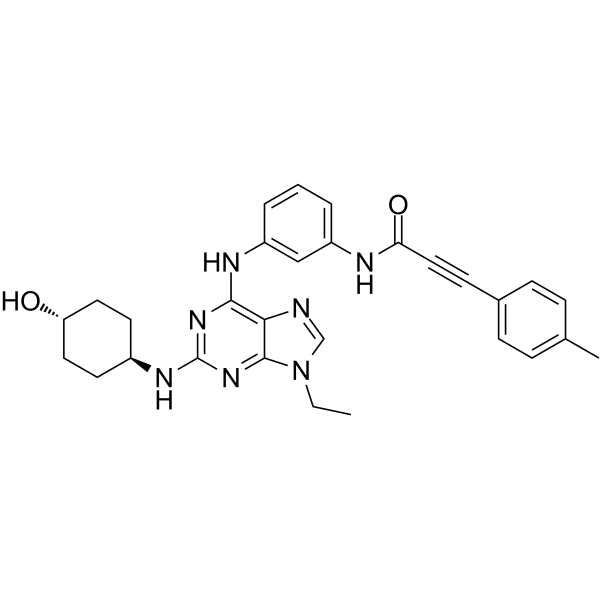 0 ImagesCat. No.: HY-100826CAS No.: 289479-94-3TN1 is a potent fetal hemoglobin (HbF) inducer.
-
Methoxyurea
 0 ImagesCat. No.: HY-W175543CAS No.: 3272-27-3Methoxyurea (Compound 3) is a potential regulator of nitric oxide (NO) donors that acts on hemoglobins such as oxy-hemoglobin (OxyHb) and met-hemoglobin (MetHb). Methoxyurea is promising for research of sickle cell disease (SCD).
-
INN-312
 0 ImagesCat. No.: HY-W305227CAS No.: 923255-75-8INN-312 is a sickle hemoglobin (Hb S) inhibitor capable of penetrating red blood cell membranes. INN-312 inhibits sickling of sickle red blood cells under hypoxic conditions, increases the oxygen affinity of Hb, and moderately improves the solubility of deoxygenated Hb S. INN-312 can be used in research related to sickle cell disease.
-
Velaresol (Standard)
 0 ImagesCat. No.: HY-106509RCAS No.: 77858-21-0Synonyms: BW 12C (Standard); 12C79 (Standard); BW 12C79 (Standard)Velaresol (Standard) is the analytical standard of Velaresol. This product is intended for research and analytical applications. Velaresol (BW 12C) is a small molecule oxyhemoglobin stabilizer. Velaresol stabilizes hemoglobin’s oxy-conformation, shifts oxygen dissociation curves left, induces tumor hypoxia, alters radiosensitivity, protects normal tissues from radiation damage, and reduces sickled cell counts. Velaresol can be used for the research of cancer and sickle cell disease.
- 1



