



Immunomodulation
-
Immunomodulation (33)

- 1
- 2

- Molecular Weight: 90 kDa
Belatacept (BMS 224818) is a selective T-cell costimulation blocker and a costimulator of the CD28-CD80/86 pathway. Belatacept binds to the CD 80/86 ligand and inhibits CD-28-mediated T cell costimulation and IFN-γ production. Belatacept can be used in studies of immunosuppression in organ transplantation. The component ratio of this product is Active ingredient : Excipients = 1:2.4.

- Formula: C77H112F3N15O19S2
- Molecular Weight: 1672.93
KS-133 TFA is a highly selective and potent antagonist of the vascular active enteropeptide receptor 2 (VIPR2) with IC50 values for Ca influx measurement and cAMP measurement of 24.8 nM and 500 nM, respectively. KS-133 TFA reverses the tumor-promoting M2 phenotype of tumor-associated macrophages to the anti-tumor M1 phenotype, alters the tumor immune microenvironment, and inhibits tumor growth. KS-133 TFA can be used for research on schizophrenia and cancer immune regulation.

- Molecular Weight: 66.21 kDa
Brivekimig (F-027300252; SAR-442970) is a bispecific nanobody targeting TNF/OX40L. Brivekimig is applicable to research related to hidradenitis suppurativa.

- Formula: C19H17ClN4O3
- Molecular Weight: 384.82
RTY-406 is an orally active ABCB4/MDR3 and ABCB11/BSEP positive modulator. RTY-406 increases ABCB4/MDR3 and ABCB11/BSEP protein levels and functional output, elevates biliary phospholipid levels, enhances bile acid efflux, increases bile flow and micelle formation, reduces hepatic bile acids, and promotes cholesterol-to-bile-acid conversion. RTY-406 does not induce hepatocellular injury, maintains normal serum alanine transaminase and aspartate aminotransferase levels, and shows a favorable safety profile in cynomolgus monkeys. RTY-406 can be used for the research of primary sclerosing cholangitis and cholestasis.

- Formula: C21H32O10
- Molecular Weight: 444.47
Dendromoniliside C is a pyrrolidine-type sesquiterpene glycoside isolated from the stems of Dendrobium moniliforme, which stimulates B cell proliferation and inhibits T cell proliferation. Dendromoniliside C modulates adaptive immune responses by differentially regulating lymphocyte expansion.

- Formula: C24H26O12
- Molecular Weight: 506.46
Pleioside A is a flavonoid glycoside with immunomodulatory activity that is found in the leaves of Pleioblastus amarus. Pleioside A exerts differential regulatory effects on adaptive immune lymphocyte proliferation by inhibiting mouse T cell proliferation and promoting B lymphocyte proliferation. Pleioside A can be used for research on adaptive immunity and immunomodulation.
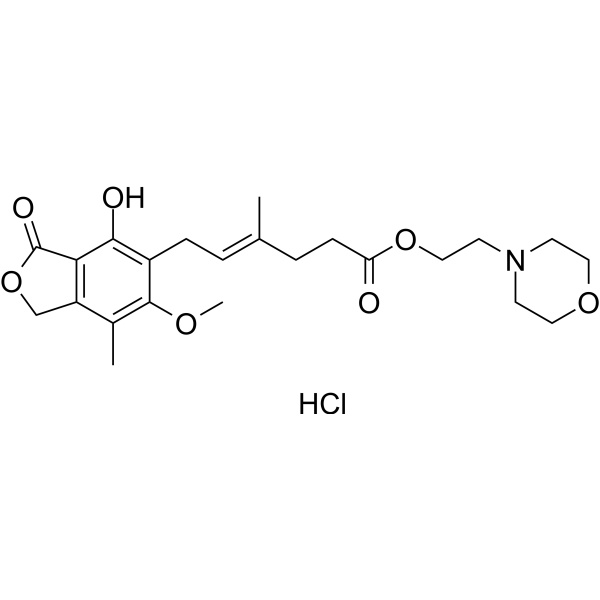
- Formula: C23H32ClNO7
- Molecular Weight: 469.96
Mycophenolate mofetil (RS 61443; TM-MMF) hydrochloride is an orally active antimetabolic immunosuppressant with antiproliferative and anti-inflammatory properties. Mycophenolate mofetil hydrochloride significantly inhibits the production of B, T lymphocytes and the proliferation of smooth muscle cells by selectively blocking the de novo purine synthesis pathway. Mycophenolate mofetil hydrochloride effectively reduces adventitial inflammation, medial necrosis and intimal thickening in rat aortic allografts, and decreases the number of lymphocytes expressing the IL-2 receptor, thereby delaying xenograft rejection. Mycophenolate mofetil hydrochloride shows certain toxicity in a hamster-to-rat limb xenotransplantation model when used in combination with FK506 (HY-13756). Mycophenolate mofetil hydrochloride is widely used in studies related to allograft arteriosclerosis (chronic rejection).
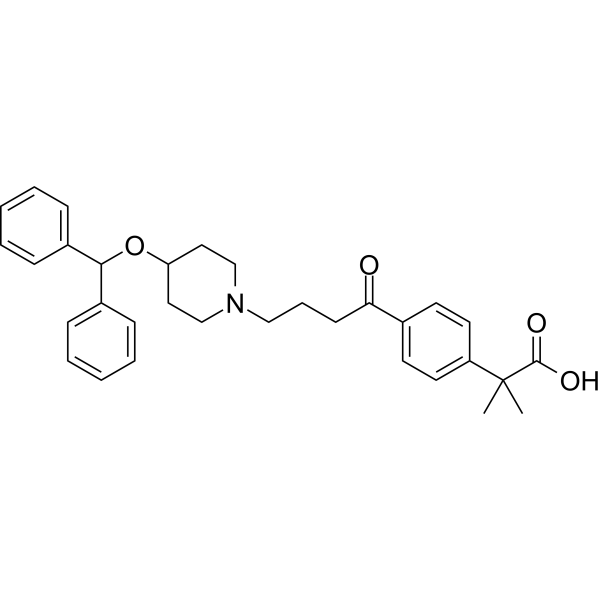
- Formula: C32H37NO4
- Molecular Weight: 499.64
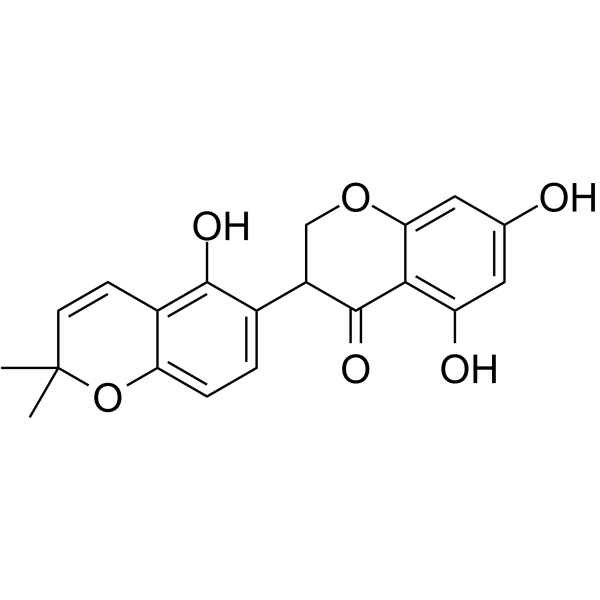
- Formula: C20H18O6
- Molecular Weight: 354.35
Licoisoflavanone is an orally active isoflavane-based immunomodulator with multiple activities including antiviral, anti-inflammatory, cytoprotective and cancer cell apoptosis-inducing effects. Licoisoflavanone can be isolated from the roots and rhizomes of Glycyrrhiza uralensis Fisch. Licoisoflavanone not only enhances the body's immunity, but also effectively prevents acute respiratory distress syndrome and multiple organ damage by alleviating cytokine storm, thereby reducing the degree of inflammation. In rats, Licoisoflavanone undergoes multiple metabolic transformation processes such as glucuronidation, hydroxylation, sulfation, methylation and dehydrogenation. Licoisoflavanone has become an important candidate molecule for research on COVID-19 and related inflammatory diseases.

Anti-Mouse VISTA Antibody (8G8) reacts with mouse VISTA. Anti-Mouse VISTA Antibody (8G8) is an agonistic antibody with immunosuppressive properties. Recommend Isotype Controls: Polyclonal Armenian hamster IgG, Isotype Control (HY-P990305).

- Formula: C23H32INO2
- Molecular Weight: 481.41
nAChR antagonist 2 is a selective nAChR antagonist. nAChR antagonist 2 inhibits nAChR subtype including hα9α10, hα9, and hα7 with IC50 values of 16.0 nM, 26.2 nM, and 336.3 nM, respectively, in Xenopus oocytes. nAChR antagonist 2 suppresses ATP-induced IL-1β release at nanomolar concentrations. nAChR antagonist 2 can be used for nonopioid analgesics and immunomodulators research.

- Formula: C14H28O3
- Molecular Weight: 244.37
(S)-3-Hydroxymyristic acid ((3S)-3-Hydroxytetradecanoic acid) is the enantiomer of (R)-3-hydroxytetradecanoic acid (a lipid A component) (HY-W288375), and enhances the inherent immune adjuvant activity of lipid A.
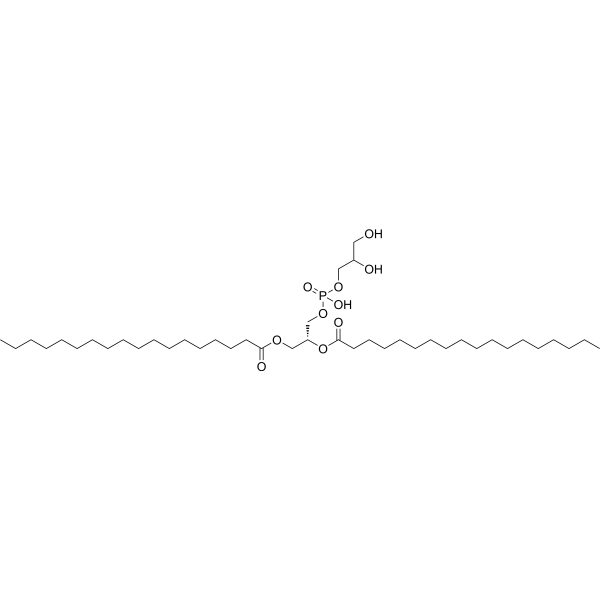
- Formula: C42H83O10P
- Molecular Weight: 779.08
1,2-Distearoyl-sn-Glycero-3-Phosphatidylglycerol (DSPG) is an anionic (negatively charged) phospholipid. 1,2-Distearoyl-sn-Glycero-3-Phosphatidylglycerol is used to prepare lipid microbubbles as ultrasound contrast agents. 1,2-Distearoyl-sn-Glycero-3-Phosphatidylglycerol can be used to construct liposomes as vaccine carriers for the treatment of atherosclerosis. 1,2-Distearoyl-sn-Glycero-3-Phosphatidylglycerol is applicable to the research of drug delivery and diagnostic preparations.

- Formula: C32H32N4O4
- Molecular Weight: 536.62
Sirt1/CXCR3-IN-1 is a dual Sirt1/CXCR3 inhibitor with an IC50 of 0.77 μM against Sirt1. Sirt1/CXCR3-IN-1 inhibits dengue virus replication, upregulates the expression of interferon-stimulated genes, and enhances the antiviral defense capacity of the host. Sirt1/CXCR3-IN-1 suppresses CXCR3-mediated T cell chemotaxis and cytokine release, thereby reducing immune activation and inflammatory responses. Sirt1/CXCR3-IN-1 is applicable to research related to dengue virus infection.

- Formula: C19H13ClN2O
- Molecular Weight: 304.73
10 (11)-Cl-BBQ is a high-affinity aryl hydrocarbon receptor (AhR) agonist. 10 (11)-Cl-BBQ is a mixture of 10-Cl-BBQ and 11-Cl-BBQ, among which 11-Cl-BBQ exhibits higher AhR activation potency than 10-Cl-BBQ. Low-dose/short-term AhR activation by 10 (11)-Cl-BBQ promotes IL-17 production, while high-dose/sustained activation induces regulatory T cells and suppresses immune responses. 10 (11)-Cl-BBQ can be used in immunomodulation research.

- Formula: C43H65N13O16
- Molecular Weight: 1020.05
AAPDNRETF is a dominant minor histocompatibility antigen presented by H-2Db, which antigen is expressed in C57BL/6 mice and can be recognized by T cells from C3H.SW mice, thereby inducing a strong immune response. AAPDNRETF can induce graft-versus-host disease in irradiated C57BL/6 recipient mice via transfer of sensitized T lymphocytes. AAPDNRETF is applicable to the research of graft-versus-host disease.

- Formula: C15H22O
- Molecular Weight: 218.33
(-)-γ-Cuparenol is a sesquiterpene compound with an IC50 of 23.6 μg/mL against porcine Na+/K+-ATPase. (-)-γ-Cuparenol reduces phytohemagglutinin (PHA)-induced activation of NF-AT and NF-κB in Jurkat cells. (-)-γ-Cuparenol inhibits the growth of Gram-positive bacteria and some Gram-negative bacteria. (-)-γ-Cuparenol exhibits weak inhibitory activity against Candida albicans. (-)-γ-Cuparenol is applicable for research related to immunoregulation, cardiovascular diseases and bacterial infections.

- Formula: C48H78O17
- Molecular Weight: 927.12
Saponin D is a natural product. Saponin D can be obtained from the leaves of Hovenia dulcis. The glycosidic bond of Saponin D is cleaved in an alkaline manner to yield Jujubogenin and Saponin G. A self-nanoemulsifying adjuvant with Saponin D boosts immune response and exerts an anti-lymphoma effect.
- 1
- 2



