



Mycophenolate mofetil hydrochloride
Based on 14 publication(s) in Google Scholar
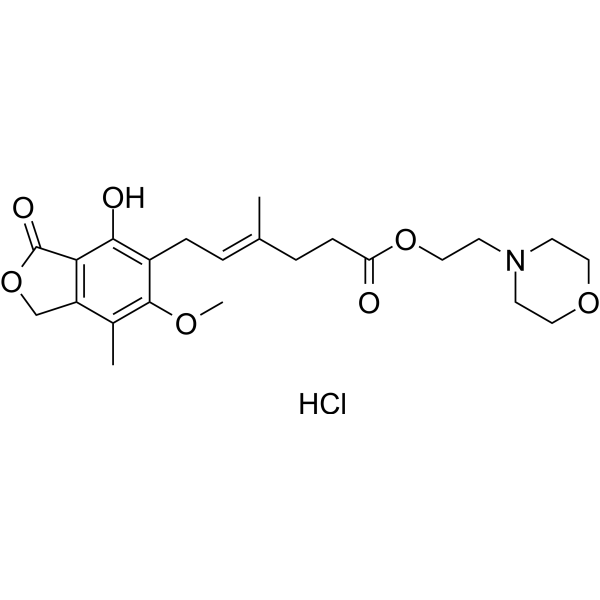
Mycophenolate mofetil (RS 61443; TM-MMF) hydrochloride is an orally active antimetabolic immunosuppressant with antiproliferative and anti-inflammatory properties. Mycophenolate mofetil hydrochloride significantly inhibits the production of B, T lymphocytes and the proliferation of smooth muscle cells by selectively blocking the de novo purine synthesis pathway. Mycophenolate mofetil hydrochloride effectively reduces adventitial inflammation, medial necrosis and intimal thickening in rat aortic allografts, and decreases the number of lymphocytes expressing the IL-2 receptor, thereby delaying xenograft rejection. Mycophenolate mofetil hydrochloride shows certain toxicity in a hamster-to-rat limb xenotransplantation model when used in combination with FK506 (HY-13756). Mycophenolate mofetil hydrochloride is widely used in studies related to allograft arteriosclerosis (chronic rejection).
For research use only. We do not sell to patients.
- Purity : 99.82%
- CAS No.: 116680-01-4
- Formula: C23H32ClNO7
- Molecular Weight:469.96
-
Storage:
4°C, protect from light, stored under nitrogen
* In solvent : -80°C, 6 months; -20°C, 1 month (protect from light, stored under nitrogen)

To place orders, for customer services and technical support, please contact: MedChemExpress USA
Tel: 609-228-6898 E-mail: [email protected] [email protected]


-
 Biological Activity
-
Chemical Information
-
Solvent & Solubility
- Purity & Documentation
- References
-
 Help & FAQs


Publications Citing Use of MedChemExpress (MCE) Mycophenolate mofetil hydrochloride
More- J Control Release. 2020 Dec 10:328:237-250. [Abstract]
- Cell Death Dis. 2026 Mar 23;17(1):347. [Abstract]
- J Transl Med. 2024 Feb 3;22(1):133. [Abstract]
- Hepatobiliary Surg Nutr. 2023 Dec 1;12(6):835-853. [Abstract]
- Cell Rep. 2026 Jun 2;45(6):117490. [Abstract]
- J Ethnopharmacol. 2022 Mar 1:285:114918. [Abstract]
- Life Sci. 2026 Mar 15:389:124236. [Abstract]
- Biol Proced Online. 2025 Jun 16;27(1):21. [Abstract]
- Virol Sin. 2026 Jul 23:S1995-820X(26)00122-7.
- J Cell Mol Med. 2021 Apr;25(7):3511-3523. [Abstract]
- PLoS Negl Trop Dis. 2019 Aug 20;13(8):e0007681. [Abstract]
- Exp Cell Res. 2020 Aug 1;393(1):112054. [Abstract]
- bioRxiv. 2025 Sep 21.
- Biomed Pharmacother. 2019 Oct:118:109305. [Abstract]
 Customer Validation & Images

-
Flow Cytometry
-
Cell Proliferation/Viability Assay
-
Cell Imaging/Staining
-
Bio/Physico-chemical Assay
-
Cell Proliferation/Viability Assay


Biological Activity
Description
IC50 & Target
|
IL-2 |
In Vitro
Mycophenolate mofetil hydrochloride (0-10 μg/mL; 1-3 d) significantly inhibits the in vitro proliferation of primary DA rat aortic smooth muscle cells[1].
MedChemExpress (MCE) has not independently confirmed the accuracy of these methods. They are for reference only.
-
Cell Line:DA rat aortic smooth muscle cells
-
Concentration:0-10 μg/mL
-
Incubation Time:1-3 days
-
Result:Significantly inhibited the in vitro proliferation of primary DA rat aortic smooth muscle cells.
This effect reversed after terminating incubation by medium change.
In Vivo
Mycophenolate mofetil hydrochloride (40 mg/kg/day; intraperitoneal injection; daily; 14 days post-injury) reduces intimal thickening and cell density in rats after carotid artery endothelial denudation, but its effect is not statistically significant[1].
Mycophenolate mofetil hydrochloride (30 mg/kg/day; intragastric administration; once daily for 14 consecutive days) significantly delays the rejection response of hamster-to-rat limb xenotransplantation, with an average rejection time of 10.0 days[2].
MedChemExpress (MCE) has not independently confirmed the accuracy of these methods. They are for reference only.
-
Animal Model:Lewis rats (recipient); Golden Syrian hamsters (donor)[2]
-
Dosage:30 mg/kg/day
-
Administration:i.g.; daily; 14 days (starting postoperative day 1)
-
Result:Increased mean rejection time to 10.0 days.
Achieved a 60% survival rate.
Showed histologic grading of skin biopsies with 1 sample no rejection (R0), 3 samples lymphocytic infiltration (R1), 1 sample lymphocytic and neutrophilic infiltration (R2).
Showed histologic grading of muscle biopsies with 1 sample lymphocytic and neutrophilic infiltration (R2), 6 samples mixed cell infiltration (R3).


Chemical Information
-
CAS No. 116680-01-4
-
Appearance Solid
-
Molecular Weight 469.96
-
Formula C23H32ClNO7
-
Color White to off-white
-
SMILES
O=C(OCCN1CCOCC1)CC/C(C)=C/CC2=C(O)C3=C(COC3=O)C(C)=C2OC.Cl
-
Synonyms
RS 61443 hydrochloride; TM-MMF hydrochloride
-
Structure Classification
-
Initial Source
-
Shipping
Room temperature in continental US; may vary elsewhere.
-
Storage
4°C, protect from light, stored under nitrogen
* In solvent : -80°C, 6 months; -20°C, 1 month (protect from light, stored under nitrogen)


Publications (14)
-
Journal Impact Factor
-
Most Recent
-
J Control Release
Target-oriented delivery of self-assembled immunosuppressant cocktails prolongs allogeneic orthotopic liver transplant survival. [Abstract]2020 Dec 10:328:237-250. PMID: 32866593 -
Cell Death Dis
HNF4α-HKDC1 axis orchestrates a metabolic rewiring to promote migration and metastasis in advanced gastric cancer. [Abstract]2026 Mar 23;17(1):347. PMID: 41866549 -
J Transl Med
Wnt/β-catenin signalling activates IMPDH2-mediated purine metabolism to facilitate oxaliplatin resistance by inhibiting caspase-dependent apoptosis in colorectal cancer. [Abstract]2024 Feb 3;22(1):133. PMID: 38310229 -
Hepatobiliary Surg Nutr
Influence of immunosuppressive drugs on natural killer cells in therapeutic drug exposure in liver transplantation. [Abstract]2023 Dec 1;12(6):835-853. PMID: 38115918
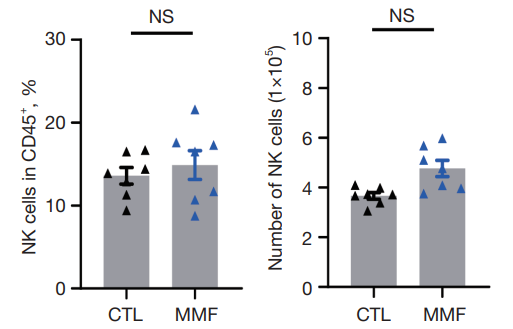
Mycophenolate mofetil hydrochloride purchased from MedChemExpress. Usage Cited in: Hepatobiliary Surg Nutr. 2023 Dec 1;12(6):835-853. [Abstract]
To investigate the effects of immunosuppressants on PBMCs, peripheral blood mononuclear cells from healthy volunteers were exposed to Mycophenolate Mofetil (15 µg/mL, 3 days).
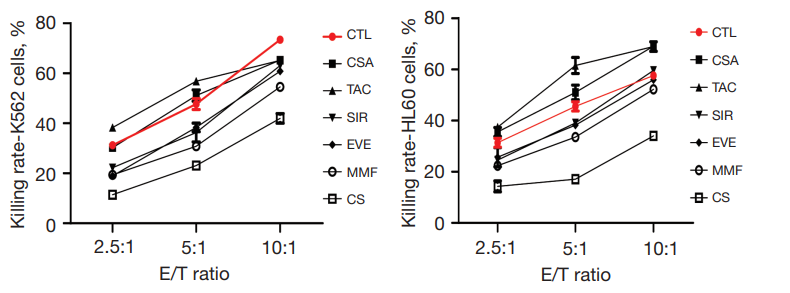
Mycophenolate mofetil hydrochloride purchased from MedChemExpress. Usage Cited in: Hepatobiliary Surg Nutr. 2023 Dec 1;12(6):835-853. [Abstract]
The cytolytic activity of NK cells on K562 and HL60 cells. NK cells sorted by MACS were exposed to TAC, CSA, Mycophenolate Mofetil (15 µg/mL, 3 days), EVE, SIR, and CS and cultured for 3 d as effector cells.
-
Cell Rep
HSPA6 maintains IMPDH2 phosphorylation to regulate GTP synthesis for driving radioresistance of glioblastoma stem cells. [Abstract]2026 Jun 2;45(6):117490. PMID: 42234559 -
J Ethnopharmacol
Immunosuppressive effect of Columbianadin on maturation, migration, allogenic T cell stimulation and phagocytosis capacity of TNF-α induced dendritic cells. [Abstract]2022 Mar 1:285:114918. PMID: 34919989 -
Life Sci
A protective role of ECSIT in chemotherapy-induced intestinal mucositis by maintaining Lgr5+ intestinal stem cells and gut homeostasis. [Abstract]2026 Mar 15:389:124236. PMID: 41611204 -
Biol Proced Online
Establishment of a mouse lung cancer organoid model and its applications for therapeutic screening. [Abstract]2025 Jun 16;27(1):21. PMID: 40524168 -
-
J Cell Mol Med
Nanoparticle formulation of mycophenolate mofetil achieves enhanced efficacy against hepatocellular carcinoma by targeting tumour-associated fibroblast. [Abstract]2021 Apr;25(7):3511-3523. PMID: 33713546
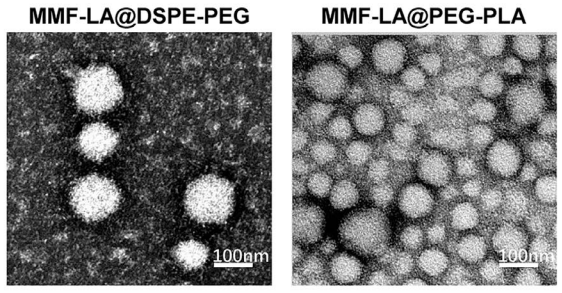
Mycophenolate mofetil hydrochloride purchased from MedChemExpress. Usage Cited in: J Cell Mol Med. 2021 Apr;25(7):3511-3523. [Abstract]
The morphology of Mycophenolate Mofetil-LA@DSPE-PEG and Mycophenolate Mofetil-LA@PEG-PLA characterized by transmission electron microscopy (TEM).
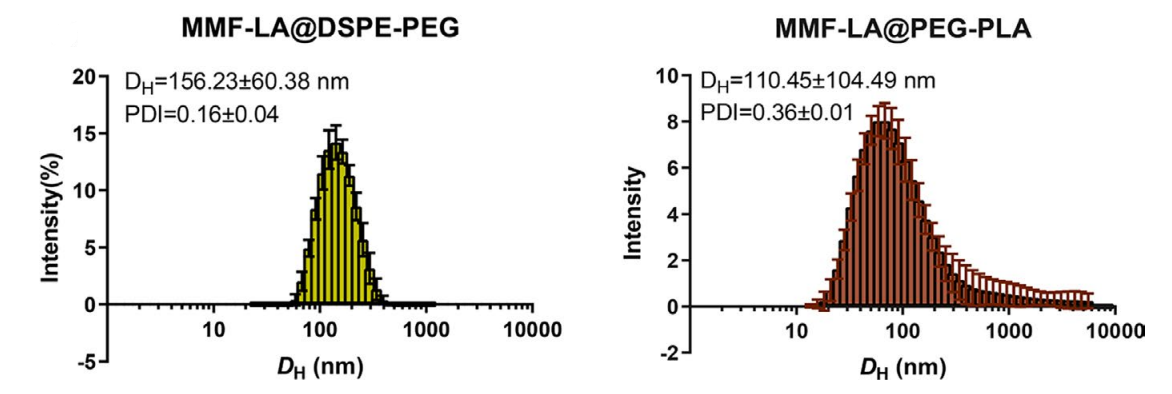
Mycophenolate mofetil hydrochloride purchased from MedChemExpress. Usage Cited in: J Cell Mol Med. 2021 Apr;25(7):3511-3523. [Abstract]
The diameters and zeta potentials of Mycophenolate Mofetil-LA@DSPE-PEG and Mycophenolate Mofetil-LA@PEG-PLA characterized by Dynamic light scattering (DLS).
Mycophenolate mofetil hydrochloride purchased from MedChemExpress. Usage Cited in: J Cell Mol Med. 2021 Apr;25(7):3511-3523. [Abstract]
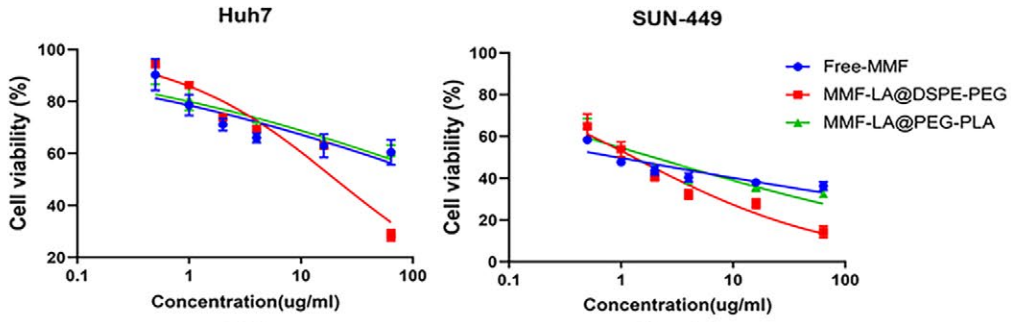
Cell viabilities of Huh7 cells, SUN‐449 cells, LM3 cells and Hep1‐6 cells treated with free Mycophenolate Mofetil, Mycophenolate Mofetil‐LA@DSPE‐PEG and Mycophenolate Mofetil‐LA@PEG‐PLA for 48 h.
Mycophenolate mofetil hydrochloride purchased from MedChemExpress. Usage Cited in: J Cell Mol Med. 2021 Apr;25(7):3511-3523. [Abstract]
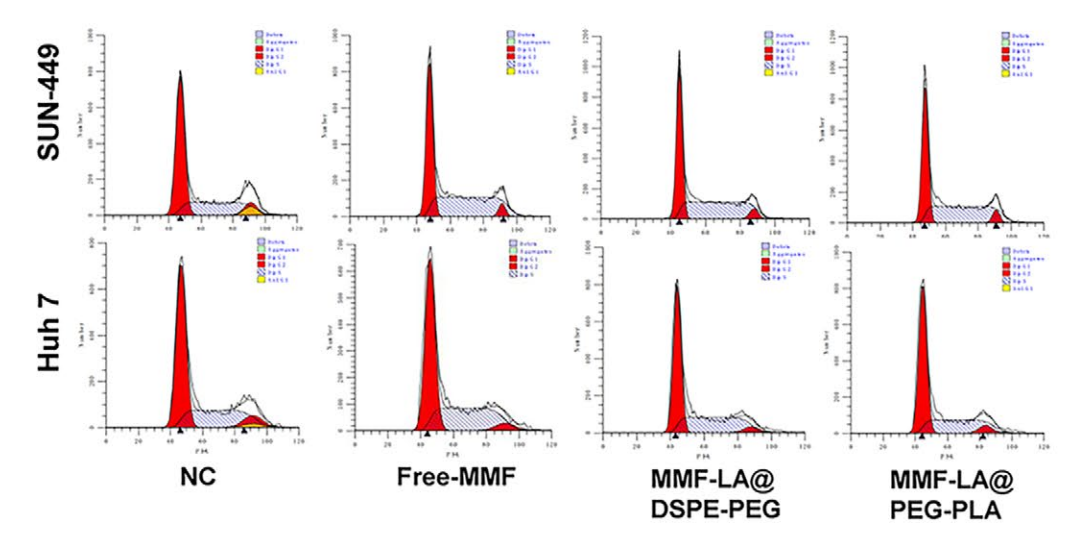
Cell cycles determined by flow cytometry. Cells were treated with free Mycophenolate Mofetil (2 µg/mL) or Mycophenolate Mofetil-LA NPs (at 2 µg/mL Mycophenolate Mofetil-equivalent dose) for 48 h.
Mycophenolate mofetil hydrochloride purchased from MedChemExpress. Usage Cited in: J Cell Mol Med. 2021 Apr;25(7):3511-3523. [Abstract]
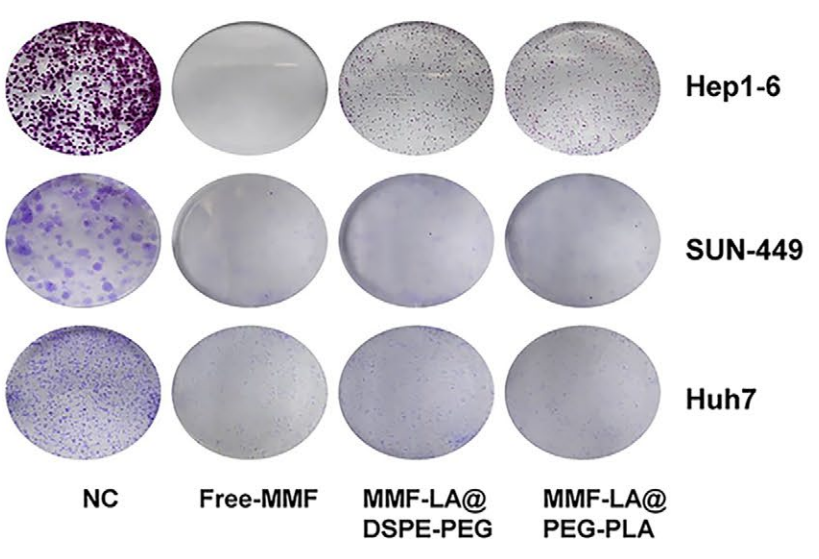
Colony Formation of Hep1-6 cells, SUN-449 cells and Huh7 cells. Hep1-6 cells, SUN-449 cells and Huh7 cells were treated with drugs at 0.5, 2 and 4 µg/mL (Mycophenolate Mofetil-equivalent concentration), respectively, for 96 h.
Mycophenolate mofetil hydrochloride purchased from MedChemExpress. Usage Cited in: J Cell Mol Med. 2021 Apr;25(7):3511-3523. [Abstract]
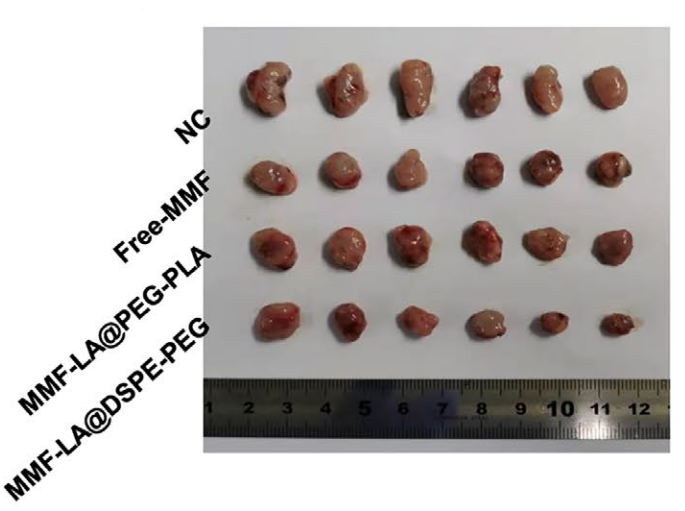
Images of Hep1‐6 tumours after treatment with drugs at 20 mg/kg (Mycophenolate Mofetil‐equivalent concentration). Mice were orally administrated with free MMF (20 mg/kg) or intravenously injected with MMF‐LA NPs (at 20 mg/kg MMF‐equivalent dose) every other day for four times.
-
PLoS Negl Trop Dis
Identification of anti-flaviviral drugs with mosquitocidal and anti-Zika virus activity in Aedes aegypti. [Abstract]2019 Aug 20;13(8):e0007681. PMID: 31430351 -
Exp Cell Res
Network-based analysis with primary cells reveals drug response landscape of acute myeloid leukemia. [Abstract]2020 Aug 1;393(1):112054. PMID: 32376287 -
-
Biomed Pharmacother
Antiviral effects of selected IMPDH and DHODH inhibitors against foot and mouth disease virus. [Abstract]2019 Oct:118:109305. PMID: 31545264


Solvent & Solubility
In Vitro:
DMSO : 200 mg/mL (425.57 mM; Need ultrasonic; Hygroscopic DMSO has a significant impact on the solubility of product, please use newly opened DMSO)
Please refer to the solubility information to select the appropriate solvent. Once prepared, please aliquot and store the solution to prevent product inactivation from repeated freeze-thaw cycles.
Storage method and period of stock solution: -80°C, 6 months; -20°C, 1 month (protect from light, stored under nitrogen). When stored at -80°C, please use it within 6 months. When stored at -20°C, please use it within 1 month.
Please refer to the solubility information to select the appropriate solvent. Once prepared, please aliquot and store the solution to prevent product inactivation from repeated freeze-thaw cycles.
Storage method and period of stock solution: -80°C, 6 months; -20°C, 1 month (protect from light, stored under nitrogen). When stored at -80°C, please use it within 6 months. When stored at -20°C, please use it within 1 month.
Concentration (start) × Volume (start) = Concentration (final) × Volume (final)
In Vivo:
Select the appropriate dissolution method based on your experimental animal and administration route.
- For the following dissolution methods, please ensure to first prepare a clear stock solution using an In Vitro approach and then sequentially add co-solvents:
- To ensure reliable experimental results, the clarified stock solution can be appropriately stored based on storage conditions. As for the working solution for In Vivo experiments, it is recommended to prepare freshly and use it on the same day.
- The percentages shown for the solvents indicate their volumetric ratio in the final prepared solution. If precipitation or phase separation occurs during preparation, heat and/or sonication can be used to aid dissolution.
Add each solvent one by one: 10% DMSO 40% PEG300 5% Tween-80 45% Saline
Solubility: ≥ 5 mg/mL (10.64 mM); Clear solution
This protocol yields a clear solution of ≥ 5 mg/mL (saturation unknown).
Taking 1 mL working solution as an example, add 100 μL DMSO stock solution (50.0 mg/mL) to 400 μL PEG300, and mix evenly; then add 50 μL Tween-80 and mix evenly; then add 450 μL Saline to adjust the volume to 1 mL.
Preparation of Saline: Dissolve 0.9 g sodium chloride in ddH₂O and dilute to 100 mL to obtain a clear Saline solution.
Add each solvent one by one: 10% DMSO 90% (20% SBE-β-CD in Saline)
Solubility: ≥ 5 mg/mL (10.64 mM); Clear solution
This protocol yields a clear solution of ≥ 5 mg/mL (saturation unknown).
Taking 1 mL working solution as an example, add 100 μL DMSO stock solution (50.0 mg/mL) to 900 μL 20% SBE-β-CD in Saline, and mix evenly.
Preparation of 20% SBE-β-CD in Saline (4°C, storage for one week): 2 g SBE-β-CD powder is dissolved in 10 mL Saline, completely dissolve until clear.
In Vivo Dissolution Calculator
Please enter the basic information of animal experiments:
-
-
-
-
Recommended: Prepare an additional quantity of animals to account for potential losses during experiments.
Please enter your animal formula composition:
-
%DMSO +
Recommended: Keep the proportion of DMSO in working solution below 2% if your animal is weak.
-
%+
-
+%Tween-80 + +
-
%Saline +
The co-solvents required include: DMSO, . All of co-solvents are available by MedChemExpress (MCE). , Tween 80. All of co-solvents are available by MedChemExpress (MCE).
Working solution concentration: 0.22 mg/mL
Method for preparing stock solution: mg drug dissolved in μL DMSO. Stock solution concentration: mg/mL. * In solvent : -80°C, 6 months; -20°C, 1 month (protect from light, stored under nitrogen)
1. Take μL DMSO stock solution;
2. Add μL .
μL , mix evenly;
3. Then add μL Tween 80, mix evenly;
4. Then add μL
Please ensure that the stock solution in the first step is dissolved to a clear state, and add co-solvents in sequence. You can use ultrasonic heating (ultrasonic cleaner, recommended frequency 20-40 kHz), vortexing, etc. to assist dissolution.


Purity & Documentation
-
Data Sheet (276 KB)
-
SDS (396 KB)
- English - EN (396 KB)
- Français - FR (396 KB)
- Deutsch - DE (396 KB)
- Norwegian - NO (396 KB)
- Español - ES (396 KB)
- Swedish - SV (396 KB)
- Italian - IT (396 KB)
- Korean - KR (396 KB)
- Portuguese - PT (396 KB)
-
Handling Instructions (2659 KB)
References
[1]. Räisänen-Sokolowski A, et al. Mycophenolate mofetil (MMF, RS-61443) inhibits inflammation and smooth muscle cell proliferation in rat aortic allografts. Transpl Immunol. 1995;3(4):342-351. [Content Brief]
[2]. Hebebrand D, et al. Limb xenotransplantation using FK506 and RS61443 immunosuppression. J Reconstr Microsurg. 1998;14(3):191-194. [Content Brief]


Complete Stock Solution Preparation Table
Please refer to the solubility information to select the appropriate solvent. Once prepared, please aliquot and store the solution to prevent product inactivation from repeated freeze-thaw cycles.
Storage method and period of stock solution: -80°C, 6 months; -20°C, 1 month (protect from light, stored under nitrogen). When stored at -80°C, please use it within 6 months. When stored at -20°C, please use it within 1 month.
| Optional Solvent | Concentration Solvent Mass | 1 mg | 5 mg | 10 mg | 25 mg |
|---|---|---|---|---|---|
| DMSO | 1 mM | 2.1278 mL | 10.6392 mL | 21.2784 mL | 53.1960 mL |
| 5 mM | 0.4256 mL | 2.1278 mL | 4.2557 mL | 10.6392 mL | |
| 10 mM | 0.2128 mL | 1.0639 mL | 2.1278 mL | 5.3196 mL | |
| 15 mM | 0.1419 mL | 0.7093 mL | 1.4186 mL | 3.5464 mL | |
| 20 mM | 0.1064 mL | 0.5320 mL | 1.0639 mL | 2.6598 mL | |
| 25 mM | 0.0851 mL | 0.4256 mL | 0.8511 mL | 2.1278 mL | |
| 30 mM | 0.0709 mL | 0.3546 mL | 0.7093 mL | 1.7732 mL | |
| 40 mM | 0.0532 mL | 0.2660 mL | 0.5320 mL | 1.3299 mL | |
| 50 mM | 0.0426 mL | 0.2128 mL | 0.4256 mL | 1.0639 mL | |
| 60 mM | 0.0355 mL | 0.1773 mL | 0.3546 mL | 0.8866 mL | |
| 80 mM | 0.0266 mL | 0.1330 mL | 0.2660 mL | 0.6650 mL | |
| 100 mM | 0.0213 mL | 0.1064 mL | 0.2128 mL | 0.5320 mL |


Mycophenolate mofetil hydrochloride Related Classifications
HY-B0199A Related Classifications
 Powered by Bioz
Keywords
- Mycophenolate mofetil
- 116680-01-4
- RS 61443
- TM-MMF
- RS61443
- RS-61443
- Interleukin Related
- B lymphocytes
- rat aortic allografts
- natural antibodies
- hamster-to-rat vascularized hindlimb xenograft
- inflammatory cells
- interleukin-2 receptor
- allograft arteriosclerosis
- T lymphocytes
- smooth muscle cells
- smooth muscle α-actin
- Inhibitor
- inhibitor
- inhibit