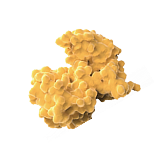
Anti-HA Magnetic Beads
Based on 179 publication(s) in Google Scholar
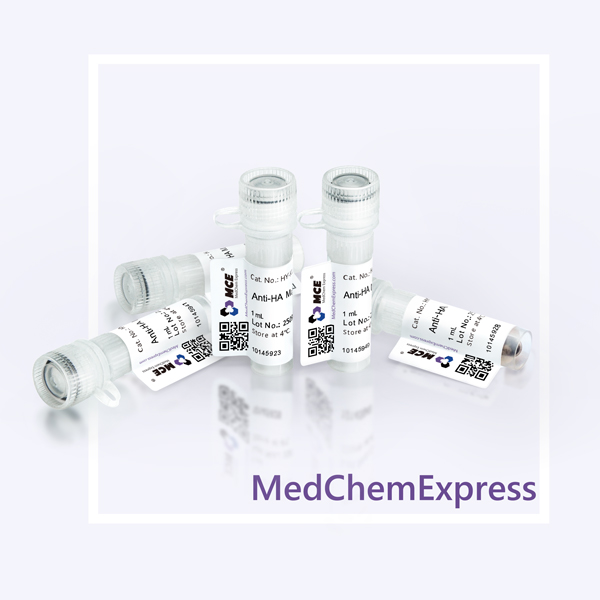
MCE Anti-HA Magnetic Beads are used for immunoprecipitation (IP) of specific HA-tagged proteins expressed in bacterial and mammalian cells and in vitro expression systems.The 1 mL volume is defined as the base specification. All larger sizes correspond to incremental volumes of this base.
-
Storage :
4°C, 2 years. Do not centrifuge, dry or freeze the magnetic beads.

To place orders, for customer services and technical support, please contact: MedChemExpress USA
Tel: 609-228-6898 E-mail: [email protected] [email protected]



-
HY-K0207
Anti-Flag Magnetic Beads -
HY-K0202
Protein A/G Magnetic Beads -
HY-K0206
Anti-c-Myc Magnetic Beads -
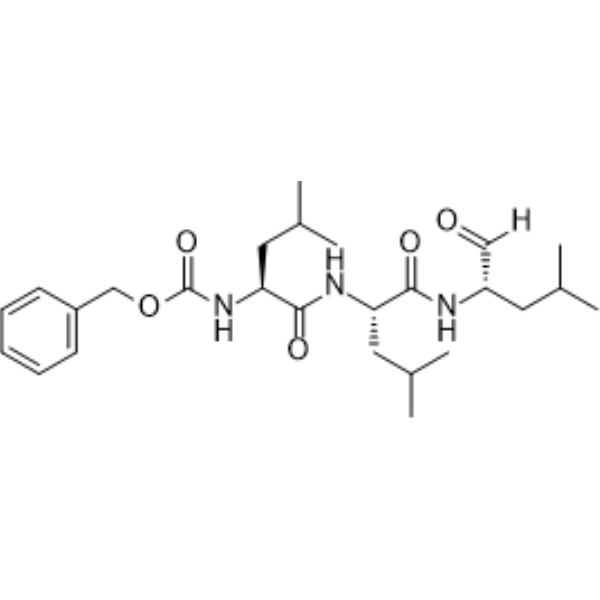
HY-13259
MG-132 -
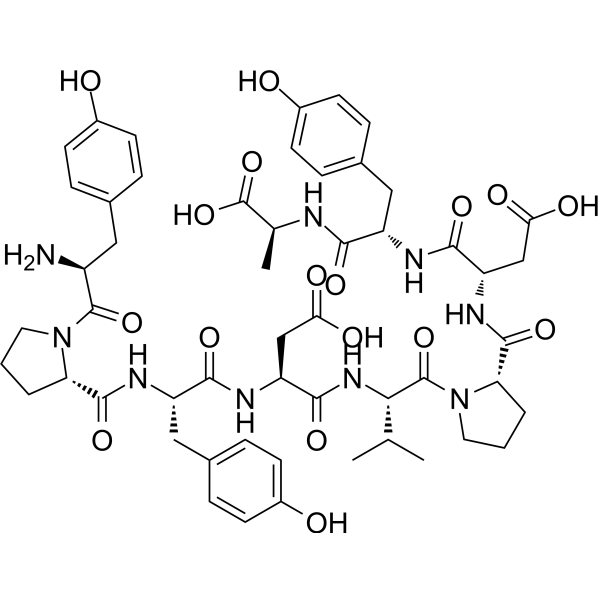
HY-P0239
HA Peptide -
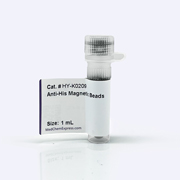
HY-K0209
Anti-His Magnetic Beads -

HY-K0010
Protease Inhibitor Cocktail (EDTA-Free, 100× in DMSO) -
HY-K0208
Streptavidin Magnetic Beads -
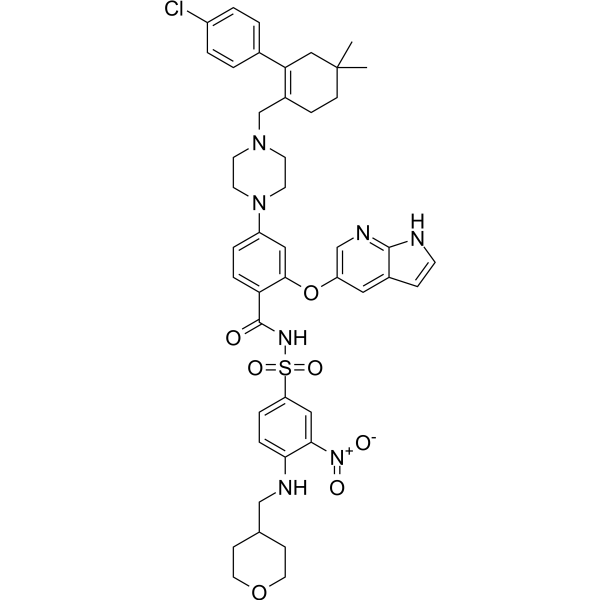
HY-15531
Venetoclax -

HY-Y0320
Dimethyl sulfoxide, meets analytical specification of Ch.P. -
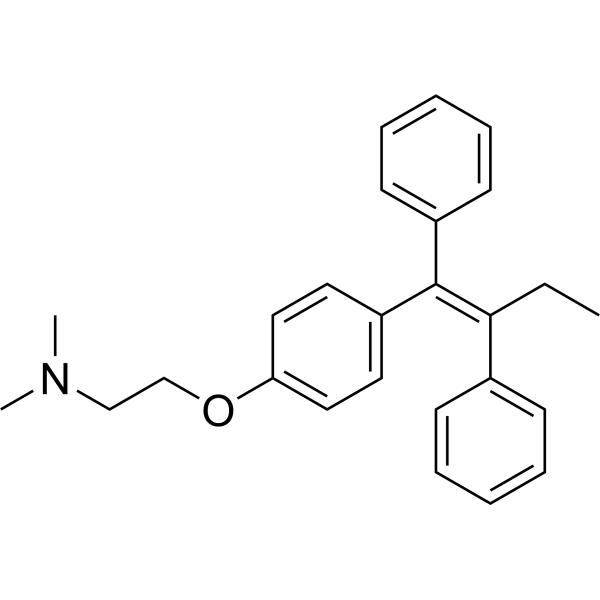
HY-13757A
Tamoxifen -
HY-15371
Forskolin


Description & Advantages
Anti-HA magnetic beads are based on amino magnetic beads, with 200 nm particle size, covalently coupling with high quality mouse IgG3a monoclonal antibody that recognizes the HA-epitope tag (YPYDVPDYA) derived from the human influenza hemagglutinin (HA) protein.
1. During immunoprecipitation, only a small amount of magnetic beads are needed.
2. Convenient and time saving.
3. Low non-specific binding.
4. Minimal sample loss.
5. Protein binding capacity up to 0.4 mg/mL.
6. Stable, one bottle solution.


Protocol
1. Preparation of Magnetic Beads
1.1 Resuspend the Magnetic Beads in the vial (tilt and rotate for 2 minutes or gently pipette for 10 times, do not vortex). Transfer 10 μL of Anti-HA Magnetic Beads suspension into a new tube.
1.2 Add 500 μL of wash buffer to the beads and gently pipette to mix. Place the tube into a magnetic stand (MCE Cat. No.: HY-K0200) to collect the beads against the side of the tube. Remove and discard the supernatant. Repeat this step for 2 times.
2. Protein Binding
2.1 Add 500 μL of cell lysate (the sample containing HA-tagged protein) to the washed beads. For Ag binding, incubate for 2 hours at room temperature or overnight at 4°C while gently rotating the tube.
2.2 Place the tube into a magnetic stand to collect the beads against the side of the tube. Remove and discard the supernatant.
NOTE: Occasional aggregation of magnetic beads during the binding process doesn't affect experimental results.
3. Washing
Add 500 μL of wash buffer to the Magbeads-Ag complex and mix gently. Place the tube into a magnetic stand to collect the beads against the side of the tube. Remove and discard the supernatant. Repeat this step for 4 times.
4. Elution & Detection
Three elution methods are recommended according to protein characteristics or further usage:
1) Elution with sample buffer for gel electrophoresis and immuoblotting. Add 50 μL of 1× SDS-PAGE loading buffer to each tube and boil for 5 minutes. Cool and place the tube into a magnetic stand to collect the beads and transfer the supernatant to a new tube. Keep the supernatant containing the target antigen for SDS-PAGE analysis.
2) Elution with Elution Buffer A under acidic condition. Add 50 μL of Elution Buffer A to each tube. Incubate with gentle shaking or on a rotator for 10 minutes at room temperature. Place the tube into a magnetic stand to collect the beads and transfer the supernatant to a new tube. Adding 25 μL of Neutralization Buffer for each 50 μL of eluate to neutralize the low pH, which may help preserve bioactivity of target protein.
3) Elution with Elution Buffer B under native condition. Add 3-5 (v/v) volume of Elution Buffer B to each tube. Incubate with gentle shaking or on a rotator for 1 hour at room temperature or 2 hours at 4oC. Place the tube into a magnetic stand to collect the beads and transfer the supernatant to a new tube. For immediate use, store the eluates at 4°C, or store at -20°C for long term storage.


Publications
-
Journal Impact Factor
-
Most Recent
-
Signal Transduct Target TherInteraction between CDC6 and Tmod3 accelerates resistance to paclitaxel through focal adhesion assembly. [Abstract]2025 Dec 4;10(1):395. PMID: 41339304
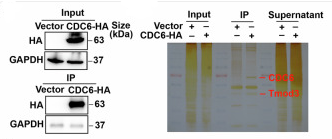
Anti-HA Magnetic Beads purchased from MedChemExpress. Usage Cited in: Signal Transduct Target Ther. 2025 Dec 4;10(1):395. [Abstract]
HEK293T cells were transfected with the CDC6-HA plasmid and lysed with western-IP lysis buffer. Anti-HA magnetic beads were incubated with total cell lysates and conjugated overnight in a rotating shaker. To remove the uncombined proteins, the beads were washed sufficiently with cell lysis buffer the next day. Potential proteins that may interact with CDC6 were bound to magnetic beads and boiled for 10 min. Then, the beads were removed via a magnetic separation rack. The samples were subjected to SDS-PAGE and stained with a Fast Silver Stain Kit.
-
Signal Transduct Target TherDDX39B K63-linked ubiquitination mediated by TRIM28 promotes NSCLC metastasis by enhancing ECAD lysosomal degradation. [Abstract]2025 Jul 16;10(1):221. PMID: 40664668
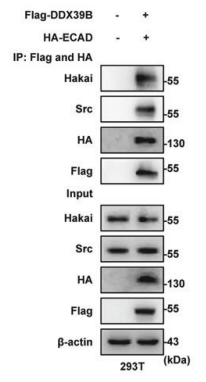
Anti-HA Magnetic Beads purchased from MedChemExpress. Usage Cited in: Signal Transduct Target Ther. 2025 Jul 16;10(1):221. [Abstract]
293T cells were co-transfected with Flag-DDX39B and HA-ECAD plasmids, and the lysates were processed for tandem affinity purification by using anti-Flag and anti-HA magnetic beads. HA-ub-K48 or HA-ub-K63 protein were purified from 293T cells by immobilization with anti-HA magnetic beads (HY-K0201) and eluted with HA peptides (HY-P0239) in TBS buffer.
-
Cell ResThe AHCY-adenosine complex rewires mRNA methylation to enhance fatty acid biosynthesis and tumorigenesis. [Abstract]2026 Feb;36(2):152-172. PMID: 41549122
-
Cell ResA lncRNA from an inflammatory bowel disease risk locus maintains intestinal host-commensal homeostasis. [Abstract]2023 May;33(5):372-388. PMID: 37055591
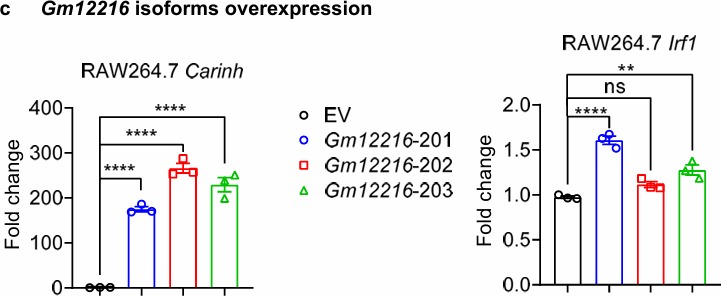
Anti-HA Magnetic Beads purchased from MedChemExpress. Usage Cited in: Cell Res. 2023 May;33(5):372-388. [Abstract]
Cell lysates were immunoprecipitated with anti-HA Magnetic Beads 6 h at 4 °C with gentle rotation. Beads were pelleted by magnetic field, the supernatant was removed, and beads were resuspended in 500 μL wash buffer (50 mM Tris, pH 7.4, 150 mM NaCl, 1 mM MgCl2, 0.05% NP40) and repeated for a total of five times of wash. After elution, co-immunoprecipitated RNA was extracted and analyzed by real-time PCR for the U1 and mCarinh. qPCR analyses of Carinh and Irf1 mRNA expression in RAW264.7 cel
-
Cell Mol ImmunolFXYD3 enhances IL-17A signaling to promote psoriasis by competitively binding TRAF3 in keratinocytes. [Abstract]2023 Mar;20(3):292-304. PMID: 36693922
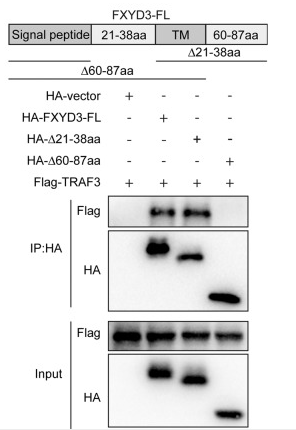
Anti-HA Magnetic Beads purchased from MedChemExpress. Usage Cited in: Cell Mol Immunol. 2023 Mar;20(3):292-304. [Abstract]
FXYD3 deletion mutants are shown in the top panel. HA-vector, HA-tagged FXYD3, HA-∆21-38aa or HA-∆60-87aa mutants were coexpressed with Flag-tagged TRAF3 in HEK293T cells. Whole-cell lysates were immunoprecipitated with anti-HA and then immunoblotted with anti-HA or anti-Flag.
-
Cell Host MicrobeUBE2O-mediated monoubiquitination licenses NLRP6 inflammasome activation in the intestine. [Abstract]2026 Jan 14;34(1):86-102.e8. PMID: 41500221
-
Cell Host Microbe2023 Dec 13;31(12):2051-2066.e7. PMID: 37977141
-
Sci BullA germline-specific vesicular structure licenses mRNA activation during spermiogenesis and is hijacked in gastric cancer. [Abstract]2026 Mar 2:S2095-9273(26)00213-6. PMID: 41925442
-
Nat Commun2025 Dec 12;16(1):11092. PMID: 41387436
-
Nat CommunDeficiency of ASGR1 promotes liver injury by increasing GP73-mediated hepatic endoplasmic reticulum stress. [Abstract]2024 Mar 8;15(1):1908. PMID: 38459023
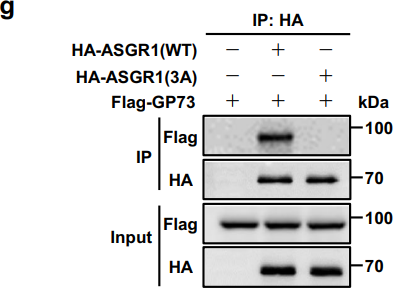
Anti-HA Magnetic Beads purchased from MedChemExpress. Usage Cited in: Nat Commun. 2024 Mar 8;15(1):1908. [Abstract]
Co-IP assays assessing the interaction of ASGR1(WT) or mutant ASGR1 (3A) with GP73 in HepG2 cells. ASGR1 (3 A), the three residues Gln240, Trp244 and Glu253 of ASGR1 were mutated to alanine, n = 3 biologically independent samples.
-
Nat Commun2022 Oct 12;13(1):6004. PMID: 36224181
-
J Adv ResLong noncoding RNA AC007637.1 inhibits tumorigenesis by regulating the Trim25/PCNA axis in colorectal cancer. [Abstract]2026 Apr 6:S2090-1232(26)00306-1. PMID: 41951040
-
Mol CellCPT1A induction following epigenetic perturbation promotes MAVS palmitoylation and activation to potentiate antitumor immunity. [Abstract]2023 Dec 7;83(23):4370-4385.e9. PMID: 38016475
-
Nucleic Acids Res2022 Nov 11;50(20):11619-11634. PMID: 36399511
-
Nucleic Acids Res2021 Nov 18;49(20):11900-11919. PMID: 34669960
-
Nat Plants2021 Feb;7(2):209-218. PMID: 33574575
-
Sci AdvFeaSion decodes the regulatory landscape and functional diversity of RNA polymerase II CTD phosphorylation. [Abstract]2025 Nov 28;11(48):eadz2345. PMID: 41313762
-
Plant CellNatural variation in the ORL4 promoter regulates rice leaf rolling to modulate leaf architecture and yield. [Abstract]2026 Apr 3;38(4):koag086. PMID: 41871429
-
Cell Death Dis2025 Aug 28;16(1):655. PMID: 40877231
-
Cell Death DisDRAM1 plays a tumor suppressor role in NSCLC cells by promoting lysosomal degradation of EGFR. [Abstract]2020 Sep 17;11(9):768. PMID: 32943616
-
Cancer Lett2026 Feb 28:639:218221. PMID: 41412211
-
Cancer Lett2025 Jul 28:623:217726. PMID: 40250791
-
Int J Biol Sci2025 Jan 1;21(2):758-771. PMID: 39781460
-
Cell Death Discov2025 Aug 23;11(1):400. PMID: 40849295
-
Hortic ResMAPK20-mediated ATG6 phosphorylation is critical for pollen development in Solanum lycopersicum L. [Abstract]2024 Mar 6;11(5):uhae069. PMID: 38725462
-
Hortic ResTomato LysM receptor kinase 4 mediates chitin-elicited fungal resistance in both leaves and fruit. [Abstract]2023 Apr 25;10(6):uhad082. PMID: 37323235
-
OncogeneUSP33 facilitates the ovarian cancer progression via deubiquitinating and stabilizing CBX2. [Abstract]2024 Oct;43(43):3170-3183. PMID: 39256572
-
OncogeneGSK3β and UCHL3 govern RIPK4 homeostasis via deubiquitination to enhance tumor metastasis in ovarian cancer. [Abstract]2024 Jun;43(25):1885-1899. PMID: 38664501
-
New PhytolThermo-sensitive tasiRNA biogenesis integrates temperature signals to maintain spikelet patterning in rice. [Abstract]2026 Jun;250(6):3812-3827. PMID: 42032902
-
Int J Biol MacromolDeubiquitinase USP45 stabilizes RTCB and DDX1, promoting tumorigenesis and chemoresistance. [Abstract]2025 Dec 28;339(Pt 2):149970. PMID: 41468936
-
New PhytolThe OsFBX388-OsFIP1-OsCatA module regulates ROS homeostasis and disease resistance in rice. [Abstract]2025 Sep;247(6):2871-2884. PMID: 40650454
-
JHEP RepJMJD2D stabilises and cooperates with HBx protein to promote HBV transcription and replication. [Abstract]2023 Jul 15;5(10):100849. PMID: 37701334
-
EMBO JNuclear receptor E75/NR1D2 promotes tumor malignant transformation by integrating Hippo and Notch pathways. [Abstract]2024 Dec;43(24):6336-6363. PMID: 39516282
-
Plant Physiol2025 Oct 31;199(3):kiaf526. PMID: 41108073
-
Free Radic Biol MedSIRT5 desuccinylates ME2 to suppress oxidative stress in bovine mammary epithelial cells. [Abstract]2026 Jun 19:254:243-252. PMID: 42320846
-
EMBO Mol MedMacrophage-induced enteric neurodegeneration leads to motility impairment during gut inflammation. [Abstract]2025 Feb;17(2):301-335. PMID: 39762650
-
Cell RepSmall-molecule enhancement of METTL3 S-palmitoylation as a therapeutic strategy for osteoarthritis. [Abstract]2026 Feb 18;45(3):116993. PMID: 41719123
-
Cell RepGoblet cell-expressed microprotein FXYD3 determines gut homeostasis by maintaining mucus barrier integrity. [Abstract]2025 Nov 25;44(11):116502. PMID: 41187059
-
Cell RepInhibiting UPF1 methylation enhances tumor immunotherapy sensitivity by reducing nonsense-mediated mRNA decay. [Abstract]2025 Jun 25;44(7):115919. PMID: 40570371
-
Emerg Microbes InfectInhibition of RAN attenuates influenza a virus replication and nucleoprotein nuclear export. [Abstract]2024 Dec;13(1):2387910. PMID: 39087696
-
Commun Chem2023 Jul 18;6(1):153. PMID: 37463995
-
EMBO RepTargeting the transcription factor YY1 is synthetic lethal with loss of the histone demethylase KDM5C. [Abstract]2024 Dec;25(12):5408-5428. PMID: 39433896
-
BMC Plant Biol14-3-3 proteins inhibit autophagy by regulating SINAT-mediated proteolysis of ATG6 in Arabidopsis. [Abstract]2024 Nov 29;24(1):1148. PMID: 39609744
-
Int J Mol Sci2022 Nov 20;23(22):14439. PMID: 36430916
-
mBioPRRSV promotes bacterial infection by remodeling actin cytoskeleton and cell membrane proteins. [Abstract]2025 Oct 8;16(10):e0194525. PMID: 40937850
-
J PatholThrombospondin-1 binds to integrin β3 to inhibit vascular calcification through suppression of NF-κB pathway. [Abstract]2025 May;266(1):109-123. PMID: 40084742
-
PLoS PathogEnP1 exploits H2Aub-dependent epigenetic reprogramming to promote microsporidia proliferation in host cells. [Abstract]2026 Jan 7;22(1):e1013853. PMID: 41499632
-
Virol SinMutual antagonism of mouse-adaptation mutations in HA and PA proteins on H9N2 virus replication. [Abstract]2024 Feb;39(1):56-70. PMID: 37967718
-
J VirolNipah virus matrix protein promotes NF-κB activation by targeting multiple signaling modulators. [Abstract]2026 Jun 23;100(6):e0018526. PMID: 42165681
-
J VirolE3 ubiquitin ligase NEDD4 inhibits PEDV infection through ubiquitination and degradation of the viral primase NSP8. [Abstract]2026 Apr 21;100(4):e0215625. PMID: 41910270
-
J VirolGlycosylated NS3/NS3A protein of bluetongue virus facilitates efficient viral egress via lipid raft anchoring. [Abstract]2026 Mar 24;100(3):e0214425. PMID: 41705838
-
J VirolSeneca Valley virus 3C protease targets TRIM32 for cleavage to antagonize its antiviral effects. [Abstract]2025 Aug 12:e0059025. PMID: 40793792
-
BMC Cancer2025 May 1;25(1):816. PMID: 40312343
-
J Biol ChemSplicing factor hnRNPA1 regulates alternative splicing of LOXL2 to enhance the production of LOXL2Δ13. [Abstract]2024 Jul;300(7):107414. PMID: 38810697
-
J VirolPSMD12-Mediated M1 Ubiquitination of Influenza A Virus at K102 Regulates Viral Replication. [Abstract]2022 Aug 10;96(15):e0078622. PMID: 35861516
-
Microbiol Spectr2022 Feb 23;10(1):e0207321. PMID: 35044222
-
Physiol PlantOsPHI-2 Controls Rice Growth and Development Through OSH1-Dependent Transcriptional Repression. [Abstract]2026 Jan-Feb;178(1):e70739. PMID: 41549841
-
Front Oncol2021 May 18:11:654995. PMID: 34094948
-
Vet Microbiol2025 May:304:110441. PMID: 40112692
-
Thorac CancerSLC34A2 promotes cell proliferation by activating STX17-mediated autophagy in esophageal squamous cell carcinoma. [Abstract]2024 Jun;15(17):1369-1384. PMID: 38720472
-
Biochem Biophys Res CommunProteasome inhibition promotes mono-ubiquitination and nuclear translocation of mature (52 kDa) PINK1. [Abstract]2019 Sep 17;517(2):376-382. PMID: 31362890
-
bioRxivA bifunctional H/ACA snoRNP mediates both pseudouridylation and rRNA scaffolding during ribosome assembly. [Abstract]2026 Mar 21:2026.03.20.713187. PMID: 41889967
Storage
4°C, 2 years.
Do not centrifuge, dry or freeze the magnetic beads.


Components
| Components | HY-K0201-1 mL | HY-K0201-5 mL |
|---|---|---|
| Anti-HA Magnetic Beads | 1 mL | 1 mL×5 |


 Please enter the correct Lot Number