



PD-1/PD-L1
PD-1/Programmed death-ligand 1
Programmed death-1 (PD-1) is a cell surface receptor that functions as a T cell checkpoint and plays a central role in regulating T cell exhaustion. PD-1 is activated by the engagement of its ligands PDL-1 or PDL-2. PD-1 receptor delivers inhibitory checkpoint signals to activated T cells upon binding to its ligands PD-L1 and PD-L2 expressed on antigen-presenting cells and cancer cells, resulting in suppression of T-cell effector function and tumor immune evasion. Inhibiting the programmed cell death-1 (PD-1)/programmed cell death-ligand 1 (PD-L1) pathway is an attractive strategy for tumor immunotherapy.
PD-1 is expressed on activated T cells, B cells, monocytes, dendritic cells (DCs), regulatory T cells (Tregs), and natural killer T cells (NKT). It is a member of a family of immunoglobulin domain (Ig) co-receptors that modify the outcome of activation of the T cell receptor by an antigen-presenting cell (APC) or infected target cell. PD-L1 is widely and constitutively expressed on both hematopoietic and nonhematopoietic cells; e.g., naive T and B cells, vascular endothelial cells, and pancreatic islet cells, whereas PD-L2 is exclusively and inducibly expressed on professional APCs.
All Product Categories
-
PD-1/PD-L1 Inhibitors
(357)
View all products
-
PD-1/PD-L1 Agonists
(5)
View all products
-
PD-1/PD-L1 Antagonists
(11)
View all products
-
PD-1/PD-L1 Activators
(16)
View all products
-
PD-1/PD-L1 Modulators
(7)
View all products
-
PD-1/PD-L1 Inducers
(3)
View all products
-
PD-1/PD-L1 Degraders
(13)
View all products
-
PD-1/PD-L1 Control
(1)
View all products
-
PD-1/PD-L1 Substrates
(2)
View all products
-
PD-1/PD-L1 Ligands
(7)
View all products
-
PD-1/PD-L1 Related Products (472)
Related Products (472)

-
Antibodies (8)
-
Pembrolizumab
 0 ImagesSynonyms: MK-3475; LambrolizumabPembrolizumab (MK-3475) is a humanized IgG4 antibody inhibiting the programmed cell death 1 (PD-1) receptor, used in cancer immunotherapy.

-
Cilengitide
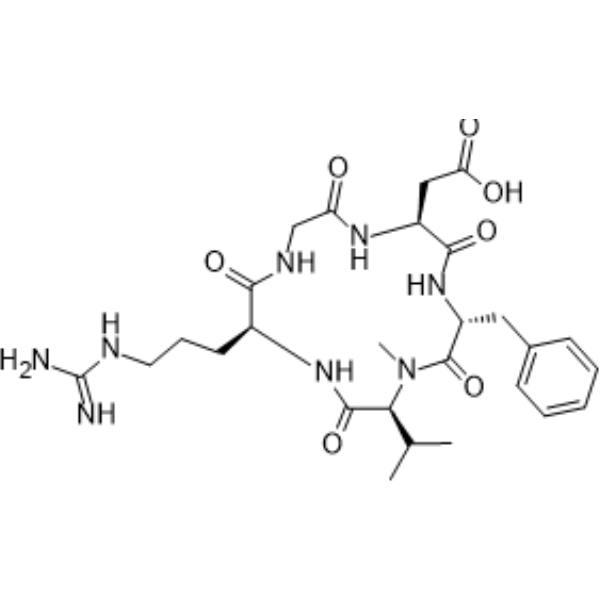 0 ImagesSynonyms: EMD 121974Cilengitide (EMD 121974) is an integrin (integrin) inhibitor with blood-brain barrier permeability, with IC50 values against human targets as follows: 0.61 nM for αvβ3, 8.4 nM for αvβ5, 14.9 nM for α5β1, 5400 nM for αIIbβ3, 2050 nM for αvβ6, 2350 nM for αvβ8. Cilengitide inhibits the binding of integrins to vitronectin, fibronectin, fibrinogen and LAP (TGF-β), and serves as an internal standard for solid-phase integrin binding assays. Cilengitide inhibits tumor cell viability, induces apoptosis, reduces the phosphorylation levels of STAT3, AKT and mTOR, downregulates the expression of PD-L1, inhibits cell viability and angiogenesis, regulates anti-tumor immune responses and slows tumor growth. Cilengitide can be used in research related to glioblastoma, melanoma, advanced solid tumors and refractory brain tumors.
-
Nivolumab
 0 ImagesSynonyms: BMS-936558; ONO-4538; MDX-1106Nivolumab is a programmed death receptor-1 (PD-1) blocking human IgG4 antibody to treat advanced (metastatic) non-small cell lung cancer.

-
Ivonescimab
 0 ImagesSynonyms: AK112Ivonescimab (AK112) is a PD-1/VEGF bispecific antibody. Ivonescimab competitively inhibiting PD-1/PD-L1 interaction, reversing the immunosuppression mediated by it, and blocks the binding of VEGF-A to VEGFR2, inhibiting tumour angiogenesis in the tumour microenvironment. Ivonescimab also has significantly anticancer activity against EGFR-mutated locally advanced or metastatic non-squamous non-small cell lung cancer (NSCL).
-
BMS-1
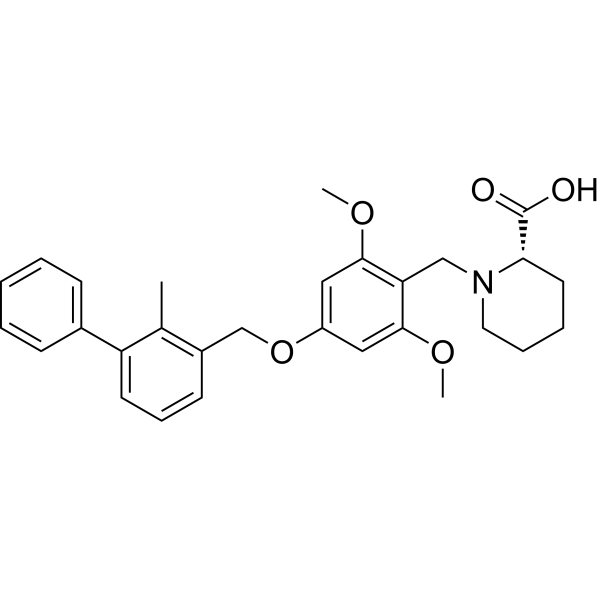 0 ImagesSynonyms: PD-1/PD-L1 inhibitor 1BMS-1 is an inhibitor of the PD-1/PD-L1 protein/protein interaction (IC50 between 6 and 100 nM).
-
BMS-202
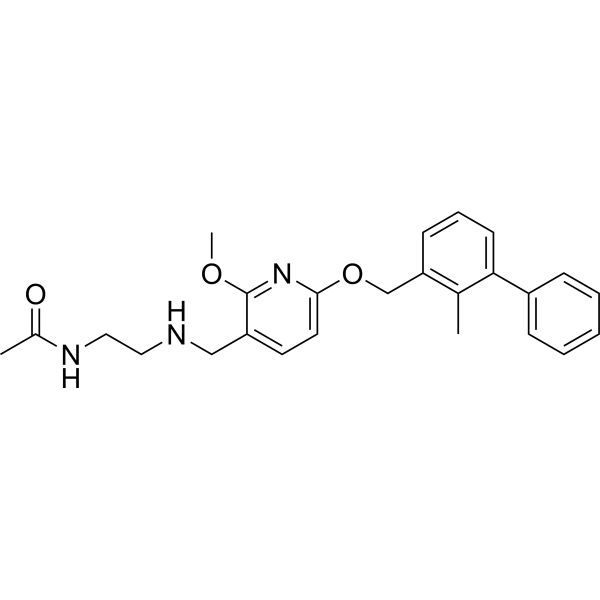 0 ImagesBMS-202 is a potent and nonpeptidic PD-1/PD-L1 complex inhibitor with an IC50 of 18 nM and a KD of 8 μM. BMS-202 binds to PD-L1 and blocks human PD-1/PD-L1 interaction. BMS-202 has antitumor activity.
-
Rosnilimab
 0 ImagesSynonyms: ANB030Rosnilimab (ANB030) is a PD-1 agonist IgG1 monoclonal antibody. Rosnilimab can inhibit T cell proliferation, the secretion of inflammatory cytokines, and reduce CD4 and CD8 T cells with high PD-1 expression. Rosnilimab can be used in the research of inflammatory diseases such as colitis and rheumatoid arthritis.
-
Tomivosertib
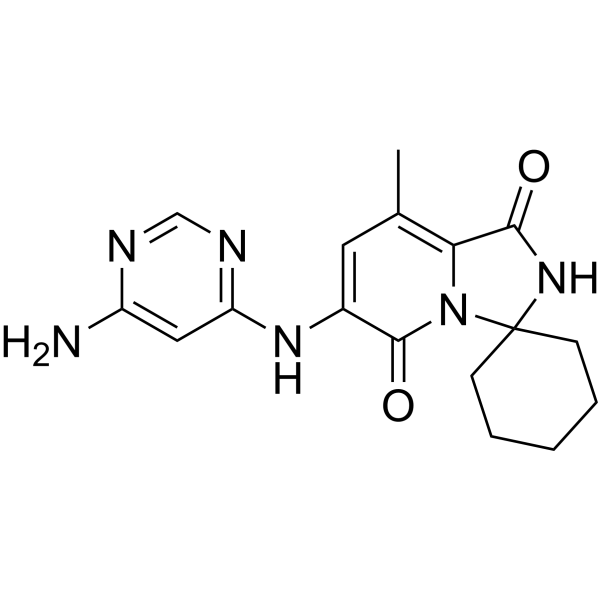 0 ImagesSynonyms: eFT508Tomivosertib (eFT508) is a potent, highly selective, and orally active MNK1 and MNK2 inhibitor, with IC50s of 1-2 nM against both isoforms. Tomivosertib (eFT508) treatment leads to a dose-dependent reduction in eIF4E phosphorylation at serine 209 (IC50=2-16 nM) in tumor cell lines. Tomivosertib (eFT508) also dramatically downregulates PD-L1 protein abundance.
-
Avelumab
 0 ImagesCat. No.: HY-108730CAS No.: 1537032-82-8Synonyms: Anti-Human PD-L1, Human Antibody; MSB 0010718C; MSB0010718C
-
Tislelizumab
 0 ImagesSynonyms: BGB-A317Tislelizumab is a monoclonal antibody that specifically binds to programmed cell death receptor 1 (PD-1), blocking its interaction with programmed death ligand 1 (PD-L1) and programmed death ligand 2 (PD-L2). Tislelizumab can reactivate immune cells such as T lymphocytes and enhance anti-tumor activity. Tislelizumab can be used for the research of a variety of tumors including typical Hodgkin's lymphoma, urothelial carcinoma, non-small cell lung cancer and hepatocellular carcinoma.
-
Visugromab
 0 ImagesSynonyms: CTL-002Visugromab (CTL-002) is a GDF-15 neutralizing IgG4 mAb. Visugromab has synergistic anticancer activity with the anti-PD1 antibody Nivolumab (HY-P9903) and can effectively act on PD-1/PD-L1 relapsed/refractory metastatic solid tumors. Recommend Isotype Controls: Human IgG4 (S228P) kappa, Isotype Control (HY-P99003).
-
Peresolimab
 0 ImagesSynonyms: LY-3462817Peresolimab is a humanized IgG1-κ antibody targeting to PD-1. Peresolimab potentially stimulates physiological immune inhibitory pathways to restore immune homeostasis. Peresolimab can be used in research of rheumatoid arthritis.
-
HLX43
 0 ImagesCat. No.: HY-177439Purity: 99.60%HLX43 is an antibody-drug conjugate (ADC) targeting PD-L1. HLX43 consists of a human monoclonal antibody anti-PD-L1 antibody Opucolimab (HY-P99785) with the drug-linker conjugate being DL-01 (HY-155870A). HLX43 exerts superior anticancer efficacy with safety profile in vivo. HLX43 can be used for non-small cell lung cancer (NSCLC), head and neck squamous cell carcinoma (HNSCC), esophageal squamous cell carcinoma (ESCC), melanoma (MEL), ovarian cancer (Ovc) research.
-
Sulindac
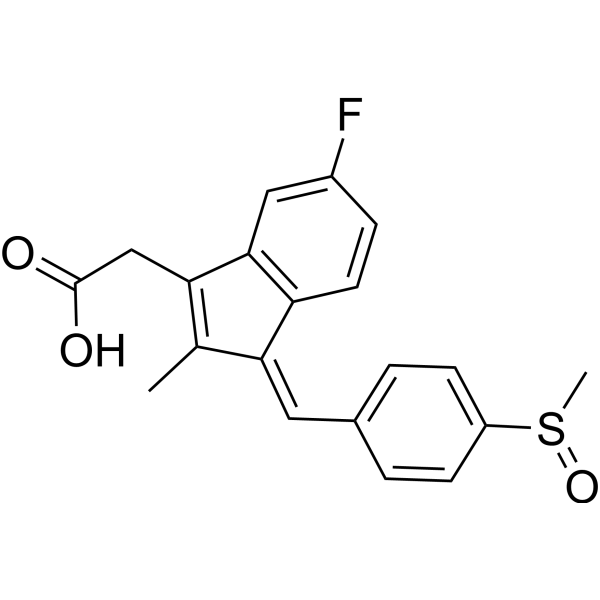 0 ImagesSynonyms: MK-231Sulindac (MK-231) is an orally active nonsteroidal anti-inflammatory agent. Sulindac also is an immunomodulatory agent. Sulindac can be used for the research of arthritis of the spine, gouty arthritis and kinds of cancer including colorectal cancer (CRC) and lung cancer.




