



형광 염료
-
 Strong Fluorescence Signal
-
 Multi-Disciplinary Applications
-
 High Fluorescence Specificity
Fluorescent dyes are substances that absorb light waves of a certain wavelength and then emit another wavelength greater than the absorbed light. By covalent binding or physical adsorption in the structure of the substance to be studied, the fluorescent properties are used to characterize, localize, and quantify the object to be labeled.
Fluorescent dyes have been used in many fields such as pharmacology, physiology, environmental science, and information science, as well as in functional studies of proteins and drug screening.
MedChemExpress (MCE) has 3000+ high quality fluorescent dye probes, covering many popular research fields, with high sensitivity, good stability and high fluorescence intensity to fully meet your experimental needs and escort your experiments.

Fluorescent Dye (3799)
-
Cell Staining Analysis (858)
Cell staining analysis dyes include organelle dyes, cell Function Analysis dyes, and ion fluorescent probes, which are important tools for helping to understand cellular physiological and pathological processes.
-
In Vivo Imaging (91)
Live imaging dyes are based on near-infrared fluorophores or luciferase substrates, allowing non-invasive, highly sensitive imaging of tissues, organs, and lesions.
-
Biological Conjugation (371)
Bioconjugate dyes connect fluorescent dyes to biomacromolecules such as proteins and antibodies through amino groups, thiol groups, and click chemistry.
-
Fluorogenic Substrate (218)
Fluorogenic Substrate are based on the principle of specific enzymatic reactions. By introducing groups on the fluorophore that can be recognized or cleaved by the enzyme, selective detection of the target enzyme activity is achieved.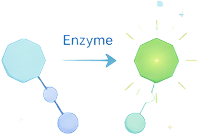
-
Labeling Chemistry (2105)
Labeling Chemistry dyes provide fluorescence labeling options with different functional groups and various protein labeling dyes.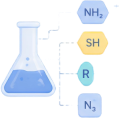
-
Biology Analysis (73)
Biological analysis dyes provide dyes for detecting bacteria and specific parts of bacteria, as well as dyes for plant research.
-
Histological Analysis (250)
Histological analysis dyes are used to visualize tissue sections at the morphological and molecular levels.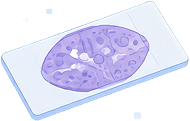
-
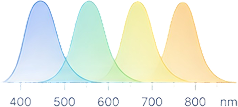
Fluorescence Wavelength ranges (614)
FluoroStock & Ready (151)
- Tissue and Cell Fixative (4% Paraformaldehyde, PFA)
- Glutaraldehyde Fixative (2.5%, For Electron Microscopy)
- Glutaraldehyde Fixative (4%, For Electron Microscopy)
- X-GAL (solution)
- Crystal Violet (solution)
- Frozen Section Embedding Medium
- Thioflavin T (solution)
- Methylene Blue Staining Solution (1%)
- Thionin Staining Solution (1%)
- India Ink