



Organ-Targeted Delivery
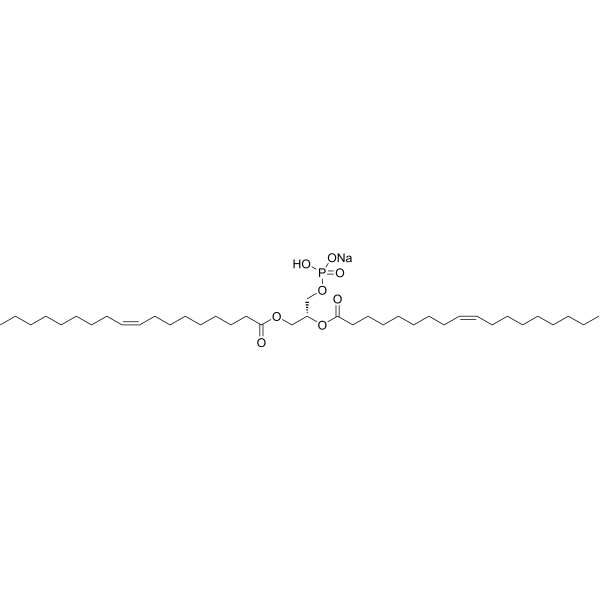
- Formula: C39H72NaO8P
- Molecular Weight: 722.95
1,2-Dioleoyl-sn-glycero-3-phosphate sodium salt (18:1 PA sodium salt) is an anionic lipid that can be used to prepare liposomes, micelles and artificial membranes.

- Formula: C41H77NO4
- Molecular Weight: 648.05
DODAP is a cationic lipid utilized as the lipid component in liposomes (pKa = 5.59 in TNS binding tests). DODAP is employed for encapsulating siRNA and delivering immunostimulated chemotherapeutic agents both in vitro and in vivo. DODAP holds great promise for research in vaccines and inflammation.

- Molecular Weight: 2000 (Average)
DSPE-PEG 2000-Mannose is a mannose-containing lipid. DSPE-PEG 2000-Mannose is used to prepare mannose-conjugated Liposome (Man-lipo) for siRNA delivery. Mannose-modified liposomes encapsulating IDO siRNA (Man-lipo-siIDO) preferentially knock down IDO expression in the draining lymph nodes and spleens of melanoma-bearing mice. Man-lipo-siIDO delays the onset time of melanoma and reduces tumor volume.
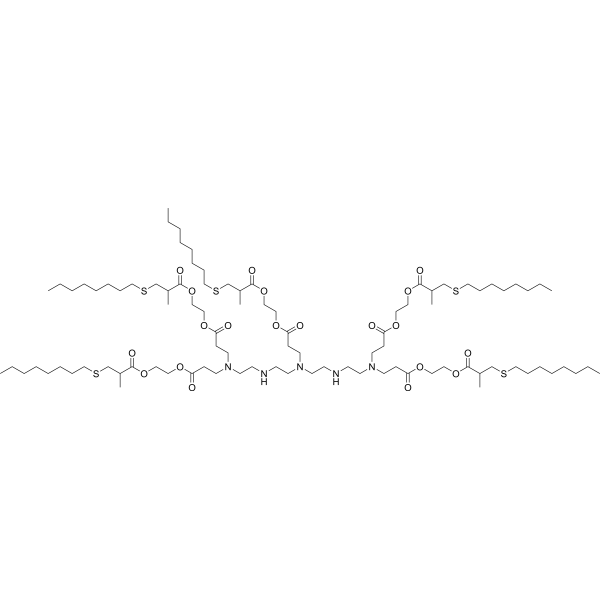
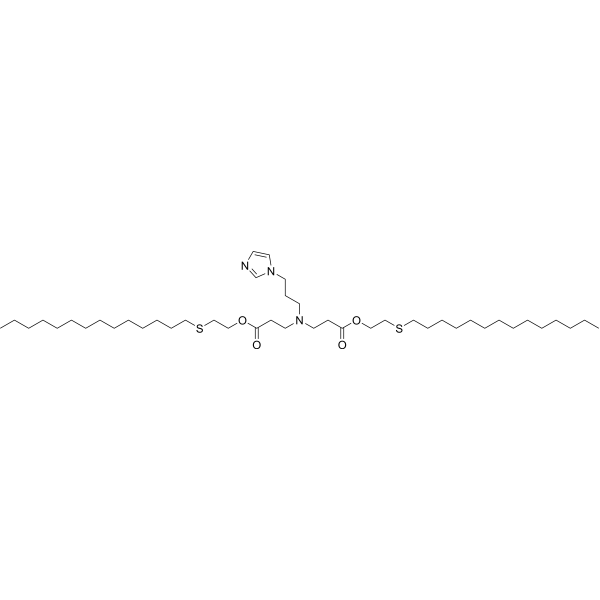
- Formula: C93H173N5O20S5
- Molecular Weight: 1841.72
5A2-SC8 is an ionizable amino lipid in lipid nanoparticles (LNPs) that shows high delivery potential and low in vivo toxicity, enabling efficient delivery of small RNAs such as siRNA and miRNA into tumor cells. 5A2-SC8 LNPs can confer a unique delivery fate of RNA within the liver, thereby changing the therapeutic outcomes in cancer models.
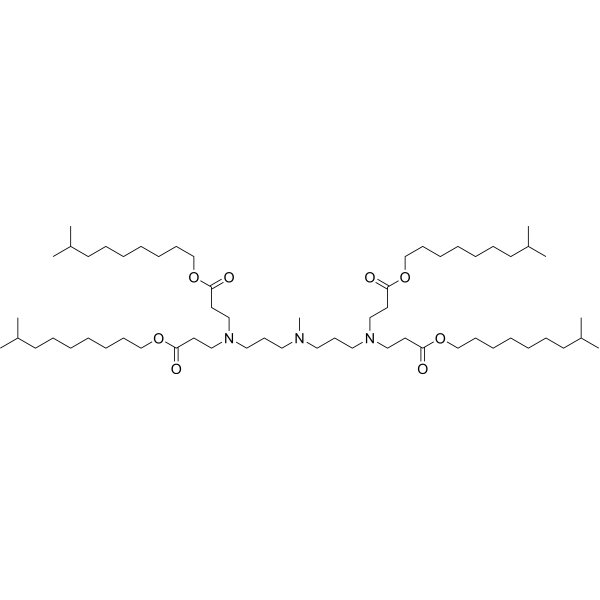
- Formula: C59H115N3O8
- Molecular Weight: 994.56
306Oi10 is a branched ionizable lipid that can be used to construct lipid nanoparticles (LNPs) for delivering messenger RNA. The surface ionization of lipid nanoparticles is related to the effectiveness of mRNA delivery. The tail of 306Oi10 has a one-carbon branch, which provides it with stronger surface ionization compared to lipids with linear tails, thereby enhancing its mRNA delivery efficacy. 306Oi10 can be used in research related to mRNA delivery.
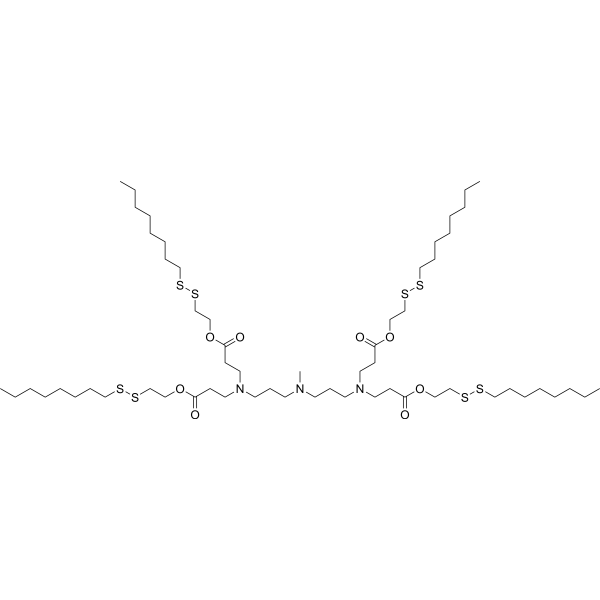
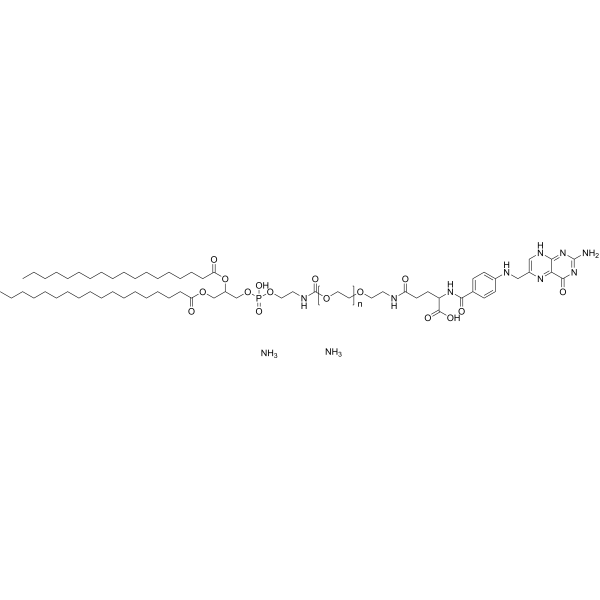
- Formula: C65H114N11O16P
- Molecular Weight: 3400 (Average)
DSPE-PEG-Folate, MW 3350 is a PEG derivative containing folic acid. DSPE-PEG-Folate has a targeting effect and bind to folate receptors in cancer cells. DSPE-PEG-Folate form micelles/lipid bilayer and can be used to targeted drug delivery system research.

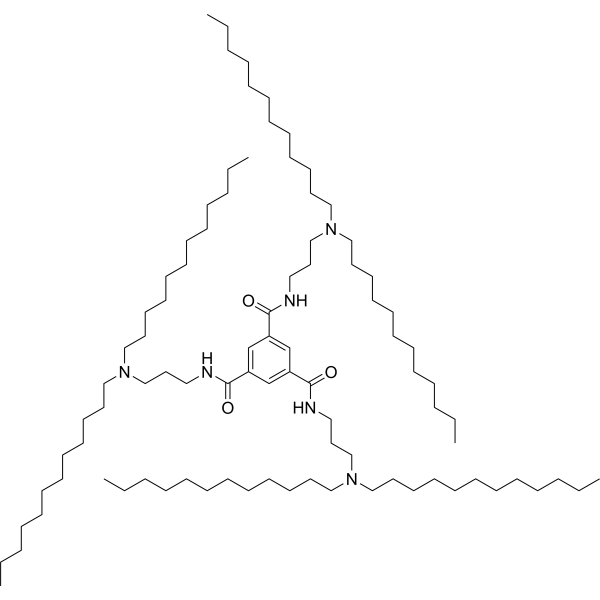
- Formula: C75H151N7O4S8
- Molecular Weight: 1471.57
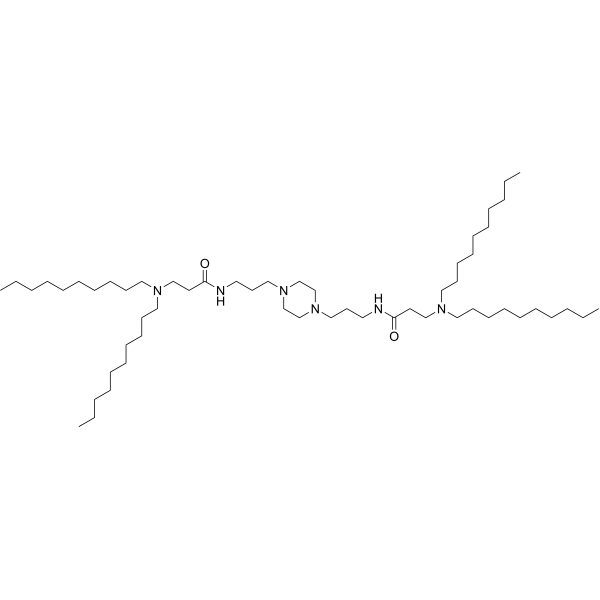
306-N16B is a selective lung-targeted lipid nanoparticle that reversibly targets lung endothelial cells and specific immune cells through selective adsorption of a protein corona mediated by differences in tail structure (such as fibrinogen β/γ chain). 306-N16B binds to specific plasma proteins in the blood to form a protein corona, which guides the particles to be enriched in the lungs, releases mRNA and promotes target cell gene expression, exerts efficient lung cell transfection activity, and can precisely regulate gene delivery of different cell types in the lungs (such as endothelial cells and macrophages). 306-N16B can be used in gene therapy technologies for hereditary lung diseases including pulmonary lymphangioleiomyomatosis (LAM), restoring tumor suppressor function by delivering Tsc2 mRNA, and can also be used for lung-specific mRNA vaccines and gene editing therapies.


DSPE-PEG2000-T7 is a PEGylated compound composed of DSPE and peptideT7. T7 (HAIYPRH) specifically binds to TfR. DSPE-PEG2000-T7 can be used to prepare T7-modified liposomes, where liposomes modified with both T7 and DA7R peptides can effectively co-deliver Doxorubicin (HY-15142A) and Vincristine (HY-N0488A) to gliomas. DSPE-PEG2000-T7 can also be used to prepare nanomodulators that mediate the co-delivery of tyrosine hydroxylase mRNA and interferon gene stimulator antagonists for synergistic intervention in Parkinson's disease.

DSPE-PEG2000-iRGD is a PEG compound which composed of DSPE and an αv-integrins targeting peptide (iRGD). iRGD peptide binds to αv-integrins, and then proteolytically cleaved in the tumor to produce CRGDK/R to interact with neuropilin-1, and has tumor-targeting and tumor-penetrating properties. DSPE-PEG2000-iRGD can be used for agent delivery.


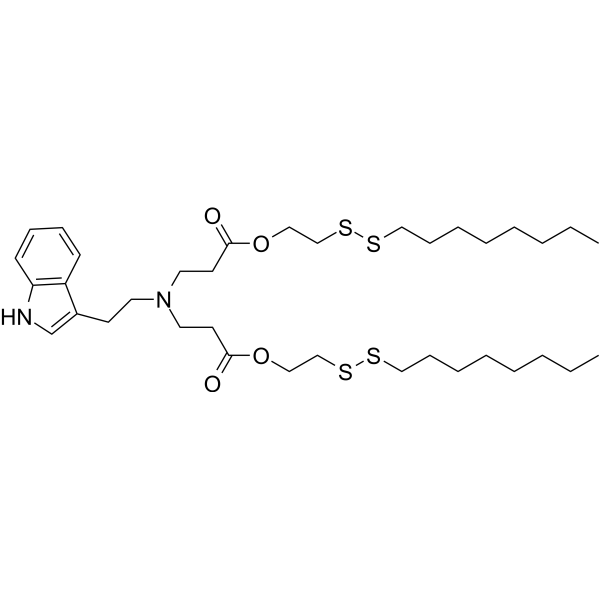
- Formula: C36H60N2O4S4
- Molecular Weight: 713.13
NT1-O12B, an endogenous chemical and a neurotransmitter-derived lipidoid (NT-lipidoid), is an effective carrier for enhanced brain delivery of several blood-brain barrier (BBB)-impermeable cargos. Doping NT1-O12B into BBB-impermeable lipid nanoparticles (LNPs) gives the LNPs the ability to cross the BBB. NT-lipidoids formulation not only facilitate cargo crossing of the BBB, but also delivery of the cargo into neuronal cells for functional gene silencing or gene recombination.
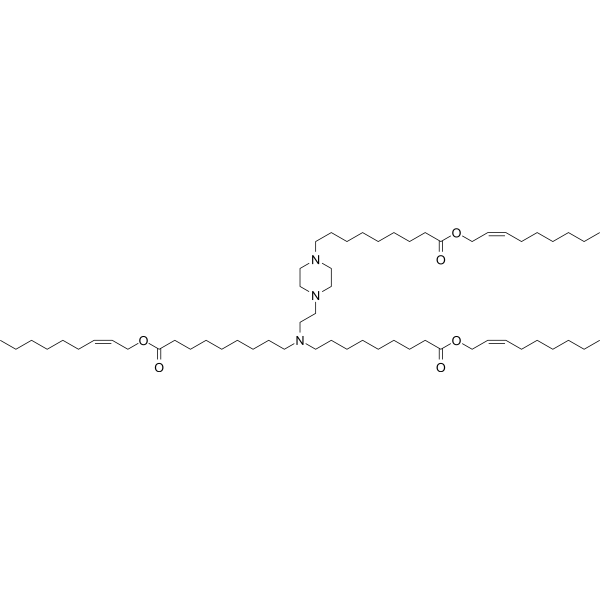
- Formula: C60H111N3O6
- Molecular Weight: 970.54
244cis, a piperazine-containing ionizable cationic lipid, has been used to generate lipid nanoparticles (LNPs). LNPs containing 244cis and coated with mRNA reporter gene were specifically accumulated in mouse lungs compared with LNPs containing SM-102. Induces a decrease in serum chemokine (C-C motif) ligand 2 (CCL2) levels.

DSPE-PEG2000-TAT is a cell-penetrating peptide-modified PEGylated phospholipid conjugate and cellular uptake enhancer. DSPE-PEG2000-TAT forms via conjugation of Cys-TAT to DSPE-PEG2000-Mal. DSPE-PEG2000-TAT enhances liposomal cellular uptake and siRNA transfection efficiency in glomerular mesangial and macrophage cells. DSPE-PEG2000-TAT can be used for drug delivery.




