



Gonadal Disease
-
Gonadal Disease (28)

- 1
- 2

- Formula: C8H12O2
- Molecular Weight: 140.18
4-Vinylcyclohexene dioxide (4-Vinylcyclohexene diepoxide) is an orally active metabolite of 4-vinylcyclohexene. 4-Vinylcyclohexene dioxide induces Apoptosis, increases intracellular ROS, and activates the PI3K/Akt/mTOR pathway. 4-Vinylcyclohexene dioxide selectively damages small ovarian follicles, inhibits granulosa cell function, and disrupts the male reproductive system. 4-Vinylcyclohexene dioxide can be used in the study of premature ovarian insufficiency, reproductive toxicity, and related fertility disorders.
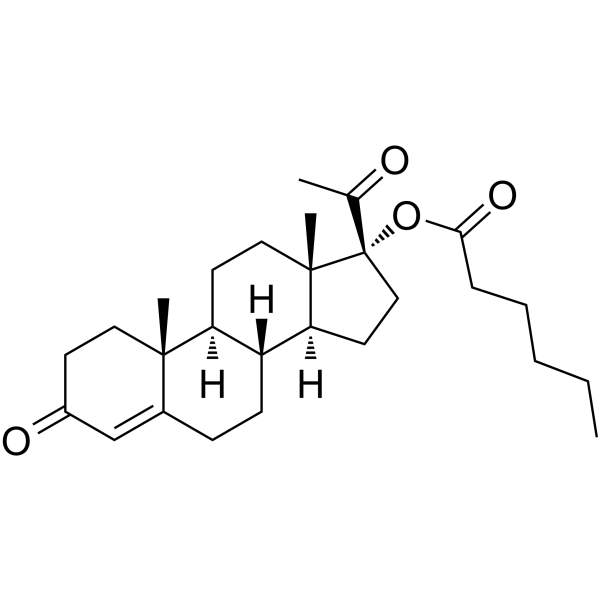
- Formula: C27H40O4
- Molecular Weight: 428.60
Hydroxyprogesterone caproate (17α-Hydroxyprogesterone hexanoate; 17α-Hydroxyprogesterone caproate) is a progesterone receptor (progesterone receptor) ligand and steroid hormone transcription inhibitor. Hydroxyprogesterone caproate downregulates estrogen receptors in target tissues and activates their metabolic pathways, and exhibits equivalent affinity for progesterone receptor A and progesterone receptor B. Hydroxyprogesterone caproate shows no consistent teratogenicity or developmental toxicity in rat, mouse and monkey models, but induces resorption or abortion in rhesus monkeys at human-equivalent doses. Hydroxyprogesterone caproate promotes the production of TNF-α in lipopolysaccharide-stimulated whole blood from non-pregnant women. Hydroxyprogesterone caproate can be used in scientific research related to preterm birth.
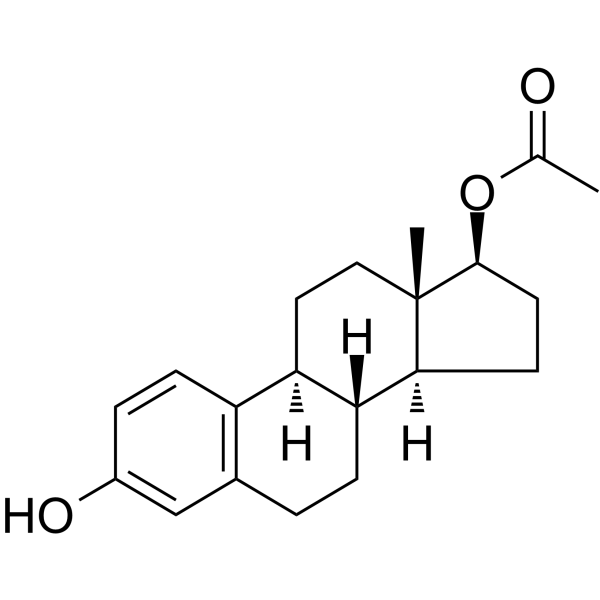
- Formula: C20H26O3
- Molecular Weight: 314.42
β-Estradiol 17-acetate (1,3,5(10)-Estratriene-3,17β-diol 17-acetate) is a long-acting endogenous estrogen precursor and also a cell viability and proliferation enhancer. β-Estradiol 17-acetate promotes the adhesion and proliferation of freshly isolated and revived female-derived human brain microvascular endothelial cells, and reverses the decreased viability of revived male-derived human brain microvascular endothelial cells. β-Estradiol 17-acetate exerts the microvascular protective effect of estrogen, enabling non-tumor human brain microvascular endothelial cells to be cultured in vitro for 2 months after cryopreservation. β-Estradiol 17-acetate is biotransformed into β-estradiol via hydrolase action in the in vitro skin of humans, hairless dogs, rats and hairless mice.
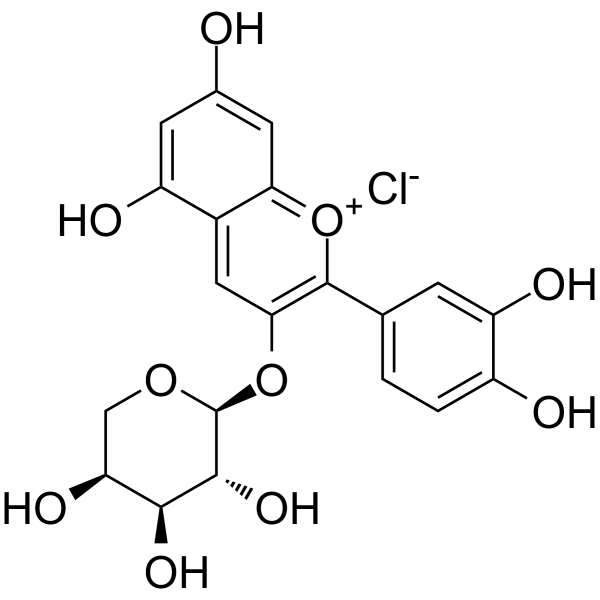
- Formula: C20H19ClO10
- Molecular Weight: 454.81
Cyanidin-3-O-arabinoside is a p38 MAPK phosphorylation inhibitor. Cyanidin-3-O-arabinoside reduces the expression of VDAC1, inhibits mtROS accumulation, reverses cellular senescence, blocks excessive mitochondrial calcium influx, reduces the formation of mitochondria-associated endoplasmic reticulum membranes, and suppresses the VDAC1-IP3R1 interaction. Cyanidin-3-O-arabinoside activates hair follicle stem cell proliferation and improves the condition of slowed hair growth. Cyanidin-3-O-arabinoside is applicable to research related to colon cancer and androgenetic alopecia.

- Formula: C13H10O5
- Molecular Weight: 246.22
Benzophenone-2 (2,2',4,4'-Tetrahydroxybenzophenone) is an organic ultraviolet absorber that is widely used in personal care products and industrial products such as plastics and coatings. Benzophenone-2 is an endocrine disruptor that can interfere with estrogen receptors (ERα receptor) and pregnane X receptor (PXR receptor) activity, leading to reproductive toxicity, immune disorders, and metabolic abnormalities. Benzophenone-2 can inhibit the activity of α-glucosidase (IC50 = 49.72 μM), and can be used for research on diabetes.

- Formula: C8H5NO6
- Molecular Weight: 211.13
3-Nitrophthalic acid (m-Nitrophthalic acid) is a nitro-substituted aromatic carboxylic acid that acts as a DPPH radical scavenger through hydrogen donation. 3-Nitrophthalic acid induces cellular oxidative stress and Apoptosis. 3-Nitrophthalic acid inhibits NRF2/HO-1 antioxidant signaling and impairs follicular development and ovulation. 3-Nitrophthalic acid can be used to construct functional MOF. 3-Nitrophthalic acid can be used in the study of premature ovarian insufficiency.
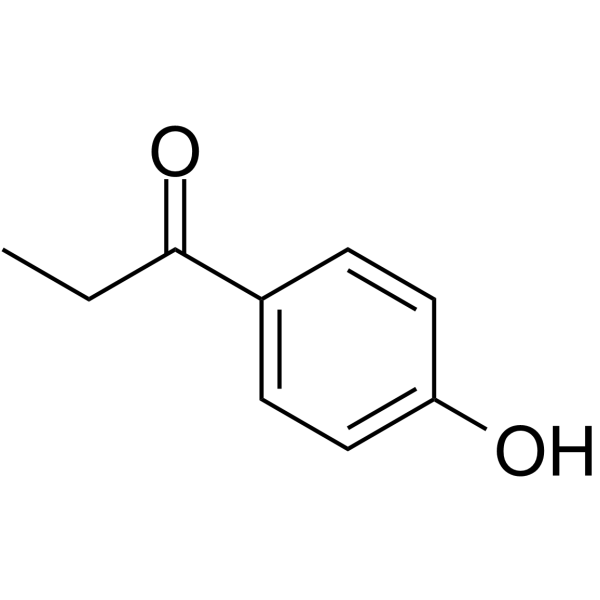

- Formula: C18H34O2
- Molecular Weight: 282.47
(Z)-11-Hexadecenyl acetate is a component of insect sex pheromones, which elicits electroantennogram responses in male Plutella xylostella and induces their wing-fanning and claspers-exposing behaviors. (Z)-11-Hexadecenyl acetate also serves as a sex pheromone component of Spodoptera exigua and Chilo suppressalis. When used in combination with other pheromones, (Z)-11-Hexadecenyl acetate significantly enhances the attraction effect on male Tryporyza incertulas, and it exists in trace amounts in the eluate of the ovipositor of female Tryporyza incertulas. (Z)-11-Hexadecenyl acetate shows no attraction effect on male Cnaphalocrocis medinalis and exhibits species specificity.

- Formula: Na2HPO4·7H2O
- Molecular Weight: 268.07
Sodium phosphate dibasic heptahydrate is an orally active and osmotic laxative, often used as a component of over-the-counter gastrointestinal lavage drugs. Sodium phosphate dibasic heptahydrate draws water into the intestinal lumen, maintains electrical neutrality by retaining cations in the intestinal lumen, and thereby alters fecal volume, consistency and phosphate levels. Sodium phosphate dibasic heptahydrate can be used to generate self-assembled calcium phosphate tubular scaffolds, which support the adhesion, survival and elongation of mesenchymal stem cells. Sodium phosphate dibasic heptahydrate can be applied to research on factitious disorders and related fields.

- Formula: C16H20O5
- Molecular Weight: 292.33
Mono (2-ethyl-5-oxohexyl) phthalate (MEOHP; 5-oxo-MEHP) is a secondary metabolite produced by cytochrome P450 enzyme-mediated oxidation of di(2-ethylhexyl) phthalate. Exposure levels of Mono (2-ethyl-5-oxohexyl) phthalate are associated with late-onset hypogonadism. Mono (2-ethyl-5-oxohexyl) phthalate can be used for research on mechanisms related to male reproductive endocrine disorders.

- Formula: C28H31FN2O3
- Molecular Weight: 462.56
BAY-1128688 is a selective, orally active aldo-keto reductase family 1 member C3 (AKR1C3) inhibitor with an IC50 of 1.4 nM. BAY-1128688 inhibits OATP, BSEP, MRP4, NTCP, UGT1A1, MRP2, and MRP3. BAY-1128688 induces reactive oxygen species (ROS) production, inhibits the mitochondrial electron transport chain, and increases circulating androsterone, etiocholanolone, dihydrotestosterone, and serum bilirubin concentrations. BAY-1128688 alters bilirubin disposition, leading to elevated plasma bilirubin, independent of liver injury. BAY-1128688 can be used in research on endometriosis and polycystic ovary syndrome.

- Formula: C60H93N21O21
- Molecular Weight: 1444.51
Murine ZP3 peptide (330-342) is a zona pellucida 3 polypeptide fragment with the amino acid sequence NSSSSQFQIHGPR. Murine ZP3 peptide (330-342) induces autoimmune premature ovarian failure (POF). Murine ZP3 peptide (330-342) can be used for the research of premature ovarian failure.

- Formula: C14HF27O2
- Molecular Weight: 714.11
Perfluorotetradecanoic acid (PFTeDA) is an orally active perfluoroalkyl substance. Perfluorotetradecanoic acid directly binds to the ligand-binding domain of purified hPPARγ, with a Kd value of 157.8 μM. Perfluorotetradecanoic acid significantly reduces the activity of the SIRT1/PGC1α and AMPK signaling pathways while stimulating the activity of the AKT1/mTOR signaling pathway. Perfluorotetradecanoic acid significantly upregulates the expression of corticosterone biosynthesis genes. Perfluorotetradecanoic acid increases ROS levels and promotes Apoptosis. Perfluorotetradecanoic acid impairs Leydig cell function and male reproductive endocrine function in adult male rats.

- Formula: C39H45NO7
- Molecular Weight: 639.79
Estrogen receptor modulator 14 is a chromene-derived prodrug of selective Estrogen Receptor modulator with oral activity. Estrogen receptor modulator 14 undergoes hydrolysis in vivo to produce the active metabolite 2d-(R), which acts on ERα and ERβ. Estrogen receptor modulator 14 acts on central thermoregulatory sites and possesses the ability to regulate estrogen signaling in multiple systemic tissues. Estrogen receptor modulator 14 maintains antiestrogenic activity in the uterus, and alters plasma cholesterol and bone metabolism. Estrogen receptor modulator 14 can be used for the research of estrogen receptor-related diseases.

- Formula: C18H10D8O2
- Molecular Weight: 274.38
Dienestrol-d8 is the deuterated-labeled Dienestrol (HY-B1403). Dienestrol is an orally active nonsteroidal estrogen. Dienestrol prevents the formation of implantation swellings in the uterus by inhibiting ovum discharge.
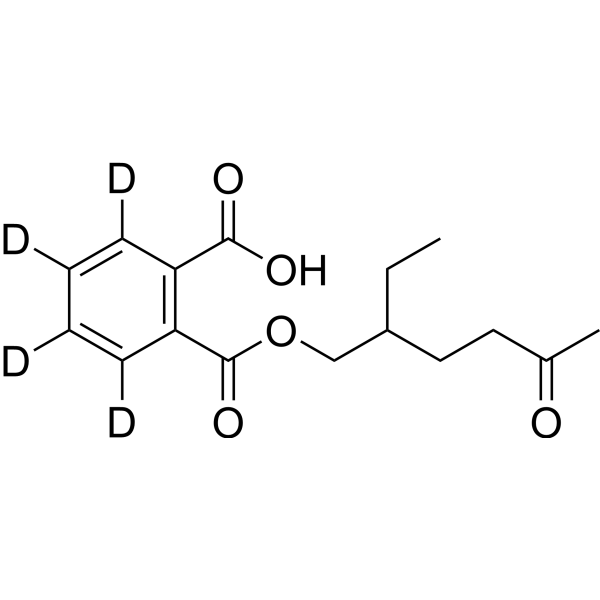
- Formula: C16H16D4O5
- Molecular Weight: 296.35
Mono(2-ethyl-5-oxohexyl) phthalate-d4 (MEOHP-d4; 5-oxo-MEHP-d4) is the deuterated-labeled Mono(2-ethyl-5-oxohexyl) phthalate (HY-133676). Mono (2-ethyl-5-oxohexyl) phthalate (MEOHP; 5-oxo-MEHP) is a secondary metabolite produced by cytochrome P450 enzyme-mediated oxidation of di(2-ethylhexyl) phthalate. Exposure levels of Mono (2-ethyl-5-oxohexyl) phthalate are associated with late-onset hypogonadism. Mono (2-ethyl-5-oxohexyl) phthalate can be used for research on mechanisms related to male reproductive endocrine disorders.


Butea superba extract is a type of Butea Superba Roxb that can be used in research on the prevention of erectile dysfunction.


- 1
- 2



