



Erectile Dysfunction
-
Erectile Dysfunction (10)

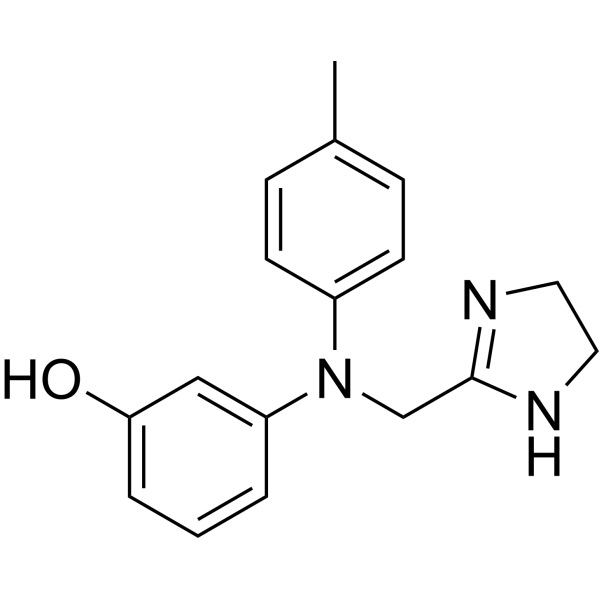
- Formule: C17H19N3O
- Masse moléculaire: 281.35
Phentolamine is an orally active, selective α1 and α2 Adrenergic receptor antagonist. Phentolamine antagonizes the vasodilatory effect of Cromakalim (HY-110011) on isolated circumflex coronary artery segments in dogs. Phentolamine reduces systemic vascular resistance and increases cardiac output. Phentolamine improves erectile dysfunction. Phentolamine can be used for the research of erectile dysfunction.
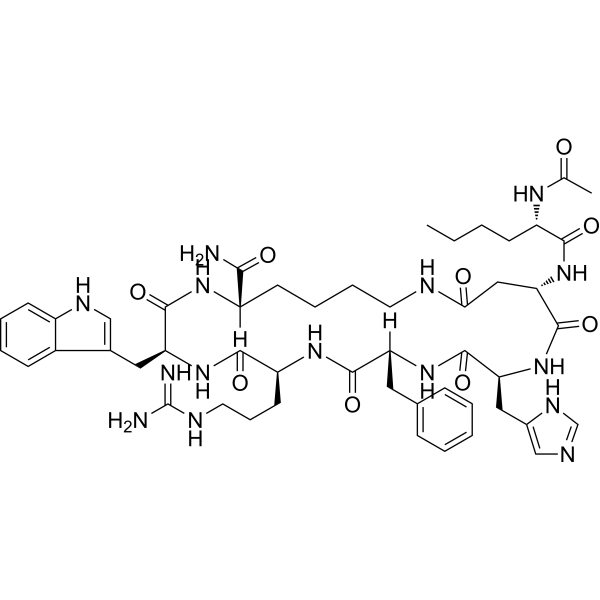
- Formule: C50H69N15O9
- Masse moléculaire: 1024.18
Melanotan (MT)-II is a melanocortin receptor agonist. Melanotan (MT)-II activates melanocortin receptor 3 and melanocortin receptor 4, and stimulates the release of central endogenous oxytocin. Melanotan (MT)-II reverses recognition memory impairment, increased anxiety levels and reduced exploratory tendency in zebrafish exposed to short-term high-fat diet. Melanotan (MT)-II improves impaired social behavior indicators in mouse models of autism spectrum disorder. Melanotan (MT)-II induces weight loss, reduces food intake and exerts anorectic effects. Melanotan (MT)-II increases intracavernous pressure and erectile activity in brown rats. Melanotan (MT)-II can be used in studies related to memory impairment, anxiety, reduced exploratory behavior, autism spectrum disorder, obesity and erectile dysfunction.
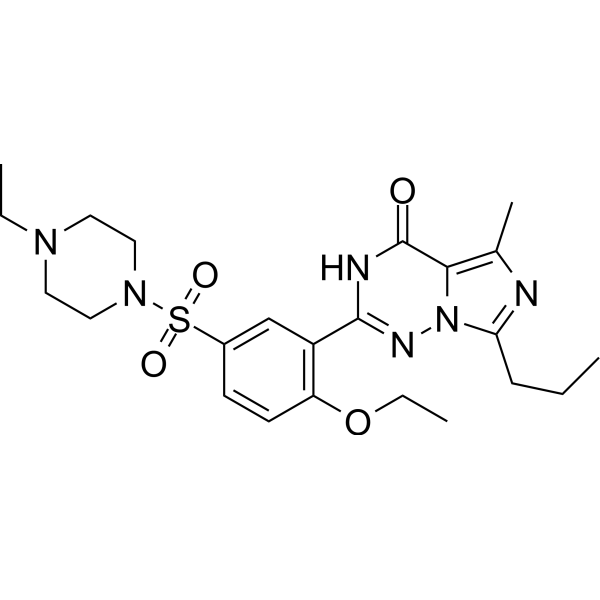
- Formule: C23H32N6O4S
- Masse moléculaire: 488.60
Vardenafil is a selective and orally active inhibitor of phosphodiesterase-5 (PDE5), with an IC50 of 0.7 nM. Vardenafil shows inhibitory towards PDE1, PDE6 with IC50s of 180 nM, and 11 nM, while IC50s are >1000 nM for PDE3 and PDE4. Vardenafil competitively inhibits cyclic guanosine monophosphate (cGMP) hydrolysis and thus increases cGMP levels. Vardenafil can be used for the research of erectile dysfunction, hepatitis, diabetes[1]-[6].
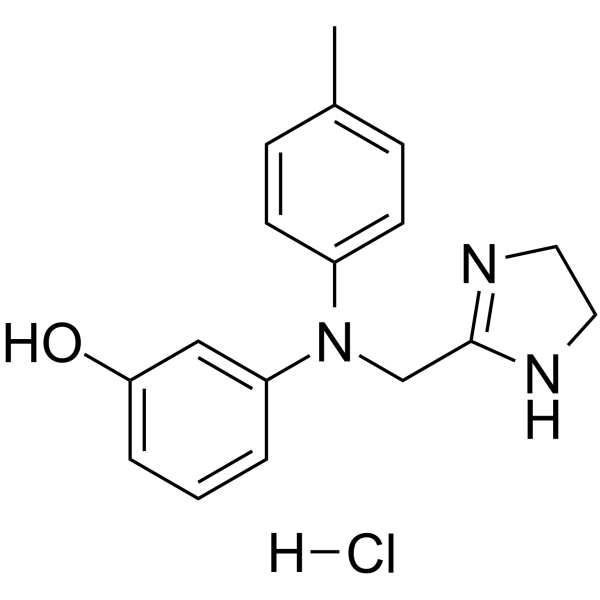
- Formule: C17H20ClN3O
- Masse moléculaire: 317.82
Phentolamine hydrochloride is an orally active, selective α1 and α2 Adrenergic receptor antagonist. Phentolamine hydrochloride antagonizes the vasodilatory effect of Cromakalim (HY-110011) on isolated circumflex coronary artery segments in dogs. Phentolamine hydrochloride reduces systemic vascular resistance and increases cardiac output. Phentolamine hydrochloride improves erectile dysfunction. Phentolamine hydrochloride can be used for the research of erectile dysfunction.
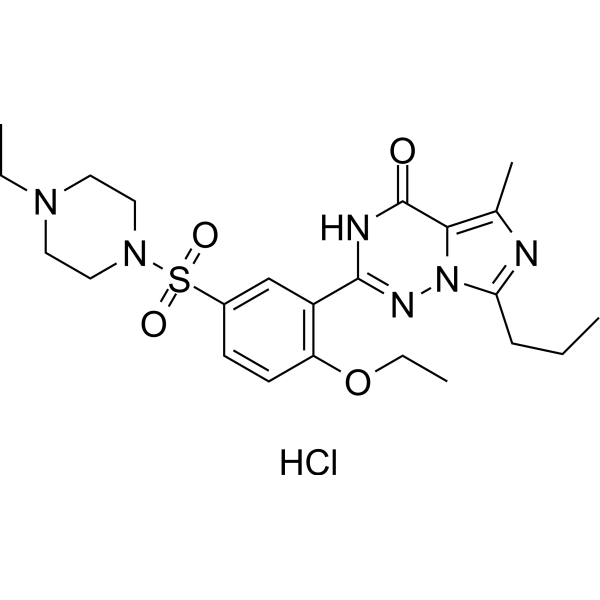
- Formule: C23H33ClN6O4S
- Masse moléculaire: 525.06
Vardenafil hydrochloride is a selective and orally active inhibitor of phosphodiesterase-5 (PDE5), with an IC50 of 0.7 nM. Vardenafil hydrochloride shows inhibitory towards PDE1, PDE6 with IC50s of 180 nM, and 11 nM, while IC50s are >1000 nM for PDE3 and PDE4. Vardenafil hydrochloride competitively inhibits cyclic guanosine monophosphate (cGMP) hydrolysis and thus increases cGMP levels. Vardenafil hydrochloride can be used for the research of erectile dysfunction, hepatitis, diabetes[1]-[6].

- Formule: C23H23ClN6O2
- Masse moléculaire: 450.93
PDE5-IN-16 is a selective phosphodiesterase type 5 (PDE5) inhibitor with an IC50 of 0.8 nM. PDE5-IN-16 enhances the relaxation of corpus cavernosum tissue strips. PDE5-IN-16 is applicable for the research of erectile dysfunction.

- Formule: C25H34N4O3
- Masse moléculaire: 438.56
GPR133 agonist 1 is an orally active GPR133/ADGRD1 agonist with an EC50 of 1.6 nM (293T cells). GPR133 agonist 1 activates GPR133, thereby regulating the downstream cAMP signaling pathway. GPR133 agonist 1 enhances muscle strength and endurance in mice. GPR133 agonist 1 can be used in research related to muscular atrophy, myasthenia, sarcopenia, erectile dysfunction, vestibular dysfunction, obesity, and non-alcoholic fatty liver disease.

- Formule: C52H73N15O11
- Masse moléculaire: 1084.23
Melanotan (MT)-II acetate is a melanocortin receptor agonist. Melanotan (MT)-II acetate activates melanocortin receptor 3 and melanocortin receptor 4, and stimulates the release of central endogenous oxytocin. Melanotan (MT)-II acetate reverses recognition memory impairment, increased anxiety levels and reduced exploratory tendency in zebrafish exposed to short-term high-fat diet. Melanotan (MT)-II acetate improves impaired social behavior indicators in mouse models of autism spectrum disorder. Melanotan (MT)-II acetate induces weight loss, reduces food intake and exerts anorectic effects. Melanotan (MT)-II acetate increases intracavernous pressure and erectile activity in brown rats. Melanotan (MT)-II acetate can be used in studies related to memory impairment, anxiety, reduced exploratory behavior, autism spectrum disorder, obesity and erectile dysfunction.
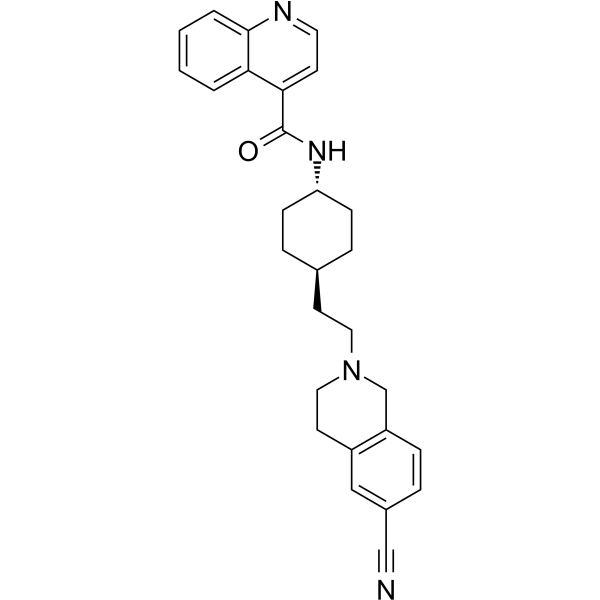
- Formule: C28H30N4O
- Masse moléculaire: 438.56
SB-277011 (SB-277011A) is a highly selective dopamine D3 receptor antagonist. SB-277011 induces ejaculation delay by inhibiting the expulsion phase of ejaculation, without impairing ejaculatory secretion or erectile function. SB-277011 also prolongs the post-ejaculatory refractory period. SB-277011 has no effect on the spontaneous preference of male rats for females in the sexually receptive phase. SB-277011 is widely applicable to studies related to premature ejaculation.

- Formule: C14H14N2O6S2
- Masse moléculaire: 370.40
Amsonic acid is an orally active weak estrogen receptor ligand with uterotrophic activity. In the weanling female rat model, Amsonic acid exhibits a uterotrophic effect consistent with that of diethylstilbestrol at equiactive doses. Amsonic acid can also be used in studies related to erectile dysfunction.



