



Ear Disease
-
Ear Disease (16)

- 1
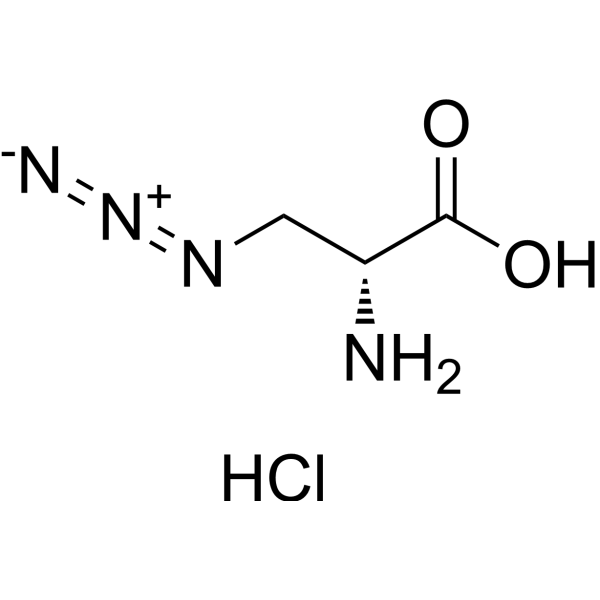
- Formula: C3H7ClN4O2
- Molecular Weight: 166.57
3-Azido-D-alanine (hydrochloride) is an orally active, selective metabolic tracer applicable for click chemistry labeling. 3-Azido-D-alanine (hydrochloride) can be selectively incorporated into bacterial cell wall peptidoglycans, introducing azido groups to enable copper-free click chemistry-based modification, labeling and single-cell tracing, while it cannot be metabolically incorporated by mammalian cells. 3-Azido-D-alanine (hydrochloride) can be used in studies related to bacterial infection, intracranial infection, otitis media, intestinal inflammation and tissue damage, as well as sepsis.
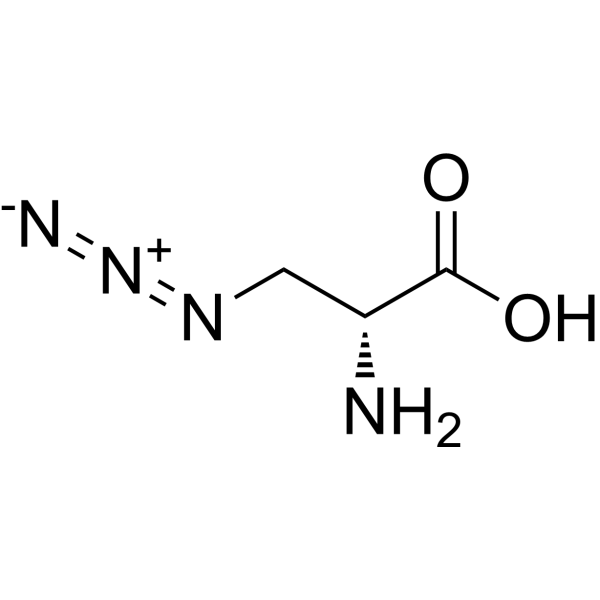
- Formula: C3H6N4O2
- Molecular Weight: 130.11
3-Azido-D-alanine is an orally active, selective metabolic tracer applicable for click chemistry labeling. 3-Azido-D-alanine can be selectively incorporated into bacterial cell wall peptidoglycans, introducing azido groups to enable copper-free click chemistry-based modification, labeling and single-cell tracing, while it cannot be metabolically incorporated by mammalian cells. 3-Azido-D-alanine can be used in studies related to bacterial infection, intracranial infection, otitis media, intestinal inflammation and tissue damage, as well as sepsis.

- Formula: C3H2ClF5O
- Molecular Weight: 184.49
Isoflurane is a volatile anaesthetic. Isoflurane diminishs the effect of ROS activity. Isoflurane suppresses respiration. Isoflurane enables rapid anesthesia induction and emergence. Isoflurane protects against noise-induced hearing loss and tissue damage in mice. Isoflurane protects against renal ischemia and reperfusion injury and modulates leukocyte infiltration.
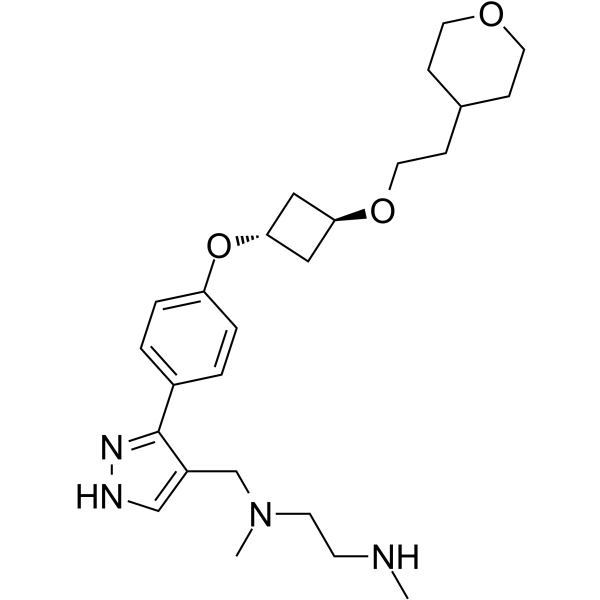
- Formula: C25H38N4O3
- Molecular Weight: 442.59
EPZ020411 is a selective, blood-brain barrier-permeable PRMT6 inhibitor with an IC50 of 0.010 μM. EPZ020411 blocks PRMT6-mediated histone H3R2 methylation, reduces ROS production, and inhibits Apoptosis. EPZ020411 is applicable to research related to neuropathic pain, colorectal cancer, ototoxicity, hearing loss and glioblastoma.
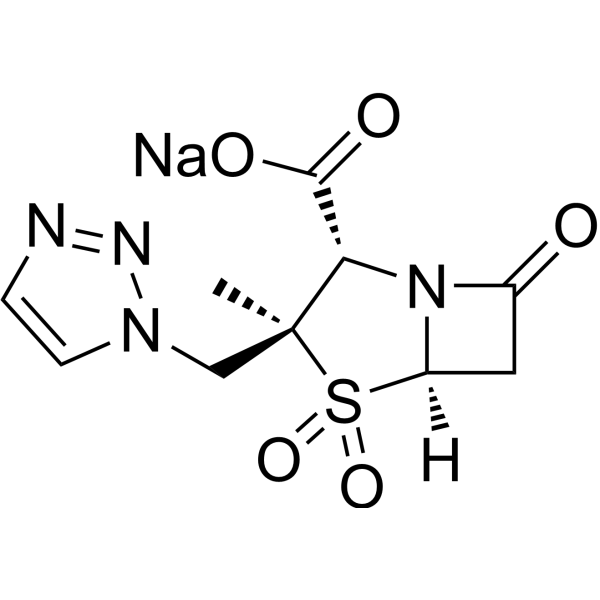
- Formula: C10H11N4NaO5S
- Molecular Weight: 322.27
Tazobactam sodium is an antibiotic of the beta-lactamase inhibitor class. Ceftolozane combines with Tazobactam, extends the activity of ceftolozane against many ESBL-producing Enterobacteriaceae and some Bacteroides spp..
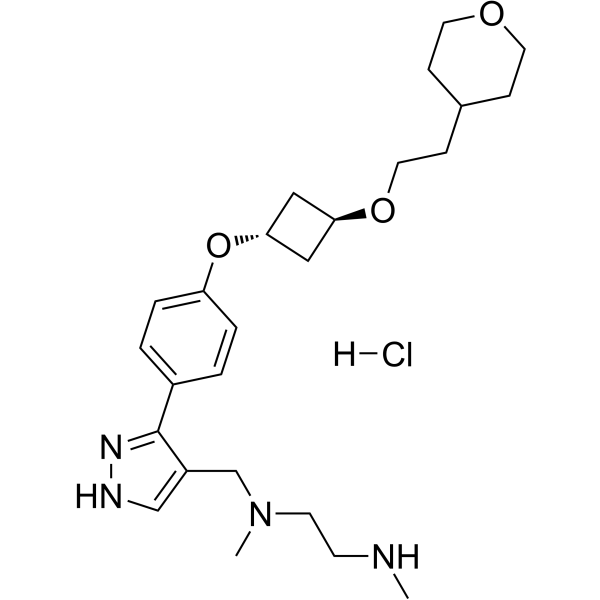
- Formula: C25H39ClN4O3
- Molecular Weight: 479.06
EPZ020411 hydrochloride is a selective, blood-brain barrier-permeable PRMT6 inhibitor with an IC50 of 0.010 μM. EPZ020411 hydrochloride blocks PRMT6-mediated histone H3R2 methylation, reduces ROS production, and inhibits Apoptosis. EPZ020411 hydrochloride is applicable to research related to neuropathic pain, colorectal cancer, ototoxicity, hearing loss and glioblastoma.

- Formula: C19H20N4O3
- Molecular Weight: 352.39
GYKI 53784 (LY303070) is an orally active, blood-brain penetrant, selective, non-competitive AMPA receptor antagonist (IC50 = 0.32 μM). GYKI 53784 completely blocks AMPA-mediated synaptic transmission, protects against excitotoxicity, and partially inhibits Kainite (Kainic acid) (HY-N2309) responses, revealing both AMPA and kainate receptors. GYKI 53784 selectively blocks synaptic transmission (IC50 = 365.3 nM) without affecting neuronal excitability, and exhibits potent stereoselective antinociceptive effects via an opioid-independent mechanism. GYKI 53784 is a versatile tool for studying AMPA receptor function in synaptic transmission, excitotoxicity, neuroprotection, pain, and inflammation, with potential relevance to hearing loss, neonatal ischemia, neurodegenerative disorders, schizophrenia, and Alzheimer's disease.

- Formula: C27H29NO14S
- Molecular Weight: 623.58
Anti-inflammatory agent 118 is a bergenin derivative with anti-inflammatory activity. Anti-inflammatory agent 118 inhibits the expression of iNOS through negative feedback regulation mediated by NO release, while blocking the phosphorylation of p65 protein and reducing the secretion levels of two pro-inflammatory cytokines, TNF-α and IL-6. Anti-inflammatory agent 118 can be used for the research of inflammation-related diseases.
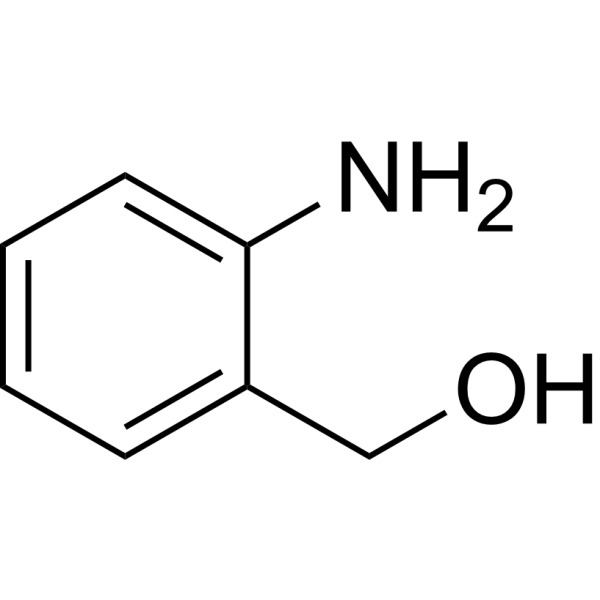
- Formula: C7H9NO
- Molecular Weight: 123.16
(2-Aminophenyl)methanol (2-Hydroxymethylaniline) is a molecular chaperone to rescue P123S mutant pendrin. (2-Aminophenyl)methanol has the advantages of low dose, long-term effect and low toxicity. (2-Aminophenyl)methanol can be used for the study of Pendred syndrome (a syndromic deafness) .
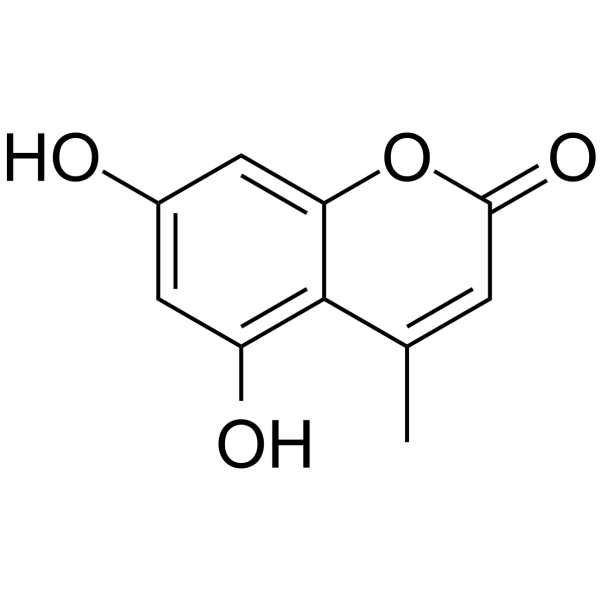
- Formula: C10H8O4
- Molecular Weight: 192.17
5,7-Dihydroxy-4-methylcoumarin is an antioxidant. 5,7-Dihydroxy-4-methylcoumarin protects mouse cochlear hair cells from Cisplatin-induced damage, enhances cell viability and inhibits apoptosis. 5,7-Dihydroxy-4-methylcoumarin downregulates phosphorylated JNK levels, increases the ratio of phosphorylated FoxO1 to total FoxO1, scavenges free radicals, reduces ROS accumulation, maintains mitochondrial membrane potential and alleviates mitochondrial dysfunction. 5,7-Dihydroxy-4-methylcoumarin downregulates the expression of caspase-3 and improves cell viability. 5,7-Dihydroxy-4-methylcoumarin can be used in studies related to ototoxicity.

β-N-Acetylhexosaminidase, Streptococcus pneumoniae is a cell surface virulence factor of Streptococcus pneumoniae, which contains two synergistically acting GH20 domains (with higher activity in GH20-2). β-N-Acetylhexosaminidase, Streptococcus pneumoniae specifically recognizes and hydrolyzes substrates with β(1,2) glycosidic bonds via Trp-443 and Tyr-482 residues. β-N-Acetylhexosaminidase, Streptococcus pneumoniae catalyzes the hydrolysis of β(1,2)-linked N-acetylglucosamine groups and related disaccharides, and promotes persistent colonization of bacteria in the airway by modifying host defense molecules and releasing monosaccharides for bacterial growth. β-N-Acetylhexosaminidase, Streptococcus pneumoniae can be used in studies related to Streptococcus pneumoniae infection, acute pneumonia, otitis media and meningitis.

- Formula: C8H10O2
- Molecular Weight: 138.17
2-Hydroxyphenylethanol is a molecular chaperone that rescues misfolded P123S mutant pendrin, promoting translocation from the cytoplasm to the plasma membrane. 2-Hydroxyphenylethanol can be used for the research of pendred syndrome.

- Formula: C23H28F3N3O4
- Molecular Weight: 467.48
LY3056480 is a γ-secretase inhibitor. LY3056480 inhibits the Notch signaling pathway, upregulates Atoh1, promotes hair cell regeneration, and drives supporting cell transdifferentiation. LY3056480 is applicable to research related to sensorineural hearing loss.

- Formula: C25H40Cl2N4O3
- Molecular Weight: 515.52
EPZ020411 dihydrochloride is a selective, blood-brain barrier-permeable PRMT6 inhibitor with an IC50 of 0.010 μM. EPZ020411 dihydrochloride blocks PRMT6-mediated histone H3R2 methylation, reduces ROS production, and inhibits Apoptosis. EPZ020411 dihydrochloride is applicable to research related to neuropathic pain, colorectal cancer, ototoxicity, hearing loss and glioblastoma.
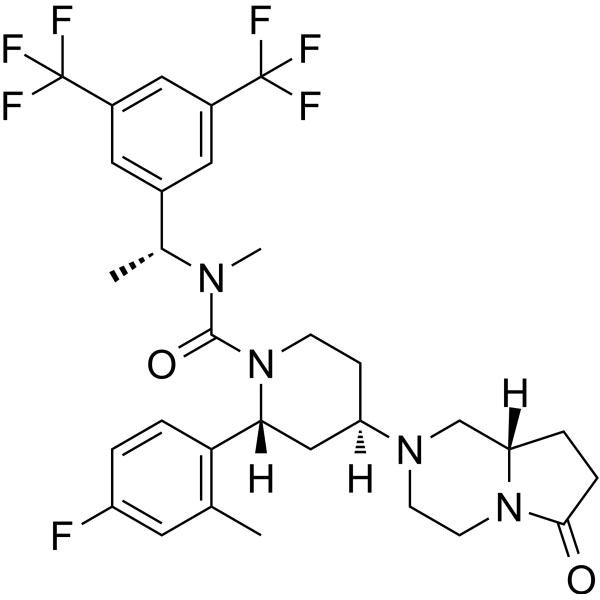
- Formula: C31H35F7N4O2
- Molecular Weight: 628.62
NK1 receptor antagonist 2 is a neurokinin 1 (NK1) receptor antagonist. NK1 receptor antagonist 2 is applicable to research related to tinnitus and hearing loss.
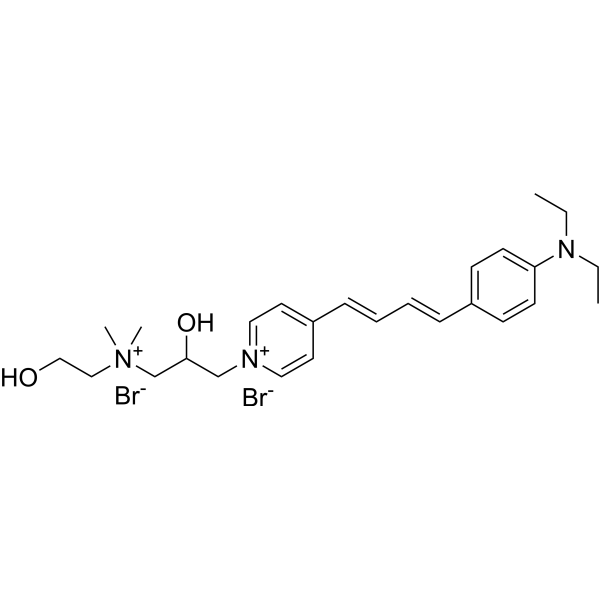
- Formula: C26H39Br2N3O2
- Molecular Weight: 585.41
RH 795 is a lipophilic potentiometric styryl fluorescent dye (Ex/Em = 530 nm/712 nm). RH 795 stains the cell membranes of sensory cells and nerve fibers in living cells that maintain membrane potential, while it shows weak staining effect on supporting cells. RH 795 supports in vivo and in vitro confocal microscopy imaging of intact living inner ear cells and neuronal components. RH 795 can be used in studies related to hearing loss.
- 1



