



Sex Pheromone
Sex Pheromone
Sex pheromone are chemical signals emitted by organisms, widely present in both the plant and animal kingdoms. The production of sex pheromone is regulated by pheromone biosynthesis activating neuropeptide (PBAN). Sex pheromone serve as crucial species recognition signals, capable of attracting conspecifics while inhibiting attraction between heterospecifics. They also function as mate recognition signals within species, playing a vital role in reproductive isolation and speciation processe. In agricultural practice, sex pheromone are extensively utilized in Integrated Pest Management (IPM) strategies, encompassing monitoring of pest populations, large-scale trapping operations, disruption of mating behaviors, and implementation of push-pull tactics to control pest populations[1][2][3].
References:
- [1]. De Pasqual C, et al. Evolutionary importance of intraspecific variation in sex pheromones. Trends Ecol Evol. 2021 Sep;36(9):848-859. [Content Brief]
- [2]. Sekimoto H. Plant sex pheromones. Vitam Horm. 2005;72:457-78. [Content Brief]
- [3]. Rizvi SAH, et al. Latest Developments in Insect Sex Pheromone Research and Its Application in Agricultural Pest Management. Insects. 2021 May 23;12(6):484. [Content Brief]
All Product Categories
-
Sex Pheromone Related Products (103)
Related Products (103)

-
Bombykol
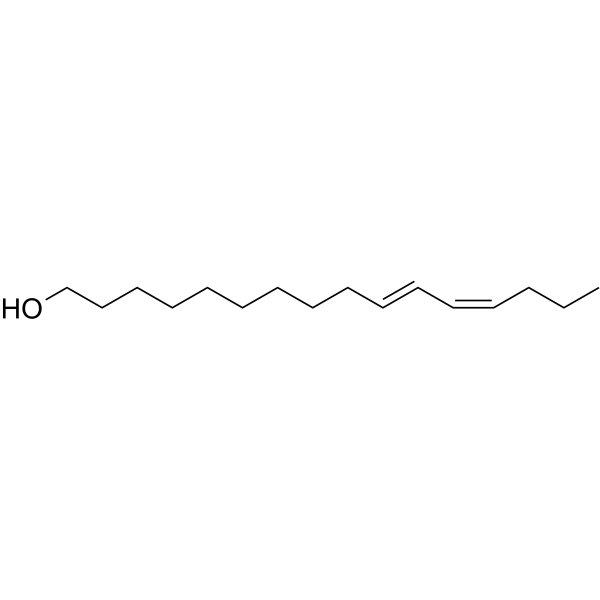 0 ImagesBombykol is an insect sex pheromone and a sex attractant produced by female Bombyx mandarina.
-
α-Factor Mating Pheromone, yeast
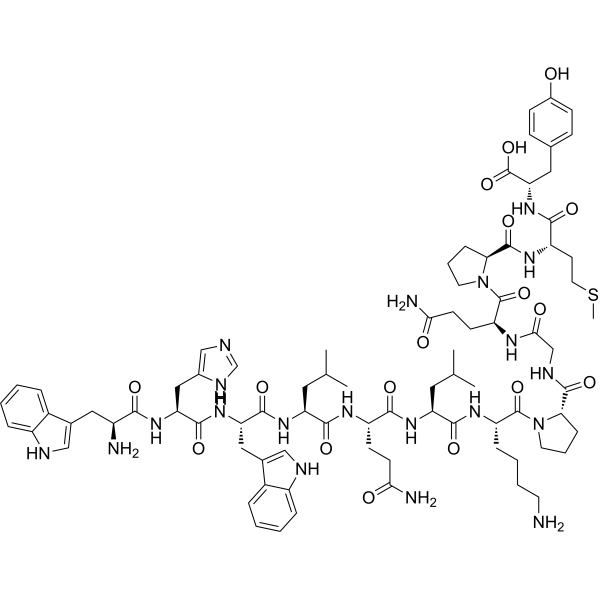 0 ImagesSynonyms: Mating Factor αα-Factor Mating Pheromone, yeast is a tridecapeptide secreted by S. cerevisiae α cells via Ste2p receptor.
-
Verbenone
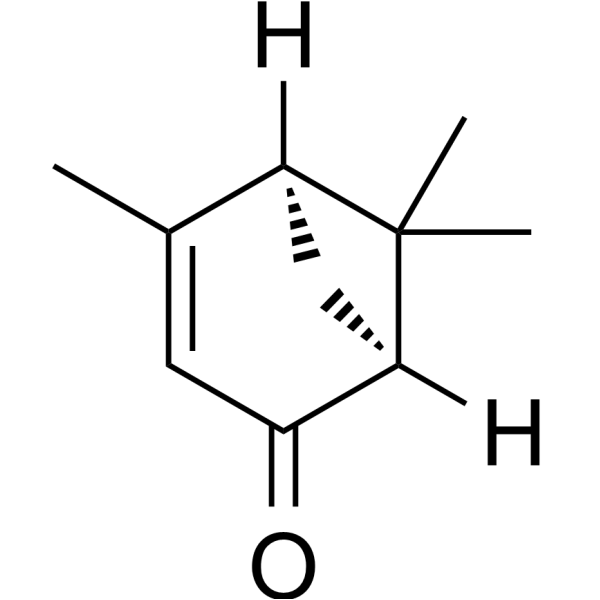 0 ImagesVerbenone is a naturally derived monoterpene ketone and an anti-aggregation pheromone/attractant inhibitor. Verbenone interferes with the responses of Dendroctonus brevicomis and Dendroctonus ponderosae to baited traps. Verbenone can be used in studies related to bark beetle infestations of trees.
-
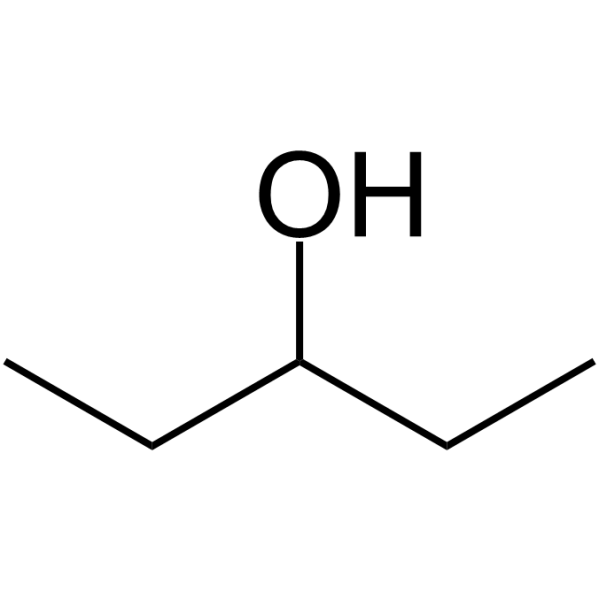
(Z)-11-Octadecenal
 0 ImagesCat. No.: HY-W742821CAS No.: 4273-95-4(Z)-11-Octadecenal is a female pheromone with diurnal stability, isolated from the pheromone glands of female rice leaffolder moths.
-
(Z)-11-Hexadecenyl acetate
 0 ImagesCat. No.: HY-W099803CAS No.: 34010-21-4(Z)-11-Hexadecenyl acetate is a component of insect sex pheromones, which elicits electroantennogram responses in male Plutella xylostella and induces their wing-fanning and claspers-exposing behaviors. (Z)-11-Hexadecenyl acetate also serves as a sex pheromone component of Spodoptera exigua and Chilo suppressalis. When used in combination with other pheromones, (Z)-11-Hexadecenyl acetate significantly enhances the attraction effect on male Tryporyza incertulas, and it exists in trace amounts in the eluate of the ovipositor of female Tryporyza incertulas. (Z)-11-Hexadecenyl acetate shows no attraction effect on male Cnaphalocrocis medinalis and exhibits species specificity.
-
Tetradecyl acetate
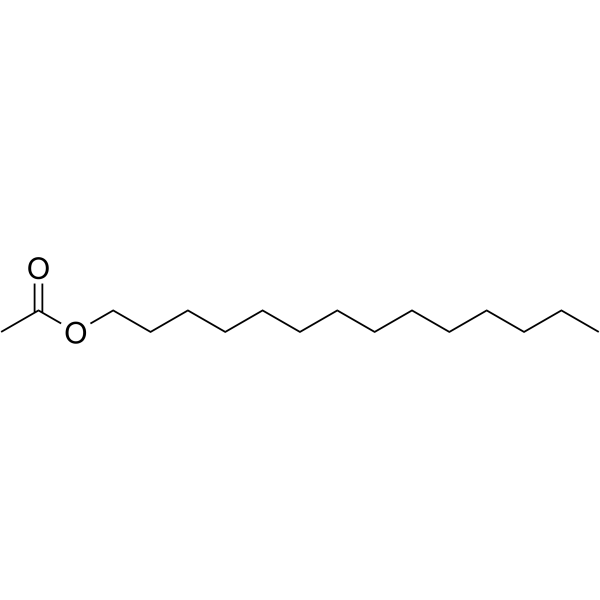 0 ImagesSynonyms: Myristyl acetateTetradecyl (Myristyl) acetate is a native sex pheromone component of Yponomeuta rorellus. Tetradecyl acetate elicits orientation behaviour, upwind flight, and landing at the odour source in male Yponomeuta rorellus. Tetradecyl acetate can be used in research on insecticides.
-
2-Hydroxy-3-octanone
 0 ImagesCat. No.: HY-N19221CAS No.: 52279-26-22-Hydroxy-3-octanone is a male-specific odor component, and its structure is related to the male sex pheromone component of Xylotrechus pyrrhoderus. 2-Hydroxy-3-octanone can be used in studies related to species identification.
-
Gibberellins A4/A7
 0 ImagesGibberellins A4/A7 (GA4+7) is a gibberellin mixture and male flower inducer with stem-regulating activity. Gibberellins A4/A7 induces the production of male flowers in female cucumber lines. Gibberellins A4/A7 reduces the mechanical damage sensitivity of female cucumber lines under field conditions in Michigan.
-
Heneicosane
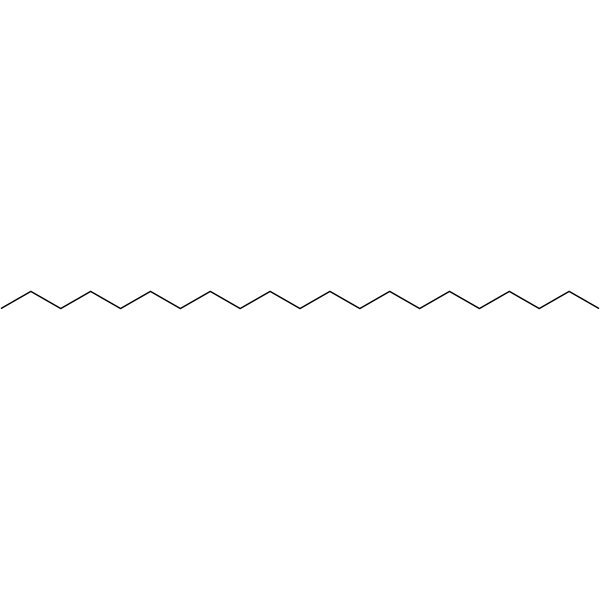 0 ImagesHeneicosane is a royal-specific pheromone of insects (such as subterranean termites) and is an identification signal for queens and kings in termites. Heneicosane mediates royal recognition and the maintenance of social division of labor by being sensed by worker ants and triggering vibrations and antennal behaviors. Heneicosane can exert anti-inflammatory, analgesic and antipyretic activities by inhibiting the release of inflammatory mediators (such as prostaglandins and cytokines). At the same time, Heneicosane can also inhibit the mycelial growth of aflatoxin-producing fungi and inhibit the production of aflatoxin. Heneicosane can be used in insect chemical ecology research to analyze the regulatory mechanism of termite social behavior, and is also a potential target for new anti-inflammatory drugs.

-
(9Z,11E)-Prodlure
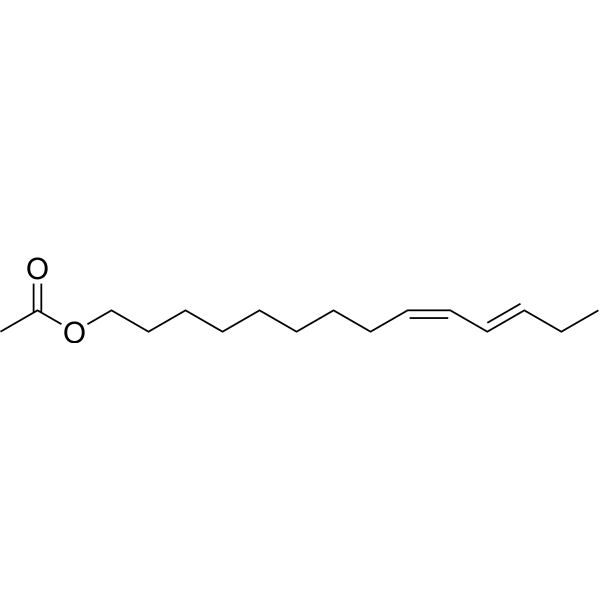 0 ImagesSynonyms: (9Z,11E)-Tetradecadien-1-yl acetate; Ferodin SL; Litlure A(9Z,11E)-Prodlure ((9Z,11E)-Tetradecadien-1-yl acetate) is the main component of the sex pheromone of female Spodoptera littoralis.
-
Blattellaquinone
 0 ImagesCat. No.: HY-W561401CAS No.: 849762-24-9Blattellaquinone is a sex pheromone isolated from German cockroaches.
-
Periplanetin
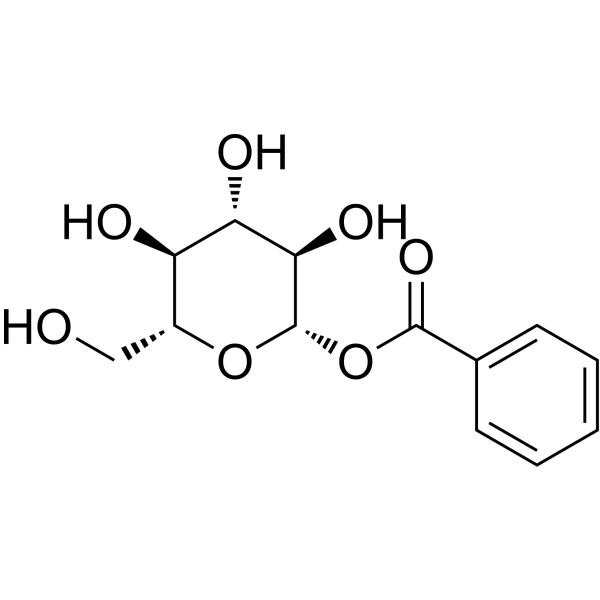 0 ImagesCat. No.: HY-W415953CAS No.: 21056-52-0Periplanetin is a peptide of the insect lipomotor hormone family (AKH family) that can be isolated from the secretion of the cervical organ of Periplaneta americana L. and Blatta orientalis L. The periplanetin peptide has potential analgesic activity and lowers the threshold of tonic seizures.
-
3-Oxo-C8-HSL
 0 ImagesCat. No.: HY-W685561CAS No.: 216596-70-2Synonyms: N-(3-Oxooctanoyl)-l-homoserine lactone3-Oxo-C8-HSL (N-(3-Oxooctanoyl)-l-homoserine lactone) is an autoinducer pheromone. 3-Oxo-C8-HSL is a TraR-regulated promoter. 3-Oxo-C8-HSL significantly stimulates tra gene expression.
-
2-(Hydroxymethyl)anthraquinone
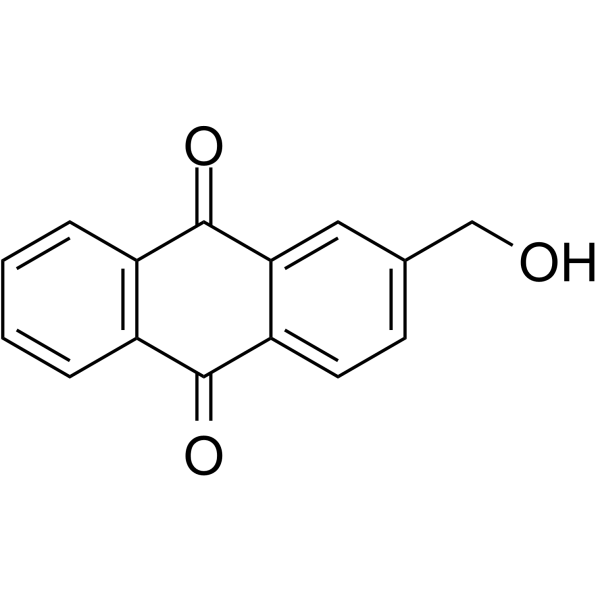 0 ImagesCat. No.: HY-N7502CAS No.: 17241-59-72-(Hydroxymethyl)anthraquinone is used as a photoremovable protecting group (PRPG) to chemically cage sex pheromone (e.g. (Z)-11-hexadecen-1-ol (sex pheromone of Chilo infuscatellussnellen)).
-
1,7-Dioxaspiro[5.5]undecane
![1,7-Dioxaspiro[5.5]undecane](https://file.medchemexpress.com/product_pic/hy-w288838.gif "Click to View 1,7-Dioxaspiro[5.5]undecane Product Detail") 0 Images1,7-Dioxaspiro[5.5]undecane is a fruit fly sex pheromone.
0 Images1,7-Dioxaspiro[5.5]undecane is a fruit fly sex pheromone.
-
Ethyl (E,Z)-2,4-decadienoate
 0 ImagesCat. No.: HY-W322222CAS No.: 3025-30-7Ethyl (E,Z)-2,4-decadienoate is an attractant. Ethyl (E,Z)-2,4-decadienoate can be isolated from pears. Ethyl (E,Z)-2,4-decadienoate elicits electroantennographic responses in codling moths and tortricid moths, and activates their olfactory receptor neurons. Ethyl (E,Z)-2,4-decadienoate acts as an attractant for codling moths and tortricid moths. Ethyl (E,Z)-2,4-decadienoate shows no significant field attractant activity against green budworms.
-
(E,E)-10,12-Hexadecadienal
 0 ImagesCat. No.: HY-W701835CAS No.: 69977-24-8(E,E)-10,12-Hexadecadienal is a female pheromone isolated from female Earias insulana.
-
(±)-Ipsdienol
 0 ImagesCat. No.: HY-W613915CAS No.: 14434-41-4(±)-Ipsdienol is a sex pheromone with an inducing effect on male spruce beetles (Dendroctonus rufipennis Kirby), which can be isolated from the subspecies of spruce beetles (Ips tridens Mannerheim).



