



Phosphorylase
Phosphorylase
Phosphorylase is an enzyme that catalyzes the addition of a phosphate group from an inorganic phosphate (phosphate+hydrogen) to an acceptor, including glycogen phosphorylase, starch phosphorylase, nucleoside diphosphate kinase, etc. Phosphorylase participates in cell signal transduction and activates signal pathways through phosphorylation. Phosphorylase plays a crucial role in metabolic processes and is extensively involved in the metabolic regulation of substances such as sugars, nucleotides, and lipids. Phosphorylase can also regulate cell differentiation, proliferation, apoptosis, and gene expression, affecting the fate and function of cells. Abnormal activity or expression of phosphorylase leads to metabolic diseases such as glycogen storage disease, and is also closely related to the occurrence and development of cancer, neurodegenerative diseases, etc[1].
All Product Categories
-
Phosphorylase Related Products (27)
Related Products (27)

- 1
- 2
-
CP-316819
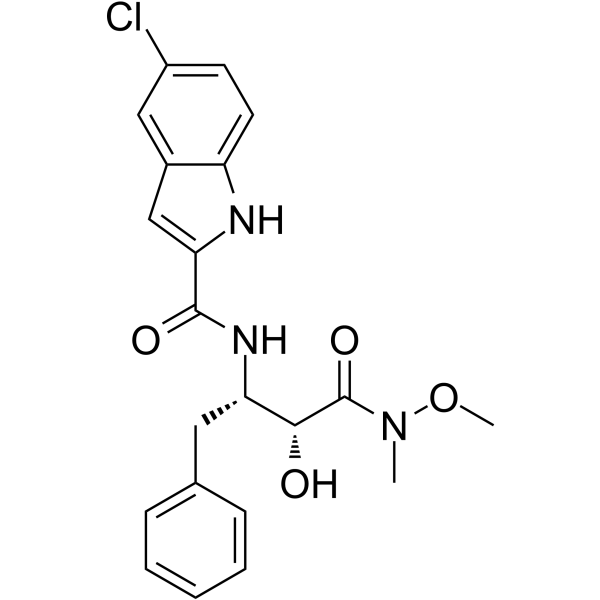 0 ImagesSynonyms: GPi 819CP-316819 (GPi 819) is a blood-brain barrier permeable glycogen phosphorylase inhibitor. CP-316819 inhibits hepatic glycogenolysis, safely reduces blood glucose in type 2 diabetes, and rarely induces hypoglycemia. CP-316819 increases brain glycogen reserves, protects neurons, alleviates hypoglycemic brain injury, and inhibits excessive platelet activation, exerting both neuroprotective and vasculoprotective effects. CP-316819 can be used in research related to hypoglycemia, thrombosis, autoimmune inflammatory diseases, and type 2 diabetes.
-
5'-Deoxyadenosine
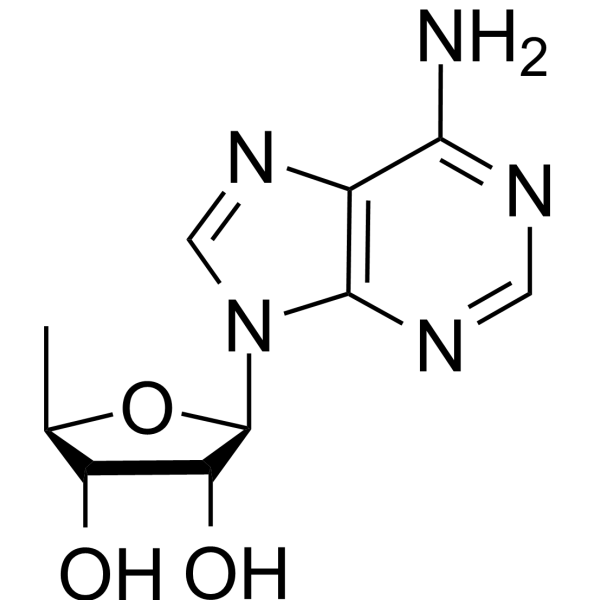 0 Images5'-Deoxyadenosine is a 5'-methylthioadenosine phosphorylase substrate and deoxyadenosine. 5'-Deoxyadenosine serves as a non-metabolizable substrate for nucleoside transport assays only in cells lacking 5'-methylthioadenosine phosphorylase.
-
TK-112690
 0 ImagesTK-112690 is a UPP1 inhibitor. TK-112690 inhibits murine small intestinal uridine phosphorylase (UPase) with an IC50 of 12.5 μM and human small intestinal UPase with an IC50 of 20.0 μM in vitro. TK-112690 increases plasma uridine concentration in mice. TK-112690 can be used for the study of cancer and pulmonary fibrosis.
-
Ingliforib
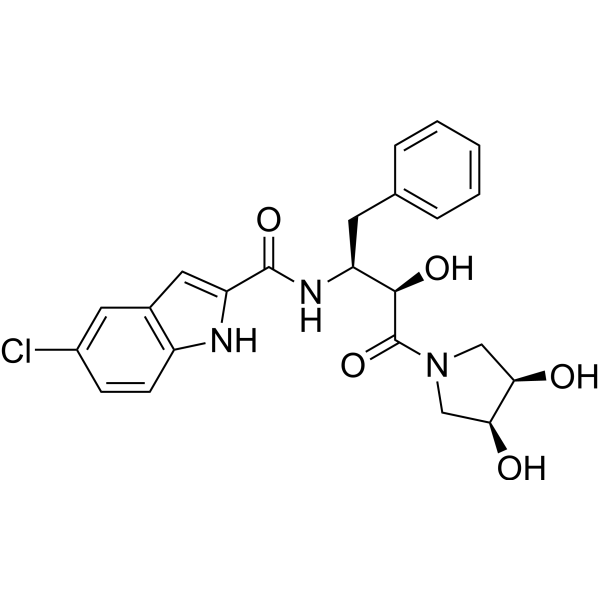 0 ImagesSynonyms: CP 368296; GPi 296Ingliforib (CP 368296) is a glycogen phosphorylase inhibitor, with IC50s of 52, 352 and 150 nM for liver, muscle and brain glycogen phosphorylase, and has cardioprotective activity.
-
Bayogenin
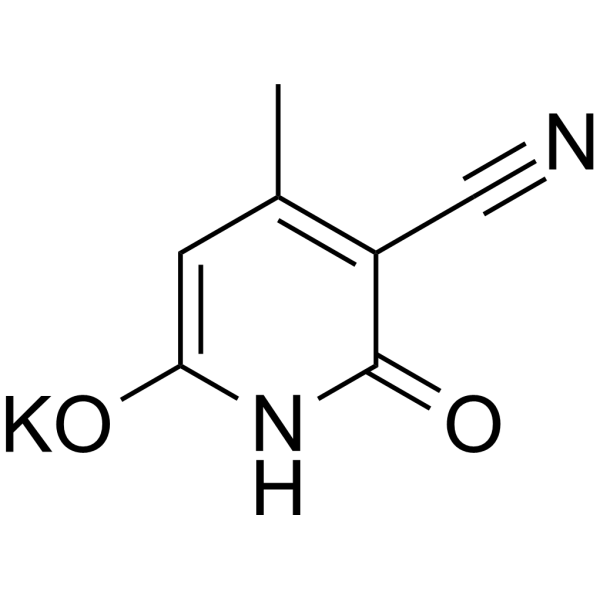
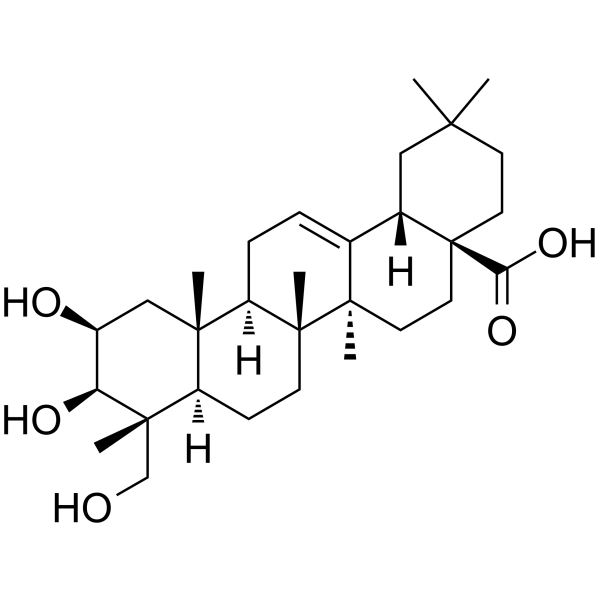 0 ImagesBayogenin is a triterpenoid saponin and one of the main components of Medicago sativa saponins. Bayogenin is an inhibitor of glycogen phosphorylase.

-
AVE5688
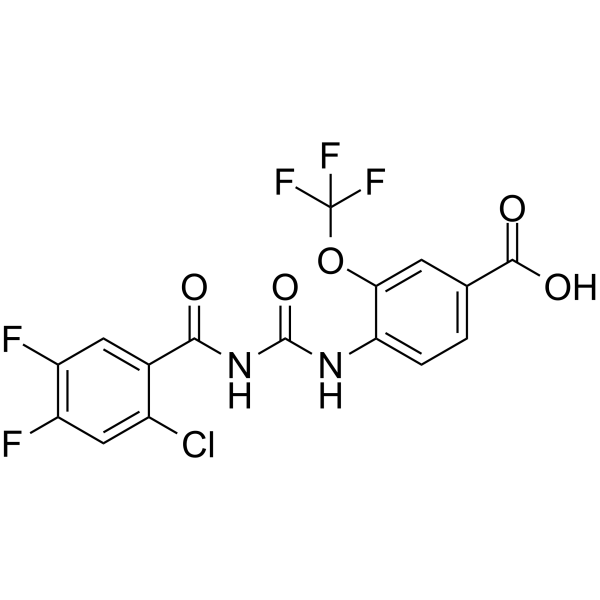 0 ImagesAVE5688 is an inhibitor of glycogen phosphorylase (GP), with IC50s of 430 nM and 915 nM and Kds of 170 nM and 530 nM for rabbit muscle glycogen phosphorylase (rmGPb and rmGPa, respectively); AVE5688 can be used for the research of type 2 diabetes.
-
Phosphorylase b
 0 ImagesPhosphorylase b is one of the two forms of phosphorylase present in skeletal muscle. The other is Phosphorylase a, which can be transformed into one another. The conversion process requires the addition of divalent metal ions and ATP.
-
Glycogen phosphorylase-IN-1
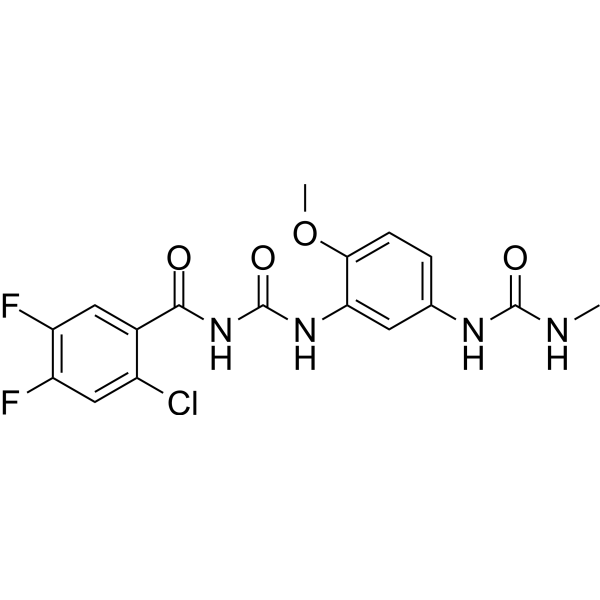 0 ImagesGlycogen phosphorylase-IN-1 (Compound 42) is an inhibitor for human liver glycogen phosphorylase (hlGPa) and hepatocyte glycogen-derived glucose production with IC50s of 53 and 380 nM, respectively. Glycogen phosphorylase-IN-1 reveals efficacy towards type 2 diabetes.
-
Glycogen phosphorylase-IN-2
 0 ImagesCat. No.: HY-172805Glycogen phosphorylase-IN-2 (compound 9C) is an inhibitor of glycogen phosphorylase with a Ki value of 1.9 nM and an IC50 value of 4 nM.
-
m-APTA
 0 ImagesSynonyms: 5′-S-(3-Aminophenyl)-5′-thioadenosinem-APTA (5'-S-(3-aminophenyl)-5'-thioadenosine) is a selective chemoprotective agent targeting methylthioadenosine phosphorylase (MTAP). m-APTA can be converted into adenine, which is a crucial step in protecting normal cells from the toxicity of nucleobase analogues (NBA). m-APTA is promising for research of MTAP-deficient cancers.
-
5'-Deoxyadenosine (Standard)
 0 ImagesCat. No.: HY-113291RCAS No.: 4754-39-65'-Deoxyadenosine (Standard) is the analytical standard of 5'-Deoxyadenosine (HY-113291). This product is intended for research and analytical applications. 5'-Deoxyadenosine is a 5'-methylthioadenosine phosphorylase substrate and deoxyadenosine. 5'-Deoxyadenosine serves as a non-metabolizable substrate for nucleoside transport assays only in cells lacking 5'-methylthioadenosine phosphorylase.
-
CP320626
 0 ImagesCat. No.: HY-117172CAS No.: 186430-23-9CP320626 is a potent inhibitor of human liver glycogen phosphorylase (IC50=205 nM). CP320626 reduces blood glucose in diabetic mice without changing plasma insulin levels. CP320626 can be used in the study of type 2 diabetes.
-
Thymidine phosphorylase
 0 ImagesThymidine phosphorylase is a nucleoside metabolism enzyme that plays an important role in the pyrimidine salvage pathway. Thymidine phosphorylase catalyzes the conversion of thymidine to thymine and 2-deoxy-α-D-ribose-1-phosphate (dRib-1-P). Thymidine phosphorylase plays an important role in platelet activation in vitro and thrombosis in vivo by participating in multiple signaling pathways. Thymidine phosphorylase can be used for the study of myocardial infarction, stroke, pulmonary embolism and cancer.

-
BAY R3401
 0 ImagesBAY R3401 is an orally active glycogen phosphorylase inhibitor that can achieve irreversible and non-selective inhibition of hepatic glycogenolysis. BAY R3401 inhibits glycogenolysis in liver cells, with IC50 values of 27.06 and 52.83 μM in HL-7702 and HepG2 cells, respectively. BAY R3401 can be used for the research of type 2 diabetes.
-
GPi688
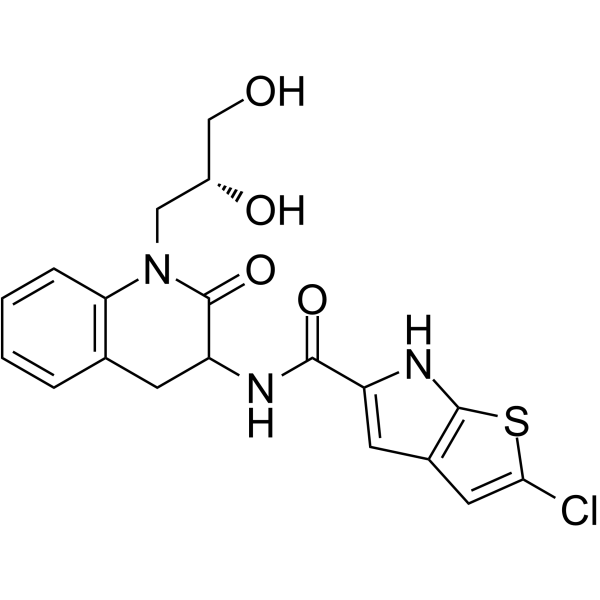 0 ImagesCat. No.: HY-108614CAS No.: 918902-32-6GPi688 is a potent and orally active glycogen phosphorylase (GPa) inhibitor with IC50s of 19 nM, 61 nM and 12 nM for human liver GPa, rat liver GPa and human skeletal muscle GPa, respectively. GPi688 can inhibit glucagons-mediated glucose output in rat primary hepatocytes. GPi688 can be used for researching glucagon-mediated hyperglycaemia.
-
hUP1-IN-1
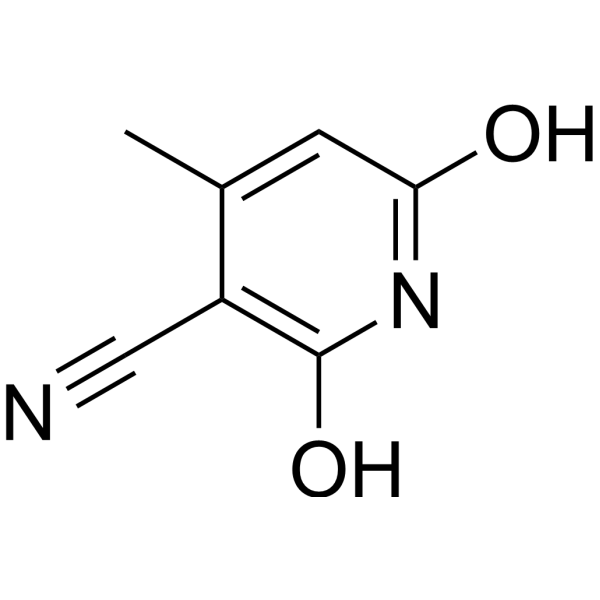 0 ImagesCat. No.: HY-W017441CAS No.: 5444-02-0hUP1-IN-1 is a hUP1 inhibitor with Kii and Kis Urd of 375 and 635 nM. hUP1-IN-1 showes inhibitory activities over hUP1 catalyzed reaction with 70% at 1 μM. hUP1-IN-1 can be used for the research of cancer.
-
CP-316819 (Standard)
 0 ImagesCat. No.: HY-108615RCAS No.: 186392-43-8Synonyms: GPi 819 (Standard)CP-316819 (GPi 819) Standard is the analytical standard of CP-316819 (HY-108615). This product is intended for research and analytical applications. CP-316819 (GPi 819) is a blood-brain barrier permeable glycogen phosphorylase inhibitor. CP-316819 inhibits hepatic glycogenolysis, safely reduces blood glucose in type 2 diabetes, and rarely induces hypoglycemia. CP-316819 increases brain glycogen reserves, protects neurons, alleviates hypoglycemic brain injury, and inhibits excessive platelet activation, exerting both neuroprotective and vasculoprotective effects. CP-316819 can be used in research related to hypoglycemia, thrombosis, autoimmune inflammatory diseases, and type 2 diabetes.
- 1
- 2



