



CP-316819

Based on 1 Customer Validation
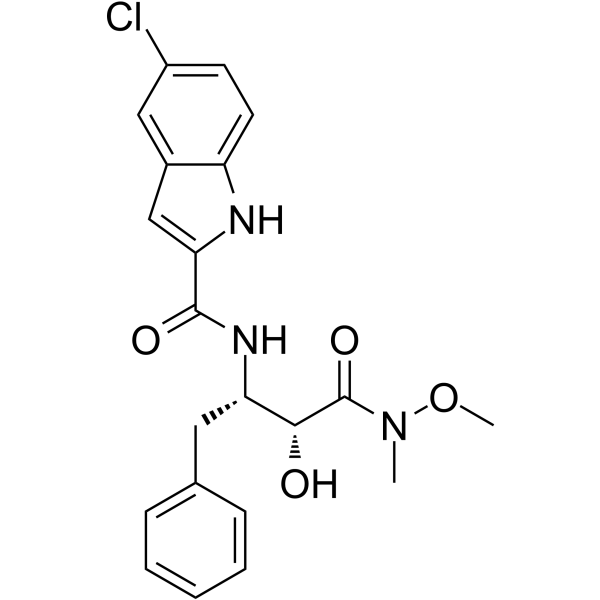
CP-316819 (GPi 819) is a blood-brain barrier permeable glycogen phosphorylase inhibitor. CP-316819 inhibits hepatic glycogenolysis, safely reduces blood glucose in type 2 diabetes, and rarely induces hypoglycemia. CP-316819 increases brain glycogen reserves, protects neurons, alleviates hypoglycemic brain injury, and inhibits excessive platelet activation, exerting both neuroprotective and vasculoprotective effects. CP-316819 can be used in research related to hypoglycemia, thrombosis, autoimmune inflammatory diseases, and type 2 diabetes.
For research use only. We do not sell to patients.
- Purity : 98.58%
- CAS No.: 186392-43-8
- Formula: C21H22ClN3O4
- Molecular Weight:415.87
-
Storage:Powder -20°C, 3 years , 4°C, 2 years ; In solvent -80°C, 6 months , -20°C, 1 month

To place orders, for customer services and technical support, please contact: MedChemExpress USA
Tel: 609-228-6898 E-mail: [email protected] [email protected]


-
 Biological Activity
-
Chemical Information
-
Solvent & Solubility
- Protocols
- Purity & Documentation
- References
-
 Help & FAQs


-
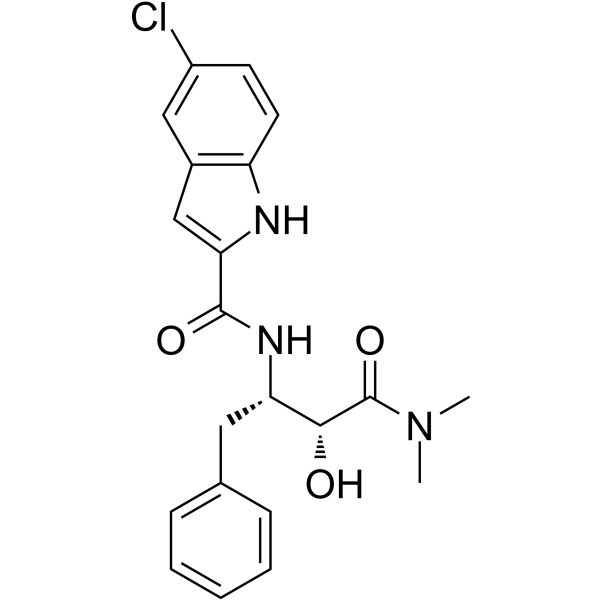
HY-13525
CP-91149Glycogen Phosphorylase Inhibitor -
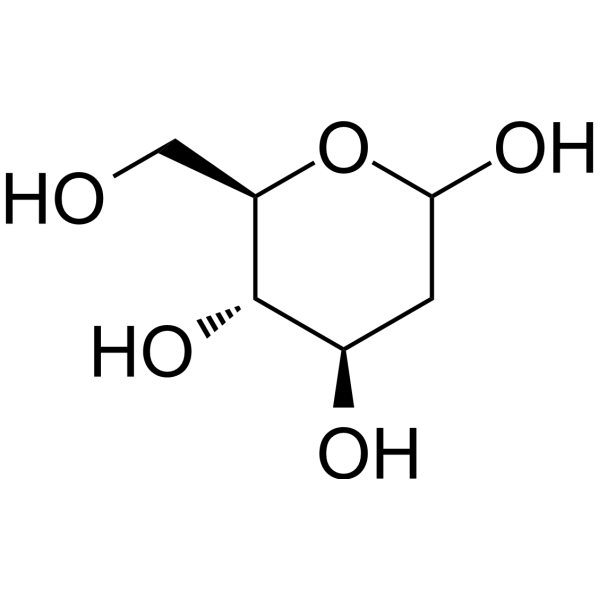
HY-13966
2-Deoxy-D-glucoseGlycolysis Inhibitor -
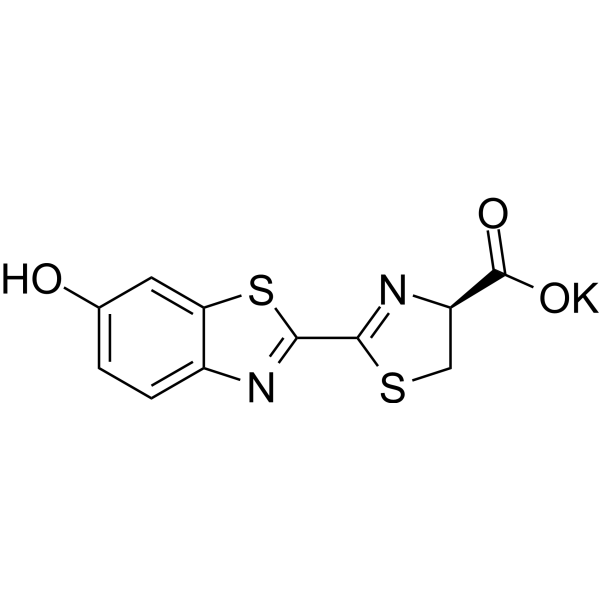
HY-12591B
D-Luciferin potassiumSubstrate for Luciferase -
HY-W010342
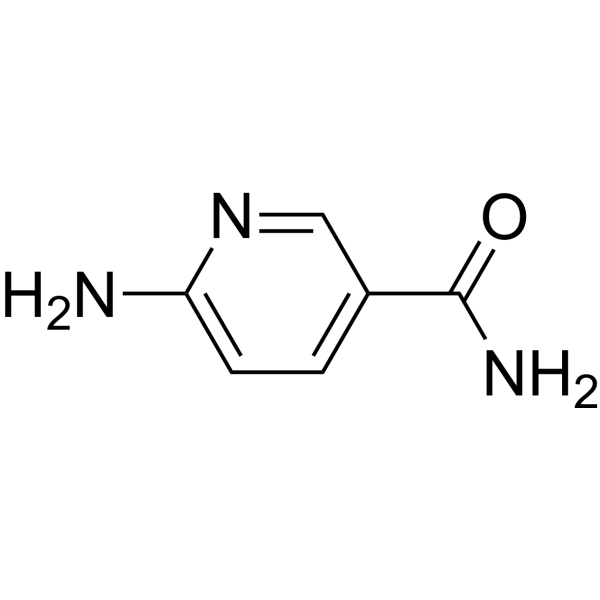
6-AminonicotinamideG6PD Inhibitor -
HY-157646
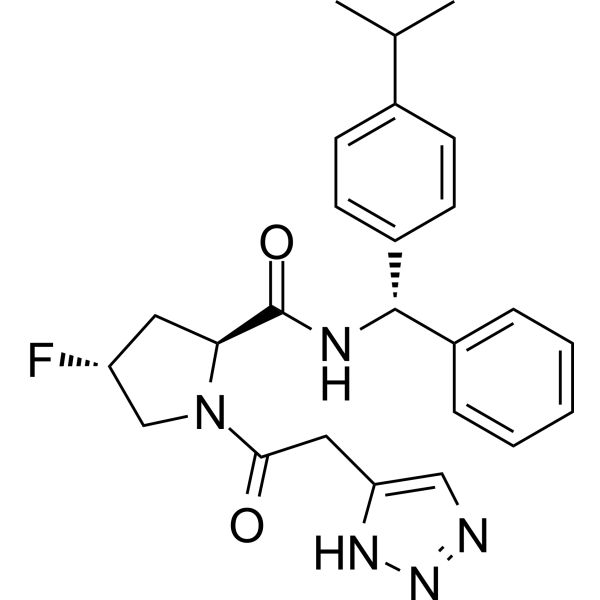
MZ-101GYS1 Inhibitor -
HY-15763
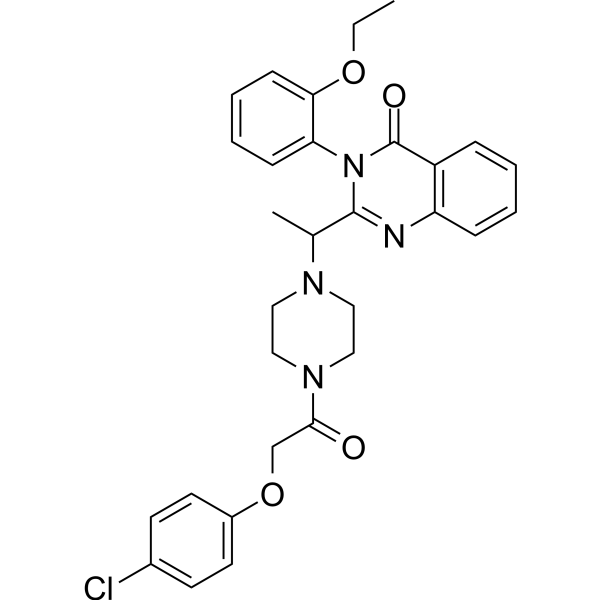
ErastinFerroptosis Inducer -
HY-104026
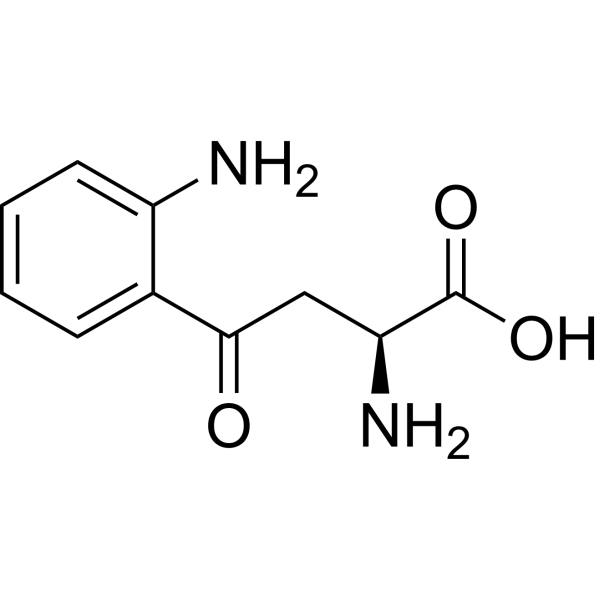
L-KynurenineAryl Hydrocarbon Receptor Agonist -
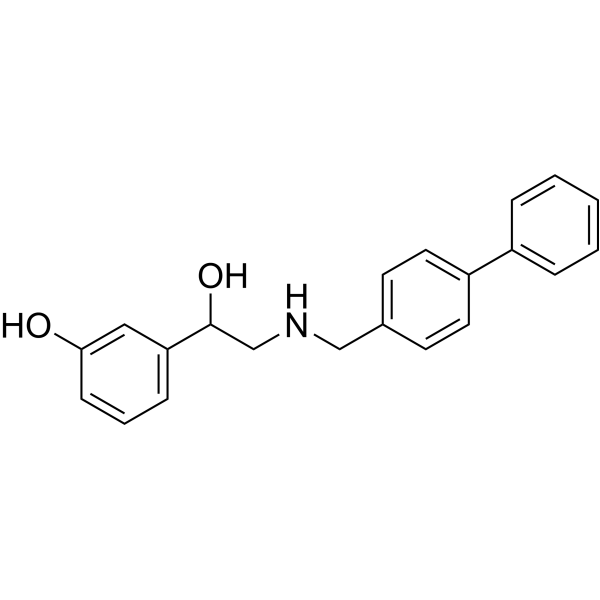
HY-122214
AC-73CD147 Inhibitor -
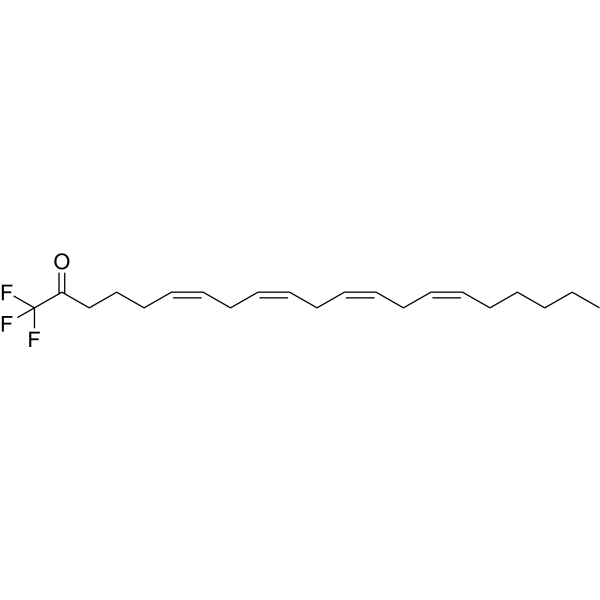
HY-108611
AACOCF3cPLA2 Inhibitor -
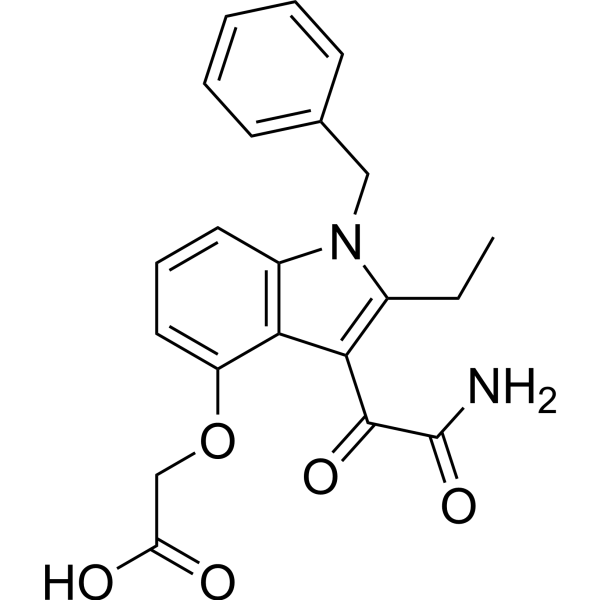
HY-13402
VarespladibsPLA2 Inhibitor -
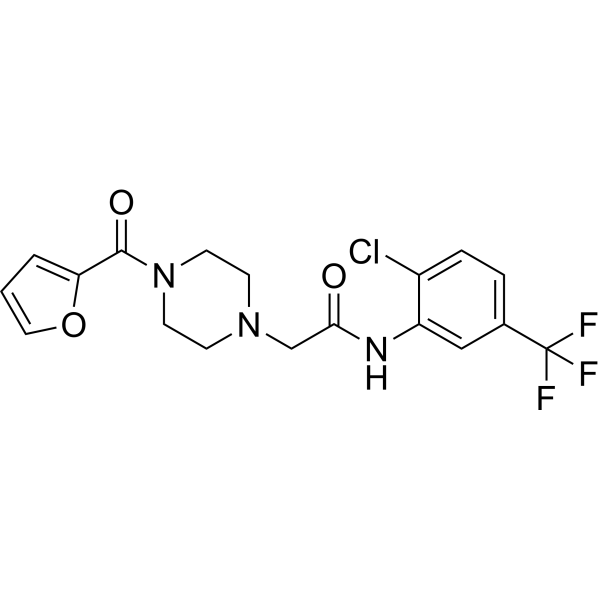
HY-100736
ML348APT1/LYPLA1 Inhibitor -
HY-100737
ML349APT2/LYPLA2 Inhibitor


Biological Activity
Description
In Vitro
CP-316819 (50 μM; 0-20 minutes) transiently inhibits the early α-granule exocytosis of thrombin-stimulated control mouse platelets, and exocytosis returns to normal at 20 minutes after stimulation[2].
CP-316819 (0-1 mM; 24 h) increases glycogen content in primary Swiss-Webster mouse forebrain astrocyte cultures in a dose-dependent manner, without preventing glycogen utilization during glucose deprivation[3].
MedChemExpress (MCE) has not independently confirmed the accuracy of these methods. They are for reference only.
In Vivo
CP-316819 (initial dose of 150 mg/kg, followed by 50 mg/kg at 12 h and 16 h after the initial administration; intraperitoneal injection) increases brain glycogen content in rats and prolongs the duration of neuronal activity under hypoglycemic conditions[3].
MedChemExpress (MCE) has not independently confirmed the accuracy of these methods. They are for reference only.
-
Animal Model:Sprague-Dawley (adult male, 2-3 months of age, insulin-induced hypoglycemia model)[1]
-
Dosage:2.5 mg/24 h; 10.0 mg/24 h
-
Administration:i.c.v.; continuous infusion; 24 hours
-
Result:Elevated basal glycogen only in the lateral hypothalamic area (LHA) at 2.5 mg/24 h dose; insulin-induced hypoglycemia reduced VMN and LHA glycogen in this group.
Elevated basal glycogen in the VMN, arcuate hypothalamic nucleus (ARH), dorsomedial hypothalamic nucleus (DMN), and LHA at 10.0 mg/24 h dose; insulin-induced hypoglycemia further increased glycogen in all these regions.
Elevated basal glucose in the VMN, ARH, and LHA, and prevented hypoglycemic glucose reduction in the ARH and DMN at 2.5 mg/24 h dose.
Reduced basal glucose in the LHA and DMN, and prevented hypoglycemic glucose reduction in the ARH, LHA, and DMN at 10.0 mg/24 h dose.
Elevated basal GAD65/67 and phosphorylated AMPK (pAMPK) levels in VMN GABA neurons at 2.5 mg/24 h dose; hypoglycemia reversed these increases to baseline levels.
Had no effect on basal GAD65/67, Fos, AMPK, or pAMPK levels in VMN GABA neurons, and prevented hypoglycemic increases in these proteins at 10.0 mg/24 h dose.
Reduced basal SF-1, Fos, AMPK, and pAMPK levels in VMN SF-1 neurons at 2.5 mg/24 h dose; hypoglycemia did not alter these reduced levels.
Reduced basal Fos, AMPK, and pAMPK levels (with no change to SF-1) in VMN SF-1 neurons at 10.0 mg/24 h dose; hypoglycemia did not alter these levels.
Prevented hypoglycemic AMPK activation in VMN SF-1 neurons at both doses.
Elevated basal neuronal nitric oxide synthase (nNOS), Fos, AMPK, and pAMPK levels in VMN nitrergic neurons at 2.5 mg/24 h dose; hypoglycemia increased nNOS further but reduced Fos, AMPK, and pAMPK to baseline.
Elevated basal nNOS and Fos levels (with no change to AMPK or pAMPK) in VMN nitrergic neurons at 10.0 mg/24 h dose; hypoglycemia reduced nNOS, Fos, and pAMPK levels from baseline.
Elevated basal plasma glucagon levels at 2.5 mg/24 h dose; hypoglycemia reduced glucagon to below baseline.
Had no effect on basal glucagon at 10.0 mg/24 h dose; hypoglycemia did not alter glucagon levels.
Did not affect plasma corticosterone levels at either dose.


Chemical Information
-
CAS No. 186392-43-8
-
Appearance Solid
-
Molecular Weight 415.87
-
Formula C21H22ClN3O4
-
Color White to off-white
-
SMILES
CON(C)C([C@H](O)[C@H](CC1=CC=CC=C1)NC(C2=CC3=CC(Cl)=CC=C3N2)=O)=O
-
Synonyms
GPi 819
-
Shipping
Room temperature in continental US; may vary elsewhere.
-
Storage
Powder -20°C 3 years 4°C 2 years In solvent -80°C 6 months -20°C 1 month


Solvent & Solubility
In Vitro:
DMSO : 125 mg/mL (300.57 mM; Need ultrasonic; Hygroscopic DMSO has a significant impact on the solubility of product, please use newly opened DMSO)
Please refer to the solubility information to select the appropriate solvent. Once prepared, please aliquot and store the solution to prevent product inactivation from repeated freeze-thaw cycles.
Storage method and period of stock solution: -80°C, 6 months; -20°C, 1 month. When stored at -80°C, please use it within 6 months. When stored at -20°C, please use it within 1 month.
Please refer to the solubility information to select the appropriate solvent. Once prepared, please aliquot and store the solution to prevent product inactivation from repeated freeze-thaw cycles.
Storage method and period of stock solution: -80°C, 6 months; -20°C, 1 month. When stored at -80°C, please use it within 6 months. When stored at -20°C, please use it within 1 month.
Concentration (start) × Volume (start) = Concentration (final) × Volume (final)
In Vivo:
Select the appropriate dissolution method based on your experimental animal and administration route.
- For the following dissolution methods, please ensure to first prepare a clear stock solution using an In Vitro approach and then sequentially add co-solvents:
- To ensure reliable experimental results, the clarified stock solution can be appropriately stored based on storage conditions. As for the working solution for In Vivo experiments, it is recommended to prepare freshly and use it on the same day.
- The percentages shown for the solvents indicate their volumetric ratio in the final prepared solution. If precipitation or phase separation occurs during preparation, heat and/or sonication can be used to aid dissolution.
Add each solvent one by one: 10% DMSO 40% PEG300 5% Tween-80 45% Saline
Solubility: ≥ 2.08 mg/mL (5.00 mM); Clear solution
This protocol yields a clear solution of ≥ 2.08 mg/mL (saturation unknown).
Taking 1 mL working solution as an example, add 100 μL DMSO stock solution (20.8 mg/mL) to 400 μL PEG300, and mix evenly; then add 50 μL Tween-80 and mix evenly; then add 450 μL Saline to adjust the volume to 1 mL.
Preparation of Saline: Dissolve 0.9 g sodium chloride in ddH₂O and dilute to 100 mL to obtain a clear Saline solution.
In Vivo Dissolution Calculator
Please enter the basic information of animal experiments:
-
-
-
-
Recommended: Prepare an additional quantity of animals to account for potential losses during experiments.
Please enter your animal formula composition:
-
%DMSO +
Recommended: Keep the proportion of DMSO in working solution below 2% if your animal is weak.
-
%+
-
+%Tween-80 + +
-
%Saline +
The co-solvents required include: DMSO, . All of co-solvents are available by MedChemExpress (MCE). , Tween 80. All of co-solvents are available by MedChemExpress (MCE).
Working solution concentration: 0.22 mg/mL
Method for preparing stock solution: mg drug dissolved in μL DMSO. Stock solution concentration: mg/mL.
1. Take μL DMSO stock solution;
2. Add μL .
μL , mix evenly;
3. Then add μL Tween 80, mix evenly;
4. Then add μL
Please ensure that the stock solution in the first step is dissolved to a clear state, and add co-solvents in sequence. You can use ultrasonic heating (ultrasonic cleaner, recommended frequency 20-40 kHz), vortexing, etc. to assist dissolution.


Purity & Documentation
-
Data Sheet (280 KB)
-
SDS (479 KB)
- English - EN (479 KB)
- Français - FR (479 KB)
- Deutsch - DE (479 KB)
- Norwegian - NO (479 KB)
- Español - ES (479 KB)
- Swedish - SV (479 KB)
- Italian - IT (479 KB)
- Korean - KR (479 KB)
- Portuguese - PT (479 KB)
-
Handling Instructions (2659 KB)
References
[1]. Ibrahim MMH, et al. Effects of Intracerebroventricular Glycogen Phosphorylase Inhibitor CP-316,819 Infusion on Hypothalamic Glycogen Content and Metabolic Neuron AMPK Activity and Neurotransmitter Expression in Male Rat. J Mol Neurosci. 2020;70(5):647-658. [Content Brief]
[2]. Fidler TP, et al. Glucose Transporter 3 Potentiates Degranulation and Is Required for Platelet Activation. Arterioscler Thromb Vasc Biol. 2017;37(9):1628-1639. [Content Brief]
[3]. Suh SW, et al. Astrocyte glycogen sustains neuronal activity during hypoglycemia: studies with the glycogen phosphorylase inhibitor CP-316,819 ([R-R*,S*]-5-chloro-N-[2-hydroxy-3-(methoxymethylamino)-3-oxo-1-(phenylmethyl)propyl]-1H-indole-2-carboxamide). J Pharmacol Exp Ther. 2007 Apr;321(1):45-50. [Content Brief]
[4]. Baker DJ, et al. Glycogen phosphorylase inhibition in type 2 diabetes therapy: a systematic evaluation of metabolic and functional effects in rat skeletal muscle. Diabetes. 2005 Aug;54(8):2453-9. [Content Brief]


Complete Stock Solution Preparation Table
Please refer to the solubility information to select the appropriate solvent. Once prepared, please aliquot and store the solution to prevent product inactivation from repeated freeze-thaw cycles.
Storage method and period of stock solution: -80°C, 6 months; -20°C, 1 month. When stored at -80°C, please use it within 6 months. When stored at -20°C, please use it within 1 month.
| Optional Solvent | Concentration Solvent Mass | 1 mg | 5 mg | 10 mg | 25 mg |
|---|---|---|---|---|---|
| DMSO | 1 mM | 2.4046 mL | 12.0230 mL | 24.0460 mL | 60.1149 mL |
| 5 mM | 0.4809 mL | 2.4046 mL | 4.8092 mL | 12.0230 mL | |
| 10 mM | 0.2405 mL | 1.2023 mL | 2.4046 mL | 6.0115 mL | |
| 15 mM | 0.1603 mL | 0.8015 mL | 1.6031 mL | 4.0077 mL | |
| 20 mM | 0.1202 mL | 0.6011 mL | 1.2023 mL | 3.0057 mL | |
| 25 mM | 0.0962 mL | 0.4809 mL | 0.9618 mL | 2.4046 mL | |
| 30 mM | 0.0802 mL | 0.4008 mL | 0.8015 mL | 2.0038 mL | |
| 40 mM | 0.0601 mL | 0.3006 mL | 0.6011 mL | 1.5029 mL | |
| 50 mM | 0.0481 mL | 0.2405 mL | 0.4809 mL | 1.2023 mL | |
| 60 mM | 0.0401 mL | 0.2004 mL | 0.4008 mL | 1.0019 mL | |
| 80 mM | 0.0301 mL | 0.1503 mL | 0.3006 mL | 0.7514 mL | |
| 100 mM | 0.0240 mL | 0.1202 mL | 0.2405 mL | 0.6011 mL |


CP-316819 Related Classifications
HY-108615 Related Classifications
 Powered by Bioz