



CP-91149
Based on 9 publication(s) in Google Scholar
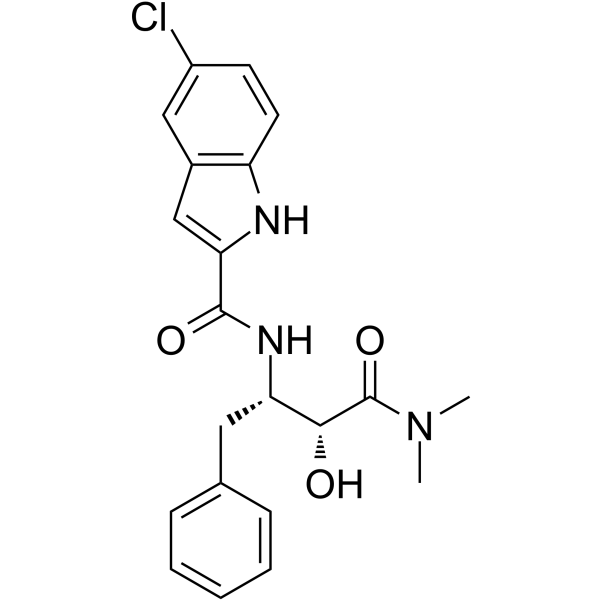
CP-91149 is a GP (glycogen phosphorylase) inhibitor. CP-91149 promotes glycogen resynthesis, but not its overaccumulation. CP-91149 has the potential for Type II (insulin-dependent) diabetes study.
For research use only. We do not sell to patients.
- Purity : 99.84%
- CAS No.: 186392-40-5
- Formula: C21H22ClN3O3
- Molecular Weight:399.88
-
Storage:Powder -20°C, 3 years , 4°C, 2 years ; In solvent -80°C, 6 months , -20°C, 1 month

To place orders, for customer services and technical support, please contact: MedChemExpress USA
Tel: 609-228-6898 E-mail: [email protected] [email protected]


-
 Biological Activity
-
Chemical Information
-
Solvent & Solubility
- Protocols
- Purity & Documentation
- References
-
 Help & FAQs


-
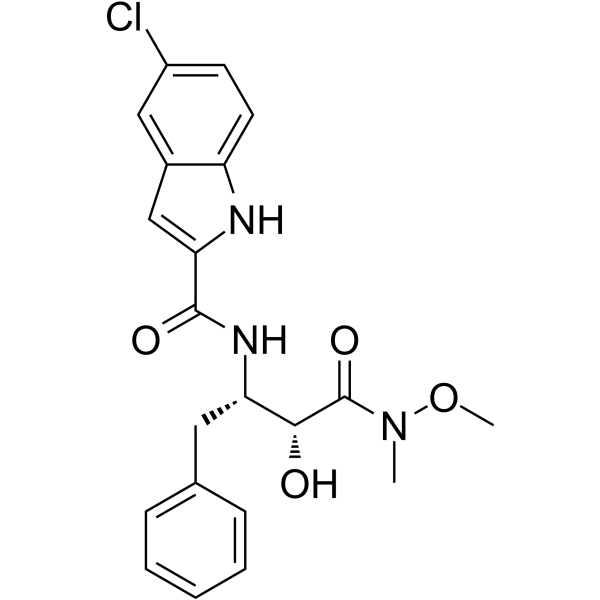
HY-108615
CP-316819Glycogen Phosphorylase Inhibitor -
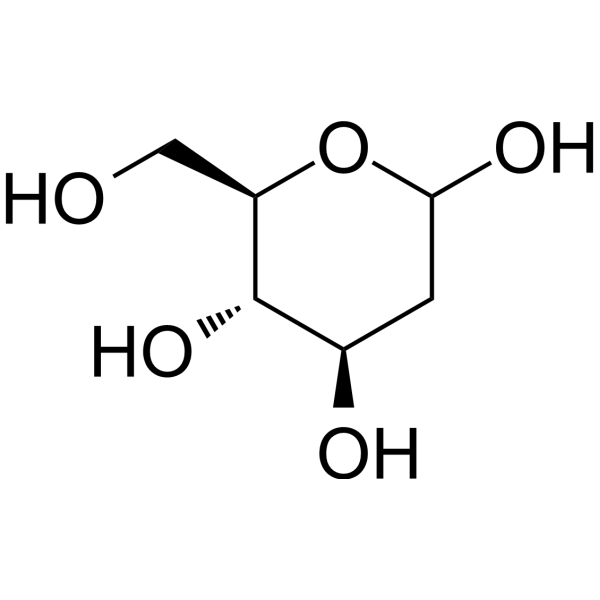
HY-13966
2-Deoxy-D-glucoseGlycolysis Inhibitor -
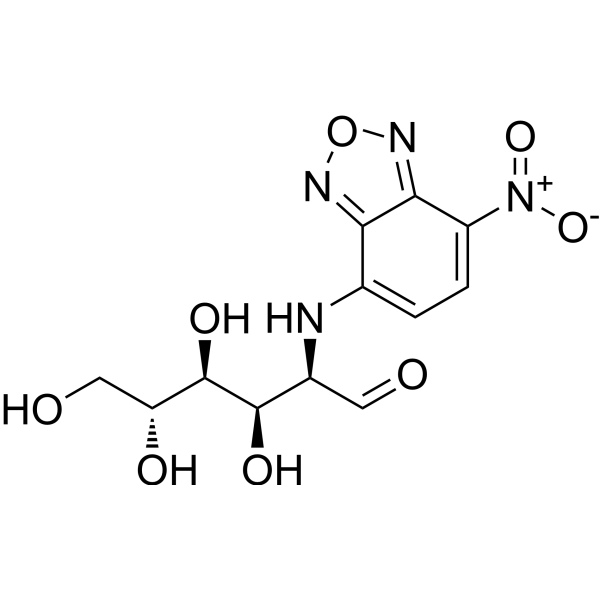
HY-116215
2-NBDGFluorescent Indicator -

HY-N6782
OligomycinH+-ATP-Synthase Inhibitor -
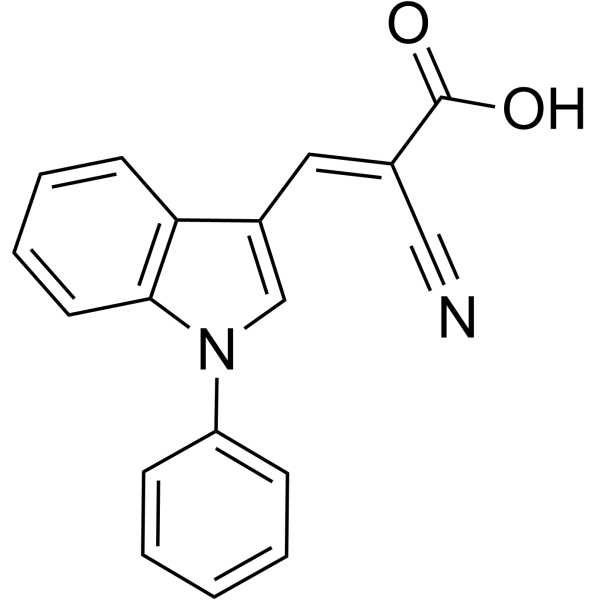
HY-15475
UK-5099Mitochondrial Pyruvate Carrier Inhibitor -
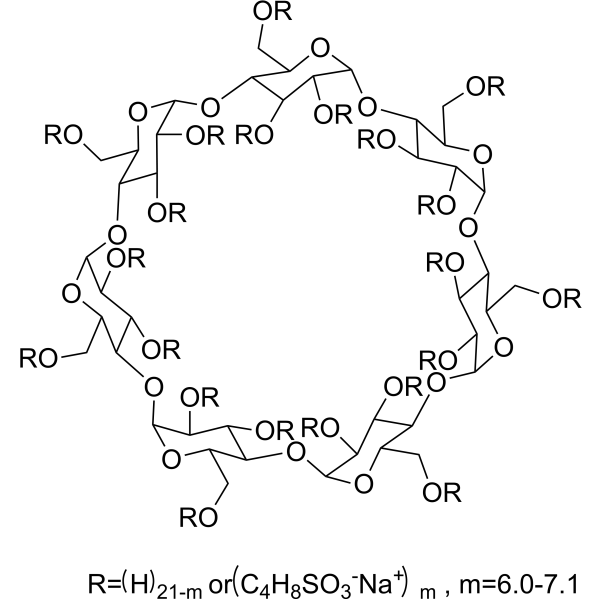
HY-17031
SBE-β-CDExcipient -
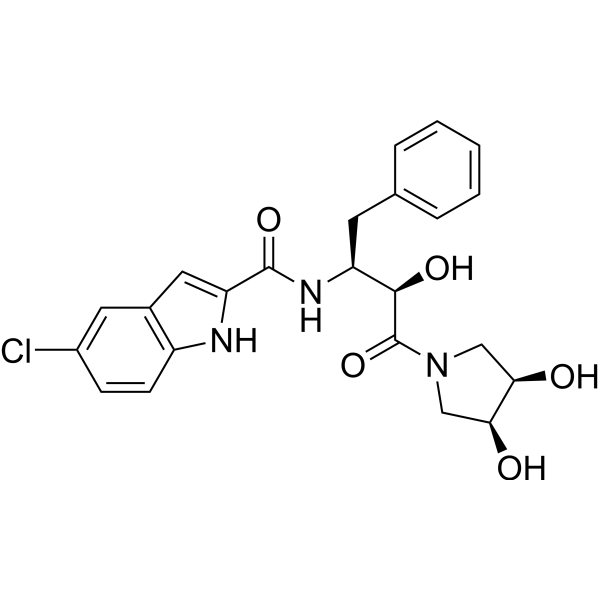
HY-19396
IngliforibGlycogen Phosphorylase Inhibitor -
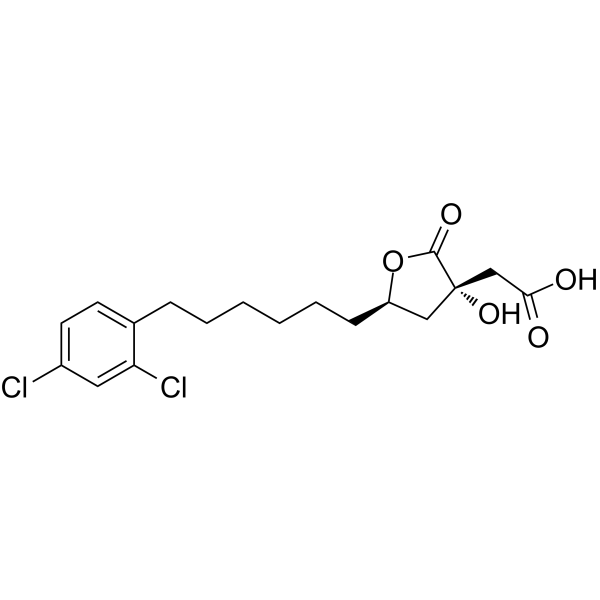
HY-16450
SB 204990ATP Citrate Lyase Inhibitor -
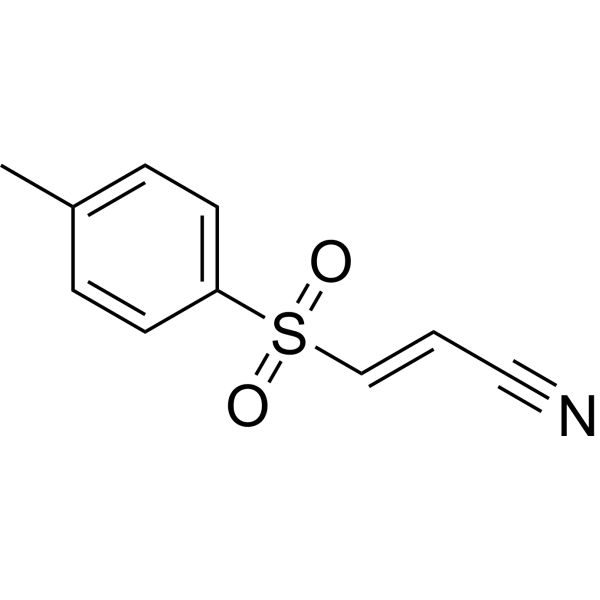
HY-13453
BAY 11-7082IκBα/NF-κB Inhibitor -
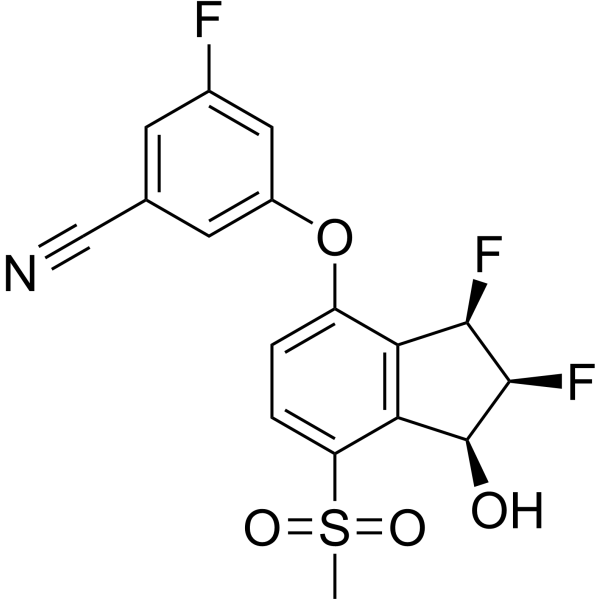
HY-125840
BelzutifanHIF-2α Inhibitor -
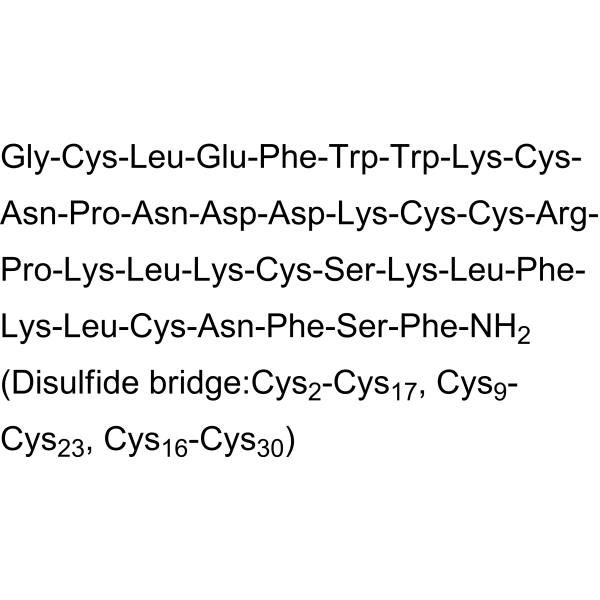
HY-P1410
GsMTx4MSCs Inhibitor -
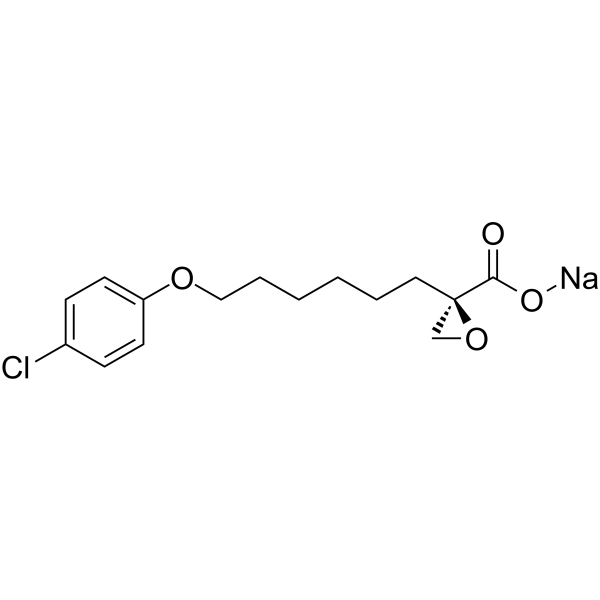
HY-50202A
Etomoxir sodium saltCPT1a Inhibitor
Publications Citing Use of MedChemExpress (MCE) CP-91149
More- Nat Commun. 2025 Jan 2;16(1):212. [Abstract]
- Cell Death Differ. 2025 Apr 11. [Abstract]
- EMBO J. 2026 Aug;45(16):5884-5918.
- J Ginseng Res. 2023 Nov;47(6):784-794. [Abstract]
- FASEB J. 2024 Jul 31;38(14):e23844. [Abstract]
- J Hepatocell Carcinoma. 2024 Jul 5:11:1295-1310. [Abstract]
- Comp Biochem Physiol Part D Genomics Proteomics. 2025 Aug 8:56:101602. [Abstract]
- Patent. US20240325326A1.
- Heliyon. 2024 Mar 16;10(6):e28295. [Abstract]
 Customer Validation & Images

-
Bio/Physico-chemical Assay
-
Cell Proliferation/Viability Assay
-
WB
-
Bio/Physico-chemical Assay
-
Bio/Physico-chemical Assay


Biological Activity
Description
Cellular Effect
|
Cell Line

|
Type | Value | Description | References |
|---|---|---|---|---|
| Hepatocyte | IC50 |
3172.5 nM
Compound: CP-91149
|
Inhibition of glycogenolysis in rat hepatocytes assessed as GCN-stimulated glycogen breakdown after 5 mins
Inhibition of glycogenolysis in rat hepatocytes assessed as GCN-stimulated glycogen breakdown after 5 mins
|
[PMID: 32527535] |
| HepG2 | IC50 |
3310.4 nM
Compound: CP-91149
|
Inhibition of glycogenolysis in human HepG2 cells assessed as GCN-stimulated glycogen breakdown after 5 mins
Inhibition of glycogenolysis in human HepG2 cells assessed as GCN-stimulated glycogen breakdown after 5 mins
|
[PMID: 32527535] |
| Sf9 | IC50 |
0.082 μM
Compound: D; CP-91149
|
Inhibition of human recombinant liver glycogen phosphorylase A expressed in baculovirus infected Sf9 insect cells assessed as release of phosphate from glucose-1- phosphate in presence of 7.5 mM glucose by malachite green based assay
Inhibition of human recombinant liver glycogen phosphorylase A expressed in baculovirus infected Sf9 insect cells assessed as release of phosphate from glucose-1- phosphate in presence of 7.5 mM glucose by malachite green based assay
|
[PMID: 27624527] |
| Sf9 | IC50 |
110 nM
Compound: CP-91149
|
Inhibition of recombinant human liver glycogen phosphorylase a expressed in baculovirus-infected Sf9 cells using glucose-1-phosphate as substrate in presence of 7.5 mM glucose
Inhibition of recombinant human liver glycogen phosphorylase a expressed in baculovirus-infected Sf9 cells using glucose-1-phosphate as substrate in presence of 7.5 mM glucose
|
[PMID: 32527535] |
| SK-HEP1 | IC50 |
1.5 μM
Compound: CP-91149
|
Inhibitory concentration against human SK-Hep-1 cells (hepatoma cell line)
Inhibitory concentration against human SK-Hep-1 cells (hepatoma cell line)
|
[PMID: 15603973] |
In Vitro
CP-91149 treatment decreases muscle GP activity by converting the phosphorylated AMP-independent α form into the dephosphorylated AMP-dependent b form and inhibiting GP α activity and AMP-mediated GP b activation[1].
CP-91149 (10, 30, 50 μM) inhibits brain GP and causes glycogen accumulation in A549 cells[2].
MedChemExpress (MCE) has not independently confirmed the accuracy of these methods. They are for reference only. Further protocols information, click here.
-
Cell Line:Cells were transduced with adenoviruses and incubated in the presence of 25 mM glucose for 2 days.
-
Concentration:10 µM (glucose− or glucose+ for 18 h).
-
Incubation Time:3 h.
-
Result:Promoted the conversion of GP a into GP b, according to α model proposed in hepatocytes.
-
Cell Line:A549 cells.
-
Concentration:0, 10, 30, 50 μM.
-
Incubation Time:72 h.
-
Result:A significant increase in glycogen accumulation was detected at 10 μM of CP-91149 as compared with untreated cells with a maximal glycogen accumulation at 30 μM. Intracellular glycogen content decreased at 50 μM CP-91149, perhaps explained by additional pharmacological effects of the drug. The dose-dependent accumulation of intracellular glycogen in A549 cells by CP-91149 indicates that CP-91149 inhibits brain GP in tissue culture.


Chemical Information
-
CAS No. 186392-40-5
-
Appearance Solid
-
Molecular Weight 399.88
-
Formula C21H22ClN3O3
-
Color White to off-white
-
SMILES
O=C(C(N1)=CC2=C1C=CC(Cl)=C2)N[C@@H](CC3=CC=CC=C3)[C@@H](O)C(N(C)C)=O
-
Shipping
Room temperature in continental US; may vary elsewhere.
-
Storage
Powder -20°C 3 years 4°C 2 years In solvent -80°C 6 months -20°C 1 month


Publications (9)
-
Journal Impact Factor
-
Most Recent
-
Nat Commun
Mitochondrial-cytochrome c oxidase II promotes glutaminolysis to sustain tumor cell survival upon glucose deprivation. [Abstract]2025 Jan 2;16(1):212. PMID: 39747079 -
Cell Death Differ
Glycogen stores mediated by the p53-GYS1 feedback circuit engenders platinum resistance in ovarian clear cell carcinoma. [Abstract]2025 Apr 11. PMID: 40210982 -
-
J Ginseng Res
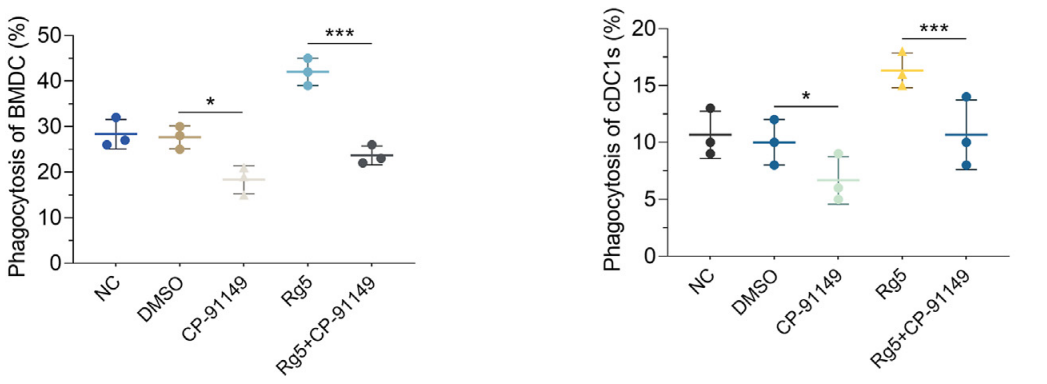
Ginsenoside Rg5 promotes wound healing in diabetes by reducing the negative regulation of SLC7A11 on the efferocytosis of dendritic cells. [Abstract]2023 Nov;47(6):784-794. PMID: 38107390
CP-91149 purchased from MedChemExpress. Usage Cited in: J Ginseng Res. 2023 Nov;47(6):784-794. [Abstract]
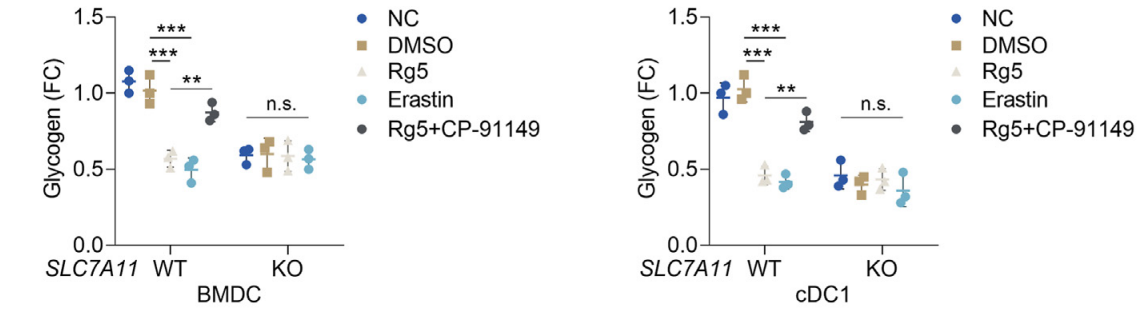
CP-91149 (a glycogen phosphorylase inhibitor) restored glycogen levels in ginsenoside Rg5-treated BMDCs and cDC1s.
CP-91149 purchased from MedChemExpress. Usage Cited in: J Ginseng Res. 2023 Nov;47(6):784-794. [Abstract]
CP-91149 significantly weakened ginsenoside Rg5-dependent elevation in efferocytosis.
-
FASEB J
Desaminotyrosine is a redox-active microbial metabolite that bolsters macrophage antimicrobial functions while attenuating IL-6 production. [Abstract]2024 Jul 31;38(14):e23844. PMID: 39046365 -
J Hepatocell Carcinoma
IL-6 Released from Hepatic Stellate Cells Promotes Glycolysis and Migration of HCC Through the JAK1/vWF/TGFB1 Axis. [Abstract]2024 Jul 5:11:1295-1310. PMID: 38983936 -
Comp Biochem Physiol Part D Genomics Proteomics
Deciphering multi-organ protein regulatory strategies in the Asian frog, Pelophylax nigromaculatus during hibernation to elucidate energy homeostasis maintenance mechanisms. [Abstract]2025 Aug 8:56:101602. PMID: 40795786 -
-
Heliyon
Integrated genomic and proteomic analyses identify PYGL as a novel experimental therapeutic target for clear cell renal cell carcinoma. [Abstract]2024 Mar 16;10(6):e28295. PMID: 38545181
CP-91149 purchased from MedChemExpress. Usage Cited in: Heliyon. 2024 Mar 16;10(6):e28295. [Abstract]
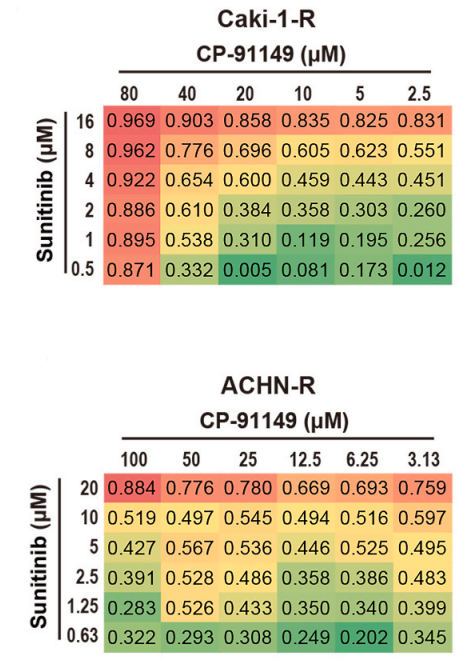
Drug synergy matrix of sunitinib and CP-91149 (2.5-100 μM) in Caki-1-R and ACHN-R cells.
CP-91149 purchased from MedChemExpress. Usage Cited in: Heliyon. 2024 Mar 16;10(6):e28295. [Abstract]
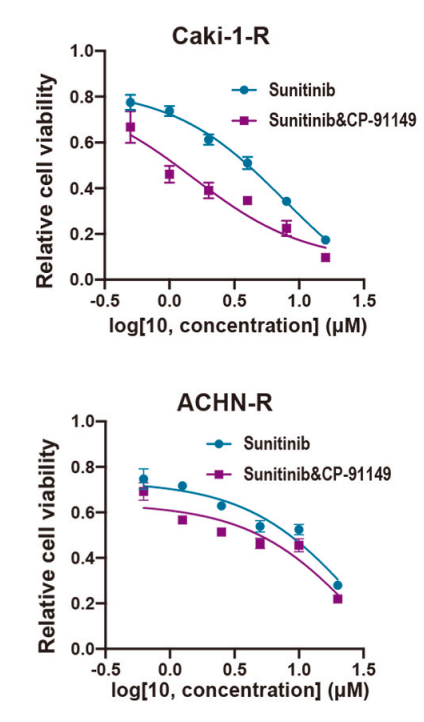
Dose-response curves were compared between sunitinib and the combination of sunitinib with CP-91149 (0-100 μM) in Caki-1-R and ACHN-R cells.
CP-91149 purchased from MedChemExpress. Usage Cited in: Heliyon. 2024 Mar 16;10(6):e28295. [Abstract]
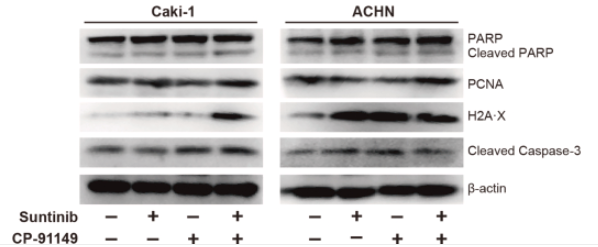
Combination of sunitinib and CP-91149 enhances DNA damage and apoptosis in ccRCC cells.


Solvent & Solubility
In Vitro:
DMSO : 100 mg/mL (250.08 mM; Need ultrasonic; Hygroscopic DMSO has a significant impact on the solubility of product, please use newly opened DMSO)
Please refer to the solubility information to select the appropriate solvent. Once prepared, please aliquot and store the solution to prevent product inactivation from repeated freeze-thaw cycles.
Storage method and period of stock solution: -80°C, 6 months; -20°C, 1 month. When stored at -80°C, please use it within 6 months. When stored at -20°C, please use it within 1 month.
Please refer to the solubility information to select the appropriate solvent. Once prepared, please aliquot and store the solution to prevent product inactivation from repeated freeze-thaw cycles.
Storage method and period of stock solution: -80°C, 6 months; -20°C, 1 month. When stored at -80°C, please use it within 6 months. When stored at -20°C, please use it within 1 month.
Concentration (start) × Volume (start) = Concentration (final) × Volume (final)
In Vivo:
Select the appropriate dissolution method based on your experimental animal and administration route.
- For the following dissolution methods, please ensure to first prepare a clear stock solution using an In Vitro approach and then sequentially add co-solvents:
- To ensure reliable experimental results, the clarified stock solution can be appropriately stored based on storage conditions. As for the working solution for In Vivo experiments, it is recommended to prepare freshly and use it on the same day.
- The percentages shown for the solvents indicate their volumetric ratio in the final prepared solution. If precipitation or phase separation occurs during preparation, heat and/or sonication can be used to aid dissolution.
Add each solvent one by one: 10% DMSO 40% PEG300 5% Tween-80 45% Saline
Solubility: ≥ 2.5 mg/mL (6.25 mM); Clear solution
This protocol yields a clear solution of ≥ 2.5 mg/mL (saturation unknown).
Taking 1 mL working solution as an example, add 100 μL DMSO stock solution (25.0 mg/mL) to 400 μL PEG300, and mix evenly; then add 50 μL Tween-80 and mix evenly; then add 450 μL Saline to adjust the volume to 1 mL.
Preparation of Saline: Dissolve 0.9 g sodium chloride in ddH₂O and dilute to 100 mL to obtain a clear Saline solution.
In Vivo Dissolution Calculator
Please enter the basic information of animal experiments:
-
-
-
-
Recommended: Prepare an additional quantity of animals to account for potential losses during experiments.
Please enter your animal formula composition:
-
%DMSO +
Recommended: Keep the proportion of DMSO in working solution below 2% if your animal is weak.
-
%+
-
+%Tween-80 + +
-
%Saline +
The co-solvents required include: DMSO, . All of co-solvents are available by MedChemExpress (MCE). , Tween 80. All of co-solvents are available by MedChemExpress (MCE).
Working solution concentration: 0.22 mg/mL
Method for preparing stock solution: mg drug dissolved in μL DMSO. Stock solution concentration: mg/mL.
1. Take μL DMSO stock solution;
2. Add μL .
μL , mix evenly;
3. Then add μL Tween 80, mix evenly;
4. Then add μL
Please ensure that the stock solution in the first step is dissolved to a clear state, and add co-solvents in sequence. You can use ultrasonic heating (ultrasonic cleaner, recommended frequency 20-40 kHz), vortexing, etc. to assist dissolution.

Protocols
-
Research Protocol for Endocrine Diseases
Endocrine diseases often arise from disrupted hormone production, hormone signaling, or target-tissue responsiveness; for diabetes-focused endocrine disease models, insulin signaling regulates glucose uptake, hepatic glucose output, lipid metabolism, and β-cell compensation. Type 2 diabetes develops through interacting defects in insulin resistance, β-cell dysfunction, adipose inflammation, hepatic glucose overproduction, altered incretin signaling, and ectopic lipid metabolism. A major unresolved question is whether endocrine dysfunction is driven primarily by target-tissue insulin resistance, intrinsic β-cell failure, immune/inflammatory stress, or combined multi-organ failure that differs by disease stage.
-
Research Protocol for Metabolic Diseases
AMP-activated protein kinase, AMPK, is a conserved cellular energy sensor that responds to reduced cellular energy status and coordinates metabolism by increasing ATP-generating catabolic pathways while suppressing ATP-consuming anabolic processes. In metabolic disease research, the AMPK pathway is experimentally relevant because it regulates hepatic lipid synthesis, fatty acid oxidation, glucose production, skeletal-muscle glucose disposal, mTORC1-linked biosynthesis, autophagy, mitochondrial homeostasis, and whole-body energy balance. The central pathway logic is that energy stress, metformin, exercise-like stimulation, or direct AMPK activators increase AMPKα Thr172 phosphorylation and downstream substrate phosphorylation, including ACC and RAPTOR. Phosphorylation of ACC suppresses lipogenesis and supports fatty acid oxidation, whereas phosphorylation of RAPTOR suppresses mTORC1 signaling and links cellular energy status to growth and protein synthesis control. The pathway is linked


Purity & Documentation
-
Data Sheet (275 KB)
-
SDS (393 KB)
- English - EN (393 KB)
- Français - FR (393 KB)
- Deutsch - DE (393 KB)
- Norwegian - NO (393 KB)
- Español - ES (393 KB)
- Swedish - SV (393 KB)
- Italian - IT (393 KB)
- Korean - KR (393 KB)
- Portuguese - PT (393 KB)
-
Handling Instructions (2659 KB)
References


Complete Stock Solution Preparation Table
Please refer to the solubility information to select the appropriate solvent. Once prepared, please aliquot and store the solution to prevent product inactivation from repeated freeze-thaw cycles.
Storage method and period of stock solution: -80°C, 6 months; -20°C, 1 month. When stored at -80°C, please use it within 6 months. When stored at -20°C, please use it within 1 month.
| Optional Solvent | Concentration Solvent Mass | 1 mg | 5 mg | 10 mg | 25 mg |
|---|---|---|---|---|---|
| DMSO | 1 mM | 2.5008 mL | 12.5038 mL | 25.0076 mL | 62.5191 mL |
| 5 mM | 0.5002 mL | 2.5008 mL | 5.0015 mL | 12.5038 mL | |
| 10 mM | 0.2501 mL | 1.2504 mL | 2.5008 mL | 6.2519 mL | |
| 15 mM | 0.1667 mL | 0.8336 mL | 1.6672 mL | 4.1679 mL | |
| 20 mM | 0.1250 mL | 0.6252 mL | 1.2504 mL | 3.1260 mL | |
| 25 mM | 0.1000 mL | 0.5002 mL | 1.0003 mL | 2.5008 mL | |
| 30 mM | 0.0834 mL | 0.4168 mL | 0.8336 mL | 2.0840 mL | |
| 40 mM | 0.0625 mL | 0.3126 mL | 0.6252 mL | 1.5630 mL | |
| 50 mM | 0.0500 mL | 0.2501 mL | 0.5002 mL | 1.2504 mL | |
| 60 mM | 0.0417 mL | 0.2084 mL | 0.4168 mL | 1.0420 mL | |
| 80 mM | 0.0313 mL | 0.1563 mL | 0.3126 mL | 0.7815 mL | |
| 100 mM | 0.0250 mL | 0.1250 mL | 0.2501 mL | 0.6252 mL |


CP-91149 Related Classifications
HY-13525 Related Classifications
 Powered by Bioz