



HOXA
Homeobox A
Homeobox A (HOXA) is a general term for the genes in cluster A of the Homeobox gene family. HOXA contains the homeobox sequence, which can encode the homeodomain and plays a key regulatory role in processes such as biological embryonic development and cell differentiation. During embryonic development, HOXA can regulate somite differentiation and the positioning of organ primordia, ensuring that all parts of the body develop in the correct pattern and sequence. HOXA is also of great significance for the maintenance of tissue morphology. In addition, HOXA is involved in the differentiation processes of hematopoietic cells, nerve cells, and so on. Abnormalities in HOXA genes are closely related to the occurrence and development of various diseases, including congenital diseases such as hand-foot-genital syndrome and neural tube defects like spina bifida, as well as multiple tumor diseases such as leukemia and breast cancer[1][2].
Références:
- [1]. Xu B, et al. Myeloid ecotropic viral integration site 1 (MEIS) 1 involvement in embryonic implantation. Hum Reprod. 2008 Jun;23(6):1394-406. [Content Brief]
- [2]. Ekanayake DL, et al. The roles and expression of HOXA/Hoxa10 gene: A prospective marker of mammalian female fertility? Reprod Biol. 2022 Jun;22(2):100647.
All Product Categories
-
HOXA Produits associés (12)
Produits associés (12)

- 1
-
TCRS-417
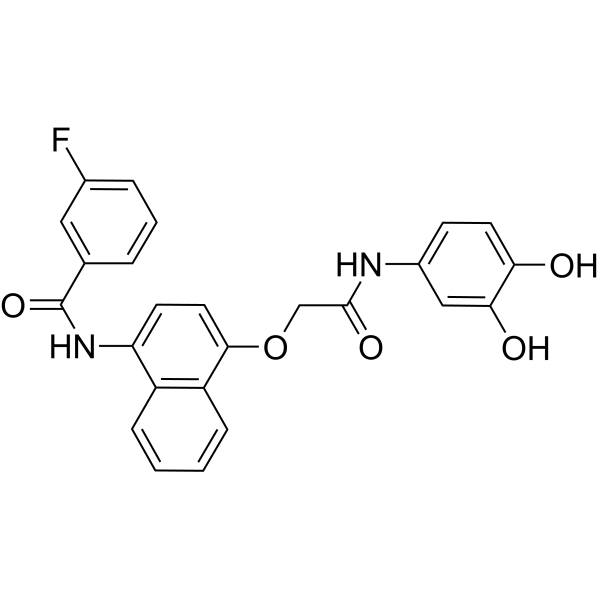 0 ImagesSynonyms: T417TCRS-417 (T417) is a small-molecular inhibitor for PBX1. TCRS-417 can directly block PBX1-binding to DNA (IC50 = 6.58 μM), and affects PBX1 transcription. TCRS-417 is able to hammer out the stemness traits of Carboplatin (HY-17393)-resistant (CR) cells to revert to a differentiated status through tacking PBX1 signaling cascade. TCRS-417 significantly suppresses self-renewal and proliferation of cancer cells expressing high levels of PBX1. TCRS-417 can decrease the mRNA levels of FOXM1, NEK2, and E2F2 in cancer cell lines. TCRS-417 is selectively toxic against chr1q-amp myeloma and solid tumor cells.
-
MEISi-1
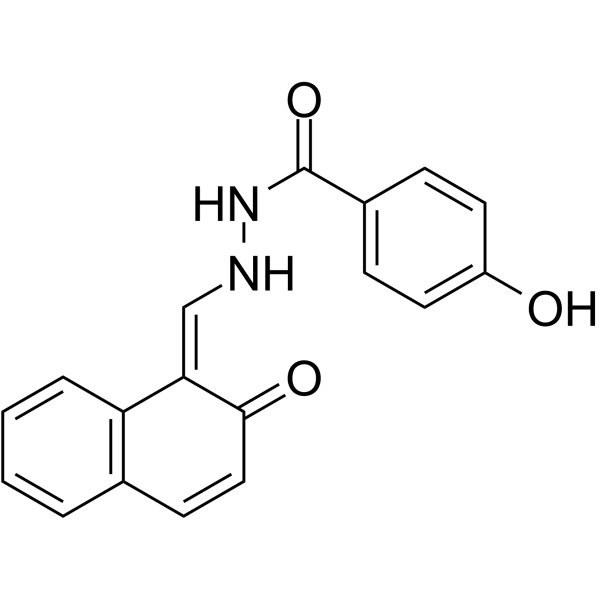
 0 ImagesMEISi-1 is a small-molecule inhibitor targeting the homeodomain of the MEIS1 protein. MEISi-1 significantly inhibits the activity of luciferase reporter genes containing MEIS binding sites (TGACAG), and induces the self-renewal of a key type of mouse and human hematopoietic stem cells (HSC) both in vitro and in vivo. MEISi-1 promotes cardiomyocyte proliferation and cytokinesis, reduces cardiac fibroblast proliferation, and upregulates the expression of cardiomyocyte-specific genes. MEISi-1 can be used in research on hematological diseases, cardiac regeneration and cancer.
-
MS181
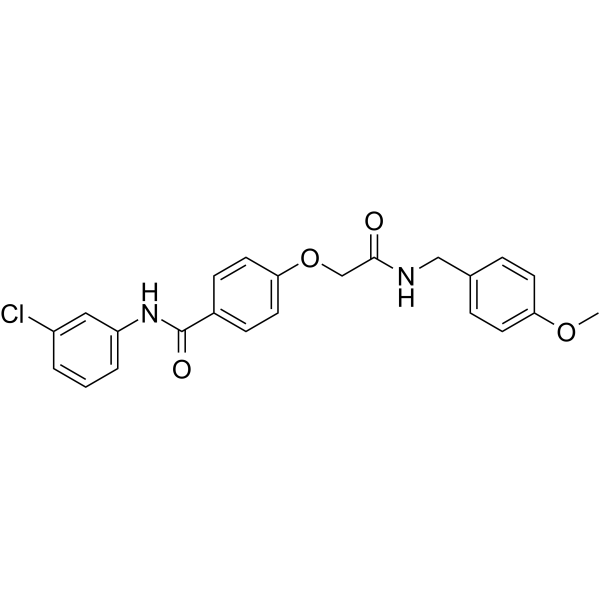
 0 ImagesMS181 is a BMI1 and RING1B degrader with antiproliferative activity. MS181 induces degradation via an EED-, CRBN-, and ubiquitin-proteosome system-dependent pathway, with preferential targeting over PRC2 components. MS181 acts in VHL-defective cancer cells. MS181 serves as a chemical biology tool to study PRC1 roles in cancer. MS181 can be used for the research of myelogenous leukemia, renal cell carcinoma, metastatic prostate cancer, triple negative breast cancer.
-
IKZF2-degrader 5
 0 ImagesCat. No.: HY-182945IKZF2-degrader 5 is a highly efficient, highly selective, rapidly acting, and orally active IKZF2 molecular glue degrader. IKZF2-degrader 5 induces IKZF2 degradation via the Cullin-CRBN-dependent pathway. IKZF2-degrader 5 promotes the production of pro-inflammatory IL-2. IKZF2-degrader 5 attenuates the immunosuppressive function of regulatory T cells (Tregs). IKZF2-degrader 5 triggers rapid, significant, and sustained IKZF2 degradation in the spleen and thymus of mice. IKZF2-degrader 5 inhibits tumor growth. IKZF2-degrader 5 can be used for the research of B16F melanoma.
-
MEIS-IN-1
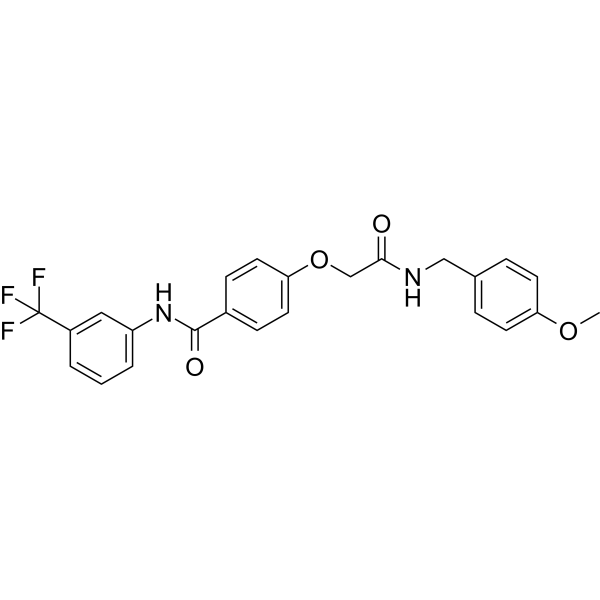 0 ImagesMEIS-IN-1 is a potent myeloid ecotropic viral integration site (MEIS) inhibitor to induce murine and human hematopoietic stem-cell expansion.
-
(S)-Bleximenib
 0 ImagesCat. No.: HY-155797CAS No.: 2654081-27-1Synonyms: (S)-JNJ-75276617; (S)-Menin-MLL inhibitor 24(S)-Bleximenib (Compound 28) ((S)-JNJ-75276617) is an isoform of Bleximenib (HY-148669). (S)-Bleximenib shows an IC50 greater than 1 μM in the MEIS1 mRNA expression assay. (S)-Bleximenib can be used in the research of acute myeloid leukemia.
-
AF9/ENL-DOT1L PPI-IN-1
 0 ImagesCat. No.: HY-178172AF9/ENL-DOT1L/AF4 PPI-IN-1 is a potent AF9/ENL and histone methyltransferase DOT1L/AF4 protein-protein interactions (PPI) inhibitor. AF9/ENL-DOT1L/AF4 PPI-IN-1 can inhibit the AF9-DOT1L (IC50 = 1.5 μM), AF9-AF4 (IC50 = 1 μM), ENL-AF4 (IC50 = 1.2 μM) interactions. AF9/ENL-DOT1L/AF4 PPI-IN-1 can suppress the expression of Mixed lineage leukemia (MLL) target genes Myc and Meis1 and selectively block the proliferation of MLL-r and several other leukemia cells. AF9/ENL-DOT1L/AF4 PPI-IN-1 exhibits significant antitumor activities in a mouse model of MLL-r leukemia without overt toxicities. AF9/ENL-DOT1L/AF4 PPI-IN-1 can be used for the study of MLL-r leukemia.
-
MEIS-IN-3
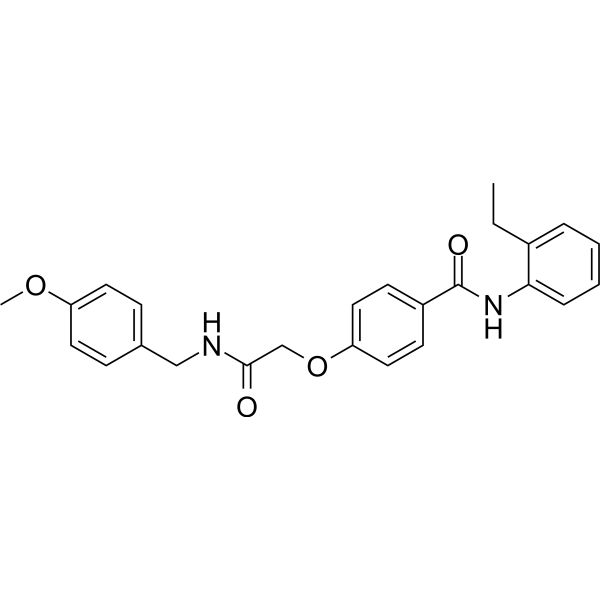 0 ImagesCat. No.: HY-132871CAS No.: 2761326-88-7MEIS-IN-3 is a potent myeloid ecotropic viral integration site (MEIS) inhibitor.
-
HOXA1-IN-1
 0 ImagesCat. No.: HY-181823CAS No.: 3118854-61-5HOXA1-IN-1 is a HOXA1 inhibitor. HOXA1-IN-1 downregulates HOXA1 protein levels, suppresses its transcriptional activity, and alters the expression of its downstream target genes. HOXA1-IN-1 induces DNA damage and apoptosis in cancer cells. HOXA1-IN-1 exhibits antitumor efficacy in xenograft models of colorectal cancer and triple-negative breast cancer. HOXA1-IN-1 shows synergistic activity in combination with Cisplatin (HY-17394). HOXA1-IN-1 can be used for the research of colorectal cancer and triple-negative breast cancer.
-
HPK1-IN-65
 0 ImagesCat. No.: HY-179338HPK1-IN-65 is a selective and orally active HPK1 inhibitor with an IC50 value of < 5 nM. HPK1-IN-65 inhibits HPK1 kinase activity and displays 1257-fold selectivity over the MAP4K kinase family member GLK. HPK1-IN-65 exhibits an IC50 of 92.3 nM for inhibiting pSLP76 phosphorylation. HPK1-IN-65 demonstrates an EC50 of 398 nM for stimulating IL-2 production. HPK1-IN-65 inhibits TCR-induced phosphorylation of SLP76 at Ser376 in a dose-dependent manner. HPK1-IN-65 can be further utilized for colorectal cancer research.
- 1



