ConA Magnetic Beads

Based on 1 Customer Validation
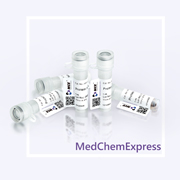
MCE ConA Magnetic Beads can be used to isolate cells or purify glycoproteins from serum and cell extracts. It is also employed in experiments such as collecting and immobilizing cell nuclei, CUT & Run, and CUT & Tag. The 1 mL is defined as the base specification. All larger sizes correspond to incremental volumes of this base.
-
Storage :
4℃, 2 years. Do not dry or freeze.


To place orders, for customer services and technical support, please contact: MedChemExpress USA
Tel: 609-228-6898 E-mail: [email protected] [email protected]





Description & Advantages
Concanavalin A (ConA), also known as Canavalia ensiformis lectin, is a mannose- or glucose-specific binding lectin isolated from the seeds of the jack bean (Canavalia ensiformis). The molecular weight of the ConA monomer is 26 kDa, and it can bind one Ca2+ and one Mn2+ ion, containing a single sugar-binding site. ConA exists as a homotetramer at alkaline pH (pH > 7.0) and as an activated dimer at acidic pH (pH 4.5 - 5.5). In the presence of Ca2+ and Mn2+, ConA exhibits high affinity for terminal α-D-mannose and α-D-glucose residues.
MCE ConA Magnetic Beads are made by coupling ConA to magnetic beads, and they feature high loading capacity, high specificity, and stability, making it suitable for cell separation or for the isolation and purification of glycoproteins from serum and cell extracts. It can also be used in experiments such as collecting and immobilizing cell nuclei, CUT & Run (Cleavage Under Targets and Release Using Nuclease) and CUT & Tag (Cleavage Under Targets and Tagmentation).


Protocol
Sample Preparation (Example: Mammalian Cells)
1. Cell Collection: Prepare mammalian cells (104 - 105 cells). Centrifuge at 600× g for 3 - 5 min at room temperature. Discard the supernatant and collect the cell pellet.
2. Cell Washing: Add 500 μL of binding buffer to the cell pellet and resuspend the cells thoroughly. Centrifuge at 600× g for 3 - 5 min at room temperature. Discard the supernatant and collect the cell pellet.
3. Sample Preparation: Add 200 μL - 500 μL of binding buffer to the cell pellet and resuspend the cells thoroughly. Add an appropriate amount of protease inhibitor (MCE Catalog No. HY-K0010) and mix well.
Magnetic Bead Pre-treatment
1. Thoroughly mix the ConA magnetic beads. Transfer 10 μL of the magnetic bead suspension into a centrifuge tube, place it on a magnetic separator, and magnetically separate for 1 min. Discard the supernatant.
Note: The amount of magnetic beads can be adjusted according to the sample volume.
2. Add 500 μL of binding buffer, and pipette up and down at least 5 times to ensure thorough mixing. Place the tube on the magnetic separator, magnetically separate for 1 min, and discard the supernatant. Repeat the washing step once more.
Sample Binding
Add the prepared sample to the treated magnetic beads and incubate on a shaker at 4°C overnight or at room temperature for 30 min (The incubation time can be adjusted according to the binding efficiency).
Washing
After incubation, place the magnetic beads on a magnetic separator, magnetically separate for 1 min, and discard the supernatant. Add 500 μL of washing buffer and pipette up and down at least 5 times to ensure thorough mixing, and incubate on a shaker at room temperature for 5 min. Place the magnetic beads back on the magnetic separator, magnetically separate for 1 min, and discard the supernatant. Repeat the washing step twice to obtain the protein-bead complex.
Elution
Add 50 μL - 250 μL of elution buffer to the protein-bead complex and incubate on a shaker at room temperature for 10 - 30 min. Place the magnetic beads on the magnetic separator, magnetically separate for 1 minute, and collect the supernatant, which contains the target protein.
Note: Repeated elution or increased incubation time can be attempted to improve protein yield.
Storage
4℃, 2 years.
Do not dry or freeze.


Attention
1. Do not centrifuge, dry or freeze the magnetic beads, which will cause the beads to aggregate and lose binding affinity.
2. To minimize protein degradation, protease inhibitor cocktails (MCE Cat. No. HY-K0010, HY-K0011) are highly recommended.
3. It is recommended to avoid using reagents containing EDTA or other metal chelators, as metal chelators can affect the binding efficiency of the magnetic beads with the protein.
4. This product is for R&D use only, not for drug, household, or other uses.
5. For your safety and health, please wear a lab coat and disposable gloves to operate.


Components
| Components | HY-K0247-1 mL | HY-K0247-5 mL |
|---|---|---|
| ConA Magnetic Beads | 1 mL | 1 mL × 5 |


 Please enter the correct Lot Number