



Skin Disease
-
Skin Disease (23)

- 1
- 2
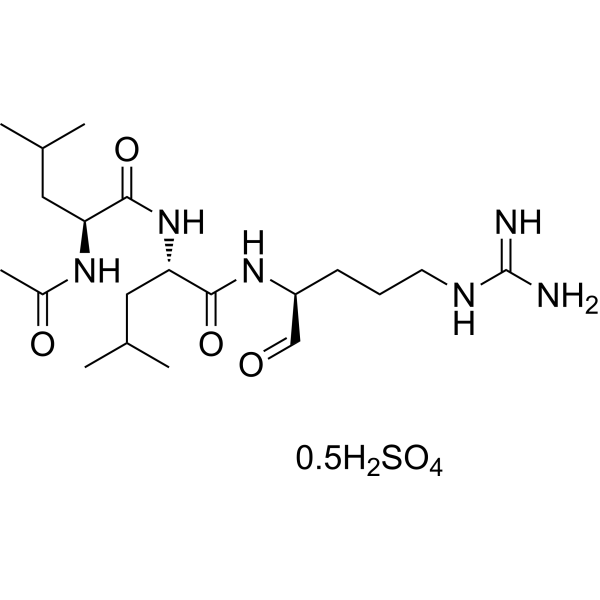
- Formula: C20H38N6O4.1/2H2SO4
- Molecular Weight: 475.59
Leupeptin hemisulfate is a broad-spectrum protease inhibitor. Leupeptin hemisulfate inhibits serine, cysteine and threonine proteases, and regulates autophagy. Leupeptin hemisulfate reduces the expression levels of LC3B, iNOS, Cox-2, Beclin-1 and the level of endopeptidases; increases the levels of p62, Arg 1, Msr 1 and Mrc−1; and blocks the upregulation of p-PTEN, p-NF-κB, p-PI3K, p-Akt, p-p38 and ERK1/2. Leupeptin hemisulfate inhibits NO, ROS, proinflammatory cytokines, the IFN-γ/IL-10 ratio, phagolysosome fusion, mammalian lysosomal hydrolase activity and SARS-CoV-2 replication; and reverses impaired autophagic flux. Leupeptin hemisulfate is applicable to research related to chronic inflammatory diseases, edema, skin tumorigenesis, COVID-19 and respiratory infections.
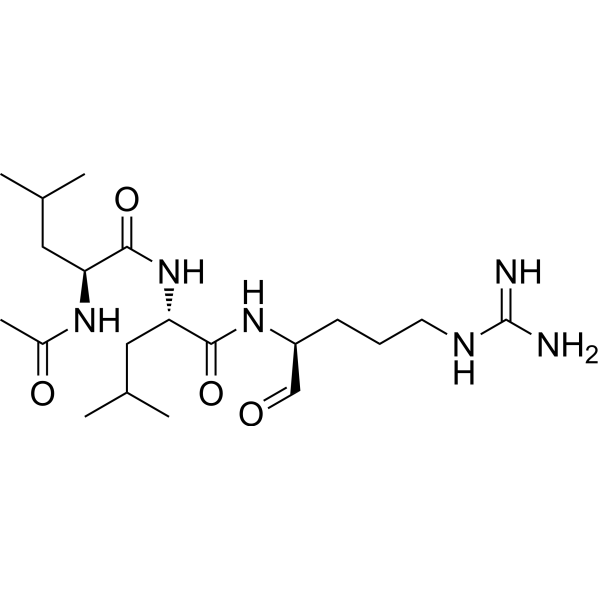
- Formula: C20H38N6O4
- Molecular Weight: 426.55
Leupeptin is a broad-spectrum protease inhibitor. Leupeptin inhibits serine, cysteine and threonine proteases, and regulates autophagy. Leupeptin reduces the expression levels of LC3B, iNOS, Cox-2, Beclin-1 and the level of endopeptidases; increases the levels of p62, Arg 1, Msr 1 and Mrc−1; and blocks the upregulation of p-PTEN, p-NF-κB, p-PI3K, p-Akt, p-p38 and ERK1/2. Leupeptin inhibits NO, ROS, proinflammatory cytokines, the IFN-γ/IL-10 ratio, phagolysosome fusion, mammalian lysosomal hydrolase activity and SARS-CoV-2 replication; and reverses impaired autophagic flux. Leupeptin is applicable to research related to chronic inflammatory diseases, edema, skin tumorigenesis, COVID-19 and respiratory infections.
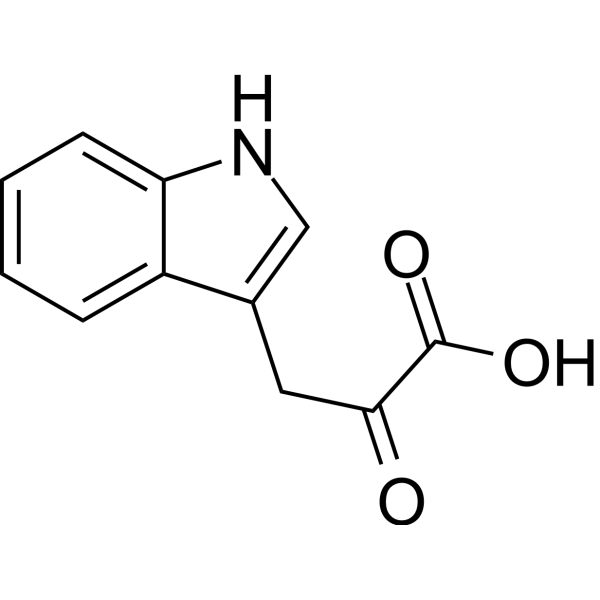
- Formula: C11H9NO3
- Molecular Weight: 203.20
Indole-3-pyruvic acid is an orally active ketone analog of tryptophan, and is an aryl hydrocarbon receptor (AHR) agonist. Indole-3-pyruvic acid inhibits p38/MAPK phosphorylation, regulates the tryptophan metabolic pathway, and also possesses protective activities against skin photodamage, as well as anti-inflammatory and anti-anxiety bioactivities in the gut. Indole-3-pyruvic acid can downregulate the expression of IL-1β, IL-6, Cox-2, and Bax to alleviate UVB-induced keratinocyte toxicity. Indole-3-pyruvic acid can activate AHR to promote Tr1 cell differentiation, increase IL-10, and inhibit Th1 cytokine production. Indole-3-pyruvic acid can alter the levels of kynurenine metabolites in the brain, mediating central nervous system-related effects. Indole-3-pyruvic acid can be used in research on skin lesions, colitis, and anxiety.
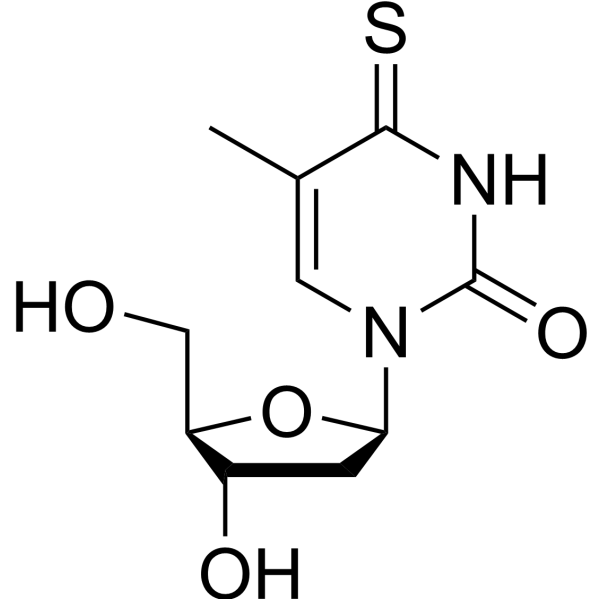
- Formula: C10H14N2O4S
- Molecular Weight: 258.29
4-Thiothymidine is a thymidine analog with UVA photosensitizing properties. 4-Thiothymidine incorporates into the DNA of dividing cells via the thymidine kinase-mediated salvage pathway, replacing thymine and sensitizing cells to UVA irradiation, thereby inducing apoptosis. 4-Thiothymidine induces DNA damage upon UVA activation and inhibits DNA replication. 4-Thiothymidine is used in research related to non-melanoma skin malignancies such as squamous cell carcinoma.
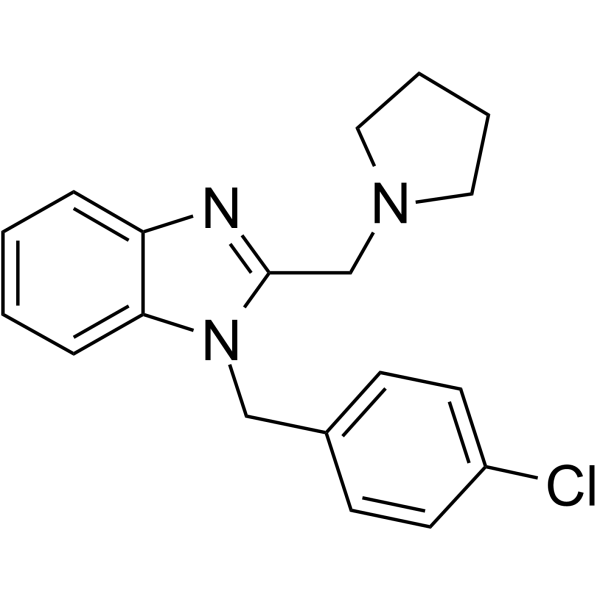
- Formula: C19H20ClN3
- Molecular Weight: 325.84
Clemizole is an orally active, blood-brain barrier permeable TRPC5 inhibitor, with an IC50 value of 1.05-1.34 μM against mouse TRPC5. Clemizole blocks TRPC1:TRPC5, TRPC3, TRPC4, TRPC6, TRPC7, hERG, hKCNQ1/hKCNE1 and hKv1.5 channels, and activates TRPA1; it modulates 5HT-2B and HTR2A receptors; it inhibits HCV RNA replication, CrtN enzymatic activity, oxidative stress, neuroinflammation, cell apoptosis and bacterial virulence; it maintains blood-brain barrier (BBB) integrity; it enhances DNA repair capacity; it improves cell viability; and it alters cardiac electrophysiological properties. Clemizole can be used in the research of Dravet syndrome, hepatitis C virus infection, Staphylococcus aureus skin infection, Cisplatin (HY-17394)-induced nephrotoxicity, STXBP1-related diseases, traumatic brain injury and xeroderma pigmentosum type C.
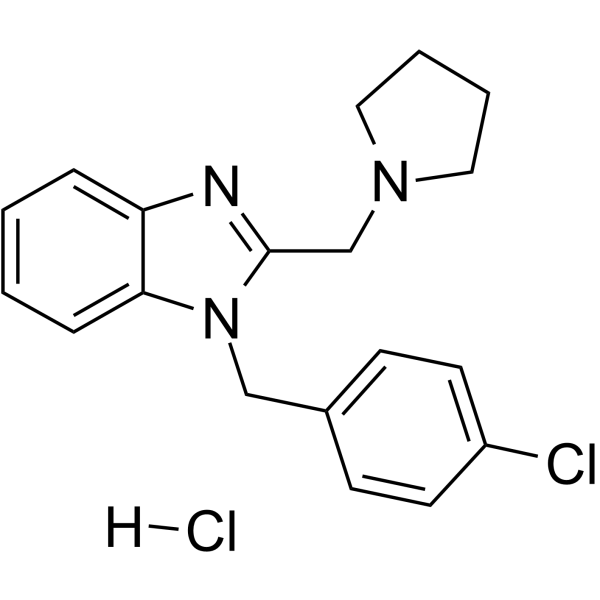
- Formula: C19H21Cl2N3
- Molecular Weight: 362.30
Clemizole hydrochloride is an orally active, blood-brain barrier permeable TRPC5 inhibitor, with an IC50 value of 1.05-1.34 μM against mouse TRPC5. Clemizole hydrochloride blocks TRPC1:TRPC5, TRPC3, TRPC4, TRPC6, TRPC7, hERG, hKCNQ1/hKCNE1 and hKv1.5 channels, and activates TRPA1; it modulates 5HT-2B and HTR2A receptors; it inhibits HCV RNA replication, CrtN enzymatic activity, oxidative stress, neuroinflammation, cell apoptosis and bacterial virulence; it maintains blood-brain barrier (BBB) integrity; it enhances DNA repair capacity; it improves cell viability; and it alters cardiac electrophysiological properties. Clemizole hydrochloride can be used in the research of Dravet syndrome, hepatitis C virus infection, Staphylococcus aureus skin infection, Cisplatin (HY-17394)-induced nephrotoxicity, STXBP1-related diseases, traumatic brain injury and xeroderma pigmentosum type C.

- Formula: C11H9NO3
- Molecular Weight: 203.20
Indole-3-pyruvic acid (Standard) is the analytical standard of Indole-3-pyruvic acid (HY-W028393). This product is intended for research and analytical applications. Indole-3-pyruvic acid is an orally active ketone analog of tryptophan, and is an aryl hydrocarbon receptor (AHR) agonist. Indole-3-pyruvic acid inhibits p38/MAPK phosphorylation, regulates the tryptophan metabolic pathway, and also possesses protective activities against skin photodamage, as well as anti-inflammatory and anti-anxiety bioactivities in the gut. Indole-3-pyruvic acid can downregulate the expression of IL-1β, IL-6, Cox-2, and Bax to alleviate UVB-induced keratinocyte toxicity. Indole-3-pyruvic acid can activate AHR to promote Tr1 cell differentiation, increase IL-10, and inhibit Th1 cytokine production. Indole-3-pyruvic acid can alter the levels of kynurenine metabolites in the brain, mediating central nervous system-related effects. Indole-3-pyruvic acid can be used in research on skin lesions, colitis, and anxiety.
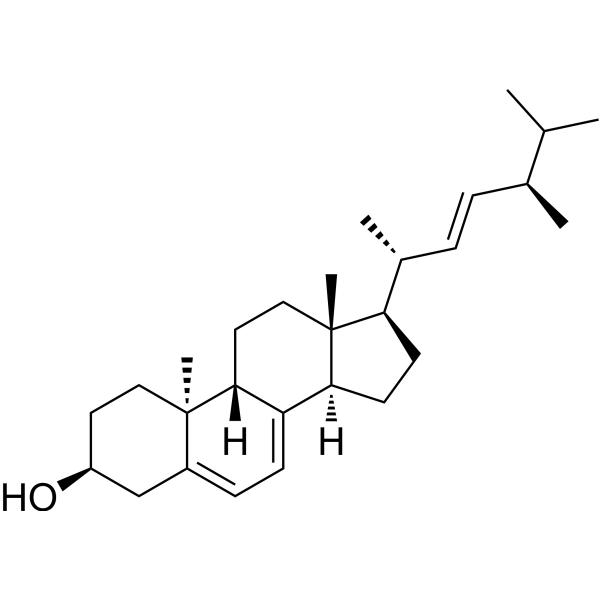
- Formula: C28H44O
- Molecular Weight: 396.65
Lumisterol (9β,10α-Ergosterol) is a photoproduct of 7-dehydrocholesterol, present in the skin, and acts as an orally active VDR non-genomic modulator and ROR inverse agonist. Lumisterol binds to the SARS-CoV-2 Mpro substrate-binding pocket and the RdRP active site, inhibiting enzyme activity. Lumisterol induces NRF2-regulated antioxidant responses, p53 phosphorylation and nuclear translocation, and intracellular free radical scavenging. Lumisterol inhibits the proliferation of epidermal keratinocytes and melanoma cells, modulates cell cycle progression, and suppresses basal and TNFα-induced NFκB transcriptional activity. Lumisterol inhibits RORγ transcriptional activity and IL-17 production. Lumisterol is used in research on UVB-induced skin damage, melanoma, psoriasis, vitamin D deficiency, and COVID-19.
Polyoxyethylene Sorbitan Monostearate is a nonionic polysorbate surfactant. Polyoxyethylene Sorbitan Monostearate acts as an emulsifier, stabilizer, gastrointestinal hydrolysis substrate, and skin tumor promoter/carcinogen in mice. Polyoxyethylene Sorbitan Monostearate can be used in the study of skin tumors.

Canine Fibrinogen is a natural fibrinogen derived from canine plasma. Canine Fibrinogen specifically binds to the host SpsL, but shows weak binding affinity to fibrinogen from other mammals including humans. Canine Fibrinogen binds to the N2N3 subdomain of SpsL via the "anchor-lock-latch" model, and interacts with multiple sites in its α-chain C domain. The binding of Canine Fibrinogen to SpsL promotes bacterial aggregation, biofilm formation, and enhances bacterial resistance to neutrophil phagocytosis. Canine Fibrinogen can be used in studies related to canine skin infections.
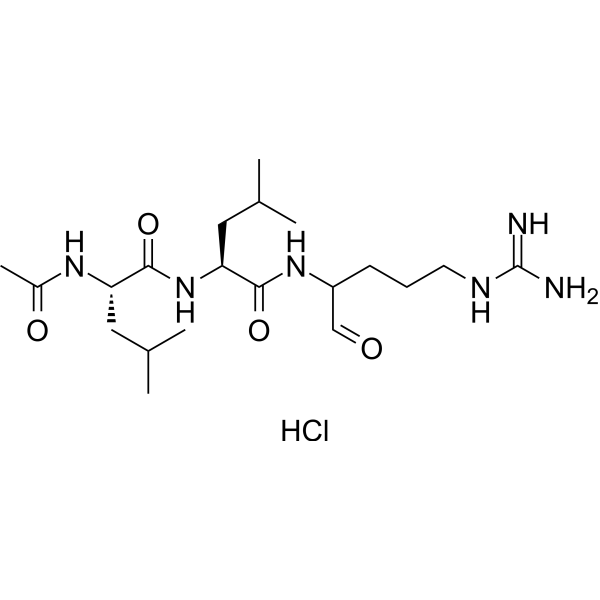
- Formula: C20H39ClN6O4
- Molecular Weight: 463.01
Leupeptin Ac-LL hydrochloride is a broad-spectrum protease inhibitor. Leupeptin Ac-LL hydrochloride inhibits serine, cysteine and threonine proteases, and regulates autophagy. Leupeptin Ac-LL hydrochloride reduces the expression levels of LC3B, iNOS, Cox-2, Beclin-1 and the level of endopeptidases; increases the levels of p62, Arg 1, Msr 1 and Mrc−1; and blocks the upregulation of p-PTEN, p-NF-κB, p-PI3K, p-Akt, p-p38 and ERK1/2. Leupeptin Ac-LL hydrochloride inhibits NO, ROS, proinflammatory cytokines, the IFN-γ/IL-10 ratio, phagolysosome fusion, mammalian lysosomal hydrolase activity and SARS-CoV-2 replication; and reverses impaired autophagic flux. Leupeptin Ac-LL hydrochloride is applicable to research related to chronic inflammatory diseases, edema, skin tumorigenesis, COVID-19 and respiratory infections.
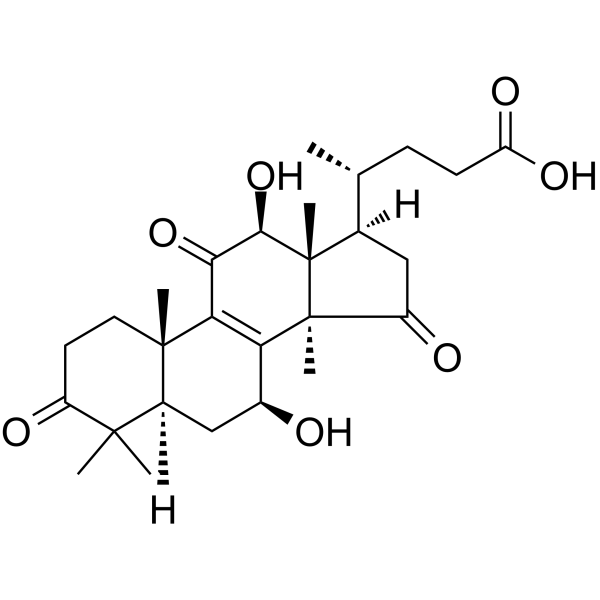
- Formula: C27H38O7
- Molecular Weight: 474.59
Lucidenic acid B is a triterpenoid compound. Lucidenic acid B inhibits the activities of ERK1/2, AP-1, NF-kB, and IKK, suppresses PMA (Phorbol 12-myristate 13-acetate) (HY-18739)-induced MMP-9 expression and cell invasion, and induces apoptosis in leukemia cells via the mitochondrial pathway. Lucidenic acid B inhibits the growth of various cancer cell lines without affecting normal lymphocytes and does not induce G1 phase arrest or necrosis. Lucidenic acid B can be used in research on hepatocellular carcinoma, human acute promyelocytic leukemia, and skin tumor promotion.
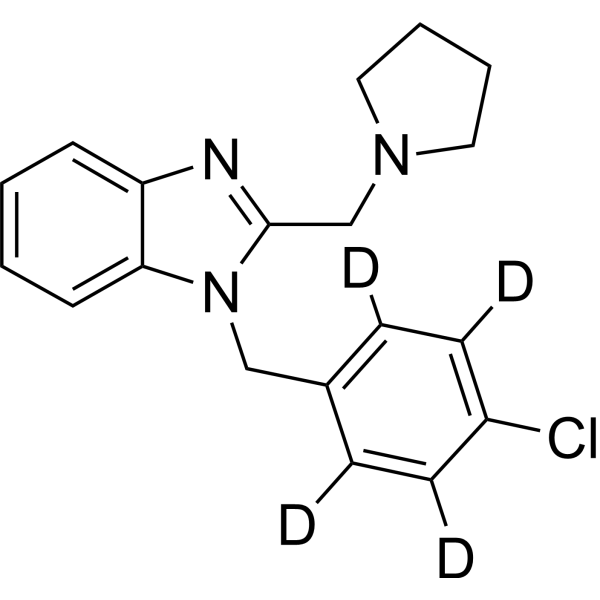
- Formula: C19H16D4ClN3
- Molecular Weight: 329.86
Clemizole-d4 is the deuterated-labeled Clemizole (HY-30234). Clemizole is an orally active, blood-brain barrier permeable TRPC5 inhibitor, with an IC50 value of 1.05-1.34 μM against mouse TRPC5. Clemizole blocks TRPC1:TRPC5, TRPC3, TRPC4, TRPC6, TRPC7, hERG, hKCNQ1/hKCNE1 and hKv1.5 channels, and activates TRPA1; it modulates 5HT-2B and HTR2A receptors; it inhibits HCV RNA replication, CrtN enzymatic activity, oxidative stress, neuroinflammation, cell apoptosis and bacterial virulence; it maintains blood-brain barrier (BBB) integrity; it enhances DNA repair capacity; it improves cell viability; and it alters cardiac electrophysiological properties. Clemizole can be used in the research of Dravet syndrome, hepatitis C virus infection, Staphylococcus aureus skin infection, Cisplatin (HY-17394)-induced nephrotoxicity, STXBP1-related diseases, traumatic brain injury and xeroderma pigmentosum type C.

- Formula: C34H49N5O2
- Molecular Weight: 559.79

- Formula: C22H19BF3N3O3
- Molecular Weight: 441.21
GSK951 is a highly potent, selective, and reversibly covalent KLK5 inhibitor, with an IC50 of approximately 250 pM and a pIC50 of 9.6 against hKLK5. It exhibits over 100-fold selectivity over KLK7, KLK14, matriptase, and elastase. GSK951 binds to the catalytic site of KLK5 via covalent interaction with the catalytic serine, with a slow dissociation rate. GSK951 improves skin barrier function, reduces transepidermal water loss, decreases the expression of proinflammatory cytokines, and inhibits the elevated KLK5 protease activity in the stratum corneum. GSK951 can be used in studies related to skin barrier dysfunction.

- Formula: C20H38N6O4.1/2H2SO4
- Molecular Weight: 475.59
Leupeptin hemisulfate (Standard) is the analytical standard of Leupeptin hemisulfate (HY-18234A). This product is intended for research and analytical applications. Leupeptin hemisulfate is a broad-spectrum protease inhibitor. Leupeptin hemisulfate inhibits serine, cysteine and threonine proteases, and regulates autophagy. Leupeptin hemisulfate reduces the expression levels of LC3B, iNOS, Cox-2, Beclin-1 and the level of endopeptidases; increases the levels of p62, Arg 1, Msr 1 and Mrc−1; and blocks the upregulation of p-PTEN, p-NF-κB, p-PI3K, p-Akt, p-p38 and ERK1/2. Leupeptin hemisulfate inhibits NO, ROS, proinflammatory cytokines, the IFN-γ/IL-10 ratio, phagolysosome fusion, mammalian lysosomal hydrolase activity and SARS-CoV-2 replication; and reverses impaired autophagic flux. Leupeptin hemisulfate is applicable to research related to chronic inflammatory diseases, edema, skin tumorigenesis, COVID-19 and respiratory infections.
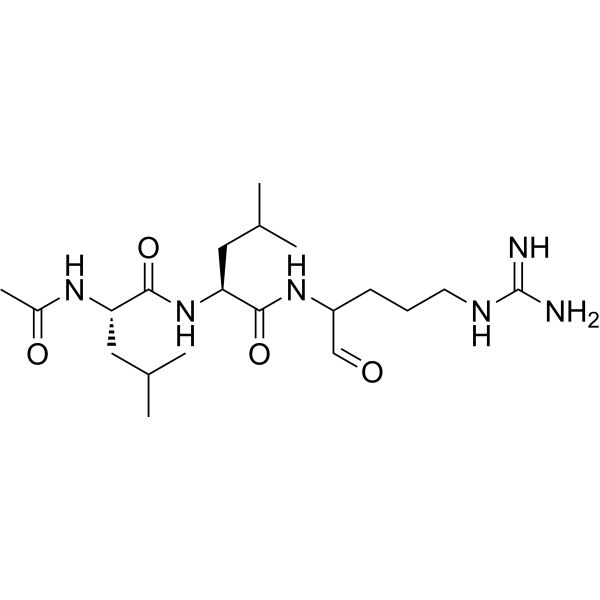
- Formula: C20H38N6O4
- Molecular Weight: 426.55
Leupeptin Ac-LL is a broad-spectrum protease inhibitor. Leupeptin Ac-LL inhibits serine, cysteine and threonine proteases, and regulates autophagy. Leupeptin Ac-LL reduces the expression levels of LC3B, iNOS, Cox-2, Beclin-1 and the level of endopeptidases; increases the levels of p62, Arg 1, Msr 1 and Mrc−1; and blocks the upregulation of p-PTEN, p-NF-κB, p-PI3K, p-Akt, p-p38 and ERK1/2. Leupeptin Ac-LL inhibits NO, ROS, proinflammatory cytokines, the IFN-γ/IL-10 ratio, phagolysosome fusion, mammalian lysosomal hydrolase activity and SARS-CoV-2 replication; and reverses impaired autophagic flux. Leupeptin Ac-LL is applicable to research related to chronic inflammatory diseases, edema, skin tumorigenesis, COVID-19 and respiratory infections.

- Formula: C18H20N2O2
- Molecular Weight: 296.37
ADA-07 is a TOPK inhibitor with activity at the ATP-binding pocket that does not inhibit MEK1 activity. ADA-07 suppresses solar ultraviolet (SUV)-induced phosphorylation of ERK1/2, p38, and JNKs, and inhibits AP-1 activity. ADA-07 attenuates tumor incidence, multiplicity, and volume in SUV-exposed SKH-1 hairless mice. ADA-07 can be used for the research of solar ultraviolet-induced skin carcinogenesis.

- Formula: C9H11N3S
- Molecular Weight: 193.27
Tyrosinase-IN-51 is a tyrosinase inhibitor with an IC50 value of 340 nM. Tyrosinase-IN-51 can be used in studies related to pigmented skin diseases such as melasma, melanosis, freckles, and senile plaques.

- Formula: C48H78O18
- Molecular Weight: 943.12
Asiaticoside F is a triterpenoid glycoside found in Centella asiatica. Asiaticoside F can be used in studies related to skin diseases, diarrhea, eye diseases, inflammation, asthma, leprosy and hypertension.
- 1
- 2



