



Polyoxyethylene Sorbitan Monostearate

Based on 1 Customer Validation
Polyoxyethylene Sorbitan Monostearate is a nonionic polysorbate surfactant. Polyoxyethylene Sorbitan Monostearate acts as an emulsifier, stabilizer, gastrointestinal hydrolysis substrate, and skin tumor promoter/carcinogen in mice. Polyoxyethylene Sorbitan Monostearate can be used in the study of skin tumors.
For research use only. We do not sell to patients.
- Assay : ≥99%
- CAS No.: 9005-67-8
-
Storage:
4°C, sealed storage, away from moisture
* In solvent : -80°C, 6 months; -20°C, 1 month (sealed storage, away from moisture)

To place orders, for customer services and technical support, please contact: MedChemExpress USA
Tel: 609-228-6898 E-mail: [email protected] [email protected]


-
 Biological Activity
-
Chemical Information
-
Solvent & Solubility
- Purity & Documentation
- References
-
 Help & FAQs


-

HY-Y1891
Tween 80 -
HY-141415
Tween 20 -

HY-W115819
Polysorbate 40 -
HY-Y0316B
Sodium dodecyl sulfate for electrophoresis -
HY-Y0316
Sodium dodecyl sulfate -
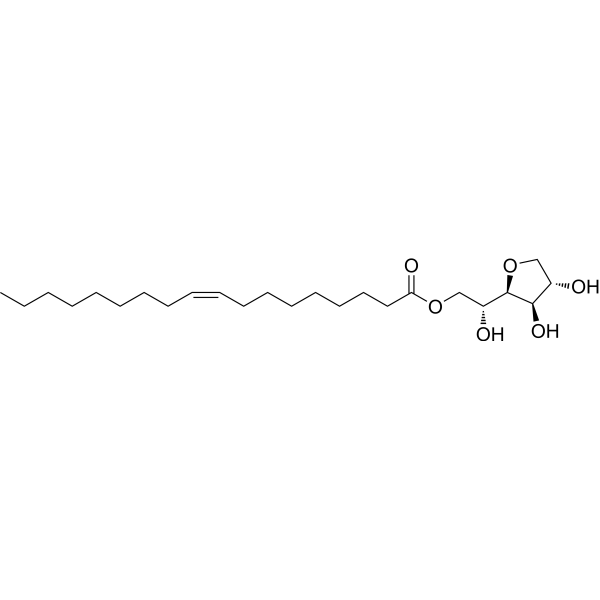
HY-N1446C
Sorbitan monooleate -
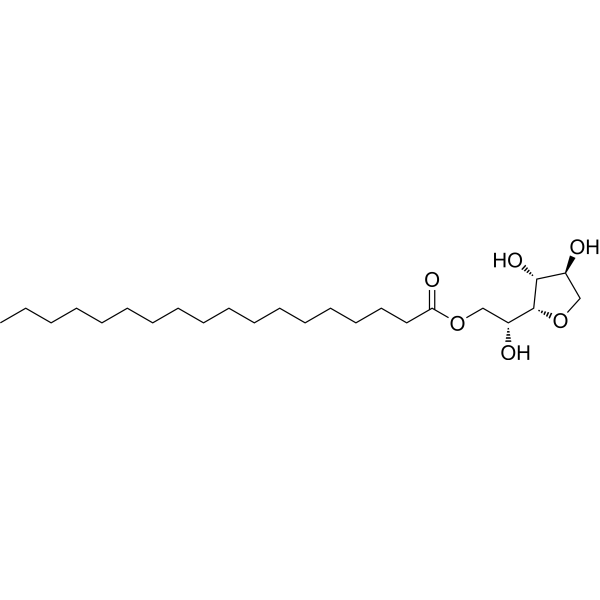
HY-W129593
Sorbitan monooctadecanoate -
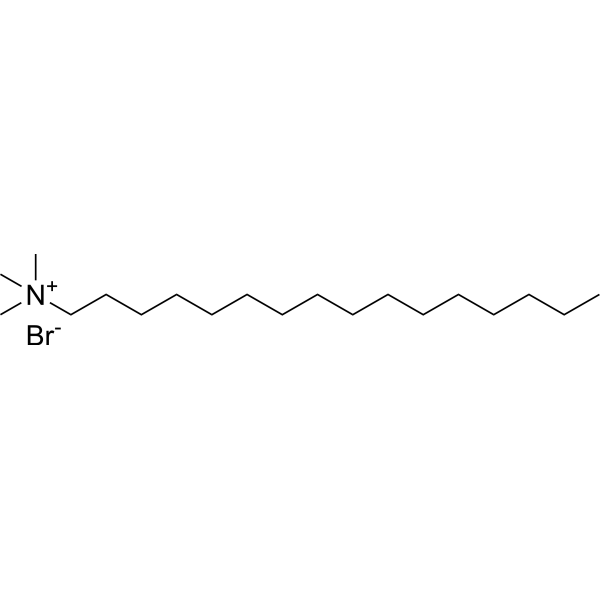
HY-B1260
Cetrimonium bromide -
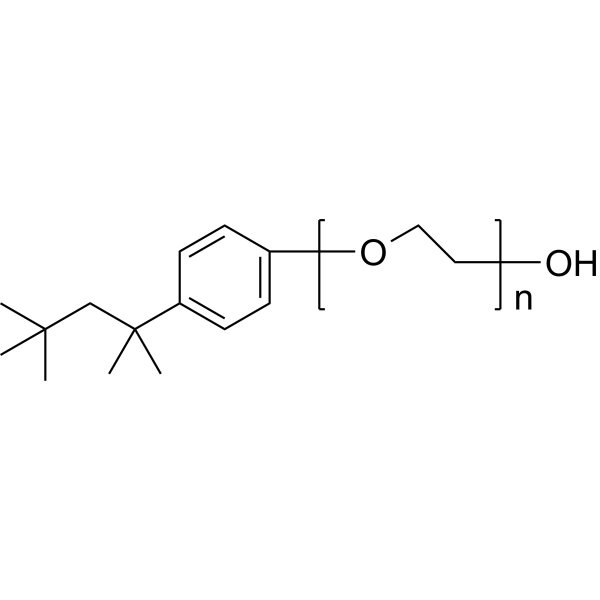
HY-Y1883
Polyethylene glycol mono(4-tert-octylphenyl) ether surfactant -
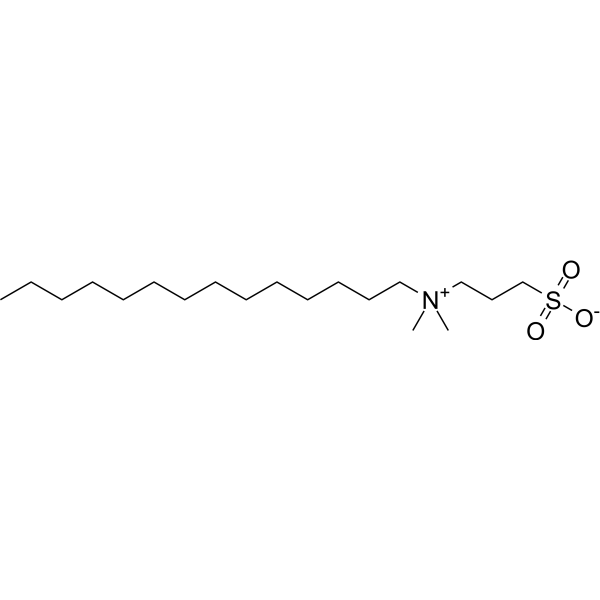
HY-W099581
Sulfobetaine-14 -
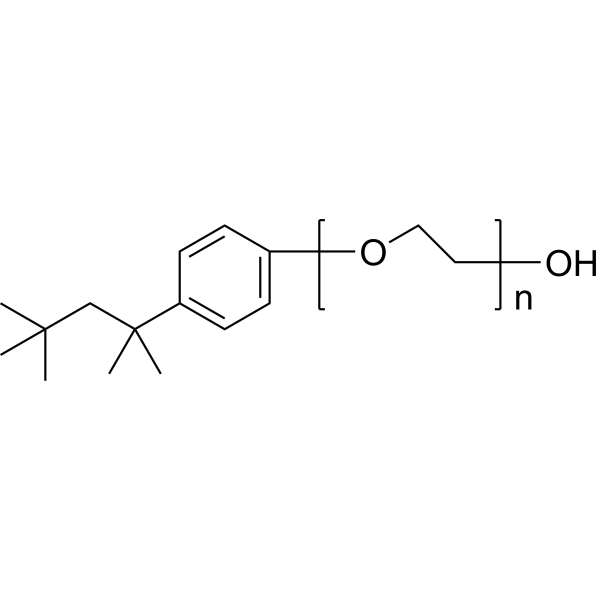
HY-Y1883A
Polyethylene glycol mono(4-tert-octylphenyl) ether -
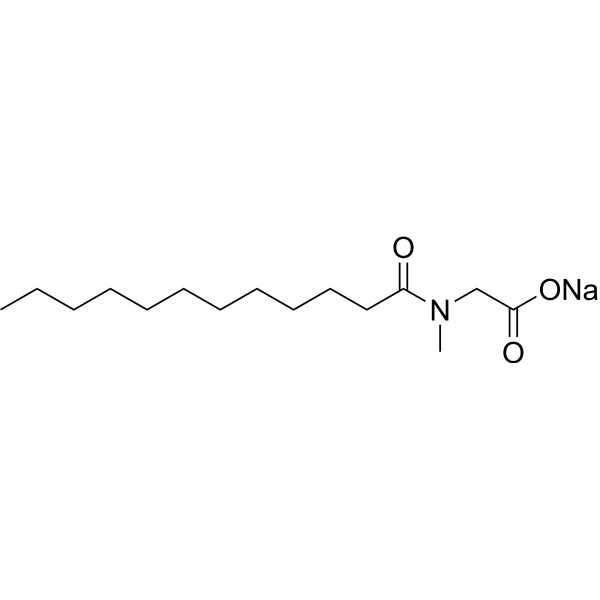
HY-125920
Lauroylsarcosine sodium


Biological Activity
Description
In Vitro
Polyoxyethylene sorbitan monostearate (1-7 kg/Mg coal; 3 min) significantly improves the combustible matter recovery of fine lignite in flotation, with recovery increasing from 9.07% to 49.37% across dosages of 1 to 7 kg/Mg coal, and selectively enhances recovery of low-density clean coal particles more than medium- and high-density particles[1].
Polyoxyethylene sorbitan monostearate (1-7 kg/Mg coal; 3 min) increases both the maximum height and half-life time of three-phase lignite flotation froth in a dosage-dependent manner, significantly improving froth stability and foaming ability[1].
Polyoxyethylene sorbitan monostearate (60-420 mg/L) reduces surface tension and increases viscosity of aqueous flotation solution in a concentration-dependent manner across 60 to 420 mg/L[1].
MedChemExpress (MCE) has not independently confirmed the accuracy of these methods. They are for reference only.
In Vivo
Polyoxyethylene sorbitan monostearate (60 mg per application; topical; twice weekly; 75-80 weeks) given alone induces multiple skin tumors in both female and male Swiss mice (47 and 44 total tumors, respectively), with 1 carcinoma in females and 0 in males, and most tumors arising after 30 weeks[2].
Polyoxyethylene sorbitan monostearate (60 mg per application; topical; daily; 55 weeks) given daily starting at 25 weeks of age induces few skin tumors in uninitiated Swiss mice (11 in females, 6 in males) with no squamous-cell carcinomas[2].
Polyoxyethylene sorbitan monostearate (60 mg per application; topical; daily; 45 weeks) given daily starting at 35 weeks of age induces few skin tumors in uninitiated Swiss mice (18 in females, 12 in males) with no squamous-cell carcinomas, and tumors appear earlier than in younger mice given the same treatment[2].
Polyoxyethylene sorbitan monostearate (topical skin painting) alone induces skin tumors in Swiss mice, predominantly papillomas (39 of 47 tumors, ~83%), with a lower incidence of malignant tumors[3].
Polyoxyethylene sorbitan monostearate (60 mg per application; topical; daily; 60-82 weeks) given alone induces a large number of skin tumors in Swiss mice, with 150 tumors in females and 52 in males, including 5 and 1 carcinomas, respectively[2].
MedChemExpress (MCE) has not independently confirmed the accuracy of these methods. They are for reference only.
-
Animal Model:Swiss albino mice (Roscoe B. Jackson Memorial Laboratory origin, randomly bred, females, 10 weeks old, 20-26 g)[2]
-
Dosage:30 mg per application (twice weekly); 30 mg per application (daily)
-
Administration:topical; twice weekly; 50 weeks (30 mg twice weekly); topical; daily (5-6 times weekly); 50 weeks (30 mg daily)
-
Result:Resulted in 2 of 30 mice developing tumors (2 total skin tumors; 1 sebaceous adenoma on the face, 1 squamous-cell carcinoma at the perineal site); 0 regressions; 1 skin carcinoma at 30 mg twice weekly.
Resulted in 1 of 30 mice developing 1 skin tumor (1 squamous-cell carcinoma at the perineal site); 0 regressions; 1 skin carcinoma at 30 mg daily.
Showed 30 survivors at week 20, 30 at week 30, 28 at week 40, 22 at week 50 in the 30 mg twice weekly group.
Showed 30 survivors at week 20, 23 at week 30, 21 at week 40, 15 at week 50 in the 30 mg daily group.
Caused local skin damage (reddening, thickening, scaling) in the daily group.
-
Animal Model:Swiss albino mice (females, 20-26 g; males, 24-30 g; 10 weeks old)[2]
-
Dosage:60 mg per application (2 drops)
-
Administration:topical; twice weekly; 75-80 weeks
-
Result:Resulted in 9 tumor-bearing animals, 47 total skin tumors, 32 regressions, and 1 squamous-cell carcinoma in 30 female mice.
Resulted in 10 tumor-bearing animals, 44 total skin tumors, 32 regressions, and 0 squamous-cell carcinomas in 30 male mice.
Showed tumors first appearing after 30 weeks of treatment.
Caused local skin hyperplasia and inflammatory changes in treated skin.
-
Animal Model:Swiss albino mice (females, 20-26 g; males, 24-30 g; 10 weeks old)[2]
-
Dosage:60 mg per application (2 drops)
-
Administration:topical; daily (5-6 times weekly); 60-82 weeks
-
Result:Resulted in 16 tumor-bearing animals, 150 total skin tumors, 114 regressions, 4 squamous-cell carcinomas plus 1 basal-cell carcinoma in 30 female mice.
Resulted in 6 tumor-bearing animals, 52 total skin tumors, 19 regressions, and 1 squamous-cell carcinoma in 30 male mice.
Induced considerably more tumors than twice-weekly application at the same dose.
Caused local skin damage (reddening, thickening, scaling) and epidermal hyperplasia with inflammatory changes consistently.
-
Animal Model:Swiss albino mice (females and males, 25 weeks old at start of treatment)[2]
-
Dosage:60 mg per application (2 drops)
-
Administration:topical; daily (5-6 times weekly); from 25 weeks of age until 80 weeks of age (55 weeks total)
-
Result:Resulted in 9 tumor-bearing animals, 11 total skin tumors, 8 regressions, 0 squamous-cell carcinomas, and an average latent period of 27.09 weeks in 25 female mice.
Resulted in 3 tumor-bearing animals, 6 total skin tumors, 3 regressions, 0 squamous-cell carcinomas, and an average latent period of 20.50 weeks in 29 male mice.
-
Animal Model:Swiss albino mice (females and males, 35 weeks old at start of treatment)[2]
-
Dosage:60 mg per application (2 drops)
-
Administration:topical; daily (5-6 times weekly); from 35 weeks of age until 80 weeks of age (45 weeks total)
-
Result:Resulted in 10 tumor-bearing animals, 18 total skin tumors, 13 regressions, 0 squamous-cell carcinomas, and an average latent period of 18.44 weeks in 25 female mice.
Resulted in 4 tumor-bearing animals, 12 total skin tumors, 7 regressions, 0 squamous-cell carcinomas, and an average latent period of 15.33 weeks in 23 male mice.


Chemical Information
-
CAS No. 9005-67-8
-
Appearance Viscous Liquid
-
Color Colorless to light yellow
-
SMILES
[Polyoxyethylene sorbitan monostearate]
-
Shipping
Room temperature in continental US; may vary elsewhere.
-
Storage
4°C, sealed storage, away from moisture
* In solvent : -80°C, 6 months; -20°C, 1 month (sealed storage, away from moisture)


Solvent & Solubility
In Vitro:
DMSO : 100 mg/mL (Need ultrasonic; Hygroscopic DMSO has a significant impact on the solubility of product, please use newly opened DMSO)
In Vivo:
Select the appropriate dissolution method based on your experimental animal and administration route.
- For the following dissolution methods, please ensure to first prepare a clear stock solution using an In Vitro approach and then sequentially add co-solvents:
- To ensure reliable experimental results, the clarified stock solution can be appropriately stored based on storage conditions. As for the working solution for In Vivo experiments, it is recommended to prepare freshly and use it on the same day.
- The percentages shown for the solvents indicate their volumetric ratio in the final prepared solution. If precipitation or phase separation occurs during preparation, heat and/or sonication can be used to aid dissolution.
Add each solvent one by one: 10% DMSO 40% PEG300 5% Tween-80 45% Saline
Solubility: ≥ 2.5 mg/mL; Clear solution
This protocol yields a clear solution of ≥ 2.5 mg/mL (saturation unknown).
Taking 1 mL working solution as an example, add 100 μL DMSO stock solution (25.0 mg/mL) to 400 μL PEG300, and mix evenly; then add 50 μL Tween-80 and mix evenly; then add 450 μL Saline to adjust the volume to 1 mL.
Preparation of Saline: Dissolve 0.9 g sodium chloride in ddH₂O and dilute to 100 mL to obtain a clear Saline solution.
In Vivo Dissolution Calculator
Please enter the basic information of animal experiments:
-
-
-
-
Recommended: Prepare an additional quantity of animals to account for potential losses during experiments.
Please enter your animal formula composition:
-
%DMSO +
Recommended: Keep the proportion of DMSO in working solution below 2% if your animal is weak.
-
%+
-
+%Tween-80 + +
-
%Saline +
The co-solvents required include: DMSO, . All of co-solvents are available by MedChemExpress (MCE). , Tween 80. All of co-solvents are available by MedChemExpress (MCE).
Working solution concentration: 0.22 mg/mL
Method for preparing stock solution: mg drug dissolved in μL DMSO. Stock solution concentration: mg/mL. * In solvent : -80°C, 6 months; -20°C, 1 month (sealed storage, away from moisture)
1. Take μL DMSO stock solution;
2. Add μL .
μL , mix evenly;
3. Then add μL Tween 80, mix evenly;
4. Then add μL
Please ensure that the stock solution in the first step is dissolved to a clear state, and add co-solvents in sequence. You can use ultrasonic heating (ultrasonic cleaner, recommended frequency 20-40 kHz), vortexing, etc. to assist dissolution.


Purity & Documentation
-
Data Sheet (273 KB)
-
SDS (394 KB)
- English - EN (394 KB)
- Français - FR (394 KB)
- Deutsch - DE (394 KB)
- Norwegian - NO (394 KB)
- Español - ES (394 KB)
- Swedish - SV (394 KB)
- Italian - IT (394 KB)
- Korean - KR (394 KB)
- Portuguese - PT (394 KB)
-
Handling Instructions (2659 KB)
References

Calculators
Concentration (start) × Volume (start) = Concentration (final) × Volume (final)


Polyoxyethylene Sorbitan Monostearate Related Classifications
HY-W115818 Related Classifications
 Powered by Bioz