



Polyethylene glycol mono(4-tert-octylphenyl) ether
Based on 30 publication(s) in Google Scholar
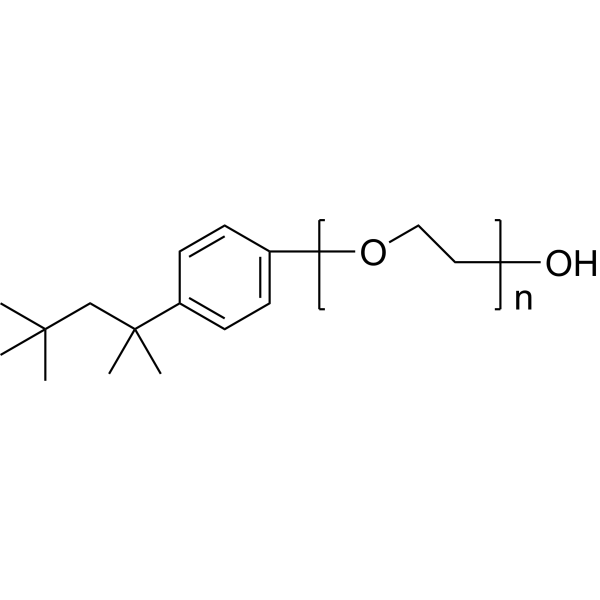
Polyethylene glycol mono(4-tert-octylphenyl) ether is a non-denaturing detergent that solubilizes lipid membranes. Polyethylene glycol mono(4-tert-octylphenyl) ether is commonly used in laboratories and is applied to vaccines at different stages of the manufacturing process. Polyethylene glycol mono(4-tert-octylphenyl) ether is listed as an excipient in certain vaccines including split virus influenza vaccines. Polyethylene glycol mono(4-tert-octylphenyl) ether is a nonionic surfactant. Polyethylene glycol mono(4-tert-octylphenyl) ether induces Apoptosis in prostate and colon cancer cell lines and reduces the infectivity of classic enveloped viruses such as WNV.
Nur für Forschungszwecke. Wir verkaufen nicht an Patienten.
- CAS. Nr.: 9002-93-1
-
Speicherung:Pure form -20°C, 3 years , 4°C, 2 years ; In solvent -80°C, 6 months , -20°C, 1 month

To place orders, for customer services and technical support, please contact: MedChemExpress USA
Tel: 609-228-6898 E-mail: [email protected] [email protected]


-
 Biologische Aktivität
-
Chemical Information
-
Lösungsmittel & Löslichkeit
- Protokoll
- Reinheit & Dokumentation
- Verweise
-
 Help & FAQs


-

HY-Y0320
Dimethyl sulfoxide, meets analytical specification of Ch.P.Aprotic Solvent -

HY-141415
Tween 20Nonionic Surfactant -
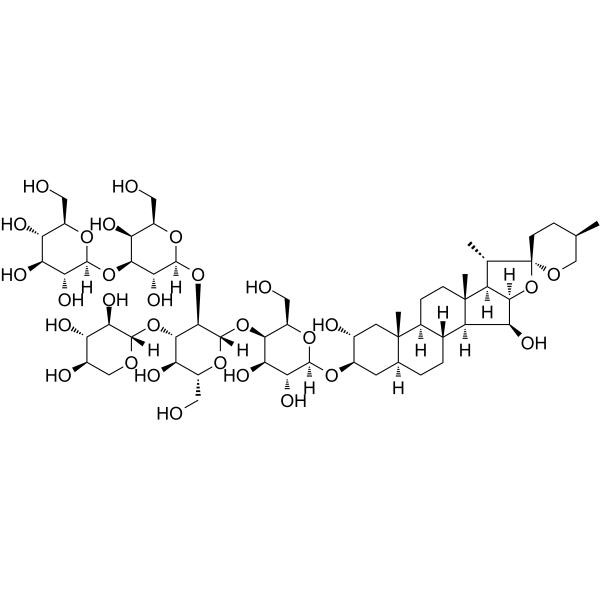
HY-N4000
DigitoninDetergent -
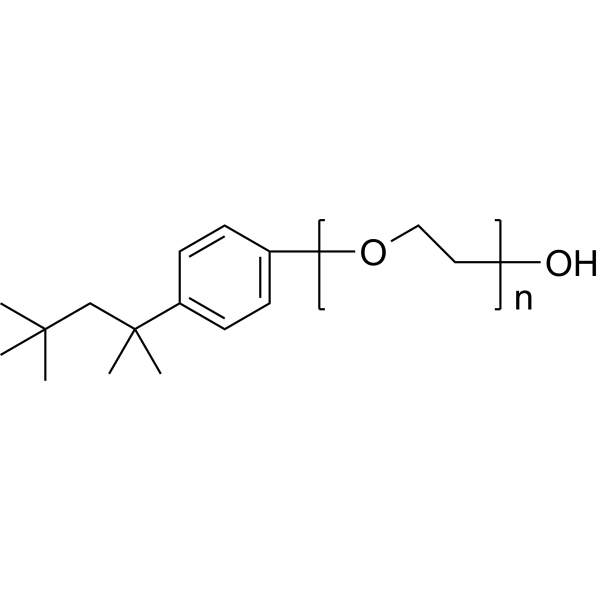
HY-Y1883
Polyethylene glycol mono(4-tert-octylphenyl) ether surfactantNonionic Surfactant -
HY-K1042
AntiFade Mounting Medium -
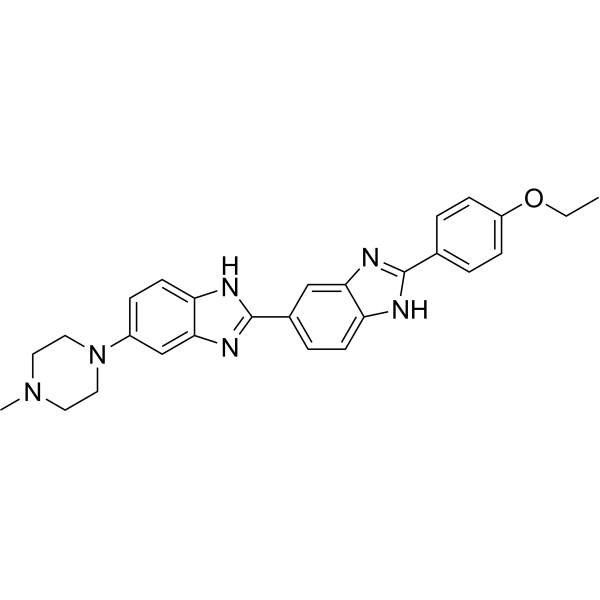
HY-15559
Hoechst 33342DNA Fluorescent Stain -
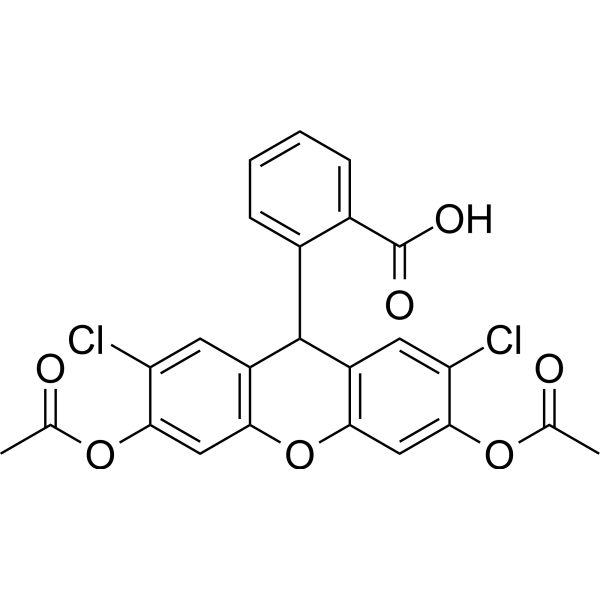
HY-D0940
H2DCFDAROS-Sensitive Probe -
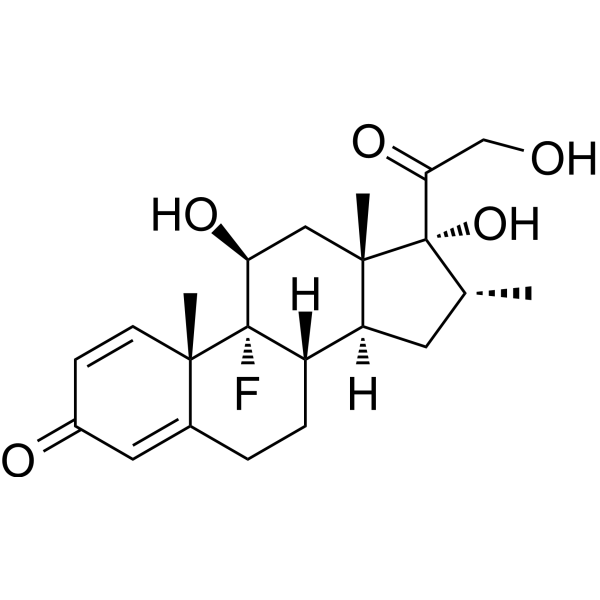
HY-14648
DexamethasoneGR Agonist -
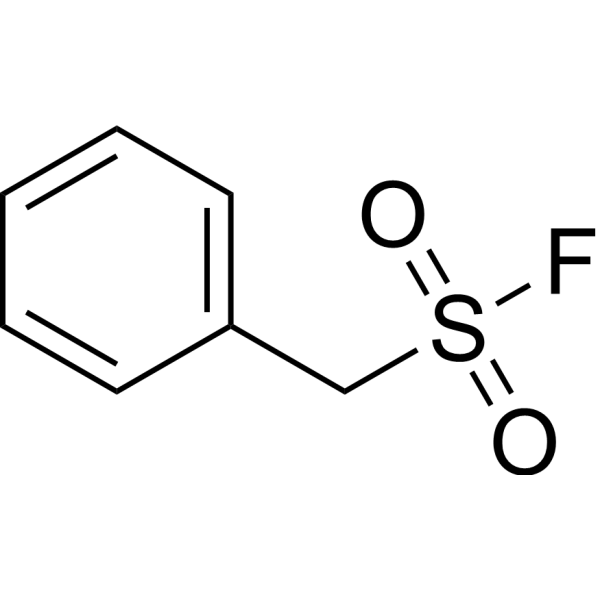
HY-B0496
PMSFCathepsin Inhibitor -

HY-K0010
Protease Inhibitor Cocktail (EDTA-Free, 100× in DMSO) -

HY-D0842
BSA ProteinGlobular Protein -
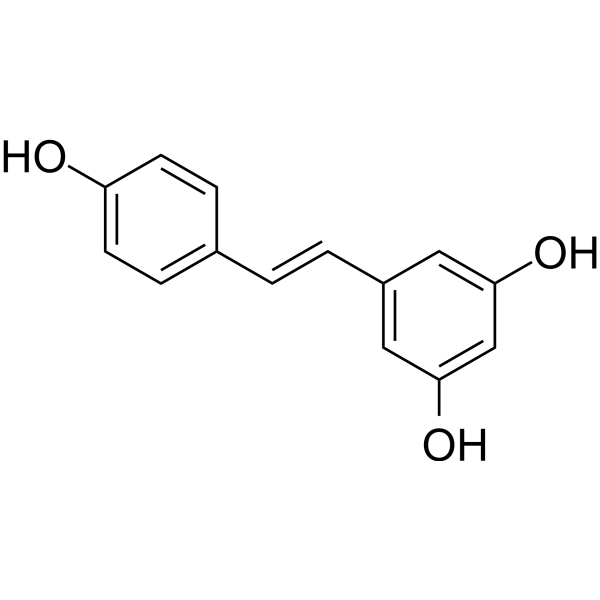
HY-16561
ResveratrolPolyphenolic Phytoalexin
Publications Citing Use of MedChemExpress (MCE) Polyethylene glycol mono(4-tert-octylphenyl) ether
More- Bioact Mater. 2023 Apr 17:27:271-287. [Abstract]
- Autophagy. 2026 Jul 23:1-26. [Abstract]
- Autophagy. 2023 Jun;19(6):1745-1763. [Abstract]
- ACS Nano. 2024 Mar 26;18(12):8777-8797. [Abstract]
- Theranostics. 2025 Jan 20;15(6):2360-2374. [Abstract]
- Adv Sci (Weinh). 2024 Nov;11(44):e2401931. [Abstract]
- Cell Death Dis. 2025 Oct 27;16(1):763. [Abstract]
- Mol Ther. 2025 Dec 3;33(12):6146-6159. [Abstract]
- Addit Manuf. 2025 May 25.
- Int J Surg. 2024 Jul 1;110(7):4103-4115. [Abstract]
- Int J Biol Macromol. 2025 Dec 11;338(Pt 1):149653. [Abstract]
- Free Radic Biol Med. 2025 Aug 13:240:183-196. [Abstract]
- Br J Pharmacol. 2026 Apr 26. [Abstract]
- J Agric Food Chem. 2026 Feb 25. [Abstract]
- Int J Pharm. 2024 Mar 25:653:123929. [Abstract]
- Cancer Metab. 2025 Aug 14;13(1):37. [Abstract]
- Cell Signal. 2026 Oct:146:112666. [Abstract]
- ACS Chem Neurosci. 2025 Feb 5;16(3):374-383. [Abstract]
- Pathogens. 2026 Jun 3;15(6):602. [Abstract]
- Int J Med Sci. 2023 Sep 4;20(10):1339-1357. [Abstract]
- Immun Inflamm Dis. 2024 Aug;12(8):e1341. [Abstract]
- Mol Biol Rep. 2026 May 27;53(1):850. [Abstract]
- S Afr J Bot. 2026 Jun 22;196:477-488.
- Kaohsiung J Med Sci. 2025 Sep;41(9):e70045. [Abstract]
- Hum Cell. 2023 Jan;36(1):434-445. [Abstract]
- J Chin Med Assoc. 2026 Feb 1;89(2):140-150. [Abstract]
- Chinese medicine and natural products. 2024; 04(04): e173-e181.
- bioRxiv. 2024 October 17.
- Research Square Preprint. 2024 Apr 23.
- Biomed Pharmacother. 2023 Sep:165:115227. [Abstract]


Biologische Aktivität
Beschreibung
In Vitro
Polyethylene glycol mono(4-tert-octylphenyl) ether (0.5%-0.05%, 1 h) reduces the infectivity of a classical enveloped virus such as West Nile virus (WNV)[3].
Polyethylene glycol mono(4-tert-octylphenyl) ether (0.19-0.20 mM) makes the HeLa cells underwent irreversible permeabilization of the membrane and structural collapse[4].
Polyethylene glycol mono(4-tert-octylphenyl) ether (0.01%, 1 h) induces apoptotic and necrotic death in prostate and colon cancer cell lines (PC-3, SW-620 and HT-29 cells), characterized by the typical morphological features and internucleosomal DNA fragmentation[5].
MedChemExpress (MCE) has not independently confirmed the accuracy of these methods. They are for reference only. Further protocols information, click here.


Chemical Information
-
CAS. Nr. 9002-93-1
-
Appearance Liquid (Density: 1.065 g/cm3)
-
Color Colorless to light yellow
-
SMILES
CC(C)(C)CC(C)(C)C1=CC=C(OCCO)C=C1.[n]
-
Versand
Room temperature in continental US; may vary elsewhere.
-
Speicherung
Pure form -20°C 3 years 4°C 2 years In solvent -80°C 6 months -20°C 1 month


Publications (30)
-
Journal Impact Factor
-
Most Recent
-
Bioact Mater
Cardiac patches made of brown adipose-derived stem cell sheets and conductive electrospun nanofibers restore infarcted heart for ischemic myocardial infarction. [Abstract]2023 Apr 17:27:271-287. PMID: 37122901 -
Autophagy
CX3CR1+ macrophages aggravate doxorubicin-induced cardiomyopathy by impairing cardiac mitophagy via the CSF1R-PARP1-IL1B axis. [Abstract]2026 Jul 23:1-26. PMID: 42494062 -
Autophagy
The Valsa mali effector Vm1G-1794 protects the aggregated MdEF-Tu from autophagic degradation to promote infection in apple. [Abstract]2023 Jun;19(6):1745-1763. PMID: 36449354 -
ACS Nano
Osteoinductive Dental Pulp Stem Cell-Derived Extracellular Vesicle-Loaded Multifunctional Hydrogel for Bone Regeneration. [Abstract]2024 Mar 26;18(12):8777-8797. PMID: 38488479 -
Theranostics
Inhibition of macrophage inflammasome assembly and pyroptosis with GC-1 ameliorates acute lung injury. [Abstract]2025 Jan 20;15(6):2360-2374. PMID: 39990234 -
Adv Sci (Weinh)
The Thyroid Hormone Analog GC-1 Mitigates Acute Lung Injury by Inhibiting M1 Macrophage Polarization. [Abstract]2024 Nov;11(44):e2401931. PMID: 39373388 -
Cell Death Dis
Hypoxia-induced exosomal LUCAT1 promotes osimertinib resistance in lung adenocarcinoma by stabilizing c-MET. [Abstract]2025 Oct 27;16(1):763. PMID: 41145422 -
Mol Ther
Targeting O-GlcNAcylated METTL3 impedes MDS/AML progression via diminishing SRSF1 m6A modification. [Abstract]2025 Dec 3;33(12):6146-6159. PMID: 40914805 -
-
Int J Surg
Pulsatile Flow Increases METTL14-induced m6A modification and attenuates septic cardiomyopathy: an experimental study. [Abstract]2024 Jul 1;110(7):4103-4115. PMID: 38549224 -
Int J Biol Macromol
BAG6 promotes hepatocellular carcinoma growth via enhancing PLK1-mediated aerobic glycolysis. [Abstract]2025 Dec 11;338(Pt 1):149653. PMID: 41390024 -
Free Radic Biol Med
2025 Aug 13:240:183-196. PMID: 40816648 -
Br J Pharmacol
Curcumin controls lysosomal acidification and exocytosis to ameliorate lysosomal cholesterol accumulation in Niemann-Pick type C disease. [Abstract]2026 Apr 26. PMID: 42036241 -
J Agric Food Chem
Oxygen-Driven Thermal Degradation of Isorhamnetin in Boiling Water: Product Profiling, Energetics, and Antiobesity Mechanisms in Caenorhabditis elegans. [Abstract]2026 Feb 25. PMID: 41738067 -
Int J Pharm
Selenium nanoparticles/carboxymethyl chitosan/alginate antioxidant hydrogel for treating steroid-induced osteonecrosis of the femoral head. [Abstract]2024 Mar 25:653:123929. PMID: 38387817 -
Cancer Metab
NSUN2 promotes colorectal cancer progression by stabilizing PHGDH mRNA to promote serine metabolism reprogramming. [Abstract]2025 Aug 14;13(1):37. PMID: 40814066 -
Cell Signal
Mechanical stress attenuates the metabolic reprogramming and M1 polarization of macrophages by upregulating integrin subunit alpha D. [Abstract]2026 Oct:146:112666. PMID: 42270026 -
ACS Chem Neurosci
2025 Feb 5;16(3):374-383. PMID: 39800970 -
Pathogens
Egg Yolk Antibodies Elicited by a Novel Multi-Epitope Recombinant Adenovirus Vaccine Against Genotype G2b PEDV Spike Protein Reduce Mortality and Viral Shedding in Passively Immunized Piglets. [Abstract]2026 Jun 3;15(6):602. PMID: 42347214 -
Int J Med Sci
Hypoxia-induced long non-coding RNA LINC00460 promotes p53 mediated proliferation and metastasis of pancreatic cancer by regulating the miR-4689/UBE2V1 axis and sequestering USP10. [Abstract]2023 Sep 4;20(10):1339-1357. PMID: 37786443 -
Immun Inflamm Dis
Mechanism of desuccinylation of G6PD mediated by SIRT7 to promote vitiligo disease progression. [Abstract]2024 Aug;12(8):e1341. PMID: 39092715 -
Mol Biol Rep
Ameliorative effects of bevacizumab against sepsis-induced acute kidney injury: investigation of inflammatory responses, pyroptosis-related signalling and angiogenesis in a murine model of polymicrobial sepsis. [Abstract]2026 May 27;53(1):850. PMID: 42201618 -
-
Kaohsiung J Med Sci
Dexmedetomidine Blocks the ERK Pathway by Inhibiting MAP3K8 to Achieve a Protective Effect in Lung Ischemia/Reperfusion Injury. [Abstract]2025 Sep;41(9):e70045. PMID: 40372180 -
Hum Cell
Establishment and characterization of a new Chinese hepatocellular carcinoma cell line, Hep-X1. [Abstract]2023 Jan;36(1):434-445. PMID: 36152230 -
J Chin Med Assoc
Single-cell omics in investigating the effect of CAFs with KRAS overexpression on the malignant progression of anaplastic thyroid cancer. [Abstract]2026 Feb 1;89(2):140-150. PMID: 41486477 -
-
-
-
Biomed Pharmacother
The antimicrobial peptide chensinin-1b alleviates the inflammatory response by targeting the TLR4/NF-κB signaling pathway and inhibits Pseudomonas aeruginosa infection and LPS-mediated sepsis. [Abstract]2023 Sep:165:115227. PMID: 37536032


Lösungsmittel & Löslichkeit
In Vitro:
H2O : ≥ 200 mg/mL
DMSO : 100 mg/mL (ultrasonic and warming and heat to 60°C; Hygroscopic DMSO has a significant impact on the solubility of product, please use newly opened DMSO)
* "≥" means soluble, but saturation unknown.
In Vivo:
Select the appropriate dissolution method based on your experimental animal and administration route.
- For the following dissolution methods, please ensure to first prepare a clear stock solution using an In Vitro approach and then sequentially add co-solvents:
- To ensure reliable experimental results, the clarified stock solution can be appropriately stored based on storage conditions. As for the working solution for In Vivo experiments, it is recommended to prepare freshly and use it on the same day.
- The percentages shown for the solvents indicate their volumetric ratio in the final prepared solution. If precipitation or phase separation occurs during preparation, heat and/or sonication can be used to aid dissolution.
Add each solvent one by one: 10% DMSO 40% PEG300 5% Tween-80 45% Saline
Solubility: ≥ 2.5 mg/mL; Clear solution
This protocol yields a clear solution of ≥ 2.5 mg/mL (saturation unknown).
Taking 1 mL working solution as an example, add 100 μL DMSO stock solution (25.0 mg/mL) to 400 μL PEG300, and mix evenly; then add 50 μL Tween-80 and mix evenly; then add 450 μL Saline to adjust the volume to 1 mL.
Preparation of Saline: Dissolve 0.9 g sodium chloride in ddH₂O and dilute to 100 mL to obtain a clear Saline solution.
Add each solvent one by one: 10% DMSO 90% (20% SBE-β-CD in Saline)
Solubility: ≥ 2.5 mg/mL; Clear solution
This protocol yields a clear solution of ≥ 2.5 mg/mL (saturation unknown).
Taking 1 mL working solution as an example, add 100 μL DMSO stock solution (25.0 mg/mL) to 900 μL 20% SBE-β-CD in Saline, and mix evenly.
Preparation of 20% SBE-β-CD in Saline (4°C, storage for one week): 2 g SBE-β-CD powder is dissolved in 10 mL Saline, completely dissolve until clear.
In Vivo Dissolution Calculator
Please enter the basic information of animal experiments:
-
-
-
-
Recommended: Prepare an additional quantity of animals to account for potential losses during experiments.
Working solution concentration: 0.22 mg/mL
This product has good water solubility, please refer to the measured solubility data in water/PBS/Saline for details.

Protokoll
-
Apoptosis
Apoptosis, also called programmed cell death, is generally characterized by distinct morphological characteristics.
-
TUNEL staining for apoptotic DNA fragmentation
TUNEL staining detects DNA strand breaks by using terminal deoxynucleotidyl transferase to add labeled nucleotides to exposed 3′-OH DNA termini, generating either microscopic staining in fixed cells or tissue sections, or fluorescence/cytometric signal in cell suspensions. TUNEL positivity reflects DNA fragmentation but should not be interpreted alone as definitive apoptosis, because TUNEL can also label necrotic, autolytic, mechanically damaged, or DNA-repair-associated DNA breaks.
-
Annexin V plus membrane-impermeant dye apoptosis staining
Annexin V-based apoptosis assays rely on the detection of phosphatidylserine (PS) externalization from the inner leaflet of the plasma membrane to the outer leaflet, an early biochemical hallmark of apoptosis. Fluorescently labeled Annexin V binds PS in a calcium-dependent manner, enabling identification of early apoptotic cells by flow cytometry or fluorescence microscopy. When combined with a membrane-impermeant DNA-binding dye (e. g. , propidium iodide), this approach allows discrimination between viable (Annexin V−/dye−), early apoptotic (Annexin V+/dye−), and late apoptotic or necrotic (Annexin V+/dye+) cell populations by assessing membrane integrity and PS exposure.
-
Apoptosis Solutions
Apoptosis is a regulated, generally non-lytic cell-death pathway that removes unwanted, damaged, infected, or abnormal cells through coordinated morphological changes, caspase activation, DNA fragmentation, and membrane remodeling. The intrinsic apoptosis pathway is controlled mainly by mitochondrial outer membrane permeabilization, BCL-2 family proteins, cytochrome c release, apoptosome formation, caspase-9 activation, and downstream executioner caspase-3/7 activation. The extrinsic apoptosis pathway is initiated by death receptors such as Fas, TNFR, and TRAIL receptors, which recruit adaptor proteins and activate caspase-8 before engaging executioner caspases or mitochondrial amplification through BID cleavage. Apoptosis is linked to many phenotypes, including cancer cell killing, tissue homeostasis, immune regulation, neurodegeneration, infection response, and treatment-induced cytotoxicity; unresolved questions include how apoptosis interacts with necroptosis, pyroptosis, ferroptos


Reinheit & Dokumentation
-
Data Sheet (275 KB)
-
SDS (758 KB)
- English - EN (758 KB)
- Français - FR (758 KB)
- Deutsch - DE (758 KB)
- Norwegian - NO (758 KB)
- Español - ES (758 KB)
- Swedish - SV (758 KB)
- Italian - IT (758 KB)
- Korean - KR (758 KB)
- Portuguese - PT (758 KB)
-
Handling Instructions (2659 KB)
Verweise
[1]. Colavita F, et al. J Clin Virol. 2017 Jan;86:27-30. [Content Brief]
[2]. Herman SM, et al. J Allergy Clin Immunol Pract. 2021;9(7):2941. [Content Brief]
[3]. Koley D, et al. Proc Natl Acad Sci U S A. 2010 Sep 28;107(39):16783-7. [Content Brief]
[4]. Ghosh R, et al. Int J Biol Macromol. 2021;167:736-745. [Content Brief]
[5]. Borner MM, et alE. FEBS Lett. 1994 Oct 17;353(2):129-32. [Content Brief]

Calculators
Konzentration (Stammlösung) × Volumen (Stammlösung) = Konzentration (Ziellösung) × Volumen (Ziellösung)


Polyethylene glycol mono(4-tert-octylphenyl) ether Related Classifications
HY-Y1883A Related Classifications
 Powered by Bioz