



Neuroblastoma
-
Neuroblastoma (50)

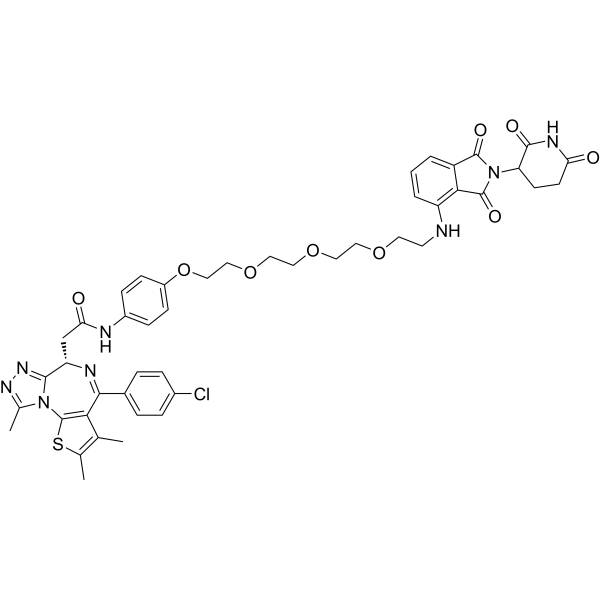
- Formula: C46H47ClN8O9S
- Molecular Weight: 923.43
ARV-825 is a BET protein PROTAC degrader that recruits cereblon, and it targets BRD2, BRD3, and BRD4 for degradation via the ubiquitin-proteasome pathway. ARV-825 downregulates c-MYC, PLK1, MYCN, CDK4/6, JAK2, pSTAT3/5, PIM1, and Bcl-xL, upregulates p21 and p27, and modulates H3K27Ac-mediated transcription, the G2/M checkpoint, the Wnt/β-catenin pathway, and amino acid transport pathways. ARV-825 induces G1 phase cell cycle arrest, caspase 3/PARP-mediated apoptosis, DNA damage, and reactive oxygen species (ROS) production, reduces mitochondrial respiration, and simultaneously inhibits cell proliferation, clonogenic growth, and cell migration. ARV-825 is used in research on gastric cancer, leukemia, neuroblastoma, and cholangiocarcinoma.
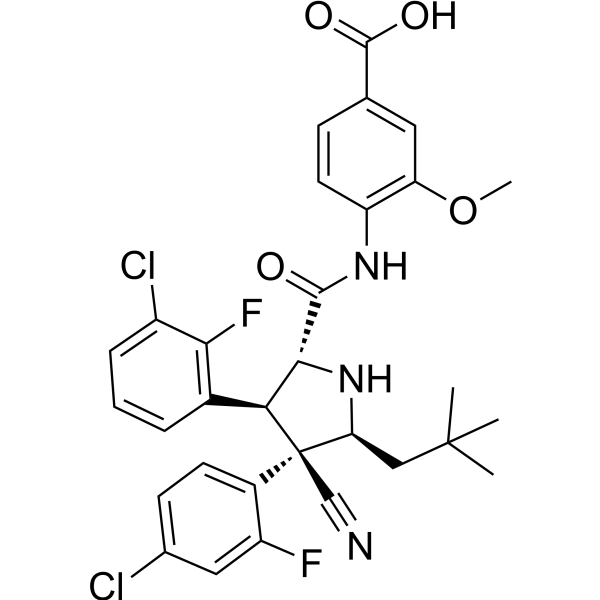
- Formula: C31H29Cl2F2N3O4
- Molecular Weight: 616.48
Idasanutlin (RG7388) is an orally bioavailable MDM2 inhibitor with an IC50 of 6 nM. Idasanutlin disrupts MDM2-p53 binding, stabilizes and activates p53, triggering cell cycle arrest, apoptosis, and reduced cancer cell viability. Idasanutlin reduces EGFR protein expression and phosphorylation, suppresses downstream SHP2, MEK1/2, ERK1/2, AKT, mTOR, p70(S6K1), and S6 signaling. Idasanutlin induces mitochondrial ROS production, drives p38 MAPK phosphorylation, upregulates NOXA, and mediates caspase-3-dependent apoptosis and gasdermin E-mediated pyroptosis. Idasanutlin can be used for the research of TP53-mutant non-small cell lung cancer, T-cell acute lymphoblastic leukemia, colorectal carcinoma, melanoma, diffuse large B-cell lymphoma, mantle cell lymphoma, non-Hodgkin lymphoma, severe fever with thrombocytopenia syndrome, neuroblastoma, acute lymphoblastic leukemia, relapsed or refractory acute myeloid leukemia, osteosarcoma, solid tumors, and hematological tumors.

- Molecular Weight: 144.98 kDa
Omburtamab (Mab 8H9) is a mouse monoclonal immunoglobulin G1 (IgG1) antibody targeting B7-H3. Omburtamab specifically binds to the glycoprotein antigen B7-H3, which is widely expressed on the surface of tumor cells. As a targeting carrier for recombinant toxins, it delivers PE38 to inhibit cellular protein synthesis and induce cytotoxicity in antigen-expressing cancer cells. Omburtamab can be used in research related to glioma, breast cancer, osteosarcoma and neuroblastoma.
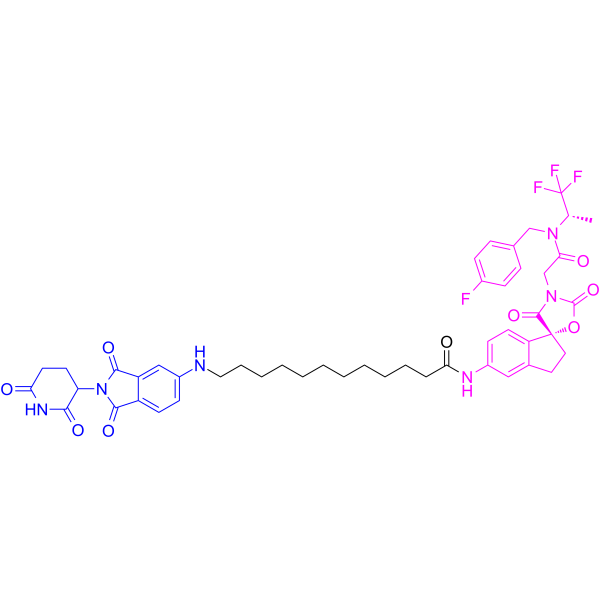
- Formula: C48H52F4N6O9
- Molecular Weight: 932.95
JQAD1 is a EP300 PROTAC degrader. JQAD1 selectively targets EP300 and induces its degradation via the CRBN-dependent proteasomal pathway. JQAD1 reduces the levels of H3K27ac and the expression of MYCN. JQAD1 induces apoptosis (apoptosis) and inhibits cancer cell growth. JQAD1 exerts anti-neuroblastoma effects in vivo in a CRBN-dependent manner. JQAD1 can be used for the research of neuroblastoma.
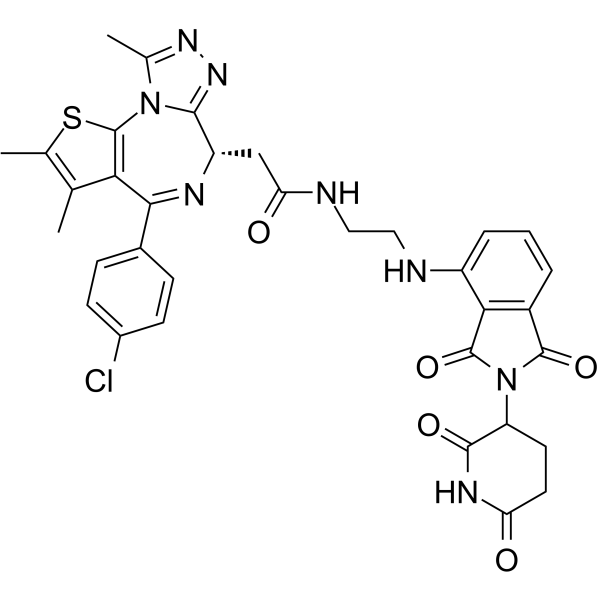
- Formula: C34H31ClN8O5S
- Molecular Weight: 699.18
dBET57 is a potent and selective BRD4BD1 PROTAC degrader with a DC50 of approximately 500 nM. dBET57 forms a ternary complex with CRL4CRBN and BRD4BD1, induces the ubiquitination and degradation of BRD4, and indirectly inhibits the transcription of MYCN, c-Myc and PD-L1, ultimately leading to cell cycle arrest and apoptosis. dBET57 can be used in related research on neuroblastoma, non-small cell lung cancer and colorectal cancer.

- Formula: C42H49N11O7
- Molecular Weight: 819.91
dAurAB5 is a potent Aurora-A/Aurora-B PROTAC degrader with DC50 values of 8.8 nM and 6.1 nM, respectively. dAurAB5 promotes proteasomal degradation of target proteins, induces ubiquitination of Aurora-A and Aurora-B kinases, and downregulates the protein levels of TTK and MYCN. dAurAB5 can be used in studies related to neuroblastoma[1].

- Formula: C43H46ClFN6O10S
- Molecular Weight: 893.38
SK2188 (JB325) is a selective AURKA PROTAC degrader with a DC50 of 3.9 nM. SK2188 recruits CRBN E3 ubiquitin ligase to target and degrade AURKA, abrogating both its catalytic and non-kinase functions, which leads to the destabilization and degradation of the oncogenic protein MYCN, ultimately inducing replication stress, DNA damage and apoptosis. SK2188 is applicable to research related to neuroblastoma.

- Formula: C45H49ClFN7O11S
- Molecular Weight: 950.43
SK2187 (JB301) is a selective AURKA PROTAC degrader. SK2187 induces targeted degradation of AURKA by recruiting the CRBN E3 ubiquitin ligase. SK2187 is applicable to research related to neuroblastoma.
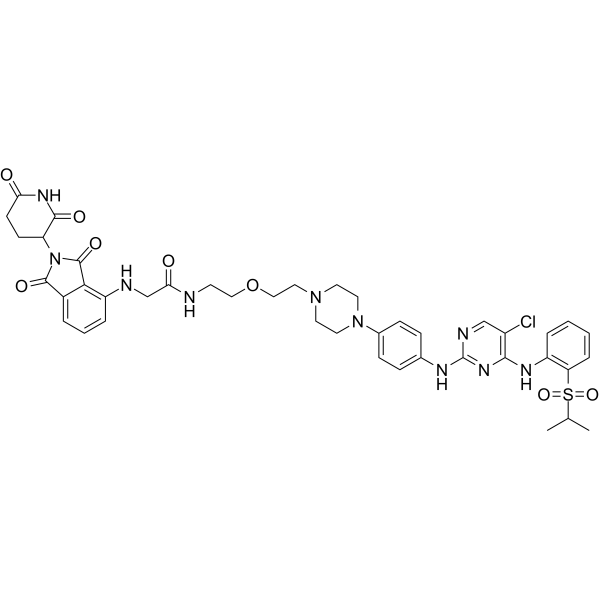
- Formula: C42H47ClN10O8S
- Molecular Weight: 887.40
SK-3-91 is a multi-kinase PROTAC degrader that induces the degradation of the maximum number of unique kinases (over 125 distinct kinases) simultaneously. SK-3-91 induces protein degradation via the ubiquitin biotinylation (E-STUB) pathway, such as inducing the degradation of YTHDF2. SK-3-91 also inhibits cell proliferation and induces cell morphological changes. SK-3-91 can be used in research related to acute lymphoblastic leukemia, multiple myeloma, neuroblastoma, ovarian cancer, mantle cell lymphoma, and gastric cancer.
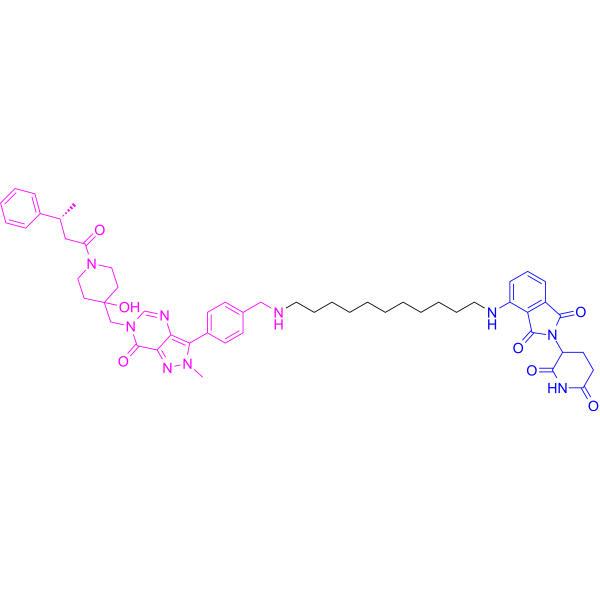
- Formula: C53H65N9O7
- Molecular Weight: 940.14
U7D-1 is a USP7 PROTAC degrader that induces selective proteasomal degradation of USP7. U7D-1 destabilizes and downregulates the expression of variant PRC1 complex subunits PCGF1, RING1A and PCGF6, and also slightly reduces the protein level of KDM2B. U7D-1 decreases cell viability, arrests neuroblastoma cells at the G0/G1 cell cycle phase, and downregulates the expression of target genes of PAX3::FOXO1 in FP-RMS cells. U7D-1 increases the level of cleaved PARP in FP-RMS cells, induces cell apoptosis, and upregulates the expression of muscle differentiation markers MYH1 and MYF5. U7D-1 inhibits the growth and proliferation of p53 wild-type and mutant cancer cells, and regulates the apoptosis pathway and E2F pathway. U7D-1 is applicable to studies on neuroblastoma, fusion-positive rhabdomyosarcoma, p53-mutant cancers and cancer-related research.

- Formula: C40H44N8O7
- Molecular Weight: 748.83
HLB-0532259 is a Aurora-A/N-Myc PROTAC degrader, with a DC50 of 20.2 nM against Aurora-A in MCF-7 cells; its DC50 values against N-Myc are 179 nM in SK-N-BE (2) cells and 229 nM in Kelly cells, respectively. HLB-0532259 induces apoptosis (apoptosis) in MYCN-amplified neuroblastoma cells and inhibits tumor growth in mouse xenograft models. HLB-0532259 can be used for the research of neuroblastoma.
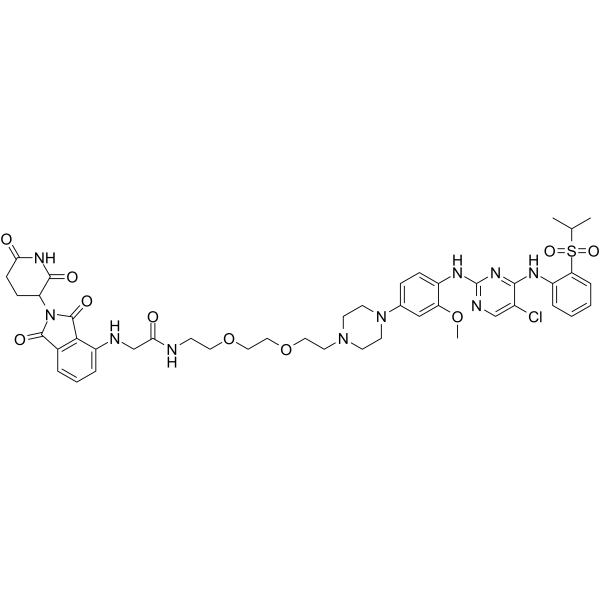
- Formula: C45H53ClN10O10S
- Molecular Weight: 961.48
TL13-12 is a CRBN-recruiting ALK PROTAC degrader, with a DC50 of 10 nM in H3122 cells. TL13-12 induces dimerization of CRBN and truncated ALK, which brings the DNA-binding domain and transactivation domain into close proximity, thereby activating the expression of downstream reporter genes, while exhibiting extremely low leaky expression under non-inducing conditions. TL13-12 serves as a tool molecule for the orthogonal PROTAC-CID system, and is applied in research on non-small cell lung cancer, anaplastic large cell lymphoma, and neuroblastoma.
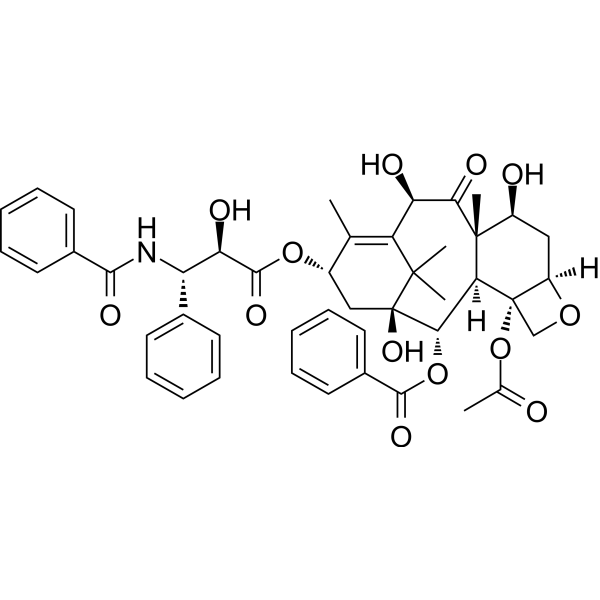
- Formula: C45H49NO13
- Molecular Weight: 811.87
10-Deacetyltaxol (10-Deacetylpaclitaxel) is a taxane derivative found in Taxus wallichiana Zucc. and exhibits cytotoxicity against human neurotumor cell lines. It shows a concentration-dependent cytotoxic effect on cancer cells and demonstrates activity in the mouse leukemia system. 10-Deacetyltaxol can be used for research on neuroblastoma, glioblastoma multiforme, and lymphocytic leukemia.
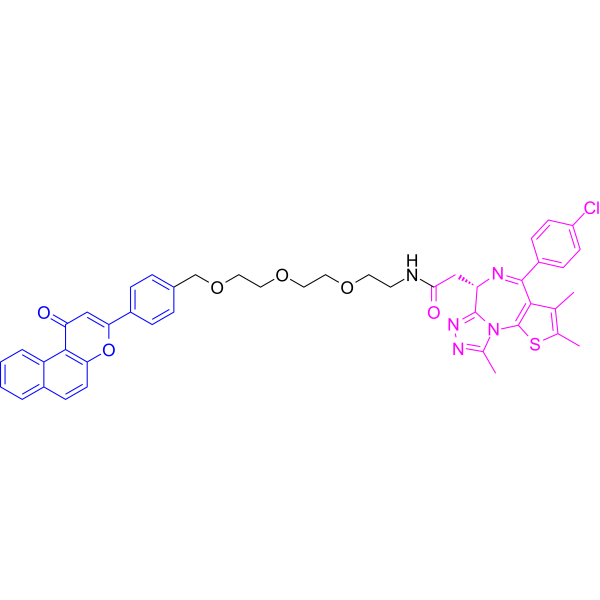
- Formula: C45H42ClN5O6S
- Molecular Weight: 816.36
β-NF-JQ1 is a BRD2/3/4 PROTAC degrader. β-NF-JQ1 recruits the AhR E3 ligase complex to BRD2, BRD3 and BRD4, induces AhR-BRD interaction, and mediates AhR-dependent degradation through the proximity effect between the target protein and AhR. β-NF-JQ1 acts as an antiproliferative and cytotoxic agent that induces anticancer activity associated with BRD protein knockdown. β-NF-JQ1 can be used for research on breast cancer and neuroblastoma.

- Formula: C52H62BrN11O8
- Molecular Weight: 1049.02
dAurAB2 is a potent Aurora-A/Aurora-B PROTAC degrader with DC50 values of 59 nM and 39 nM, respectively. dAurAB2 induces ubiquitination and proteasomal degradation of Aurora-A kinase and Aurora-B kinase, and indirectly reduces N-Myc protein levels. dAurAB2 can be used in studies related to neuroblastoma.

- Formula: C34H35N9O7
- Molecular Weight: 681.70
TO-1187 is a selective HDAC6 PROTAC degrader with a DC50 value of 5.81 nM. TO-1187 degrades HDAC6 via the ubiquitin-proteasome pathway. TO-1187 can be used in the research of multiple myeloma, neuroblastoma, and cervical cancer.

- Formula: C39H40ClN9O8S
- Molecular Weight: 830.31
AP-1 is a targeted ALK PROTAC degrader. AP-1 effectively degrades various ALK fusion/mutation forms, including degradation of NPM-ALK (DC50 = 4.6 nM) and EML4-ALK (DC50 = 357.6 nM), and exhibits a typical hook effect at high concentrations. AP-1 inhibits phosphorylation of downstream STAT3, downregulates gene expression in the JAK-STAT pathway, and kills ALK-positive tumor cells via activating the caspase-3-dependent apoptosis pathway. AP-1 shows cytotoxicity against a variety of cancer cells and possesses anti-tumor activity. AP-1 can be used in research related to non-small cell lung cancer, neuroblastoma, and anaplastic large cell lymphoma.
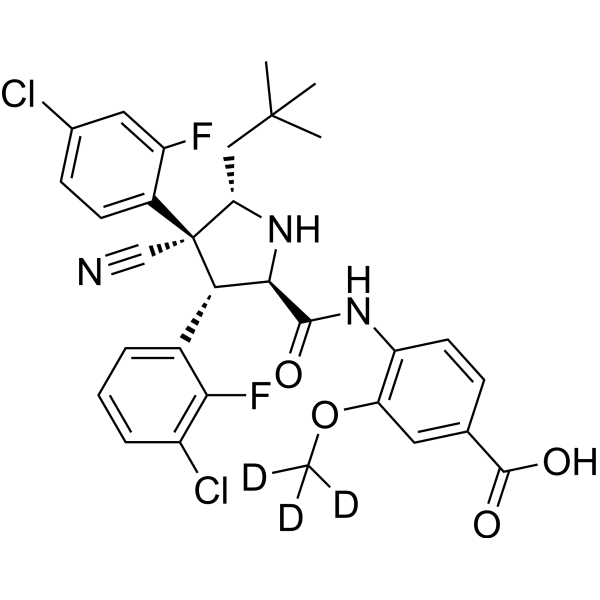
- Formula: C31H26D3Cl2F2N3O4
- Molecular Weight: 619.50
Idasanutlin-d3-1 (RG7388-d3-1) is the deuterated-labeled Idasanutlin (HY-15676). Idasanutlin (RG7388) is an orally bioavailable MDM2 inhibitor with an IC50 of 6 nM. Idasanutlin disrupts MDM2-p53 binding, stabilizes and activates p53, triggering cell cycle arrest, apoptosis, and reduced cancer cell viability. Idasanutlin reduces EGFR protein expression and phosphorylation, suppresses downstream SHP2, MEK1/2, ERK1/2, AKT, mTOR, p70(S6K1), and S6 signaling. Idasanutlin induces mitochondrial ROS production, drives p38 MAPK phosphorylation, upregulates NOXA, and mediates caspase-3-dependent apoptosis and gasdermin E-mediated pyroptosis. Idasanutlin can be used for the research of TP53-mutant non-small cell lung cancer, T-cell acute lymphoblastic leukemia, colorectal carcinoma, melanoma, diffuse large B-cell lymphoma, mantle cell lymphoma, non-Hodgkin lymphoma, severe fever with thrombocytopenia syndrome, neuroblastoma, acute lymphoblastic leukemia, relapsed or refractory acute myeloid leukemia, osteosarcoma, solid tumors, and hematological tumors.

- Formula: C14H12N2OS
- Molecular Weight: 256.32
TM-2-51 is a HDAC8 activator with a Kd value of 0.28 μM. TM-2-51 inhibits α-glucosidase with an IC50 of 171.21 μM. TM-2-51 upregulates HDAC8 expression, modulates the TP53, STAT3/ERK and PI3K-AKT pathways, alleviates LeTx-induced cell cycle arrest, downregulates JMJD3 and increases H3K27me3 levels. TM-2-51 selectively induces apoptosis in tumor cell and upregulates p53/p21 expression. TM-2-51 inhibits tumor cell proliferation, migration and invasion, induces G1-phase arrest and suppresses tumor growth in vivo. TM-2-51 can be used in research on osteosarcoma, anthrax, type 2 diabetes and neuroblastoma.
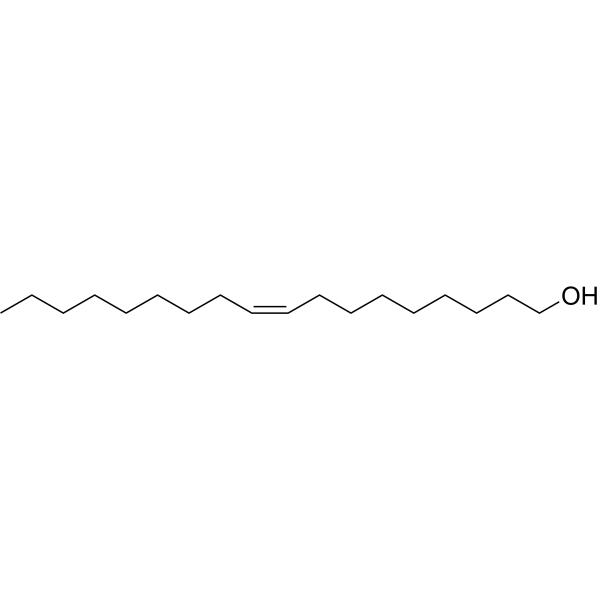
- Formula: C18H36O
- Molecular Weight: 268.48
Oleyl alcohol is an anti-tumor compound that inhibits tumor growth. Oleyl alcohol induces cytotoxicity, cell death and apoptosis. The intracellular accumulation of Oleyl alcohol correlates with its cytotoxicity against tumor cells. Oleyl alcohol forms enhancer-enriched fluid domains in stratum corneum lipids, increases the retention of diclofenac diethylamine in ex vivo human epidermis and dermis, and enhances the skin permeability of diclofenac diethylamine. Oleyl alcohol can be used in studies related to neuroblastoma.



