



Glioblastoma Multiforme
-
Glioblastoma Multiforme (13)

- 1
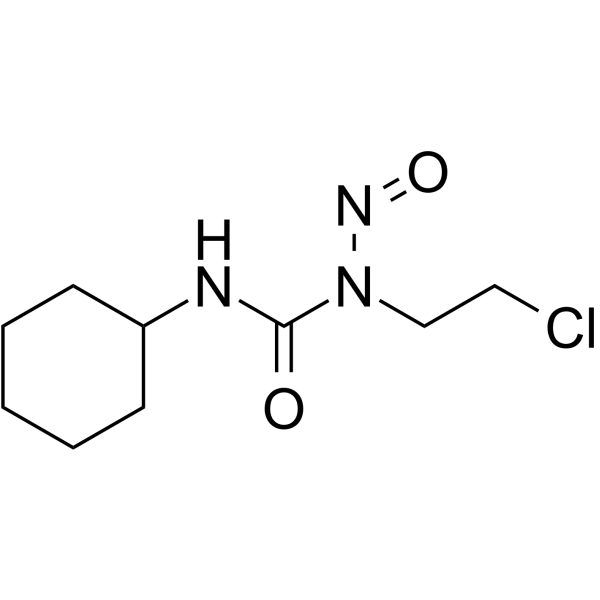
- Formula: C9H16ClN3O2
- Molecular Weight: 233.70
Lomustine (CCNU; NSC 79037) is a DNA alkylating agent, with antitumor activity.

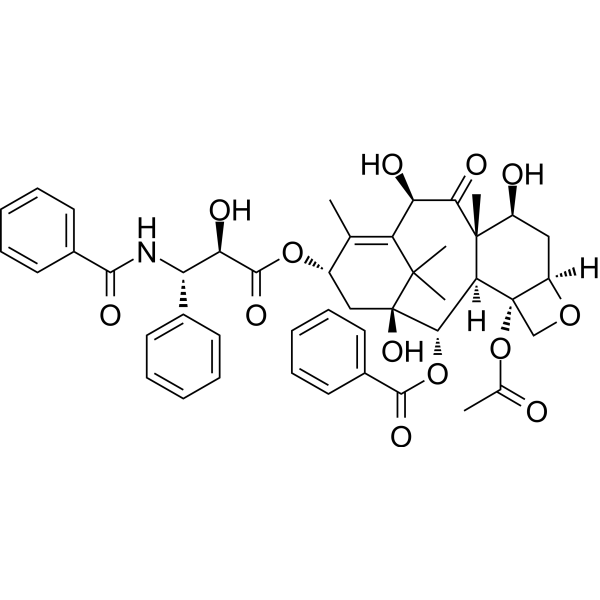
- Formula: C45H49NO13
- Molecular Weight: 811.87
10-Deacetyltaxol (10-Deacetylpaclitaxel) is a taxane derivative found in Taxus wallichiana Zucc. and exhibits cytotoxicity against human neurotumor cell lines. It shows a concentration-dependent cytotoxic effect on cancer cells and demonstrates activity in the mouse leukemia system. 10-Deacetyltaxol can be used for research on neuroblastoma, glioblastoma multiforme, and lymphocytic leukemia.

- Formula: C28H37N5O4S
- Molecular Weight: 539.69
CCX662 is a selective CXCR7 inhibitor with human IC50 values of 9 nM (buffer) and 18 nM (100% human serum), and rat IC50 of 14 nM (100% rat serum). CCX662 blocks CXCL12 binding to CXCR7, inhibits CXCR4-directed trans-endothelial migration of CXCR4+/CXCR7+ cells. CCX662 can be used for the research of glioblastoma multiforme.

- Formula: C21H33F2N3O5
- Molecular Weight: 445.50
Gem-C12 is a prodrug of Gemcitabine (HY-17026). Gem-C12 terminates DNA chain elongation, inhibits nucleic acid synthesis and induces Apoptosis. Gem-C12 inhibits the proliferation of glioma cells. Gem-C12 and Honokiol (HY-N0003) exhibit synergistic anti-glioblastoma activity. Gem-C12 can be used in research related to glioblastoma multiforme.

- Formula: C45H49NO13
- Molecular Weight: 811.87
10-Deacetyltaxol (Standard) (10-Deacetylpaclitaxel (Standard)) is the analytical standard of 10-Deacetyltaxol (HY-N1391). This product is intended for research and analytical applications. 10-Deacetyltaxol (10-Deacetylpaclitaxel) is a taxane derivative found in Taxus wallichiana Zucc. and exhibits cytotoxicity against human neurotumor cell lines. It shows a concentration-dependent cytotoxic effect on cancer cells and demonstrates activity in the mouse leukemia system. 10-Deacetyltaxol can be used for research on neuroblastoma, glioblastoma multiforme, and lymphocytic leukemia.

- Formula: C24H26FN3O2
- Molecular Weight: 407.48
M4K2163 is a ALK2 inhibitor that serves as a target protein ligand for the synthesis of PROTACs, such as M4K3250 (HY-183718). M4K2163 induces cytotoxic effects in glioblastoma cells. M4K2163 can be used in the research of diffuse intrinsic pontine glioma and glioblastoma.

- Formula: C16H21NO3
- Molecular Weight: 275.34
Rolipram GMP is Rolipram (HY-16900) produced by using GMP guidelines. GMP small molecules works appropriately as an auxiliary reagent for cell therapy manufacture. Rolipram is a PDE4 inhibitor, with blood-brain barrier permeability, that reverses β-amyloid-induced learning and memory impairment in rats. Rolipram elevates intracellular cAMP and clevels and regulates the cAMP/CREB signaling pathway, thereby alleviating neuroinflammation and apoptotic responses. Rolipram promotes neuronal differentiation of human bone marrow mesenchymal stem cells and inhibits Methamphetamine- and morphine-induced hyperlocomotion in mice. Rolipram also reduces the viability of glioblastoma stem-like cells and enhances Bevacizumab (HY-P9906)-induced cell death. Rolipram inhibits the expression of proinflammatory cytokines and enhances central noradrenergic transmission. Rolipram is mainly used in studies related to various central nervous system diseases including Alzheimer's disease, major depressive disorder, glioblastoma multiforme, and multiple sclerosis.
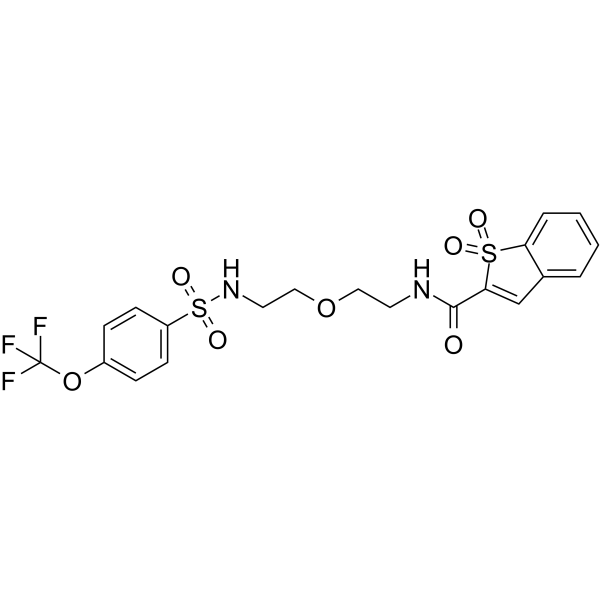
- Formula: C20H19F3N2O7S2
- Molecular Weight: 520.50
SCP1-IN-1 is a Small CTD Phosphatase 1 (SCP1) inhibitor with a human IC50 of 10 μM. SCP1-IN-1 inactivates SCP1, promotes REST transcription factor degradation, and reduces REST transcriptional activity. SCP1-IN-1 can be used for the research of glioblastoma multiforme.

- Formula: C27H30F3N5O6
- Molecular Weight: 577.55
GZD-552 is a potent orally active FAK inhibitor with a human FAK IC50 of 5.8 nM. GZD-552 suppresses FAK phosphorylation activation and downstream ERK signaling. GZD-552 induces apoptosis and G2/M cell cycle arrest, and exhibits antiproliferative activities in glioblastoma multiforme cells. GZD-552 exhibits antitumor efficacy in mice xenograft model. GZD-552 can be used for the research of glioblastoma multiforme.

- Formula: C27H20N4O5
- Molecular Weight: 480.47
TTGM 5826 is a tissue transglutaminase (tTG) inhibitor with an EC50 of 20 μM. TTGM 5826 stabilizes the open conformation of tTG that exhibits protein cross-linking activity, and acts as a competitive inhibitor of tTG-mediated cross-linking activity. TTGM 5826 inhibits the transformed phenotypes of breast cancer cells, brain cancer cells and glioma stem cells. TTGM 5826 can be used in the research of breast cancer, glioblastoma, pancreatic cancer and glioma stem cell-related tumors.

- Formula: C16H22Cl3N7O4
- Molecular Weight: 482.75
HJ03 is a blood-brain barrier-permeable, orally active DNA damage and ferroptosis inducer. HJ03 triggers ferroptosis by increasing intracellular ROS, Fe2+ accumulation and lipid peroxidation. HJ03 induces DNA adducts and interstrand crosslinks, blocks DNA replication and transcription, arrests cells at the G2/M phase and induces apoptosis. HJ03 can be used in the research of glioblastoma multiforme and colorectal cancer.

- Formula: C20H23NO6
- Molecular Weight: 373.40
AS15 is a PDIA1 inhibitor with an IC50 value of 300 nM. AS15 interacts with the active-site cysteine of PDIA1, and this process is independent of the substrate-binding domain of PDIA1. AS15 acts as a synergistic cell growth inhibitor with buthionine sulfoximine (BSO) (HY-106376), a glutathione synthesis inhibitor. AS15 can be used in the research of glioblastoma.
- 1



