



CXCR7
CXCR7, currently designated atypical chemokine receptor 3 (ACKR3), is a seven-transmembrane chemokine receptor that functions as a regulator of chemokine availability and intracellular signaling within the CXCL12 axis[1]. Unlike canonical chemokine receptors, CXCR7 lacks the conserved motif required for efficient Gi-protein coupling and is therefore classified as an atypical chemokine receptor with predominant β-arrestin-associated signaling properties[1][2]. Mechanistically, CXCR7 binds CXCL12 with higher affinity than CXCR4 and modulates chemokine gradients through ligand sequestration, receptor internalization, and regulation of downstream signaling networks[1][3]. The CXCL12/CXCR4/CXCR7 signaling system contributes to neural, vascular, and cardiac development, while also regulating cell migration, proliferation, and tissue remodeling processes[1][4]. In disease models, elevated CXCR7 expression has been associated with hypoxia-responsive pathways, glioma progression, tumor-associated angiogenesis, and multiple cancer types in which CXCL12 signaling supports tumor growth and cellular survival[1][5]. Compared with the closely related receptor CXCR4, CXCR7 displays distinct signaling behavior, acting primarily through β-arrestin-mediated mechanisms and chemokine scavenging while also modifying CXCR4-dependent cellular responses through receptor interaction[1][2]. For experimental applications, the selective CXCR7 agonist CCX771 has been widely used to investigate receptor-specific functions because it binds CXCR7 with high affinity and does not interfere with CXCL12 binding to CXCR4[1].
References:
- [1]. Wang C, et al. CXCR7 Targeting and Its Major Disease Relevance. Front Pharmacol. 2018 Jun 21;9:641. [Content Brief]
- [2]. Rajagopal S, et al. Beta-arrestin- but not G protein-mediated signaling by the \"decoy\" receptor CXCR7. Proc Natl Acad Sci U S A. 2010 Jan 12;107(2):628-32. [Content Brief]
- [3]. Abdo AA, et al. The Fermi Gamma-Ray Space Telescope discovers the pulsar in the young galactic supernova remnant CTA 1. Science. 2008 Nov 21;322(5905):1218-21. [Content Brief]
- [4]. Chu T, et al. CXCL12/CXCR4/CXCR7 Chemokine Axis in the Central Nervous System: Therapeutic Targets for Remyelination in Demyelinating Diseases. Neuroscientist. 2017 Dec;23(6):627-648. [Content Brief]
- [5]. Peter EK, et al. A Hybrid Hamiltonian for the Accelerated Sampling along Experimental Restraints. Int J Mol Sci. 2019 Jan 16;20(2):370. [Content Brief]
-
CXCR7 Related Products (17)
Related Products (17)

- 1
-
Plerixafor
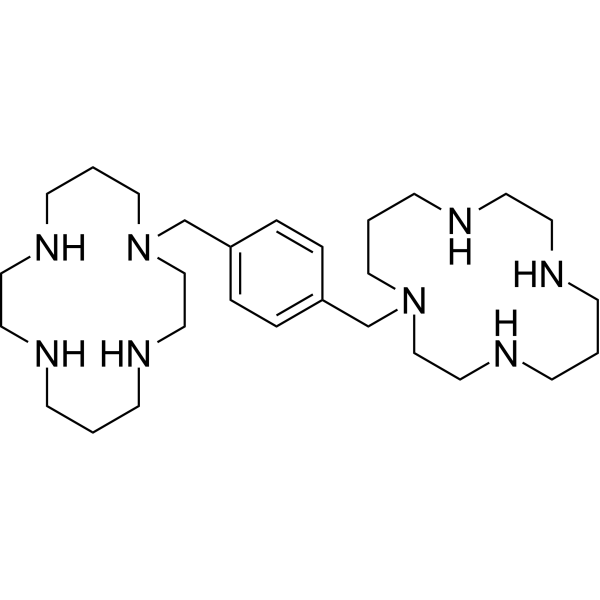 0 ImagesSynonyms: AMD 3100; JM3100; SID791
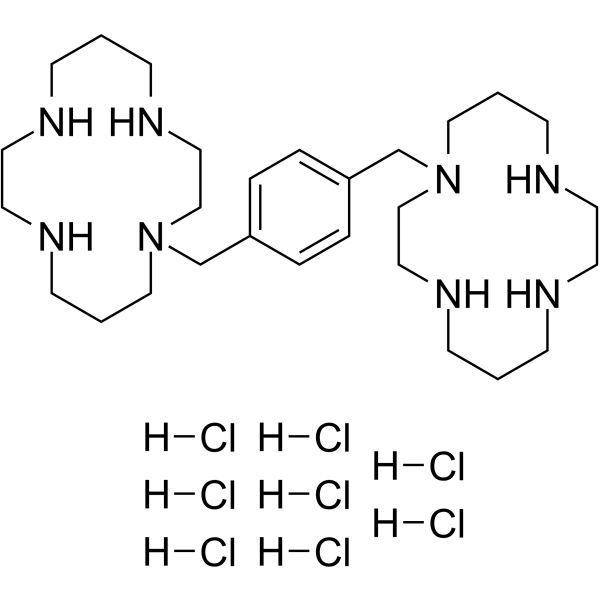
-
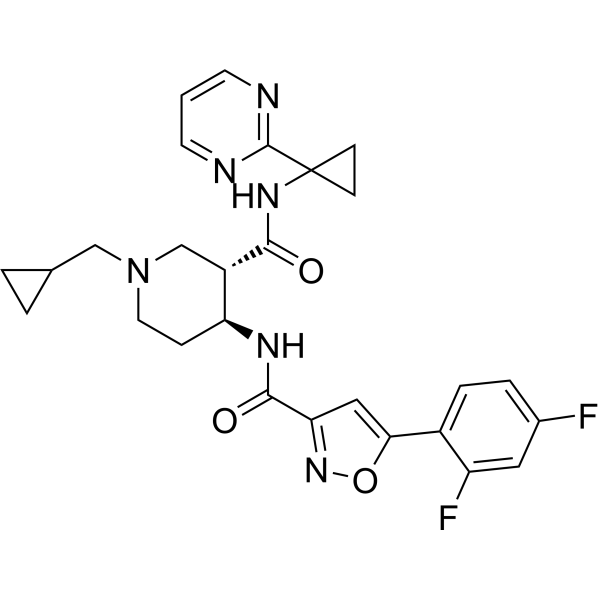
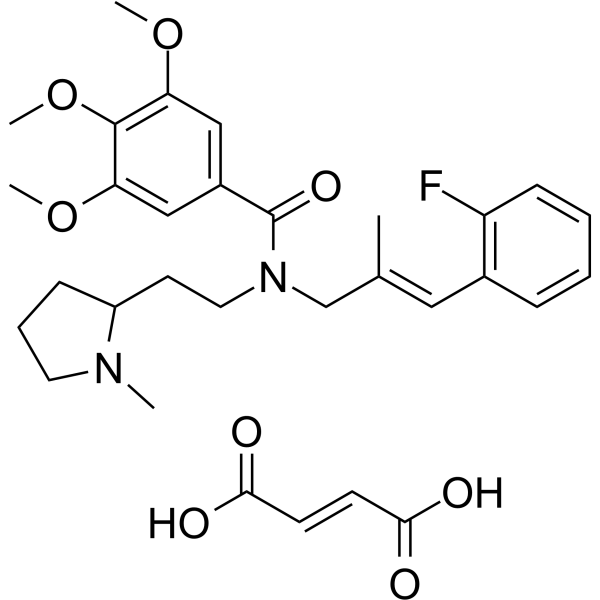
CXCR7 antagonist-1
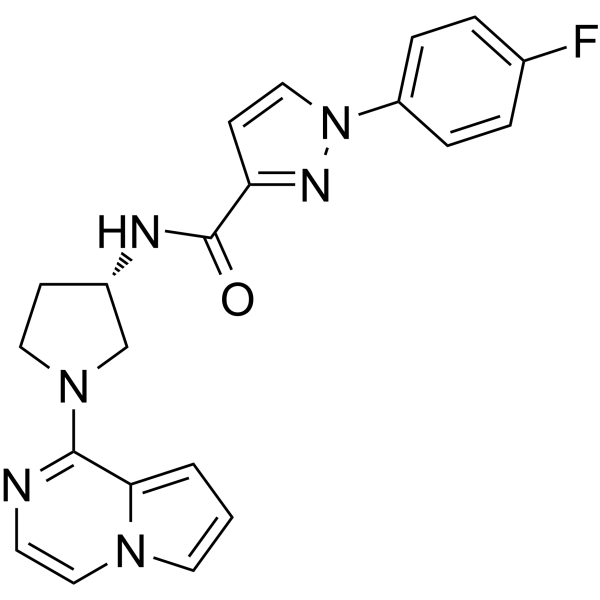 0 ImagesCXCR7 antagonist-1 is a CXCR7 antagonist that inhibits the binding of the SDF-1 chemokine (also known as the CXCL12 chemokine) or I-TAC (also known as CXCL11) to the chemokine receptor CXCR7. CXCR7 antagonist-1 is useful in preventing tumor cell proliferation, tumor formation, inflammatory diseases, and many other diseases.
-
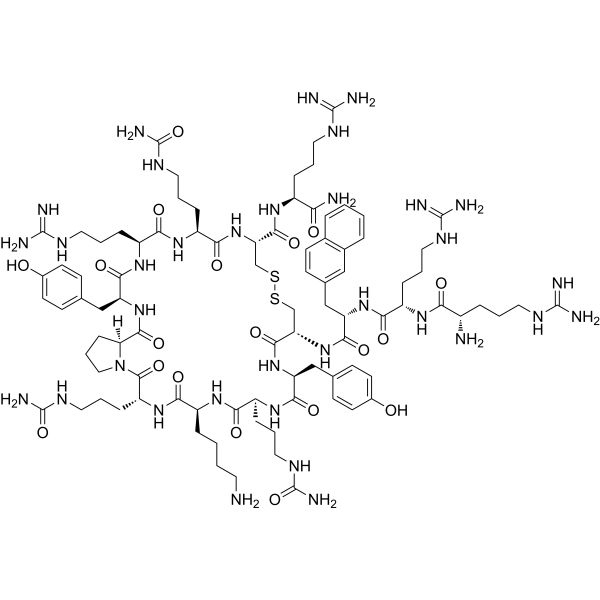
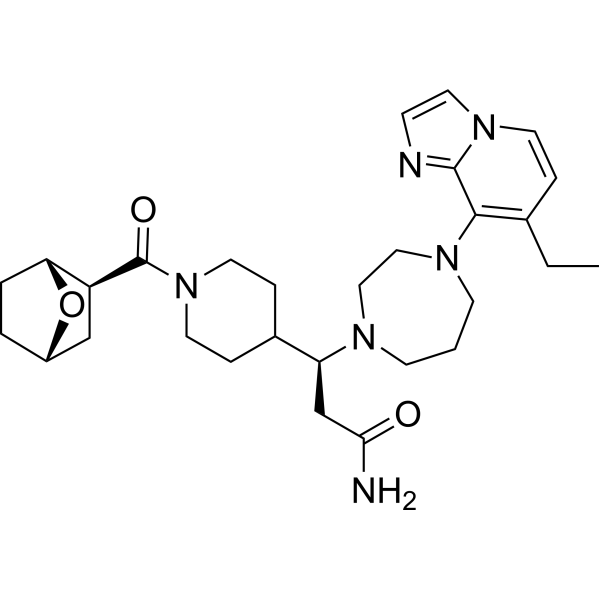
LN5972
 0 ImagesCat. No.: HY-182533CAS No.: 3035425-93-2LN5972 is a selective ACKR3 agonist with an EC50 of 3.40 μM, showing higher selectivity for ACKR3 over CXCR4. LN5972 induces β-arrestin recruitment to ACKR3/CXCR7. LN5972 reduces the surface expression of P-selectin. LN5972 is applicable to studies related to platelet-mediated thrombosis.

-
CXCR7 antagonist-1 hydrochloride
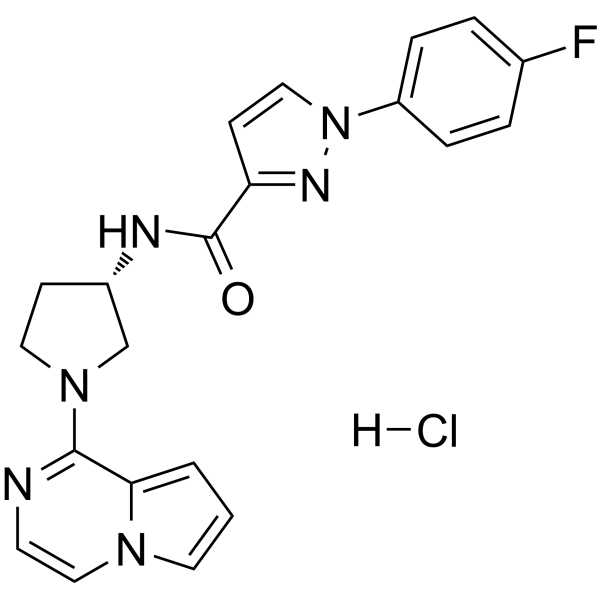 0 ImagesCXCR7 antagonist-1 hydrochloride is a CXCR7 antagonist that inhibits the binding of the SDF-1 chemokine (also known as the CXCL12 chemokine) or I-TAC (also known as CXCL11) to the chemokine receptor CXCR7. CXCR7 antagonist-1 hydrochloride is useful in preventing tumor cell proliferation, tumor formation, inflammatory diseases, and many other diseases.
-
CXCR7 modulator 1
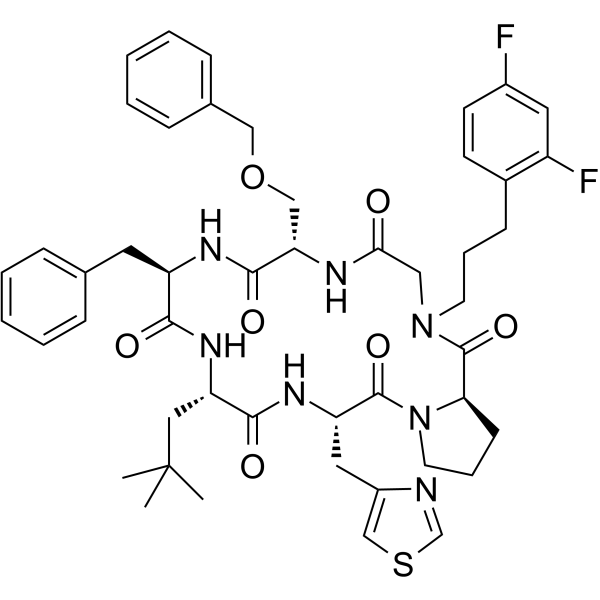 0 ImagesCXCR7 modulator 1 (compound 25) is a potent and orally bioavailable peptoid hybrid CXCR7 modulator, with a Ki of 9 nM.
-
CCX-777
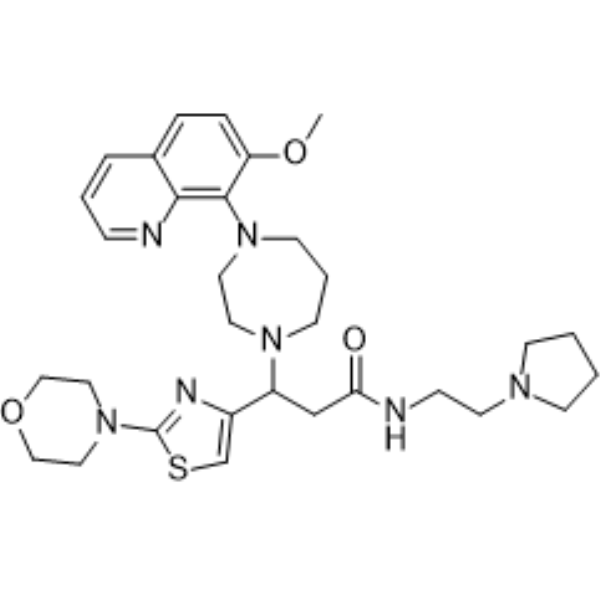 0 ImagesCCX-777 is an orthosteric binder and partial agonist of CXCR7/ACKR3. CCX-777 induces the recruitment of β-arrestin 2 and affects the rebinding of chemokines to ACKR3. CCX-777 functions to stabilize the ACKR3 receptor and promotes the formation of a monodisperse, stable complex of the receptor in DDM/CHS micelles. CCX-777 is widely used in cancer-related research.
-
CCX662
 0 ImagesCat. No.: HY-167851CAS No.: 1226686-54-9CCX662 is a selective CXCR7 inhibitor with human IC50 values of 9 nM (buffer) and 18 nM (100% human serum), and rat IC50 of 14 nM (100% rat serum). CCX662 blocks CXCL12 binding to CXCR7, inhibits CXCR4-directed trans-endothelial migration of CXCR4+/CXCR7+ cells. CCX662 can be used for the research of glioblastoma multiforme.
-
VUF11207 TFA
 0 ImagesCat. No.: HY-115615CAS No.: 1492153-74-8


- 1



