



Olfactory Receptor
Olfactory Receptor
Olfactory receptors (ORs) are a class of G protein-coupled receptors (GPCRs) located in the nasal olfactory epithelium, belonging to class A of GPCRs with seven transmembrane helix structures, primarily responsible for detecting odor molecules. These receptors initiate a series of signal transduction events by activating G proteins and generating cAMP, leading to the production of electrical signals in olfactory neurons, which are ultimately interpreted as specific smells by the brain. Humans encode about 400 types of olfactory receptors, divided into two major subfamilies: Class I and Class II olfactory receptors.
Olfactory receptors play roles in various diseases, including olfactory loss or disorders (such as temporary olfactory loss caused by colds or rhinitis), metabolic diseases (studies have shown that some olfactory receptors regulate glucose metabolism in diabetes and obesity), and cancer (abnormal expression of olfactory receptors is related to the development of various cancers, such as prostate cancer and breast cancer). These studies not only provide a deep understanding of the functions of the olfactory system but may also offer new strategies for researching related diseases[1].
All Product Categories
-
Olfactory Receptor Related Products (9)
Related Products (9)

-
α-Ionone
 0 Imagesα-Ionone (alpha-Ionone) is an activator of the olfactory receptor OR10A6. α-Ionone induces apoptosis by activating OR10A6 and increasing the phosphorylation of the LATS-YAP-TAZ signaling axis in the Hippo pathway. α-Ionone can inhibit tumor formation both in vivo and in vitro.
-
Bourgeonal
 0 ImagesBourgeonal is a potent agonist of hOR17-4 and acts as a strong chemoattractant in sperm behavioral assays.
-
HOR1-C59
 0 ImagesHOR1-C59 is a highly selective Or5v1/Olfr110 agonist with an EC50 of 7.12 nM. HOR1-C59 can improve glucose homeostasis, alleviate obesity and insulin resistance. HOR1-C59 is applicable for obesity-related research.
-
(R)-(-)-Muscone
 0 Images(R)-(-)-Muscone, a musk-smelling compound, is an odorant receptor OR5AN1 agonist.
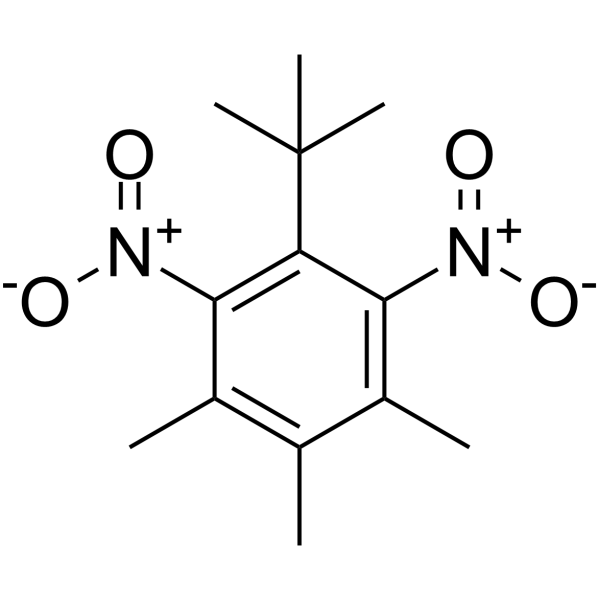
-
5-Cyclopropylpentanal
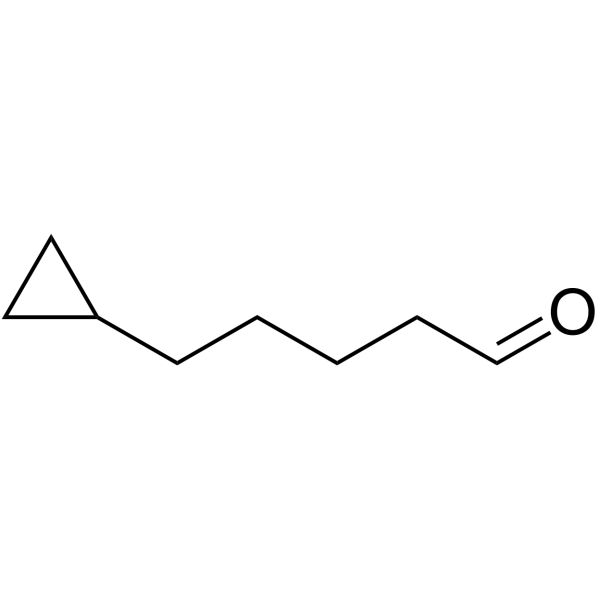 0 ImagesCat. No.: HY-145788CAS No.: 147159-38-45-Cyclopropylpentanal is an olfactory receptor agonist. 5-Cyclopropylpentanal enhance OR-I7 activation with an EC50 of 0.3 μM.
-
OX1a
 0 ImagesCat. No.: HY-121787CAS No.: 136340-88-0Synonyms: OLC20OX1a (OLC20) is an Orco antagonist with non-competitive activity that inhibits the activation of oxygen odor receptors (ORs). OX1a is able to reduce the activation of ORs by competitively inhibiting the effects of Orco agonists. OX1a also shows non-competitive inhibition of odor molecules, which may affect the olfactory-mediated behavior of insects. Through structural optimization, OX1a analogs have shown higher antagonistic potency, indicating that this type of compound may have application potential in a wide range of insect species.
-
Tyrene
 0 ImagesCat. No.: HY-W097929CAS No.: 87-40-1Synonyms: 2,4,6-TrichloroanisoleTyrene (2,4,6-Trichloroanisole) is an off-flavor compound, cyclic nucleotide-gated (CNG) channel inhibitor, and olfactory transduction attenuator. Tyrene is formed by microbial O-methylation of 2,4,6-trichlorophenol. Tyrene inhibits channel activity in olfactory receptor cells by partitioning into the plasma membrane lipid bilayer, and also suppresses odorant- and cAMP-induced currents in individual olfactory receptor cells. Tyrene causes cork taint in wine. Tyrene also produces off-flavors in potato chips, dried fruits, coffee, and drinking water.
-
(E)-8-Dodecenyl acetate
 0 ImagesCat. No.: HY-W109323CAS No.: 38363-29-0Synonyms: (E)-8-Dodecen-1-yl acetate; trans-8-Dodecenyl acetate(E)-8-Dodecenyl ((E)-8-Dodecen-1-yl; trans-8-Dodecenyl) acetate is a sex pheromone targeting the olfactory receptors of male Gymnandrosoma aurantianum moths. acting as an agonist. (E)-8-Dodecenyl acetate is promising for research of agricultural pests.



