



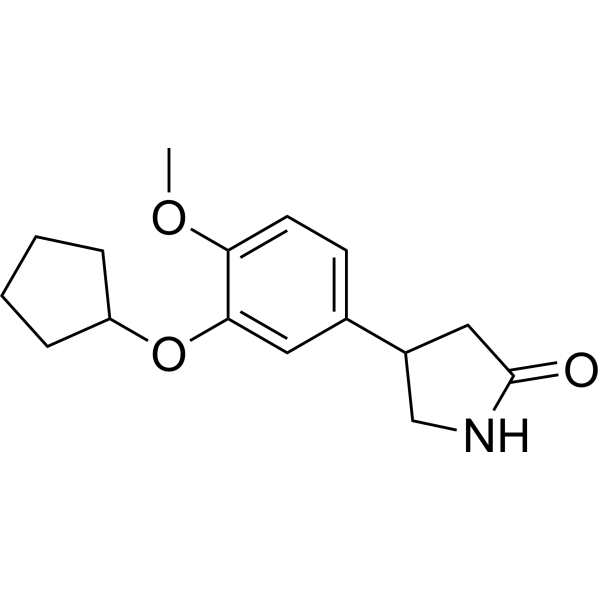
Rolipram GMP is Rolipram (HY-16900) produced by using GMP guidelines. GMP small molecules works appropriately as an auxiliary reagent for cell therapy manufacture. Rolipram is a PDE4 inhibitor, with blood-brain barrier permeability, that reverses β-amyloid-induced learning and memory impairment in rats. Rolipram elevates intracellular cAMP and clevels and regulates the cAMP/CREB signaling pathway, thereby alleviating neuroinflammation and apoptotic responses. Rolipram promotes neuronal differentiation of human bone marrow mesenchymal stem cells and inhibits Methamphetamine- and morphine-induced hyperlocomotion in mice. Rolipram also reduces the viability of glioblastoma stem-like cells and enhances Bevacizumab (HY-P9906)-induced cell death. Rolipram inhibits the expression of proinflammatory cytokines and enhances central noradrenergic transmission. Rolipram is mainly used in studies related to various central nervous system diseases including Alzheimer's disease, major depressive disorder, glioblastoma multiforme, and multiple sclerosis.
For research use only. We do not sell to patients.
- CAS No.: 61413-54-5
- Formula: C16H21NO3
- Molecular Weight:275.34
-
Storage:
Please store the product under the recommended conditions in the Certificate of Analysis.


To place orders, for customer services and technical support, please contact: MedChemExpress USA
Tel: 609-228-6898 E-mail: [email protected] [email protected]


-
 Biological Activity
-
Chemical Information
- Protocols
- Purity & Documentation
- References
-
 Help & FAQs


-
HY-16900
RolipramPDE4 Inhibitor -

HY-16900R
Rolipram (Standard)Reference Standard -
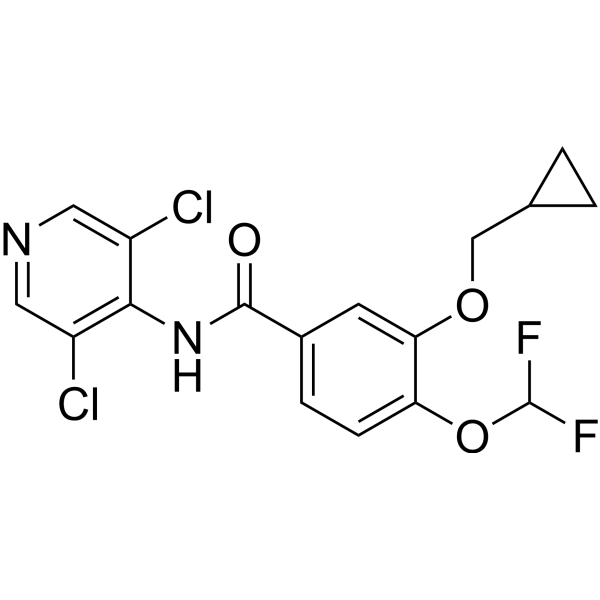
HY-15455
RoflumilastPDE4 Inhibitor -
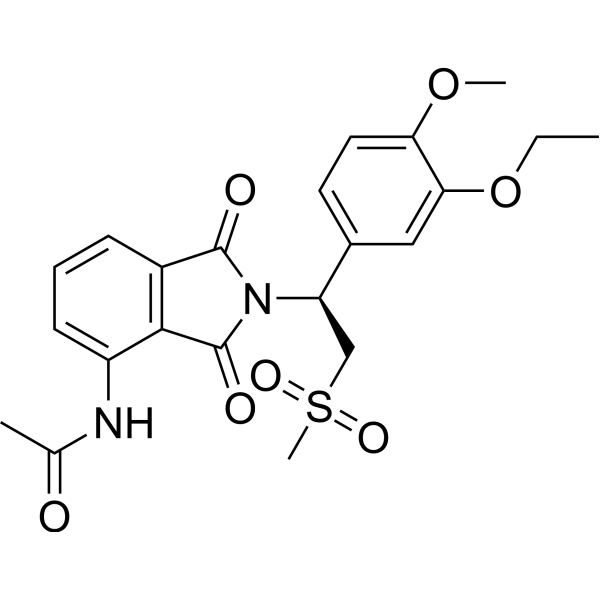
HY-12085
ApremilastPDE-4 Inhibitor -
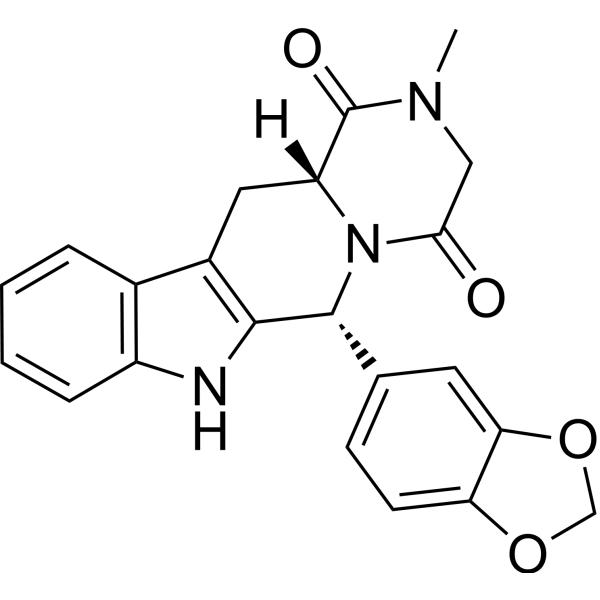
HY-90009A
TadalafilPDE5 Inhibitor -
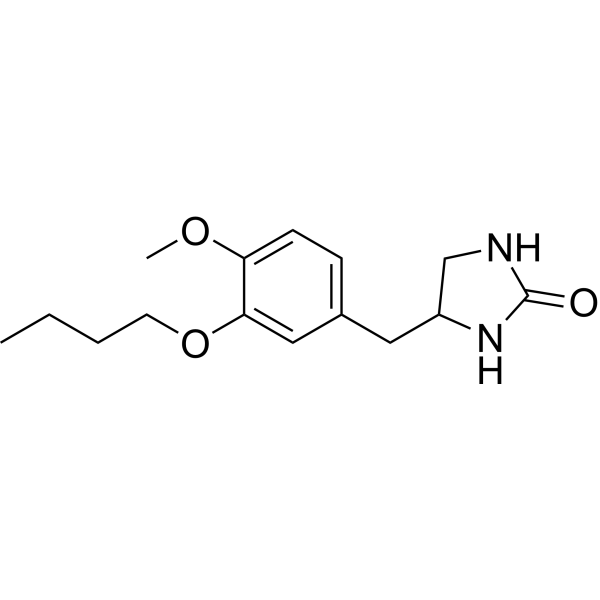
HY-100927
Ro 20-1724PDE4/PDE IV Inhibitor -
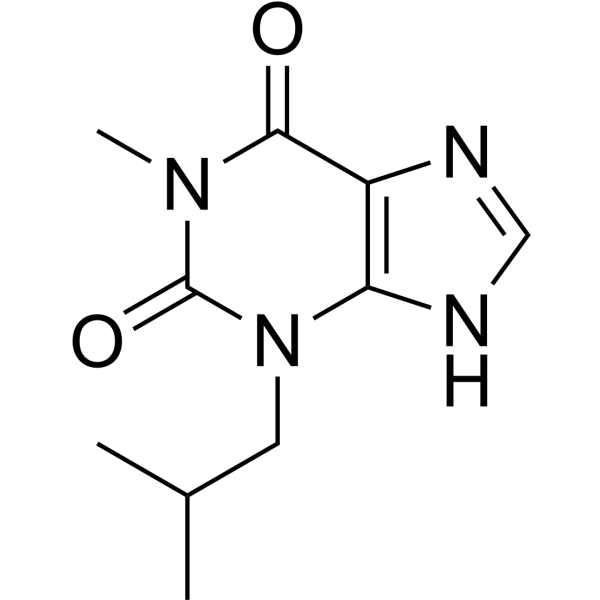
HY-12318
IBMXPDE Inhibitor -
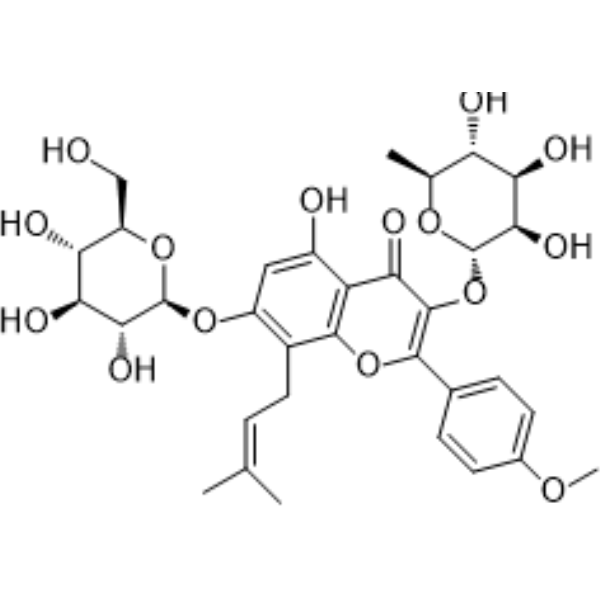
HY-N0014
IcariinPPAR Activator -
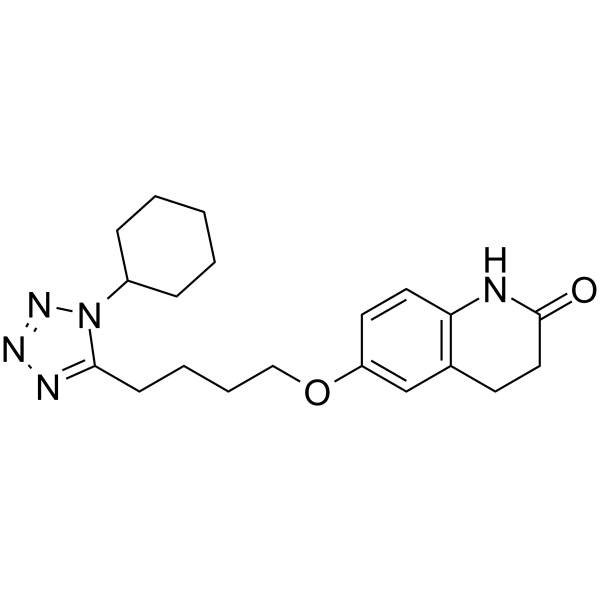
HY-17464
CilostazolPDE3 Inhibitor -
HY-B0392
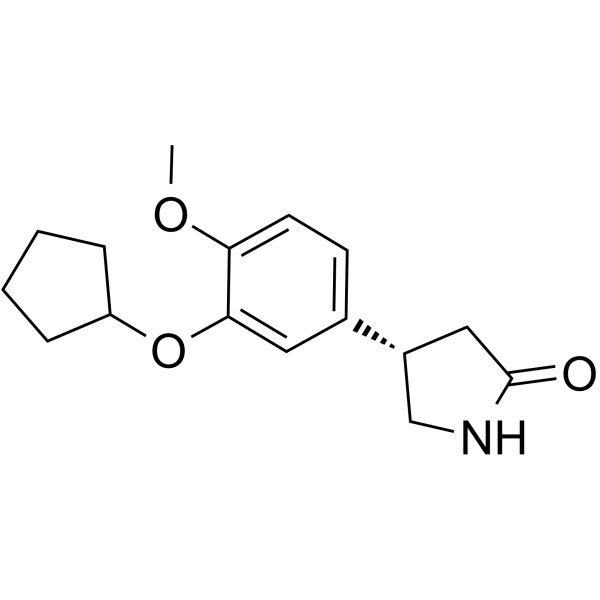
(S)-(+)-RolipramPDE4 Inhibitor -
HY-15025A
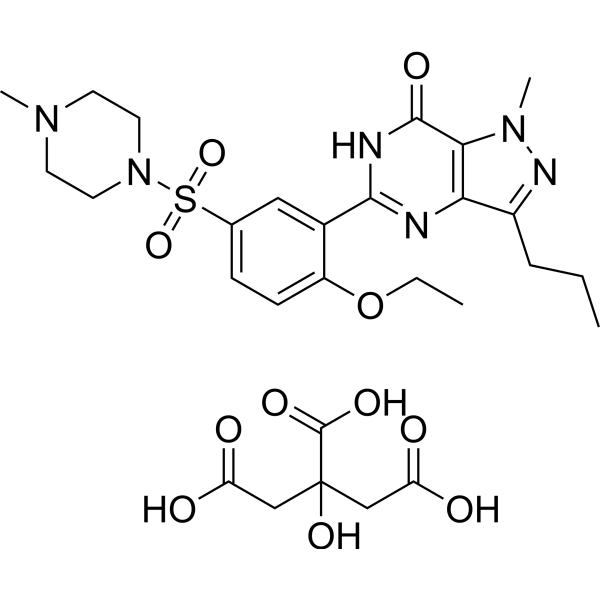
Sildenafil citratePDE5 Inhibitor -
HY-153192
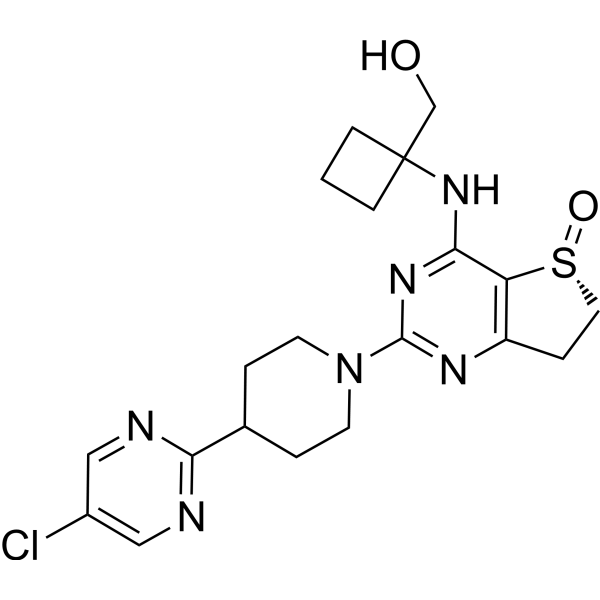
NerandomilastPDE4B Inhibitor


Biological Activity
Description
IC50 & Target
IC50: 3 nM (PDE4A), 130 nM (PDE4B), 240 nM (PDE4D)[1]
Cellular Effect
|
Cell Line

|
Type | Value | Description | References |
|---|---|---|---|---|
| A549 | IC50 |
100 μM
Compound: Rol
|
Antiproliferative activity against human A549 cells after 48 hrs by MTT assay
Antiproliferative activity against human A549 cells after 48 hrs by MTT assay
|
[PMID: 34311158] |
| COS-7 | IC50 |
105 nM
Compound: rolipram
|
Inhibition of PDE4B2 expressed in COS7 cells assessed as cAMP hydrolysis
Inhibition of PDE4B2 expressed in COS7 cells assessed as cAMP hydrolysis
|
[PMID: 18222088] |
| HEK293 | EC50 |
131.5 nM
Compound: 1
|
Inhibition of PDE4 expressed in HEK293 cells coexpressing G-protein coupled receptor and cyclic nucleotide gated ion channel by fluorescence assay
Inhibition of PDE4 expressed in HEK293 cells coexpressing G-protein coupled receptor and cyclic nucleotide gated ion channel by fluorescence assay
|
[PMID: 19464886] |
| HEK293 | EC50 |
0.22 μM
Compound: Rolipram
|
Inhibition of PDE4B expressed in HEK293 cells assessed as fold reduction in forskolin-stimulated cAMP production pretreated for 30 mins measured 4 hrs after forskolin challenge by luciferase reporter gene assay
Inhibition of PDE4B expressed in HEK293 cells assessed as fold reduction in forskolin-stimulated cAMP production pretreated for 30 mins measured 4 hrs after forskolin challenge by luciferase reporter gene assay
|
[PMID: 22386978] |
| HEK293 | EC50 |
2.62 μM
Compound: Rolipram
|
Inhibition of PDE4A4 (unknown origin) transfected in HEK293 cells assessed as forskolin-induced cAMP accumulation pretreated for 30 mins before forskolin challenge by luciferase reporter gene assay
Inhibition of PDE4A4 (unknown origin) transfected in HEK293 cells assessed as forskolin-induced cAMP accumulation pretreated for 30 mins before forskolin challenge by luciferase reporter gene assay
|
10.1039/C2MD00273F |
| HEK293 | EC50 |
0.16 μM
Compound: Rolipram
|
Inhibition of PDE4B1 (unknown origin) transfected in HEK293 cells assessed as forskolin-induced cAMP accumulation pretreated for 30 mins before forskolin challenge by luciferase reporter gene assay
Inhibition of PDE4B1 (unknown origin) transfected in HEK293 cells assessed as forskolin-induced cAMP accumulation pretreated for 30 mins before forskolin challenge by luciferase reporter gene assay
|
10.1039/C2MD00273F |
| HEK293 | EC50 |
0.67 μM
Compound: Rolipram
|
Inhibition of PDE4D3 (unknown origin) transfected in HEK293 cells assessed as forskolin-induced cAMP accumulation pretreated for 30 mins before forskolin challenge by luciferase reporter gene assay
Inhibition of PDE4D3 (unknown origin) transfected in HEK293 cells assessed as forskolin-induced cAMP accumulation pretreated for 30 mins before forskolin challenge by luciferase reporter gene assay
|
10.1039/C2MD00273F |
| MCF7 | IC50 |
100 μM
Compound: Rol
|
Antiproliferative activity against human MCF7 cells after 48 hrs by MTT assay
Antiproliferative activity against human MCF7 cells after 48 hrs by MTT assay
|
[PMID: 34311158] |
| NCI-H460 | IC50 |
100 μM
Compound: Rol
|
Antiproliferative activity against human NCI-H460 cells after 48 hrs by MTT assay
Antiproliferative activity against human NCI-H460 cells after 48 hrs by MTT assay
|
[PMID: 34311158] |
| PBMC | IC50 |
0.5 μM
Compound: 1
|
Inhibition of TNF-alpha release from LPS-stimulated human mononuclear cells
Inhibition of TNF-alpha release from LPS-stimulated human mononuclear cells
|
[PMID: 9784096] |
| PBMC | IC50 |
0.15 μM
Compound: Rolipram
|
Inhibition of LPS stimulated Tumor Necrosis Factor-alpha (TNF-alpha) release by human PBMC
Inhibition of LPS stimulated Tumor Necrosis Factor-alpha (TNF-alpha) release by human PBMC
|
[PMID: 9873600] |
| PBMC | IC50 |
0.16 μM
Compound: Rolipram
|
Antiinflammatory activity in human PBMC assessed as inhibition of LPS-induced TNFalpha release in after 24 hrs by FACS Array analysis
Antiinflammatory activity in human PBMC assessed as inhibition of LPS-induced TNFalpha release in after 24 hrs by FACS Array analysis
|
[PMID: 19303290] |
| PBMC | IC50 |
0.23 μM
Compound: Rolipram
|
Antiinflammatory activity in human PBMC assessed as inhibition of phytohemagglutininin-induced IL2 release after 24 hrs by FACS Array analysis
Antiinflammatory activity in human PBMC assessed as inhibition of phytohemagglutininin-induced IL2 release after 24 hrs by FACS Array analysis
|
[PMID: 19303290] |
| PBMC | IC50 |
0.5 μM
Compound: Rolipram
|
Antiinflammatory activity in human PBMC assessed as inhibition of phytohemagglutininin-induced IL5 release after 48 hrs by FACS Array analysis
Antiinflammatory activity in human PBMC assessed as inhibition of phytohemagglutininin-induced IL5 release after 48 hrs by FACS Array analysis
|
[PMID: 19303290] |
| PBMC | IC50 |
0.88 μM
Compound: Rolipram
|
Antiinflammatory activity in human PBMC assessed as inhibition of phytohemagglutininin-induced IL10 release after 48 hrs by FACS Array analysis
Antiinflammatory activity in human PBMC assessed as inhibition of phytohemagglutininin-induced IL10 release after 48 hrs by FACS Array analysis
|
[PMID: 19303290] |
| PBMC | IC50 |
60 nM
Compound: Rolipram
|
Inhibition of LPS-induced TNFalpha production in human PBMC
Inhibition of LPS-induced TNFalpha production in human PBMC
|
[PMID: 19049349] |
| PBMC | EC50 |
0.13 μM
Compound: rolipram
|
Antiinflammatory activity in human PBMC assessed as inhibition of LPS-induced TNFalpha production after 24 hrs by ELISA
Antiinflammatory activity in human PBMC assessed as inhibition of LPS-induced TNFalpha production after 24 hrs by ELISA
|
[PMID: 22891752] |
| PBMC | IC50 |
0.27 μM
Compound: Rolipram
|
Inhibition of LPS-induced TNF-alpha production in rat PBMC
Inhibition of LPS-induced TNF-alpha production in rat PBMC
|
[PMID: 24852119] |
| PBMC | IC50 |
12.5 μM
Compound: Rolipram
|
Anti-inflammatory activity in human PBMC assessed as suppression of LPS-induced TNF-alpha release preincubated for 30 mins followed by LPS stimulation for 18 hrs by TR-FRET assay
Anti-inflammatory activity in human PBMC assessed as suppression of LPS-induced TNF-alpha release preincubated for 30 mins followed by LPS stimulation for 18 hrs by TR-FRET assay
|
[PMID: 27289320] |
| PBMC | IC50 |
18.6 μM
Compound: Rolipram
|
Anti-inflammatory activity in human PBMC assessed as inhibition of LPS-induced TNFalpha secretion preincubated for 30 mins followed by LPS stimulation for 18 hrs by TR-FRET assay
Anti-inflammatory activity in human PBMC assessed as inhibition of LPS-induced TNFalpha secretion preincubated for 30 mins followed by LPS stimulation for 18 hrs by TR-FRET assay
|
[PMID: 28196708] |
| PBMC | IC50 |
10.85 μM
Compound: 1
|
Inhibition of LPS-induced TNFalpha production in human PBMC pre-incubated for 30 mins before LPS stimulation for 18 hrs by TR-FRET assay
Inhibition of LPS-induced TNFalpha production in human PBMC pre-incubated for 30 mins before LPS stimulation for 18 hrs by TR-FRET assay
|
[PMID: 28888661] |
| PBMC | IC50 |
0.13 μM
Compound: Rolipram
|
Anti-inflammatory activity in human PBMC assessed as inhibition of LPS-induced TNFalpha production after 24 hrs by ELISA
Anti-inflammatory activity in human PBMC assessed as inhibition of LPS-induced TNFalpha production after 24 hrs by ELISA
|
[PMID: 29432948] |
| PBMC | IC50 |
30 μM
Compound: IV
|
Cytotoxicity against human PBMC by MTS assay
Cytotoxicity against human PBMC by MTS assay
|
[PMID: 29173945] |
| RAW264.7 | IC50 |
0.19 μM
Compound: Rolipram
|
Inhibition of LPS-induced TNFalpha production in mouse RAW264.7 cells pretreated for 30 mins before LPS challenge by ELISA assay
Inhibition of LPS-induced TNFalpha production in mouse RAW264.7 cells pretreated for 30 mins before LPS challenge by ELISA assay
|
10.1039/C2MD00273F |
| RAW264.7 | CC50 |
60 μM
Compound: Rolipram
|
Cytotoxicity against mouse RAW264.7 cells measured after 24 hrs by CCK-8 method
Cytotoxicity against mouse RAW264.7 cells measured after 24 hrs by CCK-8 method
|
[PMID: 40423264] |
| RAW264.7 | IC50 |
39.93 μM
Compound: Rolipram
|
Antiinflammatory activity against mouse RAW264.7 cells assessed as inhibition of LPS-induced TNF-alpha release preincubated for 2 hrs followed by LPS stimulation and measured after 4 hrs by RT-PCR analysis
Antiinflammatory activity against mouse RAW264.7 cells assessed as inhibition of LPS-induced TNF-alpha release preincubated for 2 hrs followed by LPS stimulation and measured after 4 hrs by RT-PCR analysis
|
[PMID: 40423264] |
| RAW264.7 | IC50 |
60 μM
Compound: Rolipram
|
Antiinflammatory activity against mouse RAW264.7 cells assessed as inhibition of LPS-induced NO release preincubated for 2 hrs followed by LPS stimulation and measured after 4 hrs by RT-PCR analysis
Antiinflammatory activity against mouse RAW264.7 cells assessed as inhibition of LPS-induced NO release preincubated for 2 hrs followed by LPS stimulation and measured after 4 hrs by RT-PCR analysis
|
[PMID: 40423264] |
| Sf21 | IC50 |
100 μM
Compound: 7
|
Inhibition of His-tagged catalytic domain Trypanosoma brucei brucei PDEB1 expressed in baculovirus infected insect Sf21 cells
Inhibition of His-tagged catalytic domain Trypanosoma brucei brucei PDEB1 expressed in baculovirus infected insect Sf21 cells
|
[PMID: 22023548] |
| Sf21 | IC50 |
95 nM
Compound: 1
|
Inhibition of human full length PDE4A4 expressed in baculovirus infected sf21 cells
Inhibition of human full length PDE4A4 expressed in baculovirus infected sf21 cells
|
[PMID: 23806553] |
| Sf9 | IC50 |
4 nM
Compound: 1
|
Inhibition of recombinant human PDE4A expressed in Sf9 cells
Inhibition of recombinant human PDE4A expressed in Sf9 cells
|
[PMID: 11052785] |
| Sf9 | IC50 |
2.3 μM
Compound: Rolipram
|
Inhibition of human recombinant PDE4 catalytic domain expressed in baculovirus-infected insect Sf9 cells by modified two-step method
Inhibition of human recombinant PDE4 catalytic domain expressed in baculovirus-infected insect Sf9 cells by modified two-step method
|
[PMID: 19303290] |
| Sf9 | IC50 |
0.092 μM
Compound: rolipram
|
Inhibition of human recombinant PDE4D expressed in Sf9 cells
Inhibition of human recombinant PDE4D expressed in Sf9 cells
|
[PMID: 19827751] |
| Sf9 | IC50 |
0.941 μM
Compound: Rolipram
|
Inhibition of PDE4B1 (unknown origin) expressed in sf9 cells using cAMP as substrate preincubated for 15 mins before substrate addition measured after 1 hr by luminescence assay
Inhibition of PDE4B1 (unknown origin) expressed in sf9 cells using cAMP as substrate preincubated for 15 mins before substrate addition measured after 1 hr by luminescence assay
|
[PMID: 23415088] |
| Sf9 | IC50 |
1 μM
Compound: Rolipram
|
Inhibition of recombinant His-tagged PDE4B (unknown origin) expressed in Sf9 cells using cAMP as substrate incubated for 15 mins prior to substrate addition measured after 1 hr by luminescence-based assay
Inhibition of recombinant His-tagged PDE4B (unknown origin) expressed in Sf9 cells using cAMP as substrate incubated for 15 mins prior to substrate addition measured after 1 hr by luminescence-based assay
|
[PMID: 23380174] |
| Sf9 | IC50 |
0.94 μM
Compound: Rolipram
|
Inhibition of His-tagged recombinant human PDE4B1 expressed in baculovirus infected sf9 cells using cAMP as substrate preincubated for 15 mins followed by substrate addition measured after 1 hr by luminescence assay
Inhibition of His-tagged recombinant human PDE4B1 expressed in baculovirus infected sf9 cells using cAMP as substrate preincubated for 15 mins followed by substrate addition measured after 1 hr by luminescence assay
|
10.1039/C2MD00273F |
| Sf9 | IC50 |
0.15 μM
Compound: 4
|
Inhibition of human full length N-terminal GST-tagged PDE4B1 expressed in baculovirus infected Sf9 cells using cAMP as substrate incubated for 1 hr by fluorescence polarization assay
Inhibition of human full length N-terminal GST-tagged PDE4B1 expressed in baculovirus infected Sf9 cells using cAMP as substrate incubated for 1 hr by fluorescence polarization assay
|
[PMID: 30822711] |
| Sf9 | IC50 |
0.3 μM
Compound: 4
|
Inhibition of human N-terminal GST-tagged PDE4D7 (2 to 748 residues) expressed in baculovirus infected Sf9 cells using cAMP as substrate after 1 hr by fluorescence polarization assay
Inhibition of human N-terminal GST-tagged PDE4D7 (2 to 748 residues) expressed in baculovirus infected Sf9 cells using cAMP as substrate after 1 hr by fluorescence polarization assay
|
[PMID: 30822711] |
| Sf9 | IC50 |
0.94 μM
Compound: Rolipram
|
Inhibition of recombinant His-tagged human PDE4B expressed in Sf9 cells using cAMP as substrate preincubated with enzyme for 15 mins followed by substrate addition and incubated for 1 hr by PDELight HTS cAMP phosphodiesterase Kit based luminometry
Inhibition of recombinant His-tagged human PDE4B expressed in Sf9 cells using cAMP as substrate preincubated with enzyme for 15 mins followed by substrate addition and incubated for 1 hr by PDELight HTS cAMP phosphodiesterase Kit based luminometry
|
[PMID: 31035240] |
| Sf9 | IC50 |
288 nM
Compound: CHEMBL63
|
Inhibition of recombinant human PDE4D7 catalytic domain expressed in baculovirus infected sf9 cells using cAMP as substrate
Inhibition of recombinant human PDE4D7 catalytic domain expressed in baculovirus infected sf9 cells using cAMP as substrate
|
[PMID: 26908025] |
| Sf9 | IC50 |
1.03 μM
Compound: Rolipram
|
Inhibition of recombinant human PDE4B expressed in baculovirus infected Sf9 cells using [3H] cAMP as substrate after 30 min by scintillation proximity assay
Inhibition of recombinant human PDE4B expressed in baculovirus infected Sf9 cells using [3H] cAMP as substrate after 30 min by scintillation proximity assay
|
[PMID: 32209292] |
| T-cell | IC50 |
10 μM
Compound: Rolipram
|
Inhibitory concentration against T cell proliferation using concanavalin A stimulated mice spleen cells
Inhibitory concentration against T cell proliferation using concanavalin A stimulated mice spleen cells
|
[PMID: 11229767] |
| U-251 | IC50 |
100 μM
Compound: Rol
|
Antiproliferative activity against human U-251 cells after 48 hrs by MTT assay
Antiproliferative activity against human U-251 cells after 48 hrs by MTT assay
|
[PMID: 34311158] |
| U-937 | IC50 |
0.93 μM
Compound: Rolipram
|
Inhibition of phosphodiesterase type 4 isozyme (PDE4) from the U937 human cell line.
Inhibition of phosphodiesterase type 4 isozyme (PDE4) from the U937 human cell line.
|
[PMID: 11123995] |
| U-937 | IC50 |
0.4 μM
Compound: Rolipram
|
Inhibition of phosphodiesterase 4 from U937 cells
Inhibition of phosphodiesterase 4 from U937 cells
|
[PMID: 9873600] |
| U-937 | IC50 |
3.5 μM
Compound: Rolipram
|
Inhibition of Phosphodiesterase 4 from human U937 cells
Inhibition of Phosphodiesterase 4 from human U937 cells
|
[PMID: 10999488] |
| U-937 | IC50 |
3.5 μM
Compound: Rolipram
|
Inhibition of Phosphodiesterase 4 (PDE-4) from human U937 cells
Inhibition of Phosphodiesterase 4 (PDE-4) from human U937 cells
|
[PMID: 12039574] |
| U-937 | IC50 |
3.5 μM
Compound: Rolipram
|
Inhibition of human phosphodiesterase 4 from U937 cells
Inhibition of human phosphodiesterase 4 from U937 cells
|
[PMID: 11814830] |
| U-937 | EC50 |
1.23 μM
Compound: Rolipram
|
Arbitary maximal response for cAMP elevation from baseline level was evaluated in Human U-937 cells
Arbitary maximal response for cAMP elevation from baseline level was evaluated in Human U-937 cells
|
[PMID: 9632360] |
| U-937 | IC50 |
1.23 μM
Compound: 1
|
Ability to elevate intracellular levels of cAMP in human U937 cells
Ability to elevate intracellular levels of cAMP in human U937 cells
|
10.1016/S0960-894X(97)00097-8 |
| U-937 | EC50 |
1100 nM
Compound: 1, Rolipram
|
cAMP elevation in U937 cells
cAMP elevation in U937 cells
|
[PMID: 16263279] |
| U-937 | IC50 |
0.86 μM
Compound: Rolipram
|
Inhibition of PDE4 in human U937 cells assessed as accumulation of [3H]adenosine by scintillation counting
Inhibition of PDE4 in human U937 cells assessed as accumulation of [3H]adenosine by scintillation counting
|
[PMID: 19303290] |
| U-937 | IC50 |
0.41 μM
Compound: rolipram
|
Inhibition of PDE4 from human U937 cells
Inhibition of PDE4 from human U937 cells
|
[PMID: 19827751] |
| U-937 | IC50 |
880 nM
Compound: (+/-)-Rolipram
|
Inhibition of PDE4 isolated from human U937 cells using [3H]-cAMP as substrate after 30 mins by liquid scintillation counting analysis
Inhibition of PDE4 isolated from human U937 cells using [3H]-cAMP as substrate after 30 mins by liquid scintillation counting analysis
|
10.1039/C0MD00215A |
| U-937 | IC50 |
1.3 μM
Compound: 1
|
Inhibition of PDE4B isolated from human U937 cells using [3H]-cAMP as substrate after 30 mins
Inhibition of PDE4B isolated from human U937 cells using [3H]-cAMP as substrate after 30 mins
|
[PMID: 26320621] |
| U-937 | IC50 |
1.12 μM
Compound: Rolipram
|
Anti-inflammatory activity in human U937 cells assessed as inhibition of LPS-induced TNFalpha production pre-incubated for 1 hr before LPS stimulation for 24 hrs by ELISA method
Anti-inflammatory activity in human U937 cells assessed as inhibition of LPS-induced TNFalpha production pre-incubated for 1 hr before LPS stimulation for 24 hrs by ELISA method
|
[PMID: 28927905] |
| U-937 | IC50 |
1.17 μM
Compound: Rolipram
|
Anti-inflammatory activity in human U937 cells assessed as inhibition of LPS-induced IL6 production pre-incubated for 1 hr before LPS stimulation for 24 hrs by ELISA method
Anti-inflammatory activity in human U937 cells assessed as inhibition of LPS-induced IL6 production pre-incubated for 1 hr before LPS stimulation for 24 hrs by ELISA method
|
[PMID: 28927905] |
In Vitro
Rolipram GMP (0.5-25 μM; 6-24 h) upregulates the expression of neural precursor cell genes in hBM-MSCs in a dose- and time-dependent manner, with the maximal effect observed at 1 μM for 12 h[2].
Rolipram GMP (1-25 μM; 12 h) shows no toxicity to hBM-MSCs at concentrations ≤5 μM, but induces significant cytotoxicity at 10 μM and 25 μM[2].
Rolipram GMP (1 μM; 12 h) significantly increases the neuronal differentiation rate, neurite length, and neurite number of hBM-MSCs following neuronal induction[2].
Rolipram GMP (1 μM; 12 h) enhances neuron-specific gene expression and suppresses non-neuronal lineage gene expression in hBM-MSCs following neuronal induction[2].
Treatment with Rolipram GMP (10 μM; 48 h) alone reduces the viability of CD133+/CD15+ human glioma stem cells (T2), and its cytotoxic effect is stronger when used in combination with bevacizumab than when either drug is used alone[4].
Rolipram GMP downregulates antigen-driven proliferation and the gene expression of IL-5 and IFN-γ in human peripheral blood mononuclear cells, but does not affect the gene expression of IL-4[5].
MedChemExpress (MCE) has not independently confirmed the accuracy of these methods. They are for reference only.
-
Cell Line:human bone marrow-mesenchymal stem cells (hBM-MSCs)
-
Concentration:0.5 μM; 1 μM; 5 μM; 25 μM
-
Incubation Time:6 h; 12 h; 24 h
-
Result:Increased expression of neuroprogenitor genes Nestin and CD133 in a dose-dependent manner at ≤1 μM for 12 h, with peak expression at 1 μM.
Decreased expression of neuroprogenitor genes Nestin and CD133 at 25 μM for 12 h.
Peaked expression of neuroprogenitor genes Nestin and CD133 at 12 h, then declined at 24 h when treated with 1 μM.
Significantly increased expression of neuroprogenitor genes Nestin, Musashi, CD133, GFAP, BDNF, and Syn1 under the optimal condition of 1 μM for 12 h compared to untreated hBM-MSCs.
-
Cell Line:human bone marrow-mesenchymal stem cells (hBM-MSCs)
-
Concentration:1 μM
-
Incubation Time:12 h (pretreatment, followed by neuronal differentiation)
-
Result:Showed significantly higher expression of neuronal-specific marker genes CD133, NF-M, MAP-2, KCNH5, SCN3A, and CACNA1A compared to dMSCs.
Exhibited significantly decreased expression of adipogenic (Adiponectin, FABP4), chondrogenic (MMP13), and osteogenic (ALP) marker genes compared to undifferentiated hBM-MSCs, similar to dMSCs.
In Vivo
Rolipram GMP (0.5 mg/kg; i.p.; once daily; 14 days) reverses Aβ1-42-induced hippocampal changes in pCREB, NF-κB p65, Bcl-2, and Bax in rats, confirming effects observed with Aβ25-35[1].
Rolipram GMP (1.0-10 mg/kg; i.p.; single dose; 15 minutes pre-methamphetamine) significantly suppresses methamphetamine-induced hyperlocomotion in male ddY mice, with 10 mg/kg producing nearly complete inhibition[3].
Rolipram GMP (10-100 mg/kg/day; p.o.; daily; 5-14 days) induces dose-dependent toxic effects in female rats, including cardiac, vascular, gastrointestinal, and salivary gland changes, with lethal effects at 100 mg/kg/day within 5 days[5].
Rolipram GMP (0.02-400 mg/kg; systemic; single dose) induces a characteristic behavioral syndrome and mild hypothermia in rats, with effects linked to enhanced central adrenergic signal transduction[5].
MedChemExpress (MCE) has not independently confirmed the accuracy of these methods. They are for reference only.
-
Animal Model:Rat[5]
-
Dosage:0.02 mg/kg; 400 mg/kg
-
Administration:systemic; single dose
-
Result:Elicited a head twitch reaction, inhibited spontaneous motility, increased maintenance activity (forepaw shaking, grooming, head twitches), caused vocalization on touch, salivation, increased respiration rate, stimulated the hind limb flexor reflex in the spinal cord, and induced slight hypothermia.
Did not have behavioral effects blocked by cyproheptadine, pizotifen, or phenoxybenzamine.
- RNA extraction experimental
- Mammalian live/dead viability and cytotoxicity staining
- Protocol for Water Maze
- Cell differentiation
- PC12 NGF-induced neuronal-like differentiation
- Research Protocol for Neurological Diseases
- Amyloid: Congo Red Amyloid Staining
- Directly Induced Neuron Culture
- Cell Viability Determination by MTT Colorimetric Assay
- Alzheimer’s Disease Modeling
- PC12 NGF-Induced Neuronal Differentiation Culture
- Protocol for Shuttle Box Test (TDPA)
- iPSC/hPSC-Derived Neuron Differentiation Culture
- Detection of Apoptosis
- SH-SY5Y Neuronal Differentiation Culture
- Cell Cytotoxicity Assay
- Human pluripotent stem cell neural induction and neuron differentiation
- SH-SY5Y neuronal-like differentiation
- Transepithelial/transendothelial electrical resistance assay
- Apoptosis Solutions


Chemical Information
-
CAS No. 61413-54-5
-
Molecular Weight 275.34
-
Formula C16H21NO3
-
SMILES
O=C1NCC(C2=CC=C(OC)C(OC3CCCC3)=C2)C1
-
Shipping
Room temperature in continental US; may vary elsewhere.
-
Storage
Please store the product under the recommended conditions in the Certificate of Analysis.


Purity & Documentation
References
[1]. Wang C, et al. The phosphodiesterase-4 inhibitor rolipram reverses Aβ-induced cognitive impairment and neuroinflammatory and apoptotic responses in rats. Int J Neuropsychopharmacol. 2012;15(6):749-766. [Content Brief]
[2]. Joe IS, et al. PDE4 Inhibition by Rolipram Promotes Neuronal Differentiation in Human Bone Marrow Mesenchymal Stem Cells. Cell Reprogram. 2016;18(4):224-229. [Content Brief]
[3]. Mori T, et al. Effects of rolipram, a selective inhibitor of phosphodiesterase 4, on hyperlocomotion induced by several abused drugs in mice. Jpn J Pharmacol. 2000;83(2):113-118. [Content Brief]
[4]. Ramezani S, et al. Rolipram potentiates bevacizumab-induced cell death in human glioblastoma stem-like cells. Life Sci. 2017;173:11-19. [Content Brief]
[5]. Zhu J, et al. The antidepressant and antiinflammatory effects of rolipram in the central nervous system. CNS Drug Rev. 2001;7(4):387-398. [Content Brief]

Calculators
Concentration (start) × Volume (start) = Concentration (final) × Volume (final)


Rolipram (GMP) Related Classifications
HY-16900G Related Classifications
 Powered by Bioz