



BRD9
BRD9 (bromodomain-containing protein 9) is an epigenetic reader that recognizes acetylated lysine residues and functions as a core component of the non-canonical BAF (ncBAF) chromatin-remodeling complex, thereby regulating transcriptional programs linked to chromatin accessibility and cell identity[1][2]. Mechanistically, BRD9 contributes to chromatin-dependent gene regulation through its bromodomain-mediated recognition of acetylated proteins and its integration within SWI/SNF-family remodeling complexes[1][3]. In disease-relevant settings, BRD9 has emerged as a functional dependency in several cancer models, including acute myeloid leukemia (AML) and colorectal cancer, where genetic depletion or pharmacological inhibition impairs proliferation and promotes apoptosis or growth suppression[4][5][6]. Compared with the closely related bromodomain protein BRD7, BRD9 displays distinct biological activities within ncBAF complexes, and selective targeting of BRD9 has therefore become an important strategy for dissecting ncBAF-specific functions without broadly perturbing related chromatin-remodeling pathways[2][1]. For experimental applications, highly selective BRD9 chemical probes such as I-BRD9 have enabled interrogation of BRD9-dependent transcriptional programs, showing substantial selectivity over BRD7 and BET-family bromodomains while identifying BRD9-sensitive genes involved in oncology and immune-response pathways[1]. In addition, next-generation BRD9 inhibitors and degraders, including BI-7273, BI-9564, and BRD9-directed PROTAC degraders, have provided valuable tools for mechanistic studies and target-validation experiments in cancer biology[3][7].
References:
- [1]. Theodoulou NH, et al. Discovery of I-BRD9, a Selective Cell Active Chemical Probe for Bromodomain Containing Protein 9 Inhibition. J Med Chem. 2016 Feb 25;59(4):1425-39. [Content Brief]
- [2]. Uniprotkb.
- [3]. Remillard D, et al. Degradation of the BAF Complex Factor BRD9 by Heterobifunctional Ligands. Angew Chem Int Ed Engl. 2017 May 15;56(21):5738-5743. [Content Brief]
- [4]. Zhou L, et al. Targeting BRD9 by I-BRD9 efficiently inhibits growth of acute myeloid leukemia cells. Transl Cancer Res. 2021 Jul;10(7):3364-3372. [Content Brief]
- [5]. Chen P, et al. Bromodomain-containing protein 9 activates proliferation and epithelial-mesenchymal transition of colorectal cancer via the estrogen pathway in vivo and in vitro. J Gastrointest Oncol. 2023 Apr 29;14(2):980-996. [Content Brief]
- [6]. Zhu X, et al. Targeting BRD9 for Cancer Treatment: A New Strategy. Onco Targets Ther. 2020 Dec 24;13:13191-13200. [Content Brief]
-
BRD9 Related Products (55)
Related Products (55)

-
FHD-609
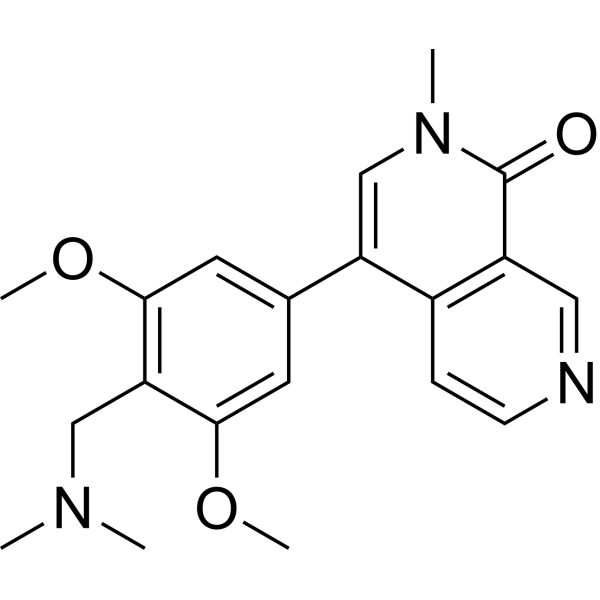
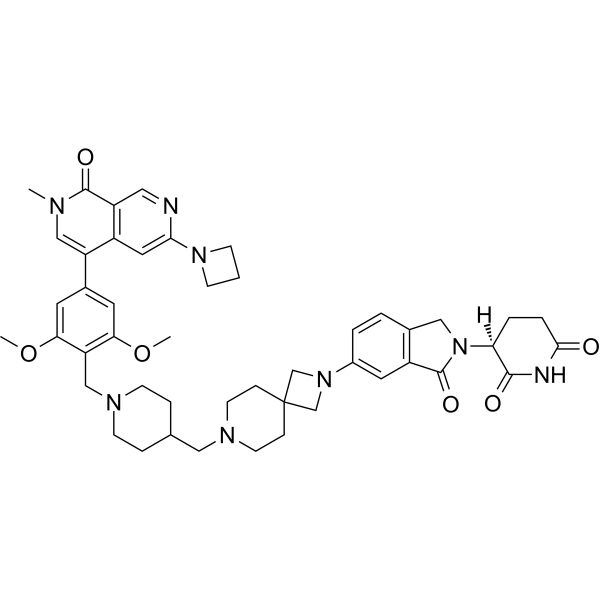 0 ImagesFHD-609 is a BRD9 PROTAC degrader. FHD-609 induces BRD9 degradation, downregulates primary transcripts of HBG/HBD, Myc expression and proliferation gene sets, reduces the levels of synovial sarcoma tumor proliferation markers, and inhibits tumor growth. FHD-609 can be used in research related to advanced synovial sarcoma, SMARCB1-deficient tumors and adrenocortical carcinoma.
-
CFT8634
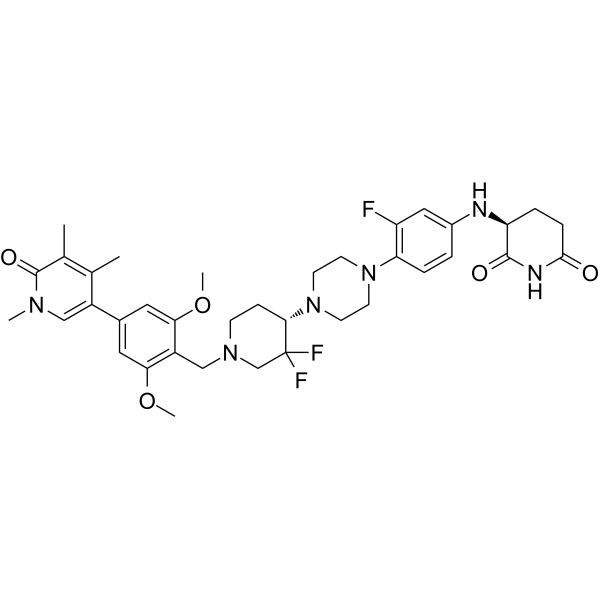 0 ImagesCFT8634 is an orally active BRD9 PROTAC degrader with a DC50 of 0.003 μM (HEK293T.166). CFT8634 recruits the CRBN E3 ubiquitin ligase to form a ternary complex, triggering CRBN-catalyzed BRD9 polyubiquitination and 26S proteasome-mediated degradation. CFT8634 induces sustained tumor regression and inhibits tumor growth in mouse models. CFT8634 can be used in research related to synovial sarcoma, SMARCB-1-deficient cancers, acute myeloid leukemia, malignant rhabdoid tumors, and multiple myeloma.
-
VZ185
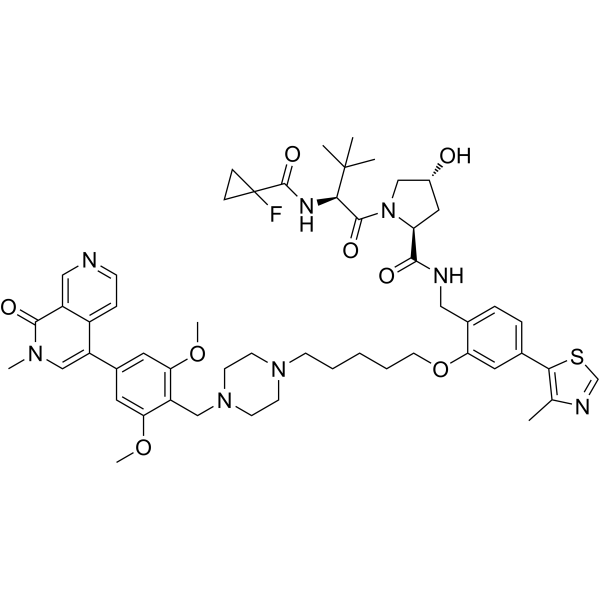 0 ImagesVZ185 is a BRD9 and BRD7 PROTAC degrader, with DC50 values of 1.76 nM and 4.5 nM, respectively, in RI-1 cells; and DC50 values of 4 nM and 34 nM, respectively, in HEK293 cells. VZ185 hijacks the CRL2VHL E3 ubiquitin ligase complex to induce ubiquitination and subsequent proteasomal degradation of BRD9 and BRD7. VZ185 can be used in research related to acute myeloid eosinophilic leukemia and malignant rhabdoid tumors.
-
XYD270
 0 ImagesCat. No.: HY-182082XYD270 is an orally active BRD9 PROTAC degrader. XYD270 inhibits the proliferation of cancer cells. XYD270 suppresses tumor growth in a mouse model of acute myeloid leukemia. XYD270 can be used in research related to synovial sarcoma and acute myeloid leukemia.
-
AMX-883
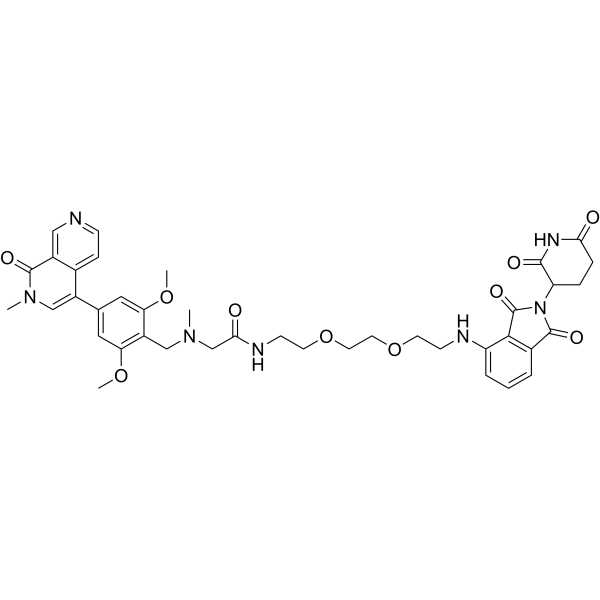
 0 ImagesCat. No.: HY-182766CAS No.: 3102636-19-8AMX-883 a selective and orally active BRD9 molecular glue degrader that drives differentiation in acute myeloid leukaemia. AMX-883 shows selectivity over all other bromodomain containing proteins and proteome wide. AMX-883 does not employ the commonly used E3 ligases (cereblon, VHL) but instead drives degradation via DCAF16 as a targeted glue. AMX-883 can be used for the study of acute myeloid leukaemia (AML).
-
NVS-CECR2-1
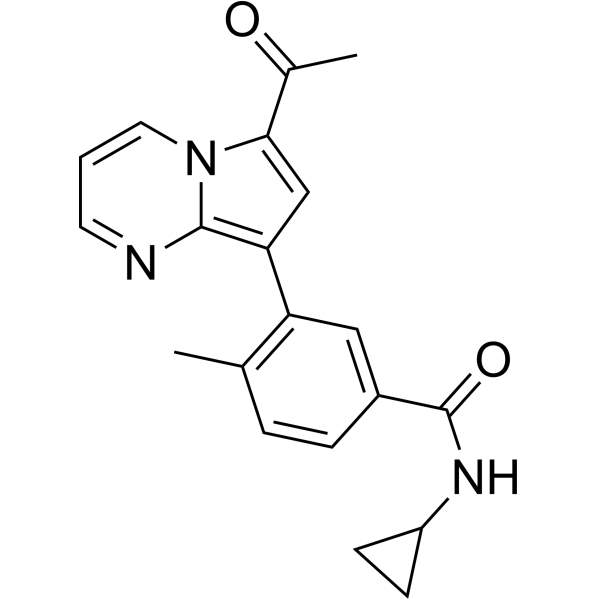
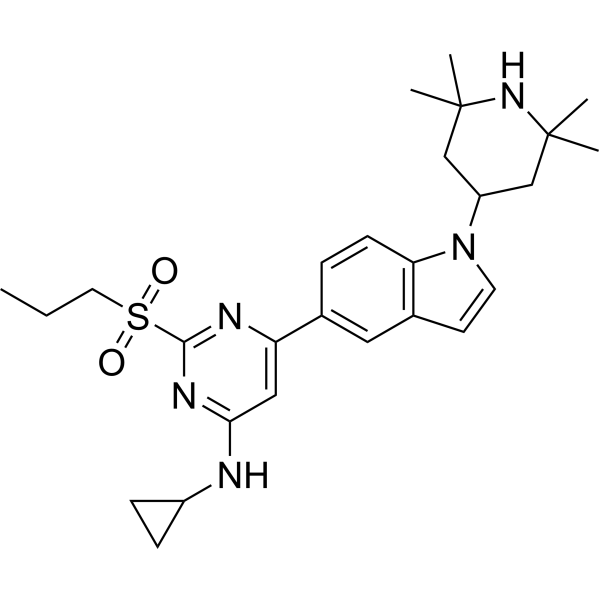 0 ImagesNVS-CECR2-1, a non-BET family Bromodomain (BRD) inhibitor, is a potent and selective cat eye syndrome chromosome region, candidate 2 (CECR2) inhibitor. NVS-CECR2-1 binds to CECR2 BRD with high affinity (IC50=47 nM; KD=80 nM). NVS-CECR2-1 exhibits cytotoxic activity and induces apoptosis against various cancer cells by targeting CECR2 as well as via CECR2-independent mechanism. NVS-CECR2-1 is a chemical probe.
-
BRD7-IN-2
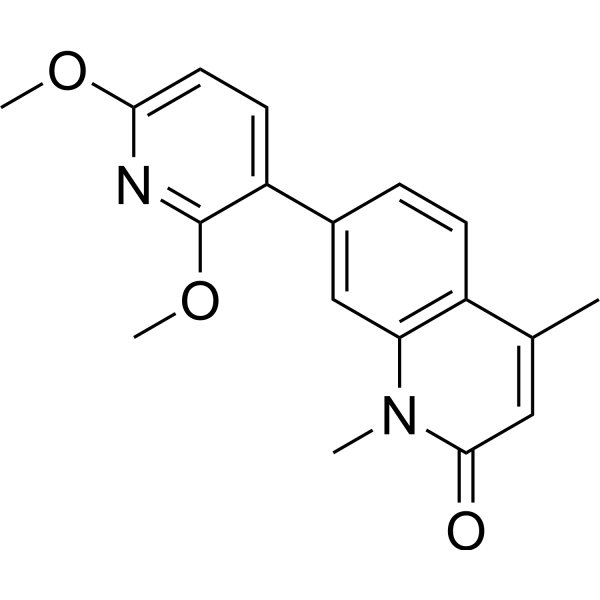 0 ImagesBRD7-IN-2 (compound 2-77) is a potent inhibitor of bromodomain-containing protein 7 (BRD7), targeting to prostate cancer cells. BRD7-IN-2 is selective for BRD7 rather than BRD9, with IC50s of 5.4 μM, and >300 μM, respectively.
-
dBRD 9-A
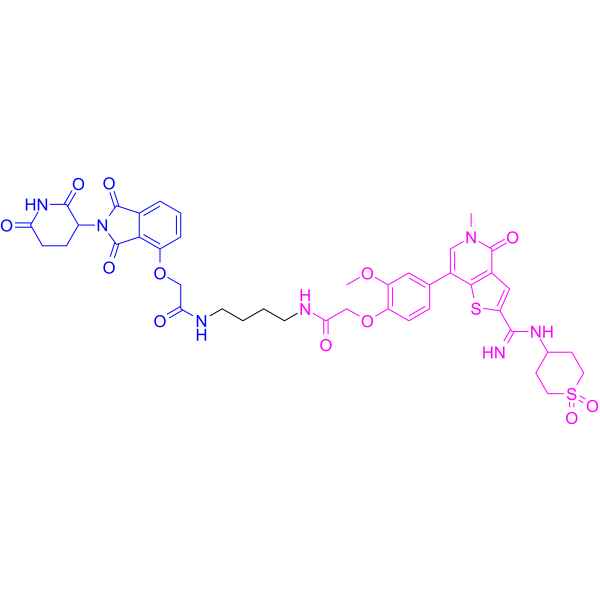
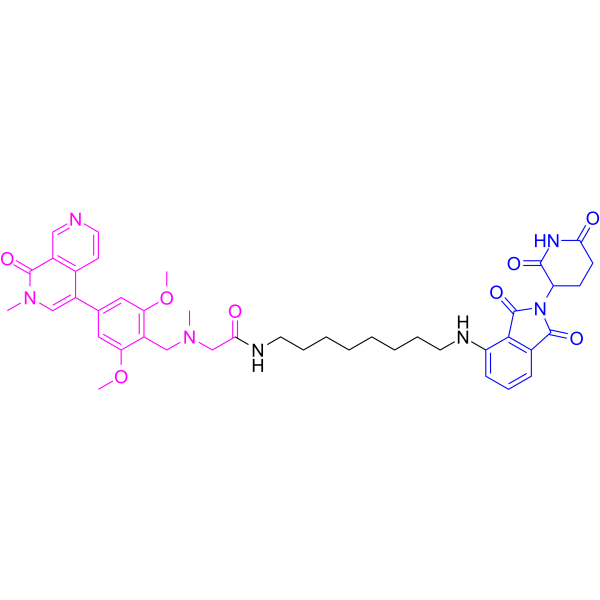 0 ImagesdBRD 9-A is a selective BRD9 PROTAC degrader. dBRD 9-A induces near complete BRD9 degradation dependent on E3 ubiquitin ligase CRBN and BRD9 bromodomain engagement, and drives loss of BRD9 chromatin binding genome-wide. dBRD 9-A downregulates oncogenic SS18-SSX-driven transcriptional programs, super enhancer-associated gene expression, and SS18-SSX1 super enhancer binding, and depletes GBAF complex members GLTSCR1/1L from SS18-SSX complexes. dBRD 9-A induces cell cycle arrest and increases apoptosis in synovial sarcoma cells. dBRD 9-A can be used for the research of synovial sarcoma.
-
GSK8573
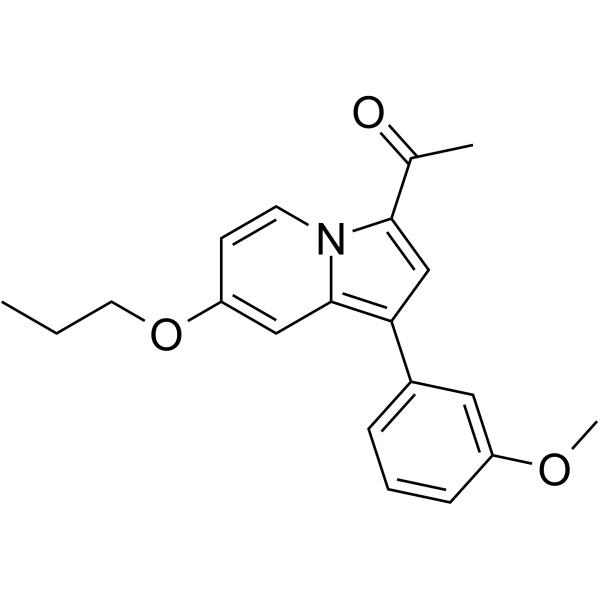 0 ImagesGSK8573 is an inactive control compound for GSK2801 (acetyl-lysine competitive inhibitor of BAZ2A and BAZ2B bromodomains). GSK8573 has binding activity to BRD9 with a Kd value of 1.04 μM and is inactive against BAZ2A/B and other bromodomain familiy. GSK8573 can be used as a structurally related negative control compound in biological experiments.
-
CW-3308
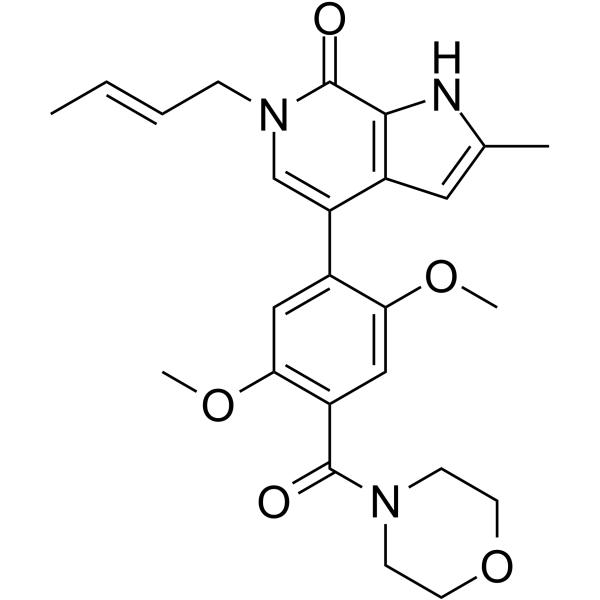
 0 ImagesCW-3308 is an orally active BRD9 PROTAC degrader with an DC50 of 92 nM. CW-3308 forms a ternary complex with BRD9 and cereblon to mediate BRD9 degradation. CW-3308 inhibits the viability of synovial sarcoma and rhabdoid tumor cells. CW-3308 reduces BRD9 protein levels in xenograft tumor tissues and suppresses tumor growth in xenograft models. CW-3308 can be used for the research of synovial sarcoma and rhabdoid tumors.
-
PROTAC BRD9 Degrader-4
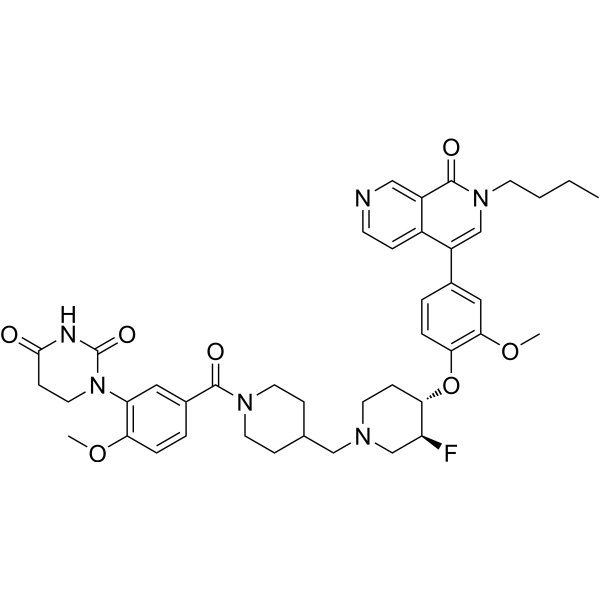 0 ImagesPROTAC BRD9 Degrader-4 is a BRD9 PROTAC degrader with a DC50 of 1 nM. PROTAC BRD9 Degrader-4 is applicable to research related to synovial sarcoma and acute myeloid leukemia.
-
PROTAC BRD9 Degrader-7
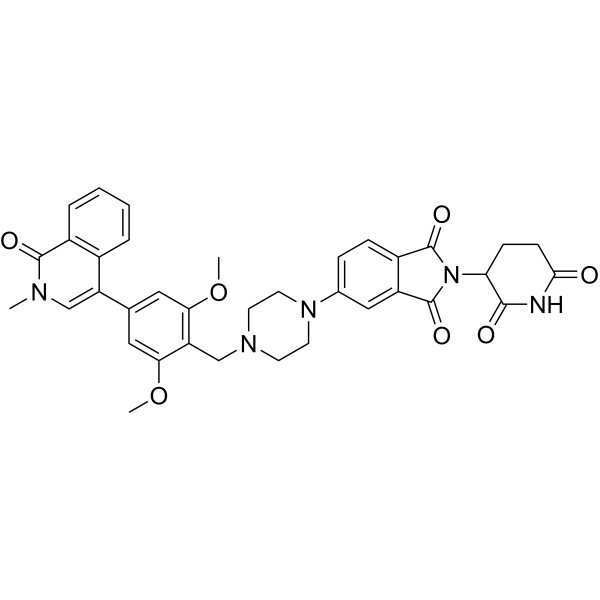 0 ImagesPROTAC BRD9 Degrader-7 is an orally active, selective BRD9 PROTAC degrader (DC50 = 1.02 nM). PROTAC BRD9 Degrader-7 mediates BRD9 degradation via the ubiquitin-proteasome system. PROTAC BRD9 Degrader-7 exhibits proliferation inhibitory activity in the MV4-11 cells. PROTAC BRD9 Degrader-7 can be used in the research of acute myeloid leukemia and other related malignancies.




