



BI-9564
Based on 2 publication(s) in Google Scholar
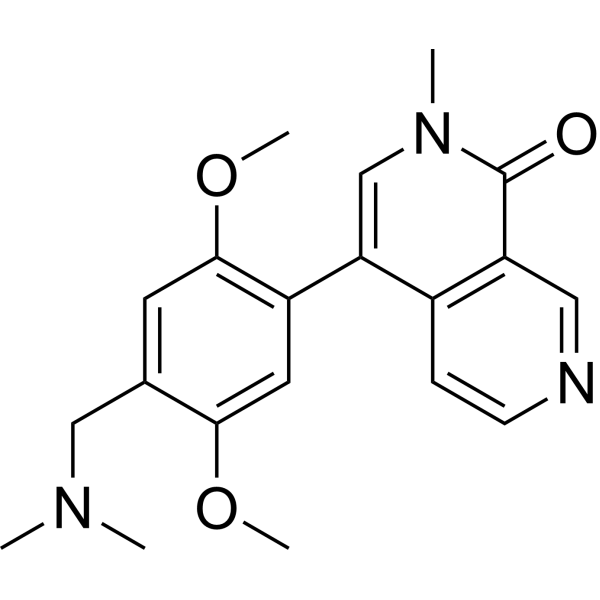
BI-9564, a chemical probe, is a potent, selective and cell-permeable BRD9/BRD7 bromodomains inhibitor, with IC50s of 75 nM and 3.4 μM and Kds of 14 nM and 239 nM, respectively. BI-9564 has an IC50 of > 100 μM for BET family.
Nos produits utilisent uniquement pour la recherche. Nous ne vendons pas aux patients.
The BI-9564 was designed by Boehringer Ingelheim and could be obtained free of charge through the Boehringer Ingelheim open innovation portal opnMe.com, associated with its negative control.
- Pureté : 98.96%
- CAS No.: 1883429-22-8
- Formule: C20H23N3O3
- Masse moléculaire:353.41
-
Stockage:Powder -20°C, 3 years , 4°C, 2 years ; In solvent -80°C, 2 years , -20°C, 1 year

To place orders, for customer services and technical support, please contact: MedChemExpress USA
Tel: 609-228-6898 E-mail: [email protected] [email protected]


-
 Activité biologique
-
Chemical Information
-
Solvant et solubilité
- Pureté et documentation
- Références
-
 Help & FAQs


-
HY-100351
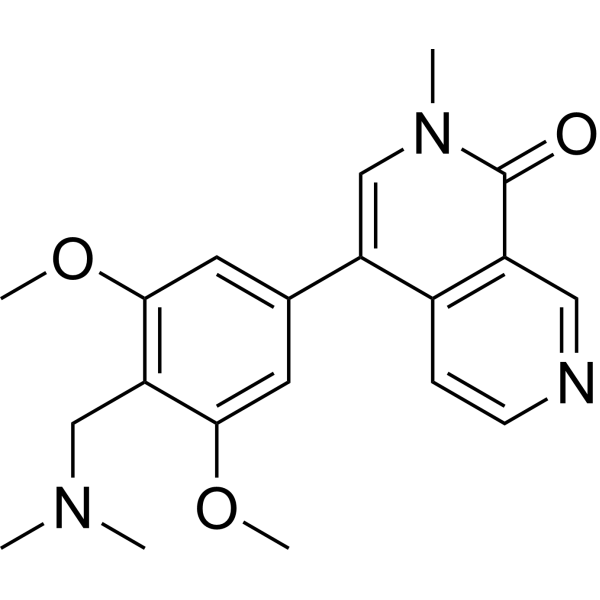
BI-7273BRD9 Inhibitor -
HY-18975
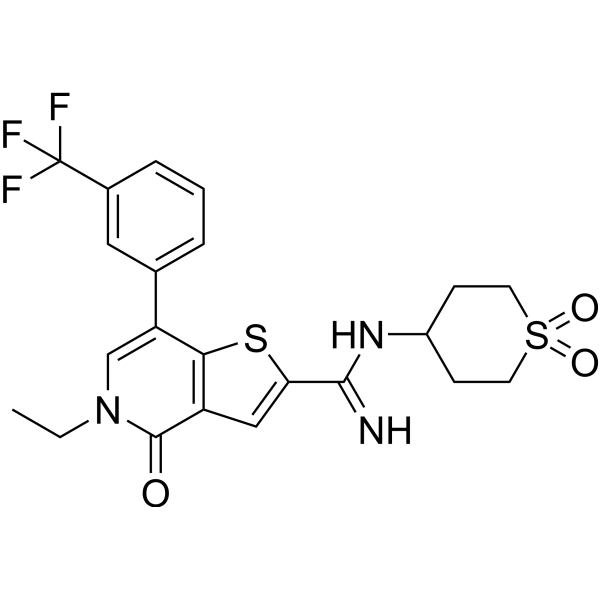
I-BRD9Chemical Probe -
HY-12409
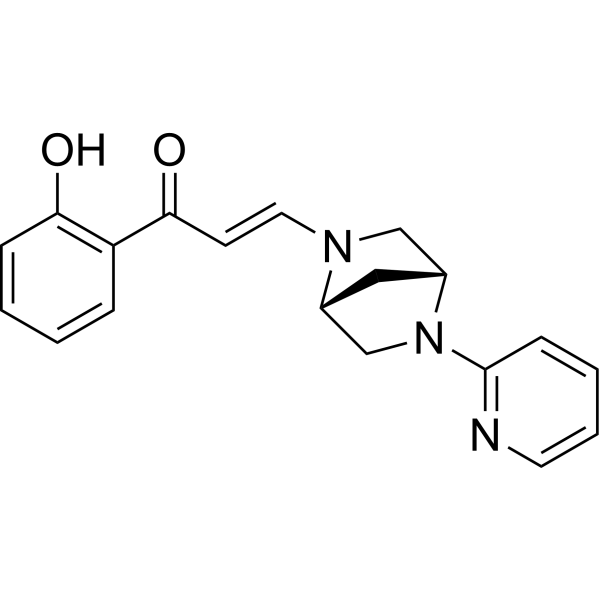
PFI-3SMARCA2/4 Bromodomain Inhibitor -
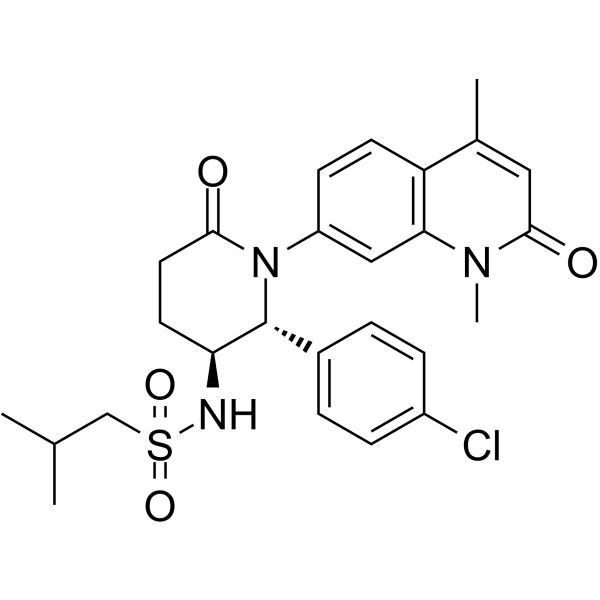
HY-19553
LP99BRD7/9 Bromodomain Inhibitor -
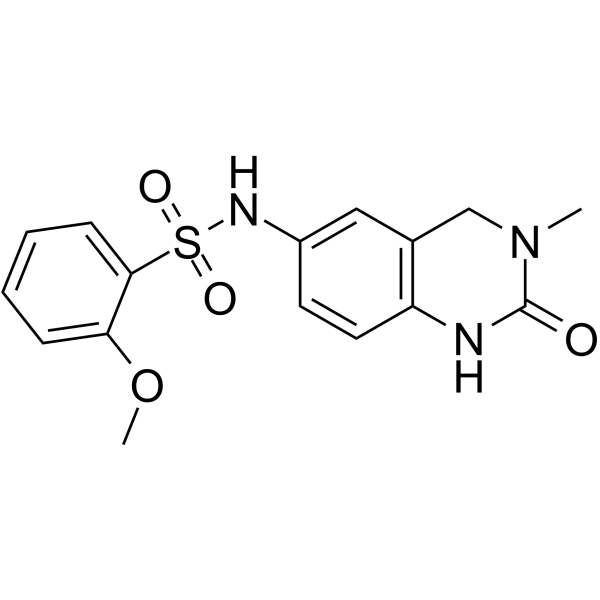
HY-16586
PFI-1BET Inhibitor -
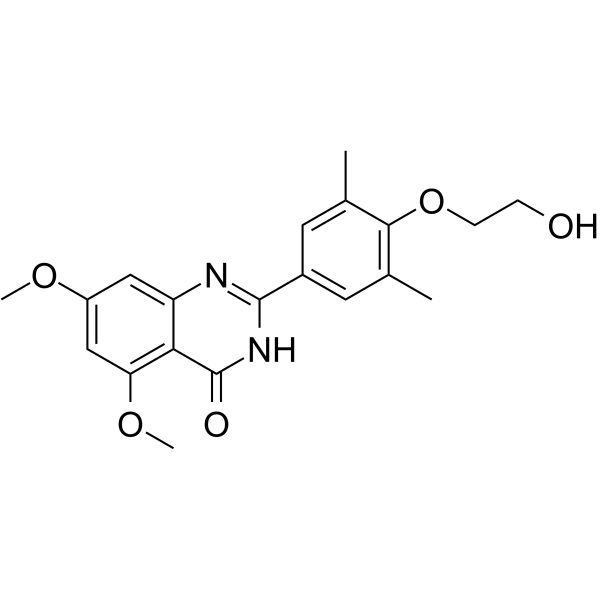
HY-16652
ApabetaloneBET Inhibitor -
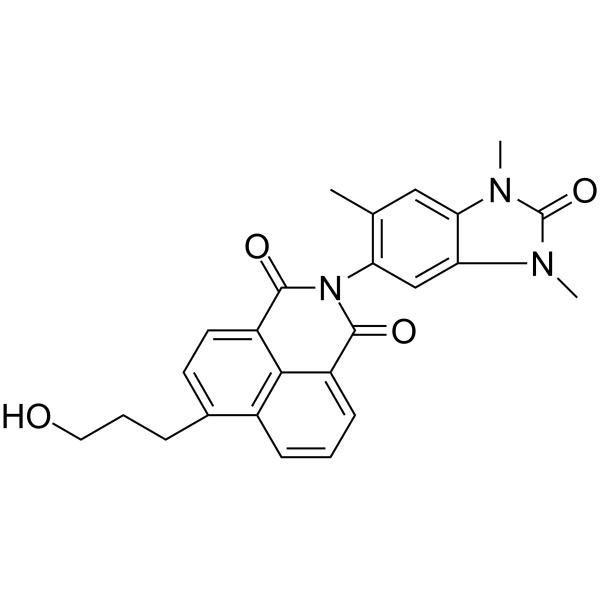
HY-107424
BAY-299BRPF2 Bromodomain Inhibitor -
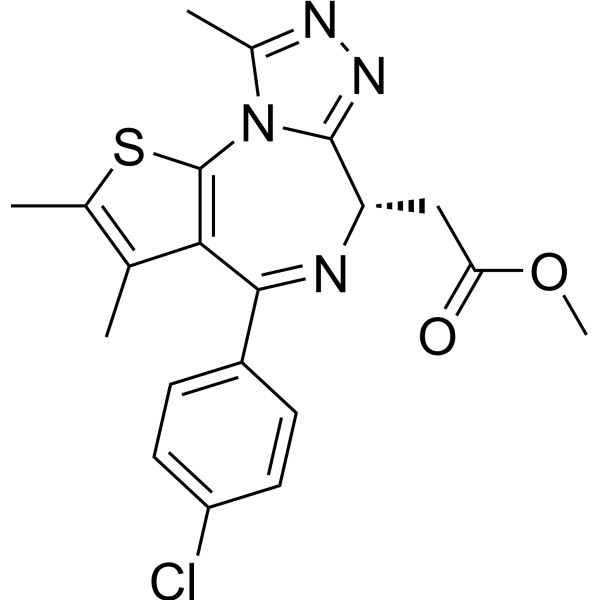
HY-111139
MS417BRD4 Inhibitor -
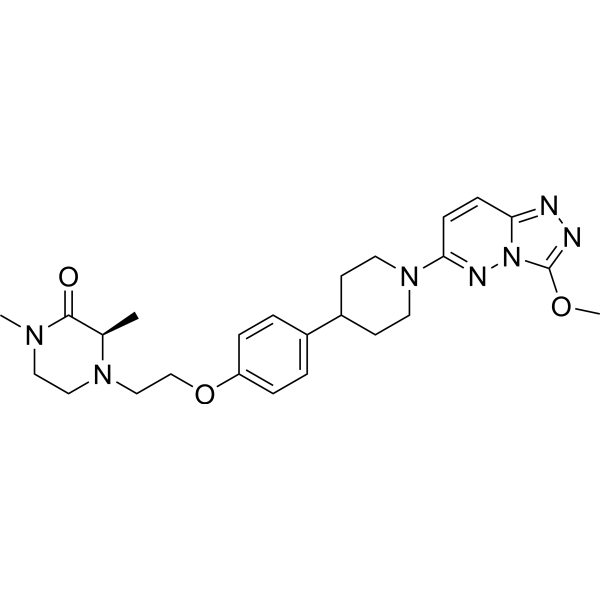
HY-100653
AZD5153BET/BRD4 Inhibitor -
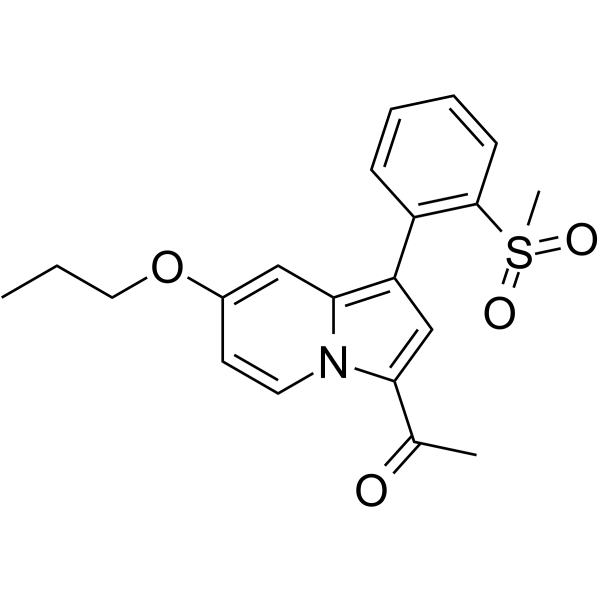
HY-15658
GSK2801BAZ2A/B Inhibitor -
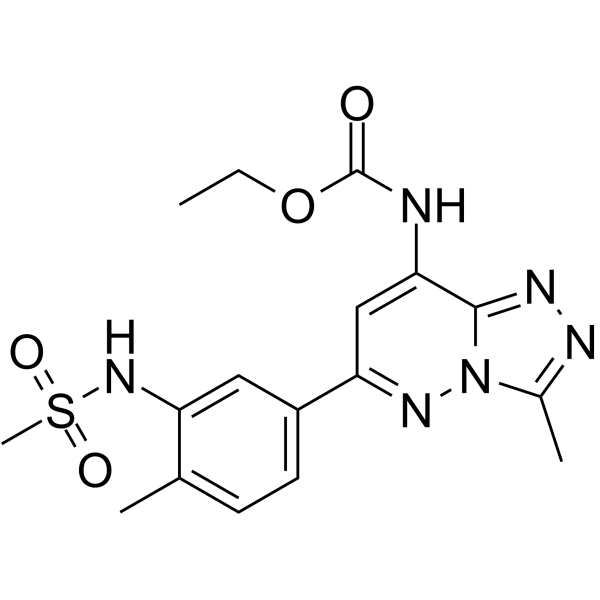
HY-15815
BromosporineBET Inhibitor -
HY-15371
ForskolinAdenylate Cyclase Activator
Publications Citing Use of MedChemExpress (MCE) BI-9564
More

Activité biologique
Description
IC50 & Target
[1]|
BRD9 75 nM (IC50) |
BRD9 14 nM (Kd) |
BRD7 3.4 μM (IC50) |
BRD7 239 nM (Kd) |
Cellular Effect
|
Cell Line

|
Type | Value | Description | References |
|---|---|---|---|---|
| A204 | IC50 |
3.55 μM
Compound: 1b;BI-9564
|
Antiproliferative activity against human A204 cells assessed as inhibition of cell growth incubated for 7 days by CellTiterGlo assay
Antiproliferative activity against human A204 cells assessed as inhibition of cell growth incubated for 7 days by CellTiterGlo assay
|
[PMID: 30540463] |
| EOL1 | EC50 |
800 nM
Compound: 2; BI-9564
|
Antiproliferative activity against human EOL-1 cells by cell titre glo assay
Antiproliferative activity against human EOL-1 cells by cell titre glo assay
|
[PMID: 26914985] |
| EOL1 | IC50 |
0.3392 μM
Compound: 1b;BI-9564
|
Antiproliferative activity against human EOL1 cells assessed as inhibition of cell growth incubated for 7 days by CellTiterGlo assay
Antiproliferative activity against human EOL1 cells assessed as inhibition of cell growth incubated for 7 days by CellTiterGlo assay
|
[PMID: 30540463] |
| G-401 | IC50 |
10.8 μM
Compound: Chemical probe: BI-9564
|
Anti-proliferative activity against human G-401 cells assessed as cell viability incubated for 144 hrs by MTT assay
Anti-proliferative activity against human G-401 cells assessed as cell viability incubated for 144 hrs by MTT assay
|
[PMID: 28714904] |
| G-401 | IC50 |
12.5 μM
Compound: Chemical probe: BI-9564
|
Anti-proliferative activity against human G-401 cells assessed as cell viability incubated for 72 hrs by MTT assay
Anti-proliferative activity against human G-401 cells assessed as cell viability incubated for 72 hrs by MTT assay
|
[PMID: 28714904] |
In Vitro
BI-9564 (<5 μM) shows no activity against 324 kinases, and at 10 μM, an inhibition >40% is observed for only 2 out of 55 GPCRs. BI-9564 has antiproliferative effect on human acute myeloid eosinophilic leukemia cell line EOL-1, with EC50 of 800 nM[1]. BI-9564 shows Kd of 73 nM for BRD7, and is >10-fold more selective for BRD9 over the highly homologues bromodomain BRD7, which has been implied as a tumor suppressor and is down-regulated in cancer cells[2].
MedChemExpress (MCE) has not independently confirmed the accuracy of these methods. They are for reference only.
In Vivo
MedChemExpress (MCE) has not independently confirmed the accuracy of these methods. They are for reference only.


Chemical Information
-
CAS No. 1883429-22-8
-
Appearance Solid
-
Masse moléculaire 353.41
-
Formule C20H23N3O3
-
Color White to off-white
-
SMILES
CN(C)CC1=CC(OC)=C(C(C2=C3C=NC=C2)=CN(C)C3=O)C=C1OC
-
Livraison
Room temperature in continental US; may vary elsewhere.
-
Stockage
Powder -20°C 3 years 4°C 2 years In solvent -80°C 2 years -20°C 1 year


Publications (2)
-
Journal Impact Factor
-
Most Recent
-
Nat Commun
Human iPSC-based Modeling of Pulmonary Fibrosis Reveals p300/CBP Inhibition Suppresses Alveolar Transitional Cell State. [Abstract]2026 Feb 12;17(1):1214. PMID: 41680175 -


Solvant et solubilité
In Vitro:
DMSO : 6.25 mg/mL (17.68 mM; ultrasonic and warming and heat to 60°C; Hygroscopic DMSO has a significant impact on the solubility of product, please use newly opened DMSO)
Please refer to the solubility information to select the appropriate solvent. Once prepared, please aliquot and store the solution to prevent product inactivation from repeated freeze-thaw cycles.
Storage method and period of stock solution: -80°C, 2 years; -20°C, 1 year. When stored at -80°C, please use it within 2 years. When stored at -20°C, please use it within 1 year.
Please refer to the solubility information to select the appropriate solvent. Once prepared, please aliquot and store the solution to prevent product inactivation from repeated freeze-thaw cycles.
Storage method and period of stock solution: -80°C, 2 years; -20°C, 1 year. When stored at -80°C, please use it within 2 years. When stored at -20°C, please use it within 1 year.
Concentration (start) × Volume (start) = Concentration (final) × Volume (final)
In Vivo:
Select the appropriate dissolution method based on your experimental animal and administration route.
- For the following dissolution methods, please ensure to first prepare a clear stock solution using an In Vitro approach and then sequentially add co-solvents:
- To ensure reliable experimental results, the clarified stock solution can be appropriately stored based on storage conditions. As for the working solution for In Vivo experiments, it is recommended to prepare freshly and use it on the same day.
- The percentages shown for the solvents indicate their volumetric ratio in the final prepared solution. If precipitation or phase separation occurs during preparation, heat and/or sonication can be used to aid dissolution.
Add each solvent one by one: 10% DMSO 40% PEG300 5% Tween-80 45% Saline
Solubility: ≥ 0.83 mg/mL (2.35 mM); Clear solution
This protocol yields a clear solution of ≥ 0.83 mg/mL (saturation unknown).
Taking 1 mL working solution as an example, add 100 μL DMSO stock solution (8.3 mg/mL) to 400 μL PEG300, and mix evenly; then add 50 μL Tween-80 and mix evenly; then add 450 μL Saline to adjust the volume to 1 mL.
Preparation of Saline: Dissolve 0.9 g sodium chloride in ddH₂O and dilute to 100 mL to obtain a clear Saline solution.
Add each solvent one by one: 10% DMSO 90% (20% SBE-β-CD in Saline)
Solubility: ≥ 0.83 mg/mL (2.35 mM); Clear solution
This protocol yields a clear solution of ≥ 0.83 mg/mL (saturation unknown).
Taking 1 mL working solution as an example, add 100 μL DMSO stock solution (8.3 mg/mL) to 900 μL 20% SBE-β-CD in Saline, and mix evenly.
Preparation of 20% SBE-β-CD in Saline (4°C, storage for one week): 2 g SBE-β-CD powder is dissolved in 10 mL Saline, completely dissolve until clear.
In Vivo Dissolution Calculator
Please enter the basic information of animal experiments:
-
-
-
-
Recommended: Prepare an additional quantity of animals to account for potential losses during experiments.
Please enter your animal formula composition:
-
%DMSO +
Recommended: Keep the proportion of DMSO in working solution below 2% if your animal is weak.
-
%+
-
+%Tween-80 + +
-
%Saline +
The co-solvents required include: DMSO, . All of co-solvents are available by MedChemExpress (MCE). , Tween 80. All of co-solvents are available by MedChemExpress (MCE).
Working solution concentration: 0.22 mg/mL
Method for preparing stock solution: mg drug dissolved in μL DMSO. Stock solution concentration: mg/mL.
1. Take μL DMSO stock solution;
2. Add μL .
μL , mix evenly;
3. Then add μL Tween 80, mix evenly;
4. Then add μL
Please ensure that the stock solution in the first step is dissolved to a clear state, and add co-solvents in sequence. You can use ultrasonic heating (ultrasonic cleaner, recommended frequency 20-40 kHz), vortexing, etc. to assist dissolution.


Pureté et documentation
-
Fiche technique (280 KB)
-
SDS (420 KB)
- English - EN (420 KB)
- Français - FR (420 KB)
- Deutsch - DE (420 KB)
- Norwegian - NO (420 KB)
- Español - ES (420 KB)
- Swedish - SV (420 KB)
- Italian - IT (420 KB)
- Korean - KR (420 KB)
- Portuguese - PT (420 KB)
-
Instruction de manipulation (2659 KB)
Références


Complete Stock Solution Preparation Table
Please refer to the solubility information to select the appropriate solvent. Once prepared, please aliquot and store the solution to prevent product inactivation from repeated freeze-thaw cycles.
Storage method and period of stock solution: -80°C, 2 years; -20°C, 1 year. When stored at -80°C, please use it within 2 years. When stored at -20°C, please use it within 1 year.
| Optional Solvent | Concentration Solvent Mass | 1 mg | 5 mg | 10 mg | 25 mg |
|---|---|---|---|---|---|
| DMSO | 1 mM | 2.8296 mL | 14.1479 mL | 28.2957 mL | 70.7394 mL |
| 5 mM | 0.5659 mL | 2.8296 mL | 5.6591 mL | 14.1479 mL | |
| 10 mM | 0.2830 mL | 1.4148 mL | 2.8296 mL | 7.0739 mL | |
| 15 mM | 0.1886 mL | 0.9432 mL | 1.8864 mL | 4.7160 mL |


BI-9564 Related Classifications
HY-100352 Related Classifications
 Powered by Bioz