BD2
BD2 is one of the tandem bromodomains within bromodomain and extraterminal (BET) proteins, a family of epigenetic readers that recognize acetyl-lysine marks on chromatin and facilitate transcriptional regulation through chromatin binding.[1][2] Mechanistically, BET bromodomains enable chromatin association that supports transcriptional programs, and BRD4 further contributes to transcriptional elongation through recruitment of positive transcription elongation factor complexes.[2][3] Because BET proteins influence gene expression, they are implicated in cancer and other disease-associated transcriptional states.[1][3] Disease relevance is particularly evident in BRD4-driven malignancies, including NUT midline carcinoma, where disruption of bromodomain-mediated chromatin interactions suppresses proliferation and promotes differentiation in experimental models.[3] Compared with the related BD1 bromodomain, BD2 has emerged as a distinct pharmacological target, and selective targeting of BD1 and BD2 has demonstrated that the two bromodomains make non-identical contributions to BET protein function.[2][4] This isoform distinction has stimulated the development of BD2-selective chemical probes and inhibitors designed to preferentially engage the second bromodomain while preserving greater selectivity than dual BD1/BD2 inhibition.[4][5] For experimental applications, BD2-selective inhibitors provide tools to investigate BET-dependent transcriptional regulation, chromatin remodeling, oncogenic gene-expression programs, and disease-associated signaling pathways.[4][5]
References:
- [1]. Wang ZQ, et al. Bromodomain and extraterminal (BET) proteins: biological functions, diseases, and targeted therapy. Signal Transduct Target Ther. 2023 Nov 6;8(1):420. [Content Brief]
- [2]. Gilan O, et al. Selective targeting of BD1 and BD2 of the BET proteins in cancer and immunoinflammation. Science. 2020;368(6489):387-394.
- [3]. Filippakopoulos P, et al. Selective inhibition of BET bromodomains. Nature. 2010 Dec 23;468(7327):1067-73. [Content Brief]
- [4]. Chen J, et al. Targeting Bromodomain-Selective Inhibitors of BET Proteins in Drug Discovery and Development. J Med Chem. 2022 Apr 14;65(7):5184-5211. [Content Brief]
All Product Categories
-
BD2 Related Products (9)
Related Products (9)

-
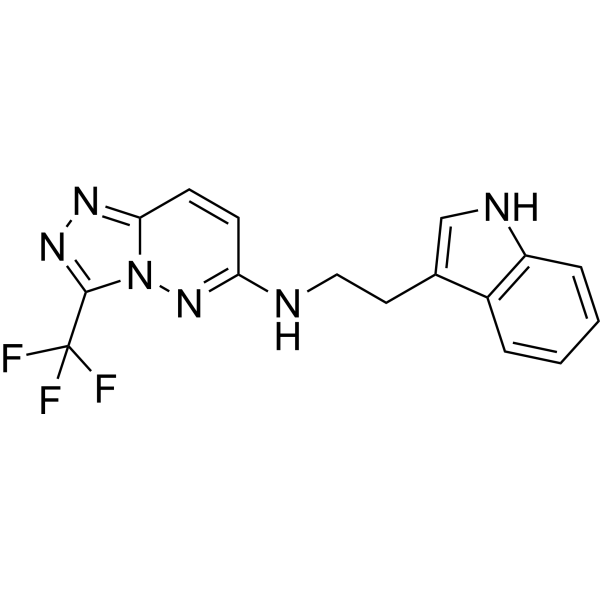
BRD4-BD1/2-IN-3
 0 ImagesBRD4-BD1/2-IN-3 (Compound B6) is a selective BRD4 BD2 inhibitor with an IC50 of 0.41 nM for BRD4 BD2 over BRD4 BD1. BRD4-BD1/2-IN-3 significantly inhibits the LPS (HY-D1056)-induced expression of IL-6. BRD4-BD1/2-IN-3 shows anti-inflammatory activities by modulating the TNF and NF-κB signaling pathway. BRD4-BD1/2-IN-3 can be used for inflammatory diseases research.

-
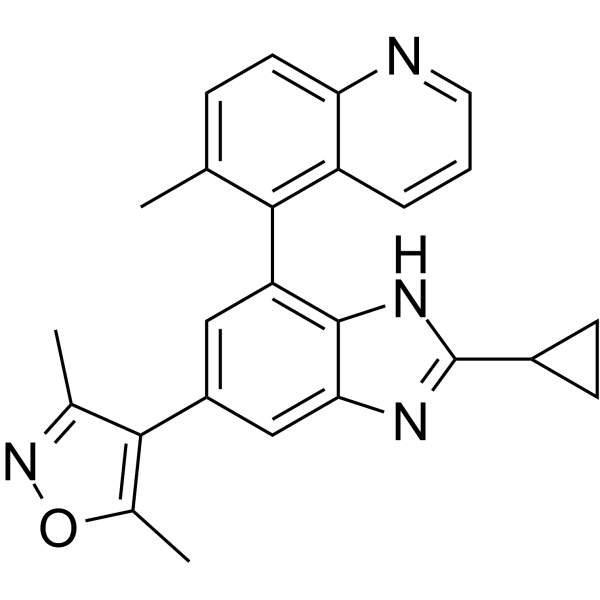
SRX3212
 0 ImagesCat. No.: HY-183922CAS No.: 2735720-80-4SRX3212 is a potent PI3Kα/BRD4 inhibitor with human IC50 values of 22 nM, 3.7 nM, and 32 nM for PI3Kα, BRD4BD1, and BRD4BD2, respectively. SRX3212 inhibits PI3K kinase activity and blocks acetyllysine binding function of BRD4BD1 and BRD4BD2. SRX3212 can be used for the research of mantle cell lymphoma, colon carcinoma, neuroblastoma, prostate cancer[1].
-
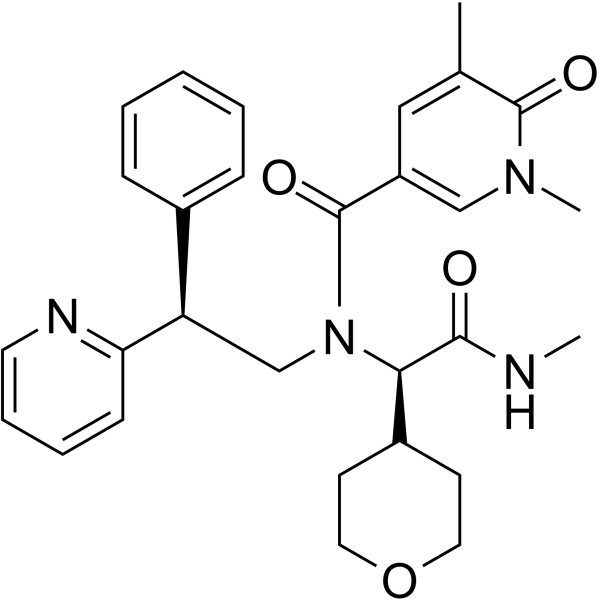
CDK4/6/BRD4-IN-1
 0 ImagesCat. No.: HY-173237CDK4/6/BRD4-IN-1 (B15) is an inhibitor of CDK4, CDK6 and BRD4, with IC50 values of 220 nM, 146 nM, 106 nM and 85 nM for BRD4-BD2, BRD4-BD1, CDK6 and CDK4, respectively. CDK4/6/BRD4-IN-1 (B15) can be used in the study of NSCLC (Non-Small Cell Lung Cancer). CDK4/6/BRD4-IN-1 (B15) induces cell cycle arrest and apoptosis.
-
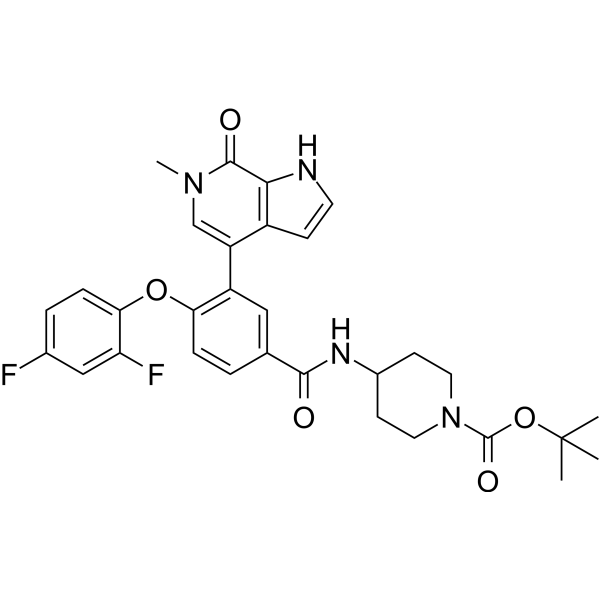
PBRM1-BD2-IN-4
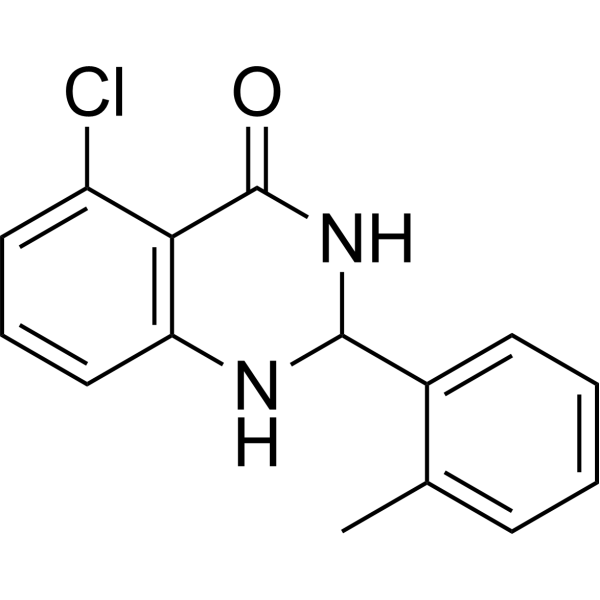 0 ImagesCat. No.: HY-151531CAS No.: 2819989-60-9PBRM1-BD2-IN-4 is a PBRM1-BD2 inhibitor with an IC50 of 0.2 μM, and its Kd values for PBRM1-BD2 and PBRM1-BD5 are 5.5 μM and 11.1 μM, respectively. PBRM1-BD2-IN-4 selectively inhibits the proliferation of PBRM1-dependent prostate cancer cells. PBRM1-BD2-IN-4 can be used in studies related to prostate cancer.