



BRDT
BRDT (bromodomain testis-specific protein) is a testis-specific member of the BET (bromodomain and extra-terminal) family that functions as an epigenetic reader of acetylated histones and regulates transcriptional programs required for male germ-cell differentiation[1][2]. BRDT contains two bromodomains, and its first bromodomain (BD1) recognizes hyperacetylated histone H4, enabling stable chromatin association and directing chromatin remodeling during spermatogenesis[1][2]. Mechanistically, BRDT coordinates stage-specific gene expression from meiosis through post-meiotic differentiation and links histone acetylation signals to large-scale genome reorganization in developing male germ cells[2]. During spermiogenesis, BRDT promotes genome-wide histone replacement and chromatin compaction, processes required for proper sperm maturation and male fertility[2]. Experimental studies further demonstrated that BRDT is essential for meiotic chromatin organization, meiotic sex chromosome inactivation, and epigenetic reprogramming during prophase I, indicating a broader role in maintaining germ-cell genome integrity[3]. In mouse models, loss of BD1 causes severe spermiogenic defects and impaired chromatin organization, whereas complete BRDT deficiency arrests spermatogenesis before the first meiotic division and results in male sterility[1][3]. Compared with other BET family members, BRDT displays highly restricted testicular expression, making it a distinctive regulator of spermatogenesis and an attractive experimental target for reproductive biology research[2][3]. For experimental applications, the BET bromodomain inhibitor JQ1 suppresses BRDT-dependent chromatin binding and produces a reversible contraceptive effect in mice, establishing BRDT inhibition as a valuable model for studying non-hormonal male contraception and epigenetic regulation of germ-cell development[4].
References:
- [1]. Shang E, et al. The first bromodomain of Brdt, a testis-specific member of the BET sub-family of double-bromodomain-containing proteins, is essential for male germ cell differentiation. Development. 2007 Oct;134(19):3507-15. [Content Brief]
- [2]. Gaucher J, et al. Bromodomain-dependent stage-specific male genome programming by Brdt. EMBO J. 2012;31(19):3809-3820.
- [3]. Manterola M, et al. BRDT is an essential epigenetic regulator for proper chromatin organization, silencing of sex chromosomes and crossover formation in male meiosis. PLoS Genet. 2018 Mar 7;14(3):e1007209. [Content Brief]
- [4]. Matzuk MM, et al. Small-molecule inhibition of BRDT for male contraception. Cell. 2012 Aug 17;150(4):673-84. [Content Brief]
-
BRDT Related Products (26)
Related Products (26)

- 1
- 2
-
ABBV-744
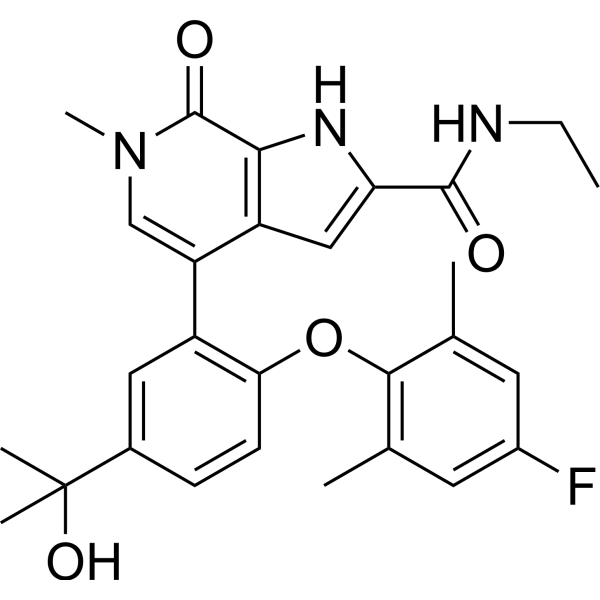 0 ImagesABBV-744 is a first-in-class, orally active and selective inhibitor of the BDII domain of BET family proteins with IC50 values ranging from 4 to 18 nM for BRD2, BRD3, BRD4 and BRDT. ABBV-744 is primarily metabolized by CYP3A4 with agent-like properties enable the investigation of its antitumor efficacy and tolerability.
-
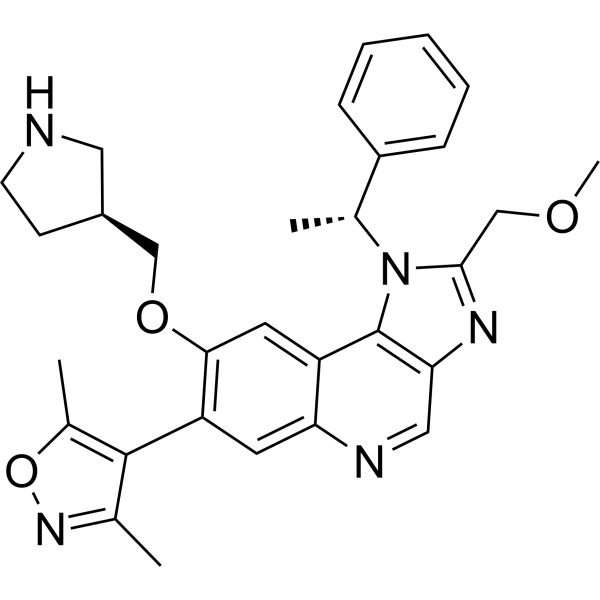
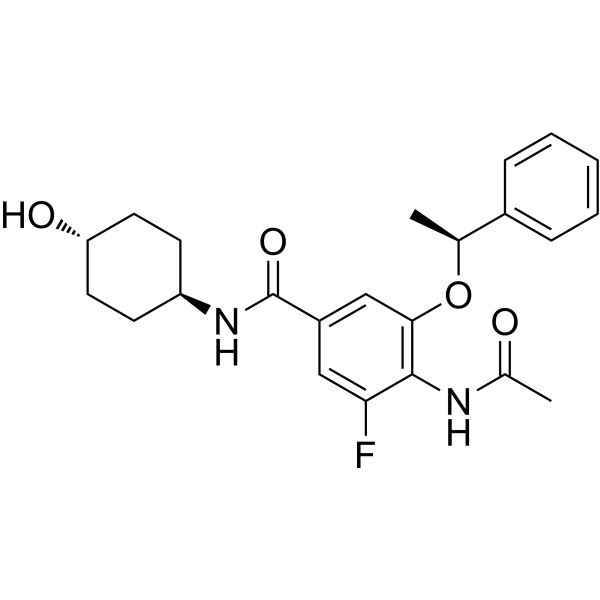
GSK973
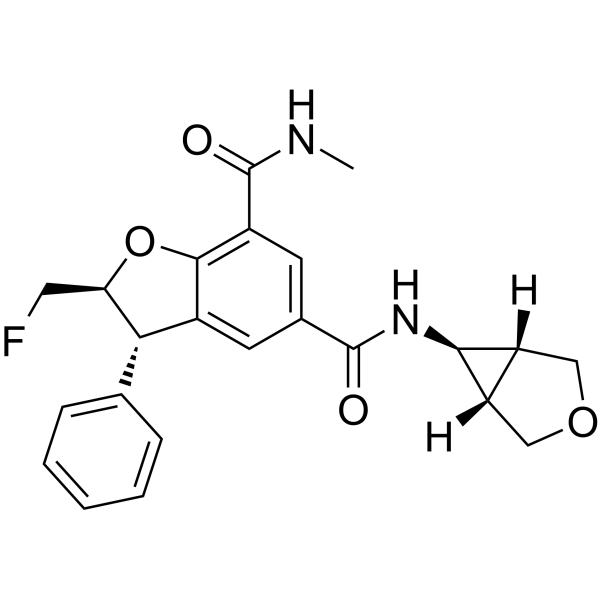 0 ImagesGSK973, a chemical probe, is a highly selective, orally bioavailable inhibitor of the BD2s (second bromodomains) of the BET family, with a pIC50 of 7.8 and a pKd of 8.7 for BRD4 BD2. GSK973 displays a 1600-fold selectivity for BRD4 BD2 over BRD4 BD1. GSK973 shows good potency against BRD2 BD2, BRD3 BD2, and BRDT BD2 (pIC50=7.4~7.8; pKd=8.3~8.5).
-
BRDT-IN-2
 0 ImagesCat. No.: HY-183248BRDT-IN-2 is a BRDT-BD1-preferring inhibitor (Ki=10 μM) with higher affinity for BRDT-BD1 than BRD4-BD1. BRDT-IN-2 preferentially binds BRDT-BD1 without direct interaction with BRDT-BD1’s Arg54 residue. BRDT-IN-2 binds BRD4-BD1 with lower affinity via structured water molecule displacement in its binding pocket. BRDT-IN-2 can be used for the research of multiple myeloma.
-
BRD4 ligand 15
 0 ImagesCat. No.: HY-182371CAS No.: 3076613-24-3
-
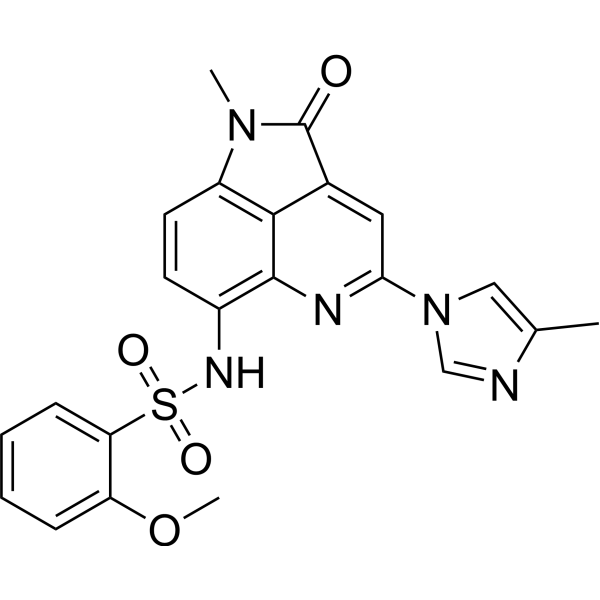
BRDT-IN-1
 0 ImagesCat. No.: HY-183247BRDT-IN-1 is a BRDT-BD1 and BRDT-T inhibitor with BRDT-BD1 IC50 19 nM, Ki 8.8 nM, Ka 1.6 nM, and BRDT-T IC50 56 nM, Ka 5.0 nM. BRDT-IN-1 displays in vitro metabolic stability and limited cellular permeability in MDCK-MDR1 cells. BRDT-IN-1 can be used for the research of multiple myeloma.
-
(S)-JQ-35
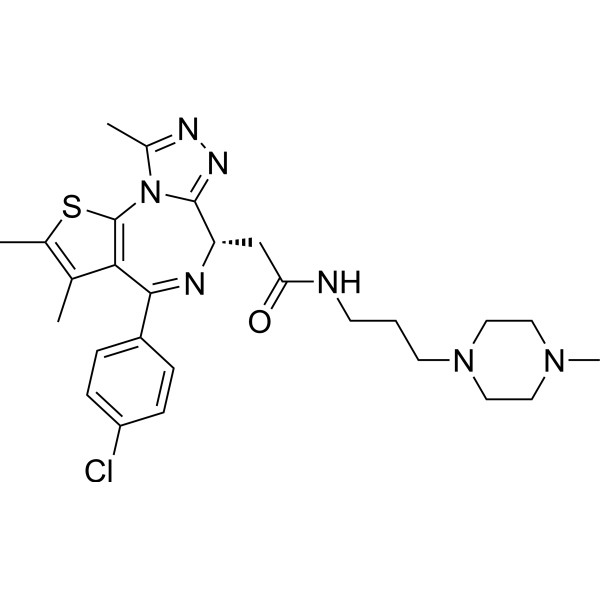 0 ImagesSynonyms: TEN-010(S)-JQ-35 (TEN-010) is an orally active, blood-brain barrier-permeable bromodomain inhibitor that selectively targets the bromodomain and extra-terminal domain (BET) protein family (BRD4, BRD3, BRD2 and BRDT). (S)-JQ-35 blocks the activation of Myc gene expression by BRD4, thereby inhibiting cancer cell proliferation and promoting cancer cell apoptosis. (S)-JQ-35 can be used in research related to NUT midline carcinoma and neuroblastoma.
-
RVX-297
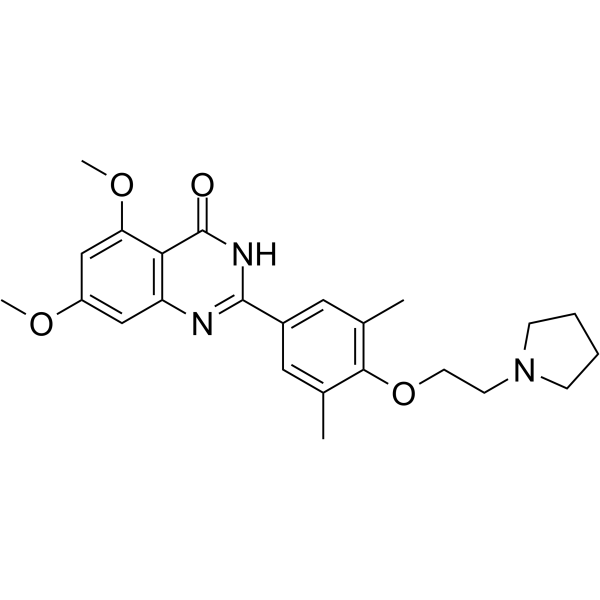 0 ImagesCat. No.: HY-114504CAS No.: 1044871-04-6RVX-297 is a potent, orally active BET bromodomain inhibitor with selectivity for BD2. RVX-297 shows IC50s of 0.08, 0.05, and 0.02 μM for BRD2(BD2), BRD3(BD2), and BRD4(BD2), respectively. RVX-297 suppresses inflammatory gene expression in multiple immune cell types. RVX-297 is effective in acute inflammation and autoimmunity models.
-
CF53
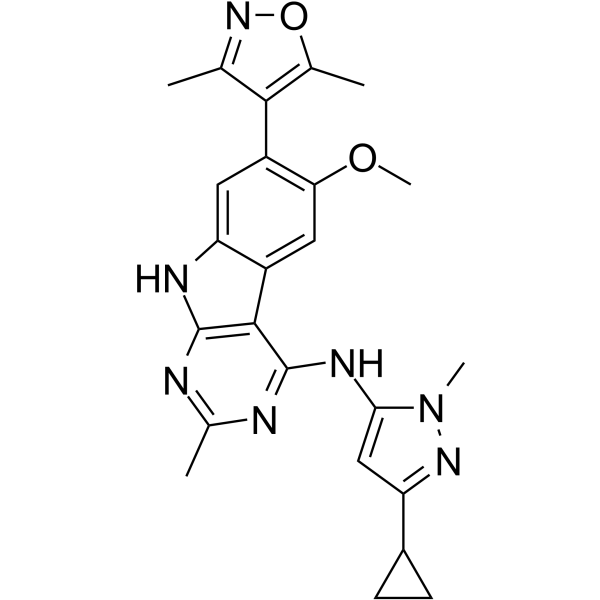 0 ImagesCF53 is a highly potent, selective and orally active inhibitor of BET protein, with a Ki of <1 nM, Kd of 2.2 nM and an IC50 of 2 nM for BRD4 BD1. CF53 binds to both the BD1 and BD2 domains of BRD2, BRD3, BRD4, and BRDT BET proteins with high affinities, very selective over non-BET bromodomain-containing proteins. CF53 shows potent anti-tumor activity both in vitro and in vivo.
-
BET bromodomain inhibitor 1
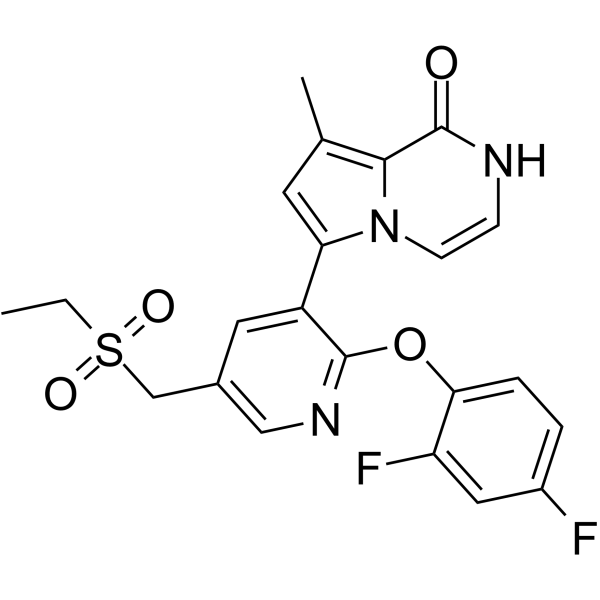 0 ImagesBET bromodomain inhibitor 1 is an orally active, selective bromodomain and extra-terminal (BET) bromodomain inhibitor with an IC50 of 2.6 nM for BRD4. BET bromodomain inhibitor 1 binds to BRD2(2), BRD3(2), BRD4(1), BRD4(2), and BRDT(2) with high affinities (Kd values of 1.3 nM, 1.0 nM, 3.0 nM, 1.6 nM, 2.1 nM, respectively). bromodomain inhibitor 1 has anti-cancer activity.
-
PLK1/BRD4-IN-3
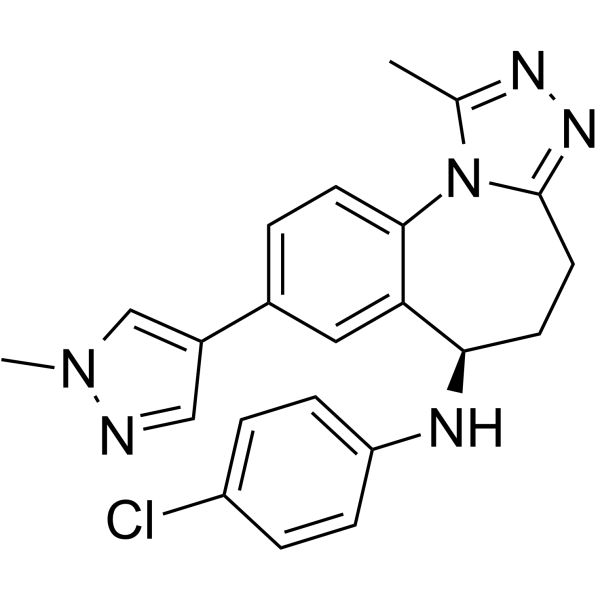
 0 ImagesPLK1/BRD4-IN-3 (Compound 21) is a selective dual inhibitor for bromodomain 4 (BRD4) and polo-like kinase 1 (PLK1). PLK1/BRD4-IN-3 inhibits BRD4-BD1, PLK1 and BRDT-BD1, with IC50s of 0.059, 0.127 and 0.245 μM, respectively.
-
GXH-II-052
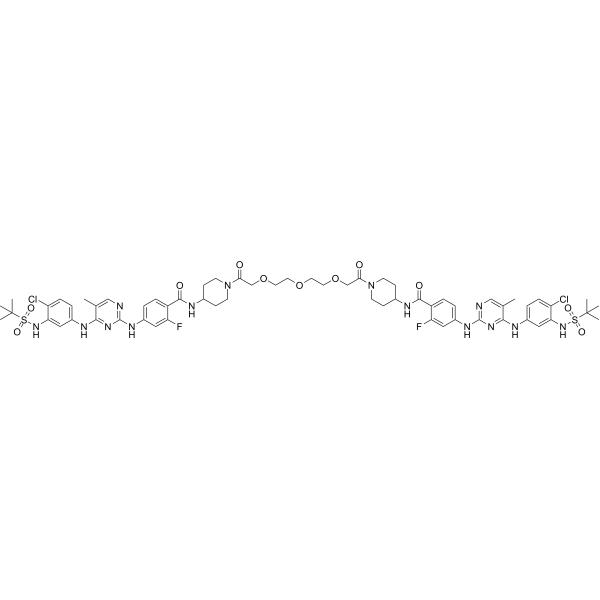 0 ImagesCat. No.: HY-150684CAS No.: 3031654-49-3GXH-II-052 is a potent bivalent bromodomain and extraterminal domain (BET) inhibitor. GXH-II-052 shows binding potential for BRD4-1, BRD4-2, BRD4-T, BRDT-1, BRDT-2, BRDT-T with Kd values of 28, 9.1, 4.8, 0.6, 8.4, 2.6 nM, respectively. GXH-II-052 shows antiproliferative activity. GXH-II-052 decreases the expression of c-Myc.
-
NC-III-49-1
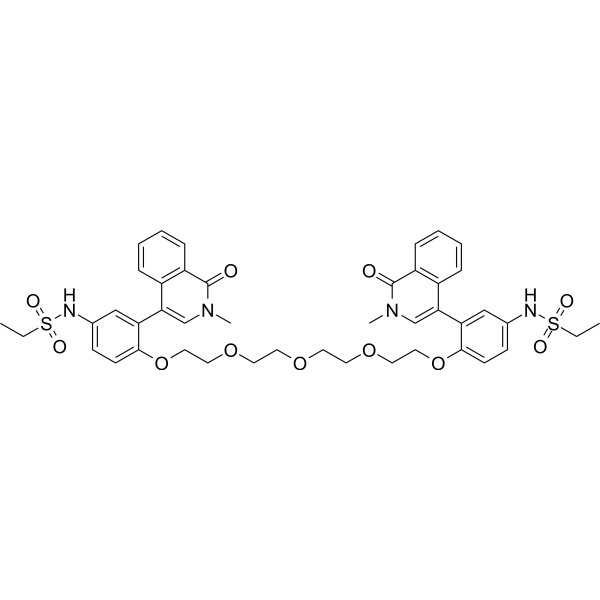 0 ImagesCat. No.: HY-150683CAS No.: 3031654-46-0NC-III-49-1 is a potent bivalent bromodomain and extraterminal domain (BET) inhibitor. NC-III-49-1 shows binding potential for BRD4-1, BRD4-2, BRD4-T, BRDT-1, BRDT-2, BRDT-T with Kd values of 0.095, 0.32, 0.29, 0.089, 5.5, 0.058 nM, respectively. NC-III-49-1 shows antiproliferative activity. NC-III-49-1 decreases the expression of c-Myc.
-
BET-IN-13
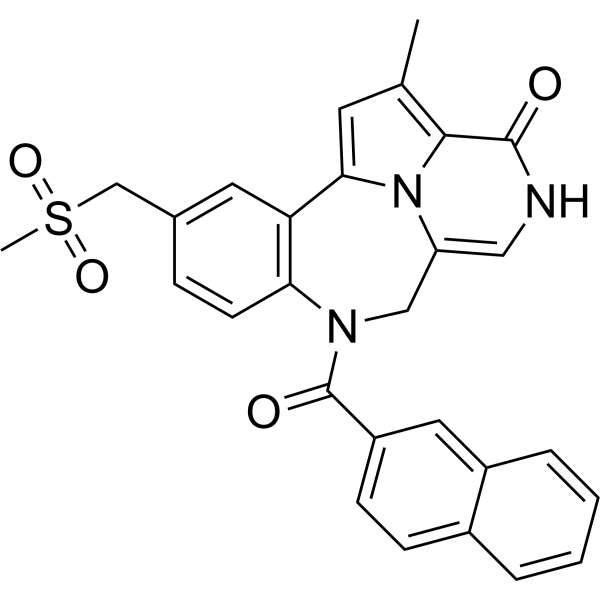 0 ImagesCat. No.: HY-152213CAS No.: 2506823-08-9BET-IN-13 is a potent BET inhibitor with an IC50 value of 1.6 nM. BET-IN-13 reduces LPS-induced TNF-α, IL-1β, IL-6, and NOS2 mRNA expression levels. BET-IN-13 shows anti-inflammatory activity. BET-IN-13 has the potential for the research of acute liver injury.
-
BET BD2-IN-1
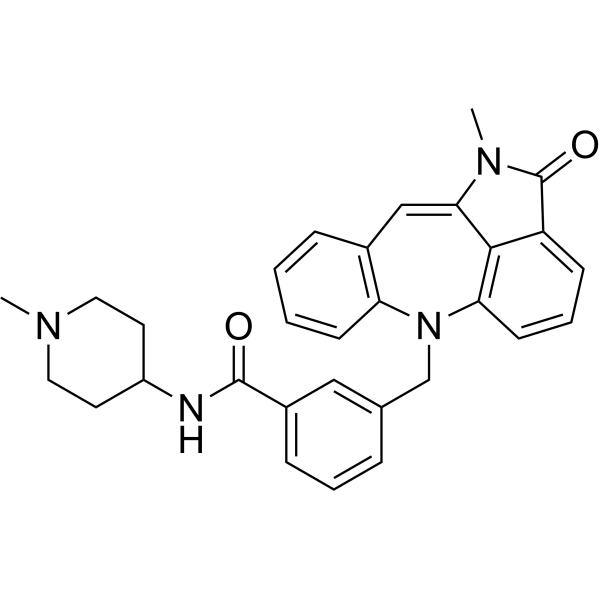 0 ImagesCat. No.: HY-155680CAS No.: 2677039-24-4
-
SB-284851-BT
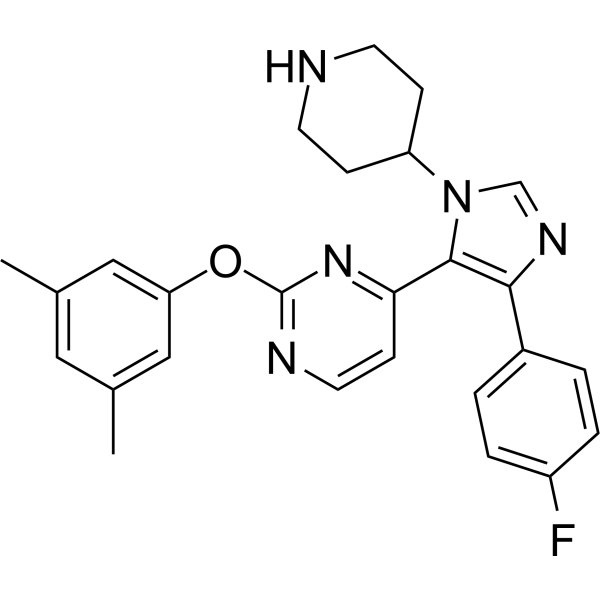 0 ImagesCat. No.: HY-136794CAS No.: 219769-23-0SB-284851-BT is an inhibitor of BRD4/p38α/BRDT. SB-284851-BT inhibits BRD4-BD1 (IC50=1.7 µM), p38α (Kd=0.47 nM), BRDT (1) (IC50=18 µM) and BRD4 (1)(IC50=3.7 µM). SB-284851-BT reduces IL-8 production by inhibiting p38α, as well as inhibiting BRD4 to down-regulates c-Myc and NF-κB gene pathways in cancer. SB-284851-BT can combined with the bromine domain and extra terminal (BET).
- 1
- 2



