



ABBV-744
Based on 11 publication(s) in Google Scholar
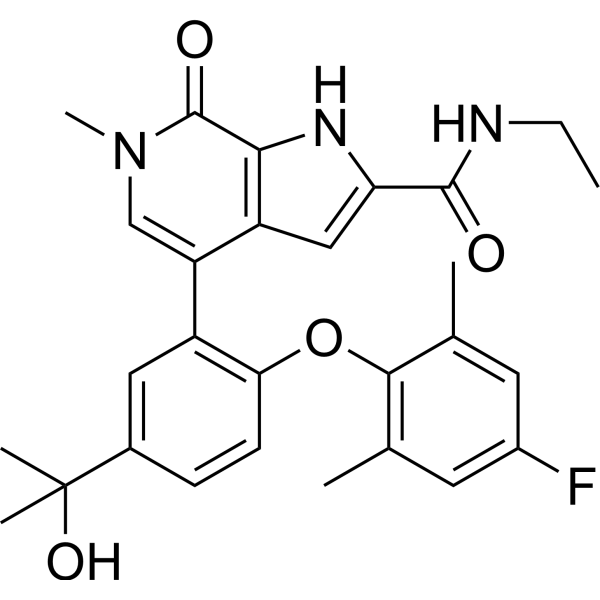
ABBV-744 is a first-in-class, orally active and selective inhibitor of the BDII domain of BET family proteins with IC50 values ranging from 4 to 18 nM for BRD2, BRD3, BRD4 and BRDT. ABBV-744 is primarily metabolized by CYP3A4 with agent-like properties enable the investigation of its antitumor efficacy and tolerability.
Nur für Forschungszwecke. Wir verkaufen nicht an Patienten.
- Reinheit : 99.97%
- CAS. Nr.: 2138861-99-9
- Formel: C28H30FN3O4
- Molecular Weight:491.55
-
Speicherung:
4°C, stored under nitrogen
* In solvent : -80°C, 1 year; -20°C, 6 months (stored under nitrogen)

To place orders, for customer services and technical support, please contact: MedChemExpress USA
Tel: 609-228-6898 E-mail: [email protected] [email protected]


-
 Biologische Aktivität
-
Chemical Information
-
Lösungsmittel & Löslichkeit
- Protokoll
- Reinheit & Dokumentation
- Verweise
-
 Help & FAQs


-
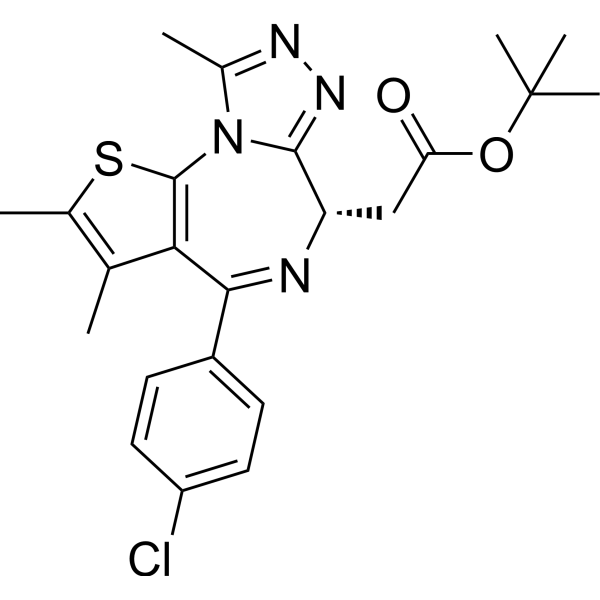
HY-13030
(+)-JQ-1BET Inhibitor -
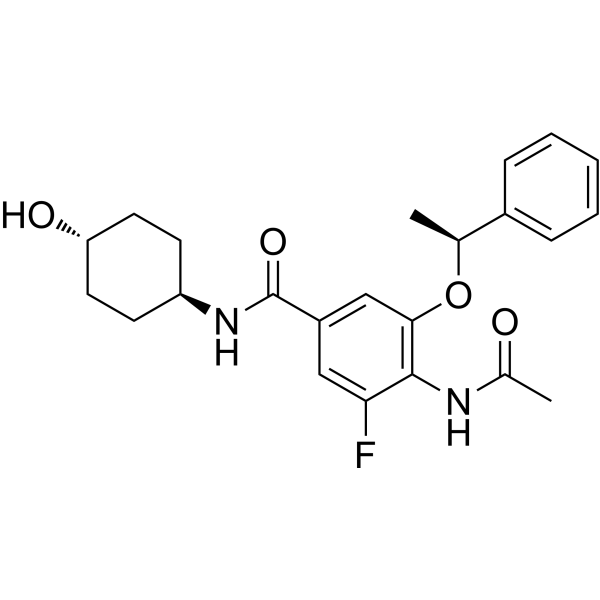
HY-136571
GSK046BET BD2 Inhibitor -
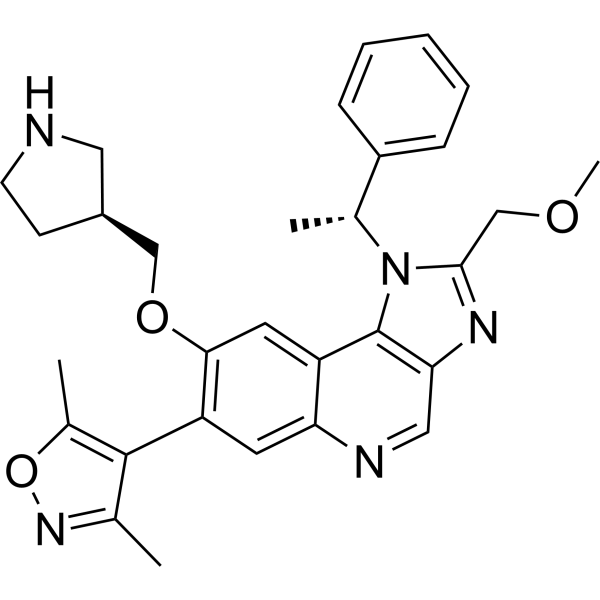
HY-136570
GSK778BET BD1 Inhibitor -
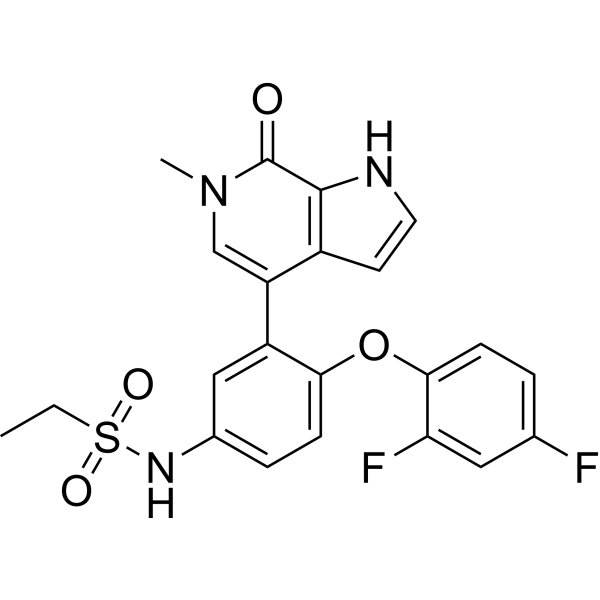
HY-100015
MivebresibBET Inhibitor -
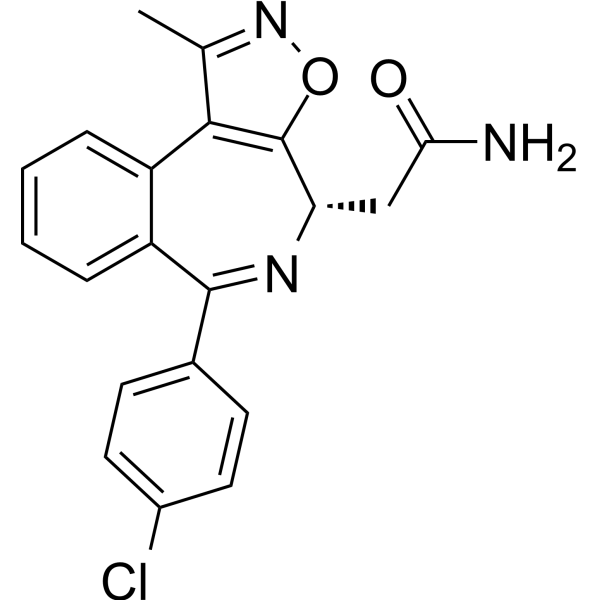
HY-12863
PelabresibBET Inhibitor -
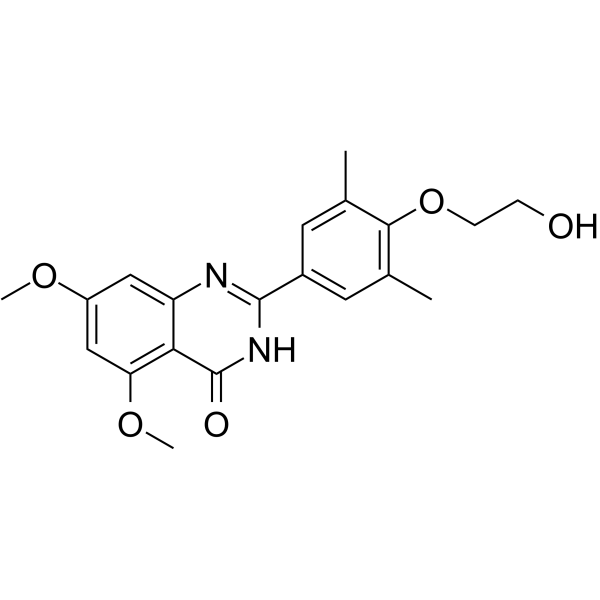
HY-16652
ApabetaloneBET Inhibitor -
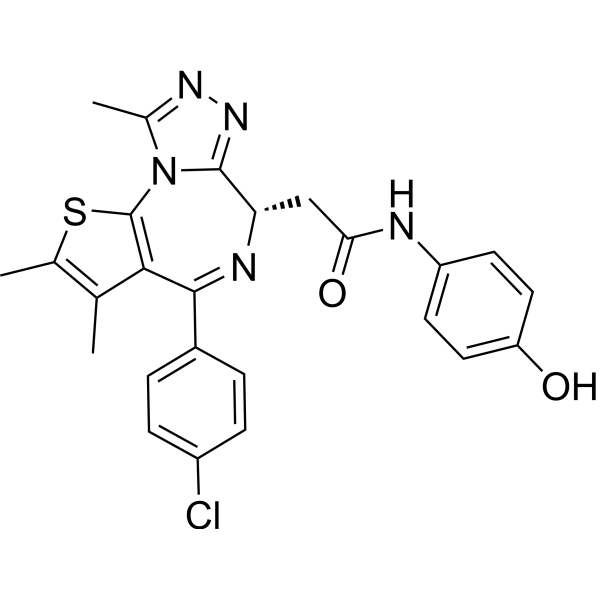
HY-15743
BirabresibBRD2/3/4 Inhibitor -
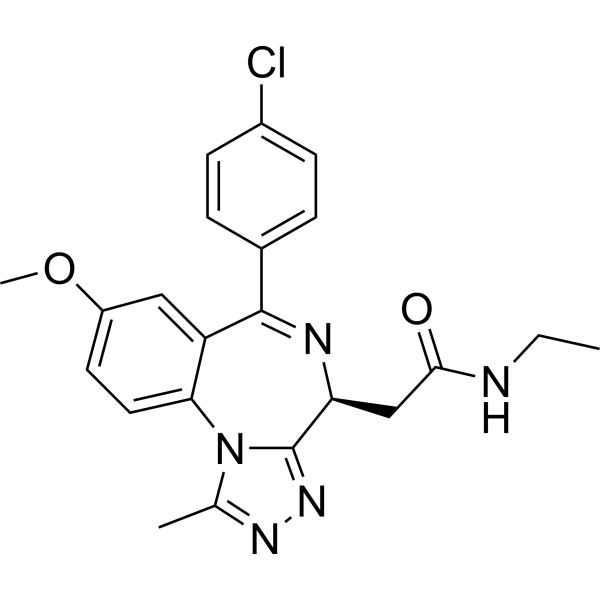
HY-13032
MolibresibBET Inhibitor -
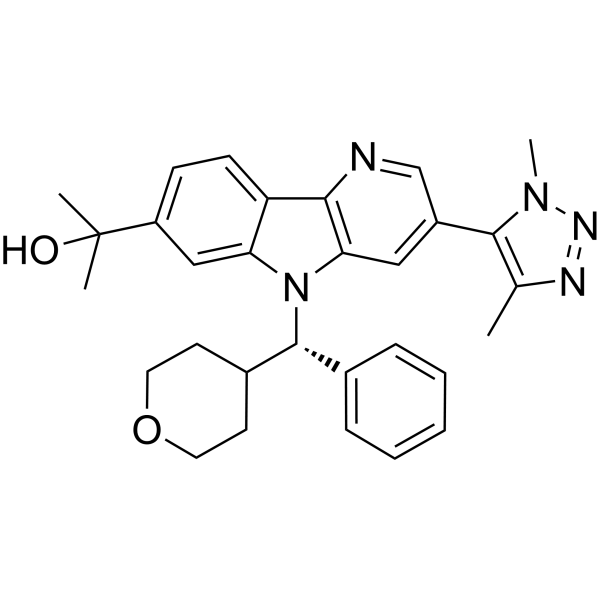
HY-101567
BMS-986158BET Inhibitor -
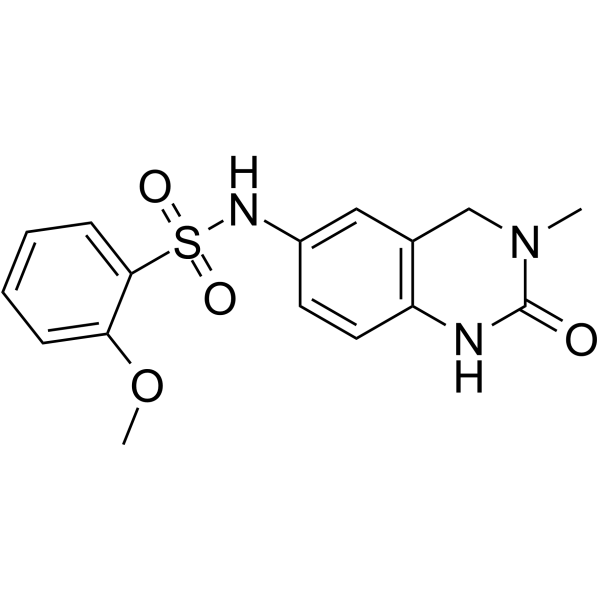
HY-16586
PFI-1BET Inhibitor -
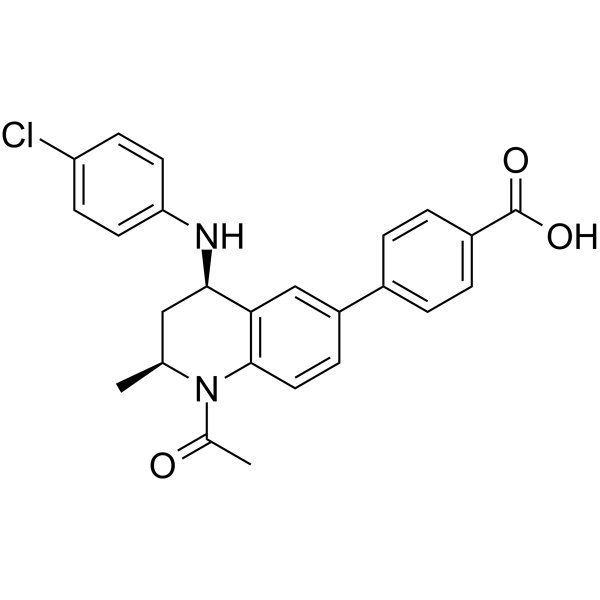
HY-13960
GSK1324726ABET Inhibitor -
HY-15815
BromosporineBET Inhibitor
Publications Citing Use of MedChemExpress (MCE) ABBV-744
More- Science. 2020 Apr 24;368(6489):387-394. [Abstract]
- Cell. 2021 Apr 15;184(8):2167-2182.e22. [Abstract]
- Nat Commun. 2026 Feb 12;17(1):1214. [Abstract]
- Acta Pharmacol Sin. 2024 Oct;45(10):2077-2091. [Abstract]
- Sci Data. 2024 Sep 19;11(1):1024. [Abstract]
- Sci Rep. 2024 Apr 20;14(1):9064. [Abstract]
- Cancer Med. 2025 Sep;14(18):e71227. [Abstract]
- J Leukoc Biol. 2026 Apr 29:qiag017. [Abstract]
- Anal Sens. 22 June 2022.
- Harvard University. 2026.
- bioRxiv. 2025 Sep 21.
 Customer Validation & Images

-
Bio/Physico-chemical Assay
-
ELISA
-
RT-PCR

-
WB
-
RT-PCR


Biologische Aktivität
Beschreibung
IC50 & Target
[1]|
BRD2 (BD2) 8 nM (IC50) |
BRD3 (BD2) 13 nM (IC50) |
BRDT (BD2) 18 nM (IC50) |
BRD4 (BD2) 4 nM (IC50) |
BRD4 (BD2) 3 nM (Kd) |
Cellular Effect
|
Cell Line

|
Type | Value | Description | References |
|---|---|---|---|---|
| HeLa | IC50 |
20700 nM
Compound: 46; ABBV-744
|
Inhibition of NanoLuc-tagged BRD4 BD1 (unknown origin) expressed in human HeLa cells after 2 hrs by NanoBRET assay
Inhibition of NanoLuc-tagged BRD4 BD1 (unknown origin) expressed in human HeLa cells after 2 hrs by NanoBRET assay
|
[PMID: 32324999] |
| HeLa | IC50 |
27.5 nM
Compound: 46; ABBV-744
|
Inhibition of NanoLuc-tagged BRD4 BD2 (unknown origin) expressed in human HeLa cells after 2 hrs by NanoBRET assay
Inhibition of NanoLuc-tagged BRD4 BD2 (unknown origin) expressed in human HeLa cells after 2 hrs by NanoBRET assay
|
[PMID: 32324999] |
| MOLM-13 | IC50 |
0.039 μM
Compound: 10; ABBV-744
|
Antiproliferative activity against human MOLM-13 cells assessed as inhibition of cell proliferation incubated for 72 hrs by CellTiterGlo luminescence assay
Antiproliferative activity against human MOLM-13 cells assessed as inhibition of cell proliferation incubated for 72 hrs by CellTiterGlo luminescence assay
|
[PMID: 38175809] |
| MV4-11 | IC50 |
0.015 μM
Compound: 10; ABBV-744
|
Antiproliferative activity against human MV4-11 cells assessed as inhibition of cell proliferation incubated for 72 hrs by CellTiterGlo luminescence assay
Antiproliferative activity against human MV4-11 cells assessed as inhibition of cell proliferation incubated for 72 hrs by CellTiterGlo luminescence assay
|
[PMID: 38175809] |
| MV4-11 | IC50 |
0.04 μM
Compound: ABBV-744
|
Antiproliferative activity against human MV4-11 cells assessed as reduction in cell growth
Antiproliferative activity against human MV4-11 cells assessed as reduction in cell growth
|
[PMID: 38964169] |
| MV4-11 | IC50 |
0.25 μM
Compound: ABBV-744
|
Antiproliferative activity against human MV4-11 cells assessed as cell viability after 72 hrs by CCK8 assay
Antiproliferative activity against human MV4-11 cells assessed as cell viability after 72 hrs by CCK8 assay
|
[PMID: 33077265] |
| MV4-11 | IC50 |
152.67 nM
Compound: ABBV-744
|
Antiproliferative activity against human MV4-11 cells incubated for 72 hrs by CCK8 assay
Antiproliferative activity against human MV4-11 cells incubated for 72 hrs by CCK8 assay
|
[PMID: 35395439] |
| NCI-H1299 | IC50 |
1600 nM
Compound: 46; ABBV-744
|
Antiproliferative activity against human H1299 cells assessed as reduction in cell viability after 5 days by CellTiter-Glo assay
Antiproliferative activity against human H1299 cells assessed as reduction in cell viability after 5 days by CellTiter-Glo assay
|
[PMID: 32324999] |
| SKM-1 | IC50 |
6.7 nM
Compound: 46; ABBV-744
|
Antiproliferative activity against human SKM1 cells assessed as reduction in cell viability after 5 days by CellTiter-Glo assay
Antiproliferative activity against human SKM1 cells assessed as reduction in cell viability after 5 days by CellTiter-Glo assay
|
[PMID: 32324999] |
In Vitro
ABBV-744 (90 nM; 0~24 h; LNCaP cells) downregulates the expression of KLK2 and MYC genes[1].
?
ABBV-744 (90 nM; 0~72 h; LNCaP cells) induces cell cycle arrest in G1 followed by senescence[1].
MedChemExpress (MCE) has not independently confirmed the accuracy of these methods. They are for reference only. Further protocols information, click here.
-
Cell Line:LNCaP cells
-
Concentration:90 nM
-
Incubation Time:0~24 hours
-
Result:Downregulated the expression of KLK2 and MYC genes.
-
Cell Line:LNCaP cells
-
Concentration:90 nM
-
Incubation Time:0~72 hours
-
Result:Induced cell cycle arrest in G1 followed by senescence.
In Vivo
? ABBV-744 (30 mg/kg; 14 days) is able to produce significant antitumor activity. ABBV-744 (30 mg/kg) triggers a reduction in platelets of only 20 %[1].
MedChemExpress (MCE) has not independently confirmed the accuracy of these methods. They are for reference only.
-
Animal Model:Mice
-
Dosage:4.7 mg/kg (Pharmacokinetic Analysis)
-
Administration:Oral gavage; 28 days
-
Result:Caused a delay in tumor growth and displayed equivalent or better antitumor activity compared with ABBV-075.
-
Animal Model:Sprague-Dawley rats
-
Dosage:30 mg/kg (Pharmacokinetic Analysis)
-
Administration:14 days
-
Result:Produced significant antitumor activity.
Clinical Trial
| NCT Number | Sponsor | Condition | Start Date |
Phase
|
|---|---|---|---|---|
| NCT01329991 | Plexxikon| | 2011-05 | PHASE1 |


Chemical Information
-
CAS. Nr. 2138861-99-9
-
Appearance Solid
-
Molecular Weight 491.55
-
Formel C28H30FN3O4
-
Color White to light yellow
-
SMILES
CC(O)(C)C1=CC(C(C2=C3NC(C(NCC)=O)=C2)=CN(C)C3=O)=C(OC4=C(C)C=C(F)C=C4C)C=C1
-
Versand
Room temperature in continental US; may vary elsewhere.
-
Speicherung
4°C, stored under nitrogen
* In solvent : -80°C, 1 year; -20°C, 6 months (stored under nitrogen)


Publications (11)
-
Journal Impact Factor
-
Most Recent
-
Science
2020 Apr 24;368(6489):387-394. PMID: 32193360 -
Cell
2021 Apr 15;184(8):2167-2182.e22. PMID: 33811809 -
Nat Commun
Human iPSC-based Modeling of Pulmonary Fibrosis Reveals p300/CBP Inhibition Suppresses Alveolar Transitional Cell State. [Abstract]2026 Feb 12;17(1):1214. PMID: 41680175 -
Acta Pharmacol Sin
ABBV-744 alleviates LPS-induced neuroinflammation via regulation of BATF2-IRF4-STAT1/3/5 axis. [Abstract]2024 Oct;45(10):2077-2091. PMID: 38862817
ABBV-744 purchased from MedChemExpress. Usage Cited in: Acta Pharmacol Sin. 2024 Oct;45(10):2077-2091. [Abstract]
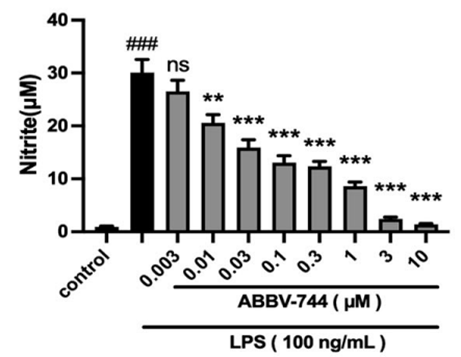
BV-2 cells were pretreated with ABBV-744 (0.003, 0.01, 0.03, 0.1, 0.3, 1, 3, 10 μM) for 2 h and then exposed to LPS (100 ng/mL) for 24 h (n = 5). The production of NO was measured using nitric oxide detection kit.
ABBV-744 purchased from MedChemExpress. Usage Cited in: Acta Pharmacol Sin. 2024 Oct;45(10):2077-2091. [Abstract]
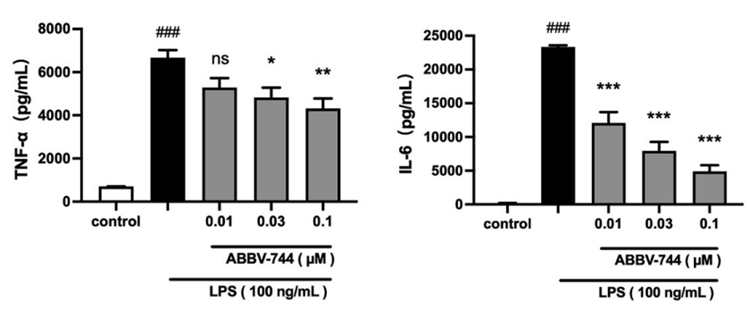
BV-2 cells were pretreated with ABBV-744 (0.003, 0.01, 0.03, 0.1, 0.3, 1, 3, 10 μM) for 2 h and then exposed to LPS (100 ng/mL) for 24 h (n = 5). The levels of pro-inflammatory factors TNF-α and IL-6 were measured using ELISA.
ABBV-744 purchased from MedChemExpress. Usage Cited in: Acta Pharmacol Sin. 2024 Oct;45(10):2077-2091. [Abstract]
BV-2 cells were pretreated with ABBV-744 (0.01, 0.03, 0.1 μM) for 2 h and then exposed to LPS (100 ng/mL) for 3 h (n = 5). The mRNA levels of TNF-α, IL-1β and IL-6 were measured by quantitative real-time PCR.
ABBV-744 purchased from MedChemExpress. Usage Cited in: Acta Pharmacol Sin. 2024 Oct;45(10):2077-2091. [Abstract]
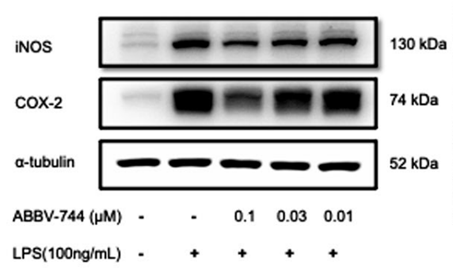
BV-2 cells were pretreated with ABBV-744 (0.01, 0.03, 0.1 μM) for 2 h and then exposed to LPS (100 ng/mL) for 24 h (n = 5). The protein levels of iNOS, COX2 and α-tubulin were measured using immunoblot analysis.
ABBV-744 purchased from MedChemExpress. Usage Cited in: Acta Pharmacol Sin. 2024 Oct;45(10):2077-2091. [Abstract]
Primary microglial cells were pretreated with ABBV-744 (0.03 μM) for 2 h and then exposed to LPS (100 ng/mL) for 3 h (n = 5). The mRNA levels of TNF-α, IL-1β, and IL-6 were measured by quantitative real-time PCR.

ABBV-744 purchased from MedChemExpress. Usage Cited in: Acta Pharmacol Sin. 2024 Oct;45(10):2077-2091. [Abstract]
C57BL/6J mice were treated with vehicle (5% DMSO + 40% PEG300 + 55% saline; p.o.) or ABBV-744 (0.05, 0.1, 0.2 mg/kg; p.o.) daily for 2 days, followed by injection with saline or LPS (5 mg/kg; i.p.) for 1 day. Activation of microglia in the CA1 region of mice hippocampus was detected by immunofluorescence staining using an anti-Iba1 antibody.
ABBV-744 purchased from MedChemExpress. Usage Cited in: Acta Pharmacol Sin. 2024 Oct;45(10):2077-2091. [Abstract]
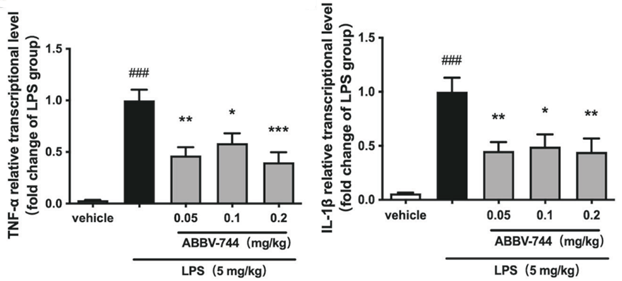
C57BL/6J mice were treated with vehicle (5% DMSO + 40% PEG300 + 55% saline; p.o.) or ABBV-744 (0.05, 0.1, 0.2 mg/kg; p.o.) daily for 2 days, followed by injection with saline or LPS (5 mg/kg; i.p.) for 1 day. The mRNA levels of TNF-α and IL-1β in the hippocampus were measured by quantitative real-time PCR (n = 7–8).
ABBV-744 purchased from MedChemExpress. Usage Cited in: Acta Pharmacol Sin. 2024 Oct;45(10):2077-2091. [Abstract]
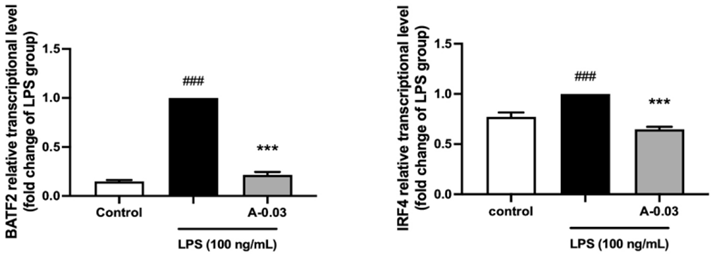
BV-2 cells were pretreated with ABBV-744 (0.03 μM) for 2 h and then exposed to LPS (100 ng/mL) for 3 h (n = 4–5). The mRNA levels of BATF2 and IRF4 were measured by quantitative real-time PCR.
ABBV-744 purchased from MedChemExpress. Usage Cited in: Acta Pharmacol Sin. 2024 Oct;45(10):2077-2091. [Abstract]
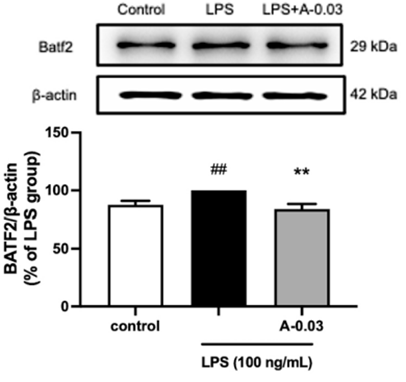
BV-2 cells were pretreated with ABBV-744 (0.03 μM) for 2 h and then exposed to LPS (100 ng/mL) for 15 min (n = 5). The protein level of BATF2 was measured by Western blot. The quantification of the intensity of BATF2 relative to β-actin is shown.
ABBV-744 purchased from MedChemExpress. Usage Cited in: Acta Pharmacol Sin. 2024 Oct;45(10):2077-2091. [Abstract]
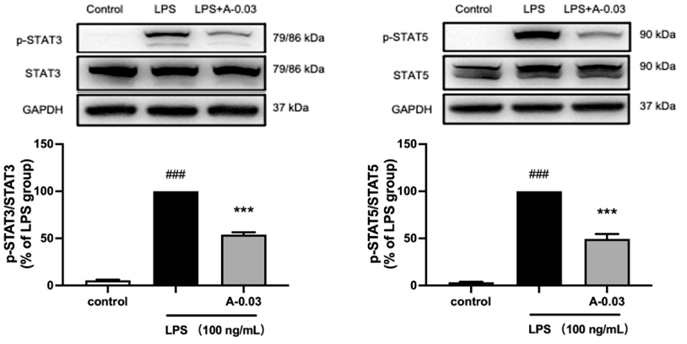
BV-2 cells were pretreated with ABBV-744 (0.03 μM) for 2 h and then exposed to LPS (100 ng/mL) for 3 h (n = 6–7). Protein levels of p-STAT3 and STAT3, p-STAT5 and STAT5 were measured by Western blot and β-actin or GAPDH were used as a loading control.
ABBV-744 purchased from MedChemExpress. Usage Cited in: Acta Pharmacol Sin. 2024 Oct;45(10):2077-2091. [Abstract]
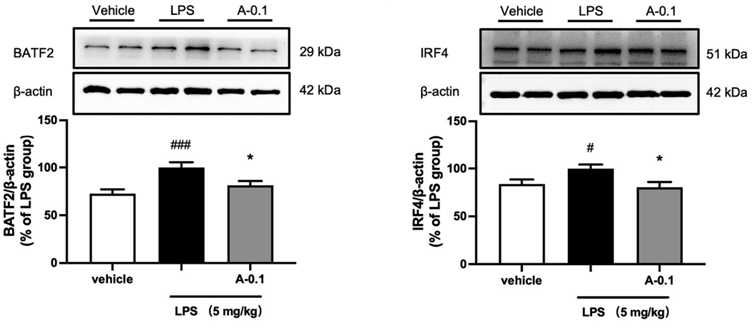
C57BL/6J mice were treated with vehicle (5% DMSO + 40% PEG300 + 55% saline; p.o.) or ABBV-744 (0.1 mg/kg; p.o.) daily for 2 days, followed by injection with saline or LPS (5 mg/kg; i.p.) for 1 day. Protein levels of BATF2 and IRF4 were measured by Western blot and β-actin was used as a loading control.
-
Sci Data
High-throughput drug screening identifies novel therapeutics for Low Grade Serous Ovarian Carcinoma. [Abstract]2024 Sep 19;11(1):1024. PMID: 39300112 -
Sci Rep
Epigenetic modulation through BET bromodomain inhibitors as a novel therapeutic strategy for progranulin-deficient frontotemporal dementia. [Abstract]2024 Apr 20;14(1):9064. PMID: 38643236 -
Cancer Med
Focal Adhesion Kinase Intersects With the BRD4-MYC Axis and YAP1 to Drive Tumor Cell Growth, Phenotypic Plasticity, Stemness, and Metastatic Potential in Colorectal Cancer. [Abstract]2025 Sep;14(18):e71227. PMID: 40959971 -
J Leukoc Biol
BET inhibition curbs macrophage inflammation, lipid accumulation, and atherogenesis by disrupting the YAP/TAZ-BRD4 axis. [Abstract]2026 Apr 29:qiag017. PMID: 42054500 -
-
-


Lösungsmittel & Löslichkeit
In Vitro:
DMSO : 100 mg/mL (203.44 mM; Need ultrasonic; Hygroscopic DMSO has a significant impact on the solubility of product, please use newly opened DMSO)
Please refer to the solubility information to select the appropriate solvent. Once prepared, please aliquot and store the solution to prevent product inactivation from repeated freeze-thaw cycles.
Storage method and period of stock solution: -80°C, 1 year; -20°C, 6 months (stored under nitrogen). When stored at -80°C, please use it within 1 year. When stored at -20°C, please use it within 6 months.
Please refer to the solubility information to select the appropriate solvent. Once prepared, please aliquot and store the solution to prevent product inactivation from repeated freeze-thaw cycles.
Storage method and period of stock solution: -80°C, 1 year; -20°C, 6 months (stored under nitrogen). When stored at -80°C, please use it within 1 year. When stored at -20°C, please use it within 6 months.
Konzentration (Stammlösung) × Volumen (Stammlösung) = Konzentration (Ziellösung) × Volumen (Ziellösung)
In Vivo:
Select the appropriate dissolution method based on your experimental animal and administration route.
- For the following dissolution methods, please ensure to first prepare a clear stock solution using an In Vitro approach and then sequentially add co-solvents:
- To ensure reliable experimental results, the clarified stock solution can be appropriately stored based on storage conditions. As for the working solution for In Vivo experiments, it is recommended to prepare freshly and use it on the same day.
- The percentages shown for the solvents indicate their volumetric ratio in the final prepared solution. If precipitation or phase separation occurs during preparation, heat and/or sonication can be used to aid dissolution.
Add each solvent one by one: 10% DMSO 40% PEG300 5% Tween-80 45% Saline
Solubility: ≥ 2.5 mg/mL (5.09 mM); Clear solution
This protocol yields a clear solution of ≥ 2.5 mg/mL (saturation unknown).
Taking 1 mL working solution as an example, add 100 μL DMSO stock solution (25.0 mg/mL) to 400 μL PEG300, and mix evenly; then add 50 μL Tween-80 and mix evenly; then add 450 μL Saline to adjust the volume to 1 mL.
Preparation of Saline: Dissolve 0.9 g sodium chloride in ddH₂O and dilute to 100 mL to obtain a clear Saline solution.
Add each solvent one by one: 10% DMSO 90% (20% SBE-β-CD in Saline)
Solubility: ≥ 2.5 mg/mL (5.09 mM); Clear solution
This protocol yields a clear solution of ≥ 2.5 mg/mL (saturation unknown).
Taking 1 mL working solution as an example, add 100 μL DMSO stock solution (25.0 mg/mL) to 900 μL 20% SBE-β-CD in Saline, and mix evenly.
Preparation of 20% SBE-β-CD in Saline (4°C, storage for one week): 2 g SBE-β-CD powder is dissolved in 10 mL Saline, completely dissolve until clear.
For the following dissolution methods, please prepare the working solution directly:
It is recommended to prepare fresh solutions and use them promptly within a short period of time.
The percentages shown for the solvents indicate their volumetric ratio in the final prepared solution. If precipitation or phase separation occurs during preparation, heat and/or sonication can be used to aid dissolution.
Add each solvent one by one: 50% PEG300 50% Saline
Solubility: 2.5 mg/mL (5.09 mM); Suspended solution; Need ultrasonic
In Vivo Dissolution Calculator
Please enter the basic information of animal experiments:
-
-
-
-
Recommended: Prepare an additional quantity of animals to account for potential losses during experiments.
Please enter your animal formula composition:
-
%DMSO +
Recommended: Keep the proportion of DMSO in working solution below 2% if your animal is weak.
-
%+
-
+%Tween-80 + +
-
%Saline +
The co-solvents required include: DMSO, . All of co-solvents are available by MedChemExpress (MCE). , Tween 80. All of co-solvents are available by MedChemExpress (MCE).
Working solution concentration: 0.22 mg/mL
Method for preparing stock solution: mg drug dissolved in μL DMSO. Stock solution concentration: mg/mL. * In solvent : -80°C, 1 year; -20°C, 6 months (stored under nitrogen)
1. Take μL DMSO stock solution;
2. Add μL .
μL , mix evenly;
3. Then add μL Tween 80, mix evenly;
4. Then add μL
Please ensure that the stock solution in the first step is dissolved to a clear state, and add co-solvents in sequence. You can use ultrasonic heating (ultrasonic cleaner, recommended frequency 20-40 kHz), vortexing, etc. to assist dissolution.

Protokoll
-
Cell Cytotoxicity Assay
Cytotoxicity assays are usually based on the assessment of cell membrane damage, which can also be indirectly detected by measuring cell viability. Detection methods include MTT assay, CKK-8 assay, LDH assay and ATP assay, etc.
-
Patient-Derived Xenograft (PDX)
Patient-derived xenograft (PDX) models are generated by engrafting primary human tumor tissue directly into immunodeficient mice, allowing in vivo propagation of patient tumor biology without initial in vitro adaptation. These models are used to preserve key histopathological and molecular characteristics of the original tumor and enable assessment of tumor growth dynamics and therapeutic response in a living organism. The biological readout is tumor engraftment and subsequent growth in the murine host, which reflects the ability of human tumor cells to survive, vascularize, and expand in an immunocompromised microenvironment.


Reinheit & Dokumentation
-
Data Sheet (285 KB)
-
SDS (394 KB)
- English - EN (394 KB)
- Français - FR (394 KB)
- Deutsch - DE (394 KB)
- Norwegian - NO (394 KB)
- Español - ES (394 KB)
- Swedish - SV (394 KB)
- Italian - IT (394 KB)
- Korean - KR (394 KB)
- Portuguese - PT (394 KB)
-
Handling Instructions (2659 KB)
Verweise


Complete Stock Solution Preparation Table
Please refer to the solubility information to select the appropriate solvent. Once prepared, please aliquot and store the solution to prevent product inactivation from repeated freeze-thaw cycles.
Storage method and period of stock solution: -80°C, 1 year; -20°C, 6 months (stored under nitrogen). When stored at -80°C, please use it within 1 year. When stored at -20°C, please use it within 6 months.
| Optional Solvent | Concentration Solvent Mass | 1 mg | 5 mg | 10 mg | 25 mg |
|---|---|---|---|---|---|
| DMSO | 1 mM | 2.0344 mL | 10.1719 mL | 20.3438 mL | 50.8595 mL |
| 5 mM | 0.4069 mL | 2.0344 mL | 4.0688 mL | 10.1719 mL | |
| 10 mM | 0.2034 mL | 1.0172 mL | 2.0344 mL | 5.0860 mL | |
| 15 mM | 0.1356 mL | 0.6781 mL | 1.3563 mL | 3.3906 mL | |
| 20 mM | 0.1017 mL | 0.5086 mL | 1.0172 mL | 2.5430 mL | |
| 25 mM | 0.0814 mL | 0.4069 mL | 0.8138 mL | 2.0344 mL | |
| 30 mM | 0.0678 mL | 0.3391 mL | 0.6781 mL | 1.6953 mL | |
| 40 mM | 0.0509 mL | 0.2543 mL | 0.5086 mL | 1.2715 mL | |
| 50 mM | 0.0407 mL | 0.2034 mL | 0.4069 mL | 1.0172 mL | |
| 60 mM | 0.0339 mL | 0.1695 mL | 0.3391 mL | 0.8477 mL | |
| 80 mM | 0.0254 mL | 0.1271 mL | 0.2543 mL | 0.6357 mL | |
| 100 mM | 0.0203 mL | 0.1017 mL | 0.2034 mL | 0.5086 mL |


ABBV-744 Related Classifications
HY-112090 Related Classifications
 Powered by Bioz