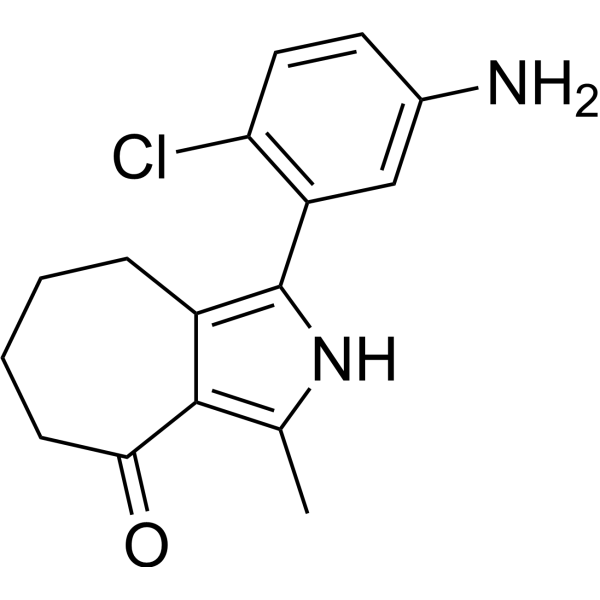
BRD7
BRD7 (bromodomain-containing protein 7) is a bromodomain-containing chromatin regulator that functions as a subunit of the PBAF SWI/SNF chromatin-remodeling complex, where it contributes to chromatin remodeling and transcriptional regulation through recognition of acetylated lysine residues on histones[1][2]. Mechanistically, BRD7 participates in gene regulatory programs controlling cell-cycle progression, senescence, apoptosis, and proliferation, and it cooperates with transcriptional regulators such as p53 to support transcriptional responses linked to growth control[2]. In disease contexts, altered BRD7 expression has been reported in multiple malignancies, including nasopharyngeal carcinoma, ovarian cancer, non-small-cell lung cancer, and prostate cancer models, highlighting its relevance to cancer biology and epigenetic regulation[2][3]. Compared with the closely related bromodomain protein BRD9, BRD7 is incorporated into the PBAF complex, whereas BRD9 is a defining component of the non-canonical BAF/GBAF complex, indicating distinct chromatin-remodeling functions despite structural homology between their bromodomains[3][4]. This functional distinction has motivated efforts to develop selective chemical tools capable of separating BRD7-dependent biology from BRD9-mediated effects[3]. For experimental applications, recent structure-guided studies identified a BRD7-specific binding pocket and enabled the development of selective BRD7 bromodomain inhibitors, providing research tools for investigating BRD7 function in cancer-related pathways and chromatin-regulatory mechanisms[3]. These advances support the use of BRD7-selective probes for mechanistic studies of transcriptional regulation and disease-associated chromatin remodeling[3].
References:
- [1]. Uniprotkb.
- [2]. BRD7 gene information.
- [3]. Ordonez-Rubiano SC, et al. Rational Design and Development of Selective BRD7 Bromodomain Inhibitors and Their Activity in Prostate Cancer. J Med Chem. 2023 Aug 24;66(16):11250-11270. [Content Brief]
- [4]. Theodoulou NH, et al. Discovery of I-BRD9, a Selective Cell Active Chemical Probe for Bromodomain Containing Protein 9 Inhibition. J Med Chem. 2016 Feb 25;59(4):1425-39. [Content Brief]
All Product Categories
-
BRD7 Related Products (9)
Related Products (9)

-
VZ185
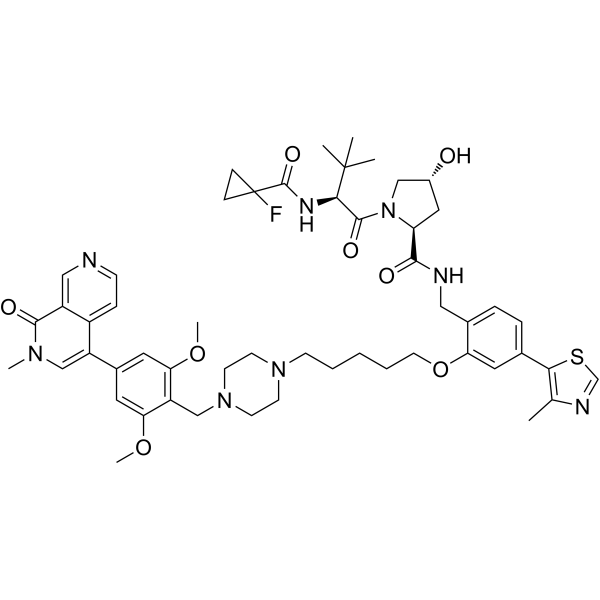 0 ImagesVZ185 is a BRD9 and BRD7 PROTAC degrader, with DC50 values of 1.76 nM and 4.5 nM, respectively, in RI-1 cells; and DC50 values of 4 nM and 34 nM, respectively, in HEK293 cells. VZ185 hijacks the CRL2VHL E3 ubiquitin ligase complex to induce ubiquitination and subsequent proteasomal degradation of BRD9 and BRD7. VZ185 can be used in research related to acute myeloid eosinophilic leukemia and malignant rhabdoid tumors.
-
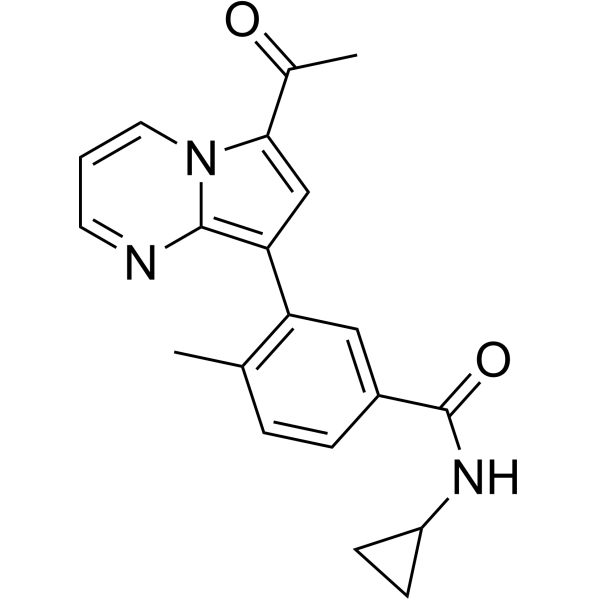
NVS-CECR2-1
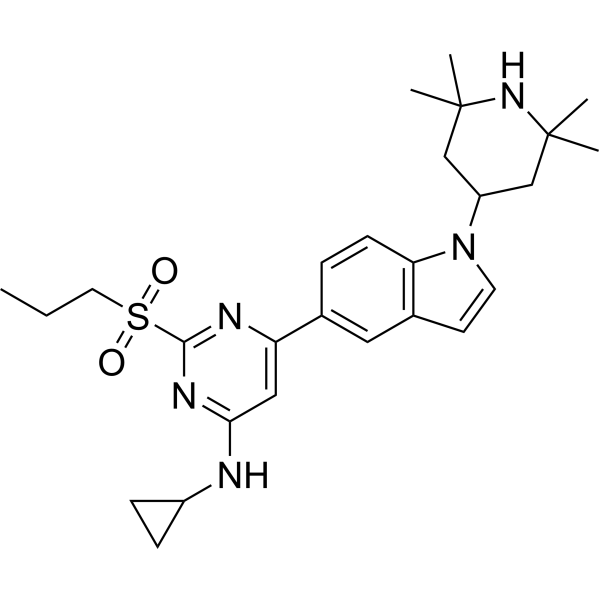 0 ImagesNVS-CECR2-1, a non-BET family Bromodomain (BRD) inhibitor, is a potent and selective cat eye syndrome chromosome region, candidate 2 (CECR2) inhibitor. NVS-CECR2-1 binds to CECR2 BRD with high affinity (IC50=47 nM; KD=80 nM). NVS-CECR2-1 exhibits cytotoxic activity and induces apoptosis against various cancer cells by targeting CECR2 as well as via CECR2-independent mechanism. NVS-CECR2-1 is a chemical probe.
-
BRD7-IN-2
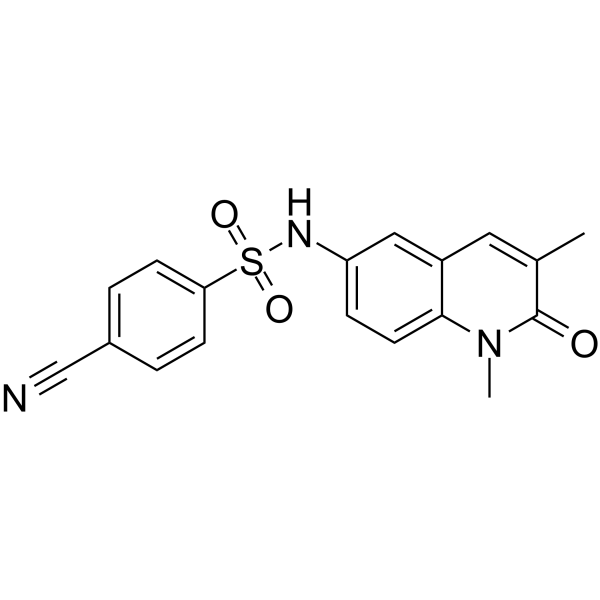
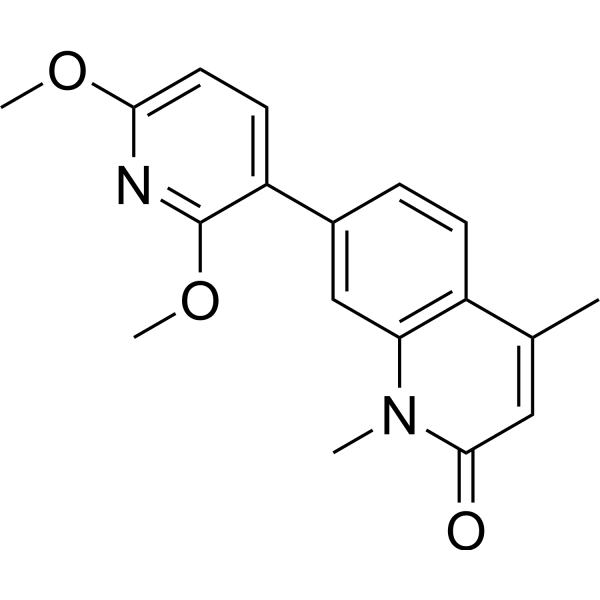 0 ImagesBRD7-IN-2 (compound 2-77) is a potent inhibitor of bromodomain-containing protein 7 (BRD7), targeting to prostate cancer cells. BRD7-IN-2 is selective for BRD7 rather than BRD9, with IC50s of 5.4 μM, and >300 μM, respectively.
-
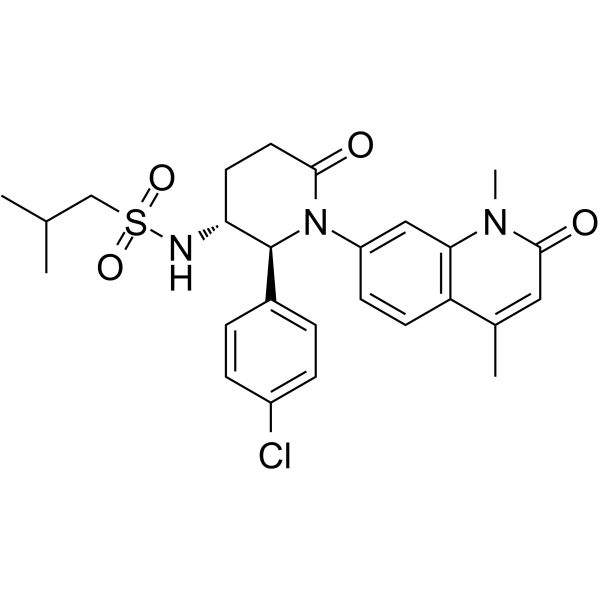
BRD7-IN-1 free base
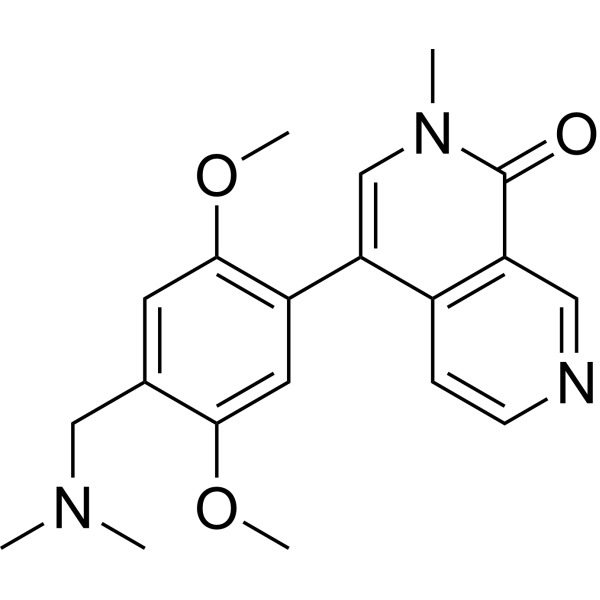
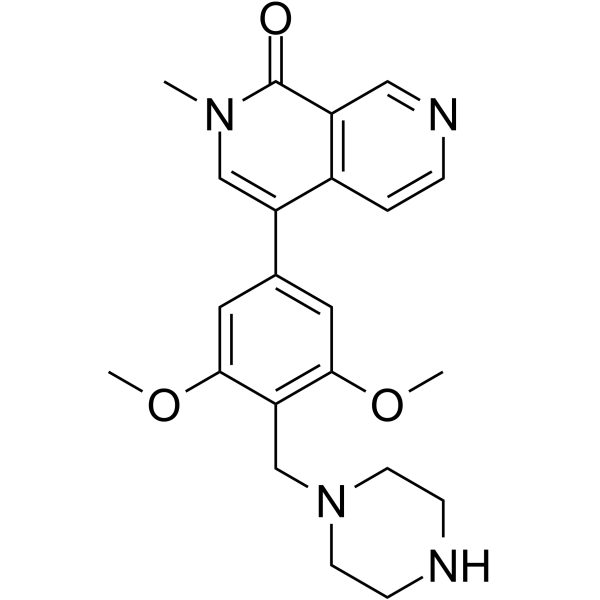 0 ImagesCat. No.: HY-111905ACAS No.: 2305379-66-0BRD7-IN-1 free base, a modified derivative of BI7273 (BRD7/9 inhibitor), binds to a VHL ligand via a linker to form a PROTAC VZ185 (VZ185 against BRD7/9 with DC50s of 4.5 and 1.8 nM, respectively).