



BRPF1
BRPF1 (bromodomain and PHD finger-containing protein 1) is a multivalent chromatin regulator and scaffold protein that assembles the MOZ/KAT6A, MORF/KAT6B, and HBO1 histone acetyltransferase complexes, thereby controlling histone acetylation, chromatin accessibility, and transcriptional regulation[1][2]. Mechanistically, BRPF1 functions through its bromodomain, PHD fingers, and PWWP domain to recognize chromatin features and coordinate histone acetyltransferase activity, which contributes to the establishment of specific histone acetylation patterns including H3K14ac and H3K23ac[2][3]. Through these epigenetic regulatory activities, BRPF1 participates in fundamental developmental processes, including neurogenesis, hematopoiesis, embryonic stem cell regulation, and tissue differentiation[1]. In disease contexts, BRPF1 deficiency or pathogenic variants are associated with intellectual developmental disorder with dysmorphic facies and ptosis (IDDDFP), while dysregulated BRPF1 activity has been linked to multiple malignancies through altered chromatin remodeling and transcriptional programs[1]. Compared with related BRPF family members, BRPF1 exhibits a broader role in development and chromatin regulation and serves as a central scaffold for MOZ/MORF-associated acetyltransferase complexes, supporting its distinctive biological importance[1]. For experimental applications, selective BRPF1 bromodomain inhibitors have been developed and are increasingly used to investigate BRPF1-dependent epigenetic mechanisms and therapeutic vulnerabilities in cancer models[1].
References:
- [1]. Alexandrova E, et al. BRPF1 in cancer epigenetics: a key regulator of histone acetylation and a promising therapeutic target. Cell Death Discov. 2025 Oct 6;11(1):435. [Content Brief]
- [2]. Uniprotkb.
- [3]. Zu G, et al. BRPF1-KAT6A/KAT6B Complex: Molecular Structure, Biological Function and Human Disease. Cancers (Basel). 2022 Aug 23;14(17):4068. [Content Brief]
All Product Categories
-
BRPF1 Related Products (9)
Related Products (9)

-
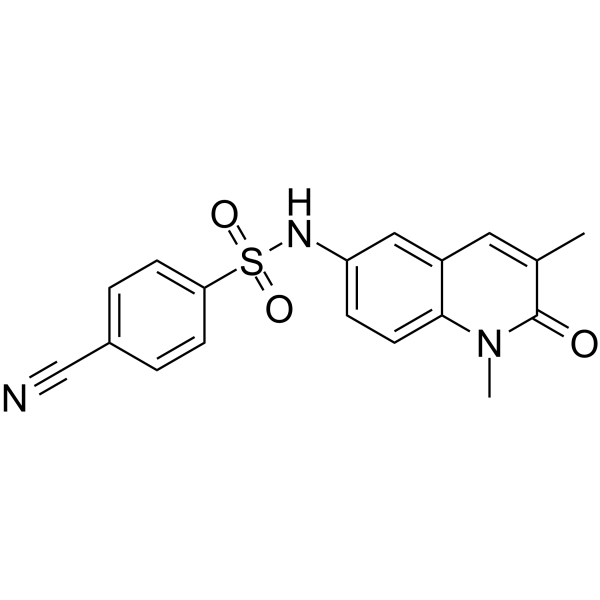
TRIM24/BRPF1-IN-2
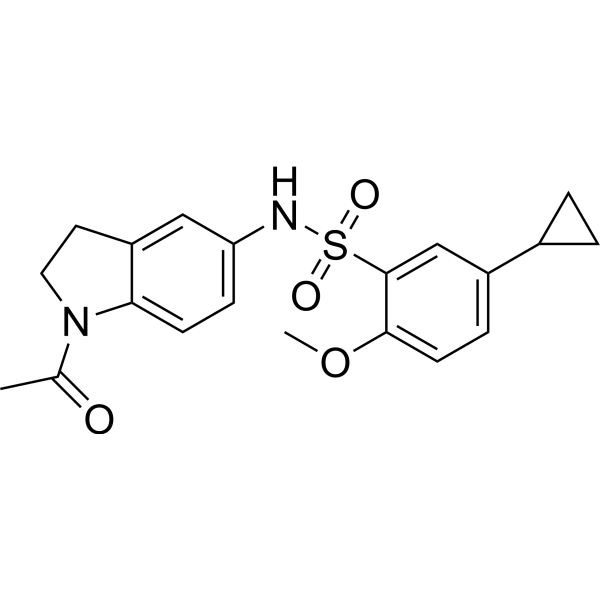 0 ImagesCat. No.: HY-143332CAS No.: 3033288-68-2TRIM24/BRPF1-IN-2 (compound 20l) is a potent TRIM24/BRPF1 dual inhibitor, with IC50 values of 0.98 and 1.16 μM, respectively. TRIM24/BRPF1-IN-2 shows TRIM24/BRPF1 bromodomain binding affinity. TRIM24/BRPF1-IN-2 can be used for prostate cancer research.
-
GSK9311 hydrochloride
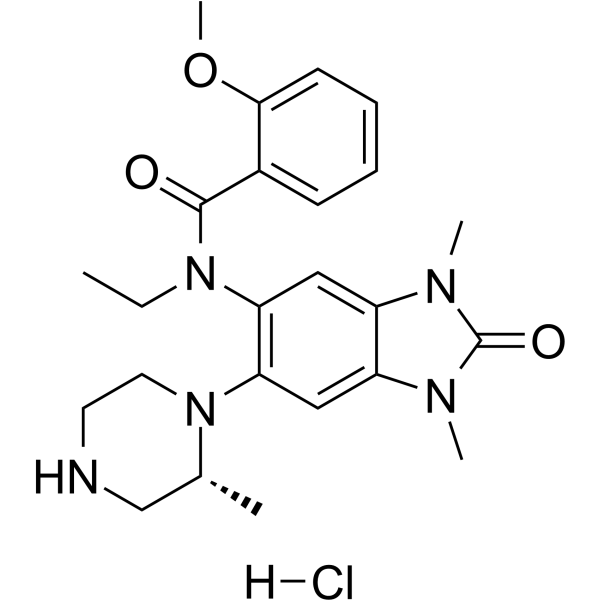 0 ImagesCat. No.: HY-100729ACAS No.: 2253733-09-2
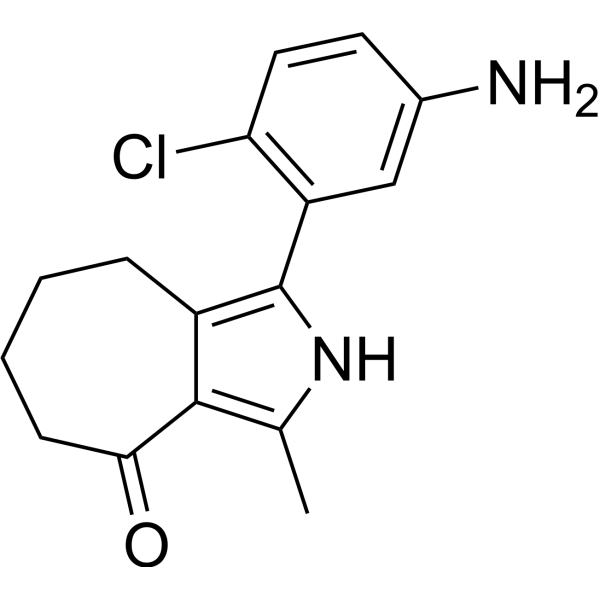
-
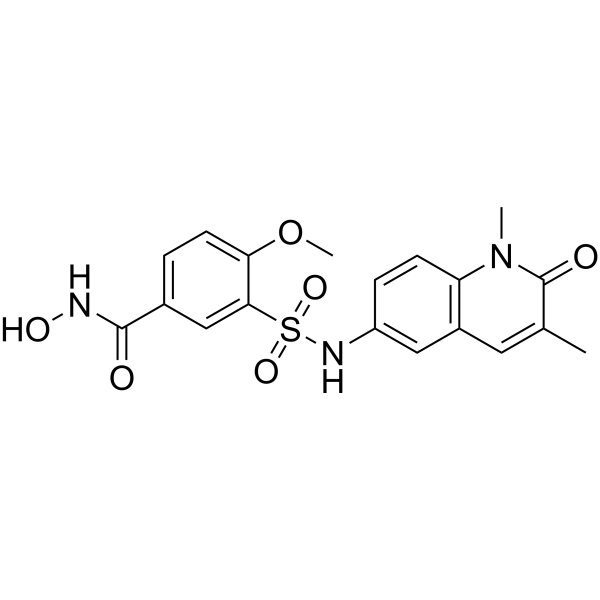
BRPF1B/TRIM24-IN-1
 0 ImagesCat. No.: HY-122626CAS No.: 1242907-48-7BRPF1B/TRIM24-IN-1 (compound 34) is a potent TRIM24/BRPF1/BRPF2 inhibitor, with IC50 values of 0.43, 0.34, 1.75 μM, respectively. BRPF1B/TRIM24-IN-1 binds the TRIM24 bromodomain with a KD of 222 nM and has a KD for the BRPF1 bromodomain of 137 nM and for BRD1 of 1130 nM.



