



CECR2
CECR2 is a chromatin-remodeling complex component involved in transcriptional regulation[1]. It plays a critical role in maintaining genomic stability and epigenetic control during development and cellular differentiation[2]. The CECR2 bromodomain has been identified as a promising therapeutic target due to its involvement in recognizing acetylated histone marks, which are key epigenetic signals in gene activation[3]. A selective inhibitor of the CECR2 bromodomain, GNE-886, has been developed and shown to modulate gene expression profiles in cancer cells by disrupting chromatin interactions[3]. This compound demonstrates potent activity against CECR2-dependent pathways, offering potential for targeted therapy in diseases with aberrant epigenetic regulation[3]. Recent studies using high-throughput screening and structural biology have provided insights into the molecular mechanisms underlying CECR2 function and inhibition[2]. These findings highlight the importance of CECR2 in both physiological and pathological contexts, particularly in oncology and developmental disorders[2].
References:
- [1]. Aharony I, et al. A Huntingtin-based peptide inhibitor of caspase-6 provides protection from mutant Huntingtin-induced motor and behavioral deficits. Hum Mol Genet. 2015 May 1;24(9):2604-14. [Content Brief]
- [2]. Zhang M, et al. CECR2 drives breast cancer metastasis by promoting NF-κB signaling and macrophage-mediated immune suppression. Sci Transl Med. 2022 Feb 2;14(630):eabf5473. [Content Brief]
- [3]. Turner LD, et al. Identification of an Indazole-Based Pharmacophore for the Inhibition of FGFR Kinases Using Fragment-Led de Novo Design. ACS Med Chem Lett. 2017 Nov 11;8(12):1264-1268. [Content Brief]
All Product Categories
-
CECR2 Related Products (4)
Related Products (4)

-
NVS-CECR2-1
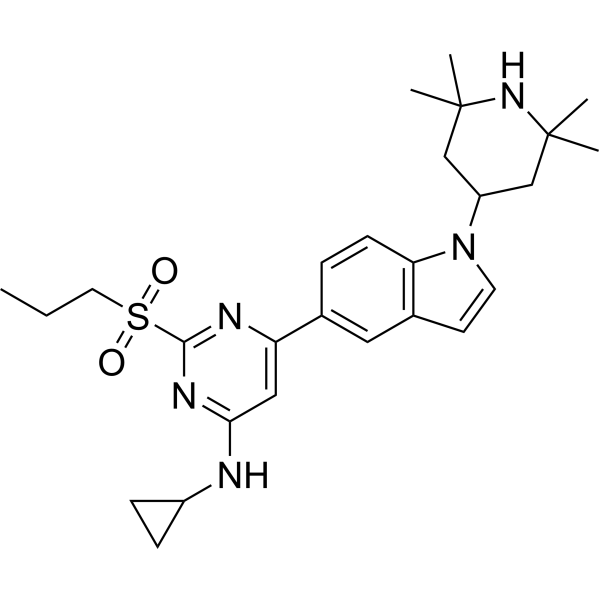 0 ImagesNVS-CECR2-1, a non-BET family Bromodomain (BRD) inhibitor, is a potent and selective cat eye syndrome chromosome region, candidate 2 (CECR2) inhibitor. NVS-CECR2-1 binds to CECR2 BRD with high affinity (IC50=47 nM; KD=80 nM). NVS-CECR2-1 exhibits cytotoxic activity and induces apoptosis against various cancer cells by targeting CECR2 as well as via CECR2-independent mechanism. NVS-CECR2-1 is a chemical probe.
-
CF53
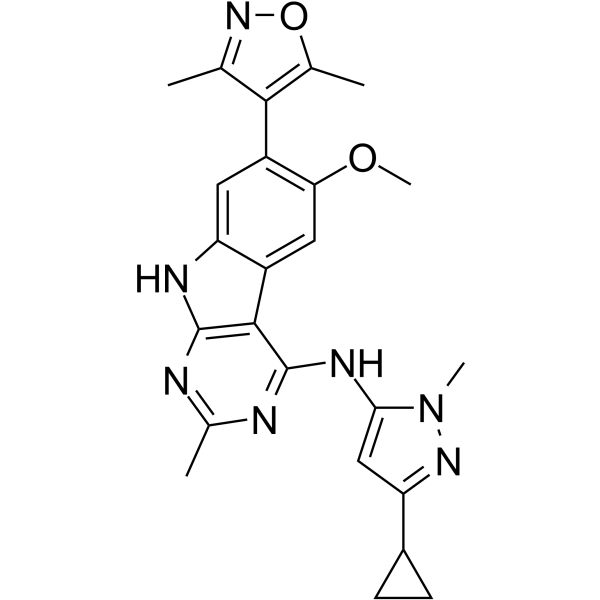 0 ImagesCF53 is a highly potent, selective and orally active inhibitor of BET protein, with a Ki of <1 nM, Kd of 2.2 nM and an IC50 of 2 nM for BRD4 BD1. CF53 binds to both the BD1 and BD2 domains of BRD2, BRD3, BRD4, and BRDT BET proteins with high affinities, very selective over non-BET bromodomain-containing proteins. CF53 shows potent anti-tumor activity both in vitro and in vivo.
-
TP-238
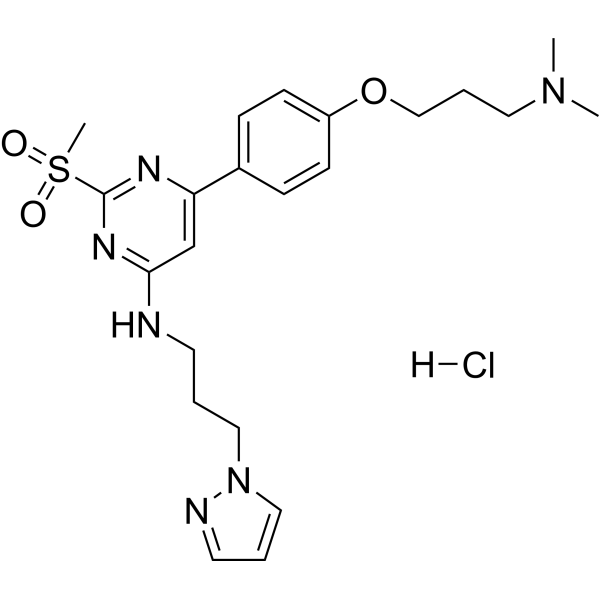
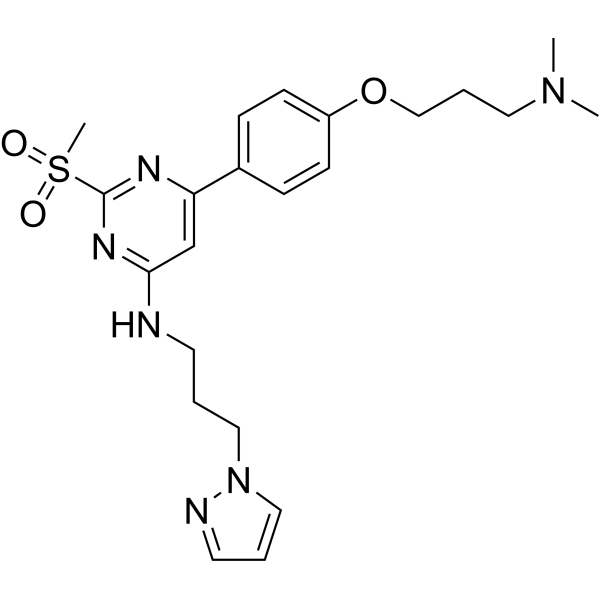 0 ImagesCat. No.: HY-114205CAS No.: 2415263-04-4



