



BRPF2
BRPF2 (also known as BRD1) is a bromodomain- and PHD finger-containing chromatin regulator that functions as a scaffold component of histone acetyltransferase complexes involved in epigenetic gene regulation[1]. Mechanistically, BRPF2 forms the HBO1-BRPF2 complex, which is responsible for global acetylation of histone H3 lysine 14 (H3K14ac), a chromatin modification associated with transcriptional regulation and chromatin accessibility[1]. Through control of H3K14 acetylation, BRPF2 participates in chromatin-dependent transcriptional programs that support cellular differentiation processes[1][2]. In experimental models, genetic disruption of the HBO1-BRPF2 complex markedly impairs fetal liver erythropoiesis, establishing a functional link between BRPF2-mediated histone acetylation and hematopoietic development[1]. BRPF2 is also associated with transcriptional activation of genes involved in erythrocyte differentiation, further supporting its role in lineage-specific gene regulation[2]. Compared with related BRPF family members, BRPF2 is distinguished by its documented requirement within the HBO1-BRPF2 complex for global H3K14 acetylation during erythropoietic development, whereas alternative BRPF-containing complexes have been linked to distinct biological contexts and acetyltransferase activities[1][3]. At the molecular level, the first PHD finger of BRPF2 recognizes unmodified histone H3, providing mechanistic insight into how BRPF2 contributes to chromatin targeting and regulation of MOZ/MORF-associated histone acetyltransferase activity[4].
References:
- [1]. Mishima Y, et al. The Hbo1-Brd1/Brpf2 complex is responsible for global acetylation of H3K14 and required for fetal liver erythropoiesis. Blood. 2011 Sep 1;118(9):2443-53. [Content Brief]
- [2]. Hermans A, et al. A 3D-Printed and Freely Available Device to Measure the Zebrafish Optokinetic Response Before and After Injury. Zebrafish. 2024 Apr;21(2):144-148. [Content Brief]
- [3]. Feng Y, et al. BRPF3-HBO1 regulates replication origin activation and histone H3K14 acetylation. EMBO J. 2016 Jan 18;35(2):176-92. [Content Brief]
- [4]. Yun S, et al. Trifluoroethanol increases the stability of Delta(5)-3-ketosteroid isomerase. 15N NMR relaxation studies. J Biol Chem. 2002 Jun 28;277(26):23414-9. [Content Brief]
All Product Categories
-
BRPF2 Related Products (5)
Related Products (5)

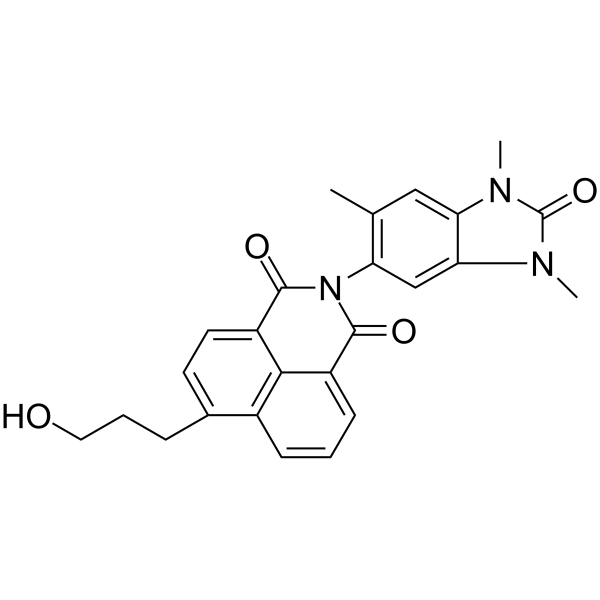
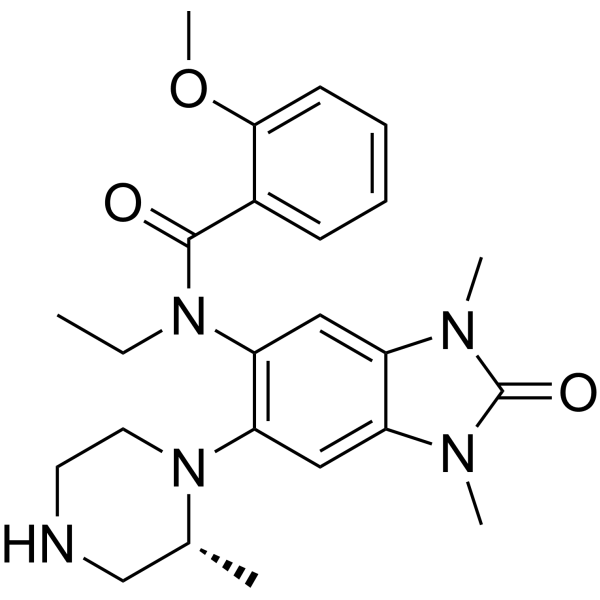
-
GSK9311 hydrochloride
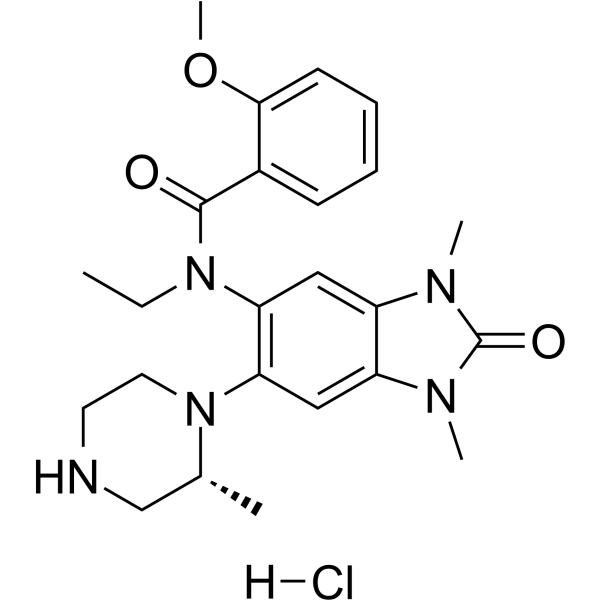 0 ImagesCat. No.: HY-100729ACAS No.: 2253733-09-2
-
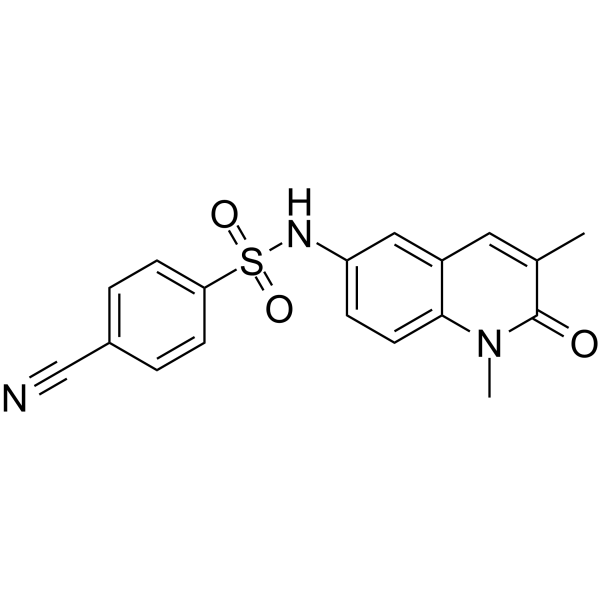
BRPF1B/TRIM24-IN-1
 0 ImagesCat. No.: HY-122626CAS No.: 1242907-48-7BRPF1B/TRIM24-IN-1 (compound 34) is a potent TRIM24/BRPF1/BRPF2 inhibitor, with IC50 values of 0.43, 0.34, 1.75 μM, respectively. BRPF1B/TRIM24-IN-1 binds the TRIM24 bromodomain with a KD of 222 nM and has a KD for the BRPF1 bromodomain of 137 nM and for BRD1 of 1130 nM.



