



BRD2
BRD2 is a BET-family epigenetic reader with tandem bromodomains that bind lysine-acetylated histones and transcription factors, recruit transcription factors and coactivators, and support RNA polymerase II-dependent transcriptional elongation[1]. Mechanistically, BET proteins including BRD2, BRD3, BRD4, and BRDT connect acetylated chromatin to gene-expression programs that regulate transcription, chromatin remodeling, DNA replication, and DNA damage repair[1]. In pancreatic β-cells, BET inhibition with JQ1 increased insulin secretion and insulin content, while specific inhibition of Brd2 increased fatty acid oxidation, showing a discrete metabolic role for BRD2 compared with other BET isoforms[2]. Compared with BRD4, BRD2 appears less dominant in several disease models: BRD4, not BRD2 or BRD3, increased after repeated cocaine exposure, and BRD4 was preferentially linked to cocaine-induced Bdnf expression[3]. In prostate cancer, BET proteins BRD2, BRD3, and BRD4 are stabilized by SPOP mutations, contributing to BET-inhibitor resistance, but BRD4 often carries the main disease-specific transcriptional signal[4]. For experimental applications, pan-BET inhibitors such as JQ1, I-BET, OTX015, and RVX-208 help probe BRD2-containing acetyl-lysine reader complexes, although their limited isoform selectivity requires paired genetic approaches for BRD2-specific interpretation[5].
References:
- [1]. Cheung KL, et al. The Functions of BET Proteins in Gene Transcription of Biology and Diseases. Front Mol Biosci. 2021 Sep 3;8:728777. [Content Brief]
- [2]. Deeney JT, et al. BET Bromodomain Proteins Brd2, Brd3 and Brd4 Selectively Regulate Metabolic Pathways in the Pancreatic β-Cell. PLoS One. 2016 Mar 23;11(3):e0151329. [Content Brief]
- [3]. Sartor GC, et al. Epigenetic Readers of Lysine Acetylation Regulate Cocaine-Induced Plasticity. J Neurosci. 2015 Nov 11;35(45):15062-72. [Content Brief]
- [4]. Dai X, et al. Prostate cancer-associated SPOP mutations confer resistance to BET inhibitors through stabilization of BRD4. Nat Med. 2017 Sep;23(9):1063-1071. [Content Brief]
- [5]. Lucas X, et al. Targeting the BET family for the treatment of leukemia. Epigenomics. 2014 Apr;6(2):153-5. [Content Brief]
-
BRD2 Related Products (71)
Related Products (71)

-
Antibodies (1)
-
ARV-825
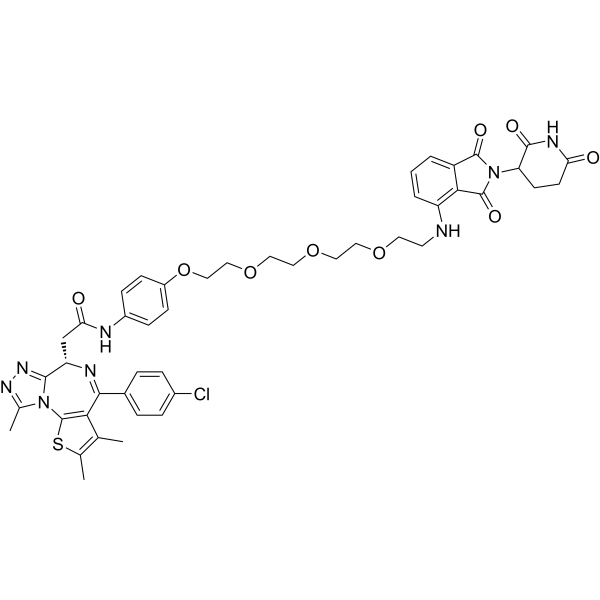 0 ImagesARV-825 is a BET protein PROTAC degrader that recruits cereblon, and it targets BRD2, BRD3, and BRD4 for degradation via the ubiquitin-proteasome pathway. ARV-825 downregulates c-MYC, PLK1, MYCN, CDK4/6, JAK2, pSTAT3/5, PIM1, and Bcl-xL, upregulates p21 and p27, and modulates H3K27Ac-mediated transcription, the G2/M checkpoint, the Wnt/β-catenin pathway, and amino acid transport pathways. ARV-825 induces G1 phase cell cycle arrest, caspase 3/PARP-mediated apoptosis, DNA damage, and reactive oxygen species (ROS) production, reduces mitochondrial respiration, and simultaneously inhibits cell proliferation, clonogenic growth, and cell migration. ARV-825 is used in research on gastric cancer, leukemia, neuroblastoma, and cholangiocarcinoma.
-
ARV-771
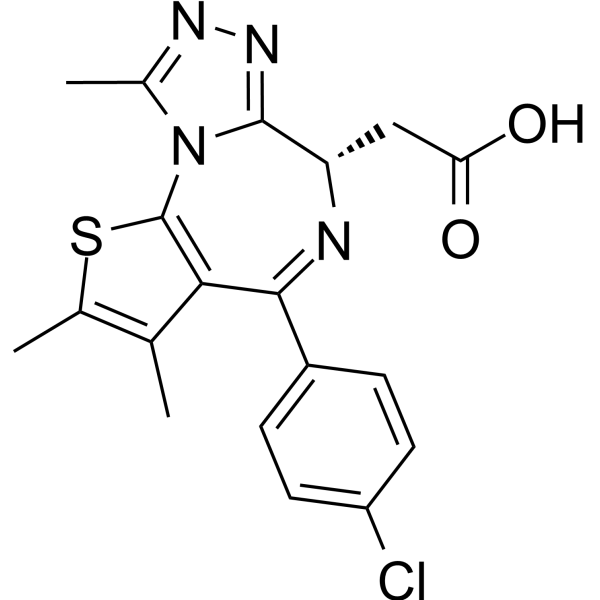
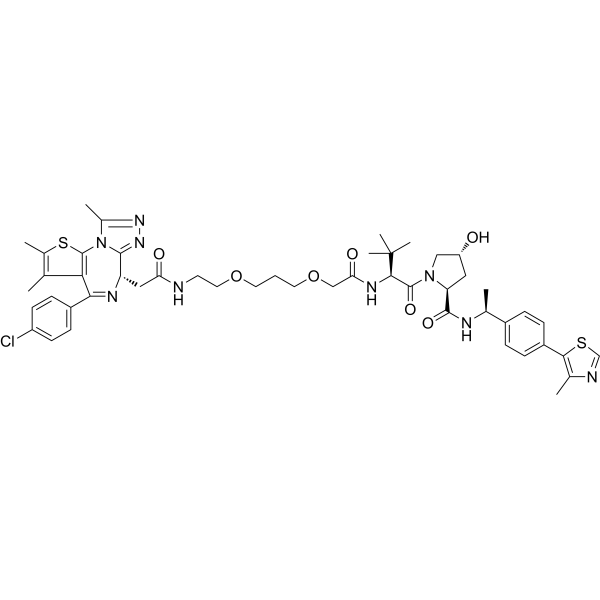 0 ImagesARV-771 is a BET PROTAC degrader, with Kd values of 34, 4.7, 8.3, 7.6, 9.6 and 7.6 nM against BRD2 (1), BRD2 (2), BRD3 (1), BRD3 (2), BRD4 (1) and BRD4 (2) , respectively. ARV-771 inhibits the transcription of AR/AR-v7 and its downstream target genes. By degrading BRD4 protein, ARV-771 enhances the sensitivity of prostate cancer cells to ferroptosis, suppresses cancer cell viability, and induces apoptosis. ARV-771 downregulates the levels of BRD4, c-MYC and AR-V7 in tumor tissues and inhibits tumor tissue growth. ARV-771 can be used in prostate cancer-related research.
-
ABBV-744
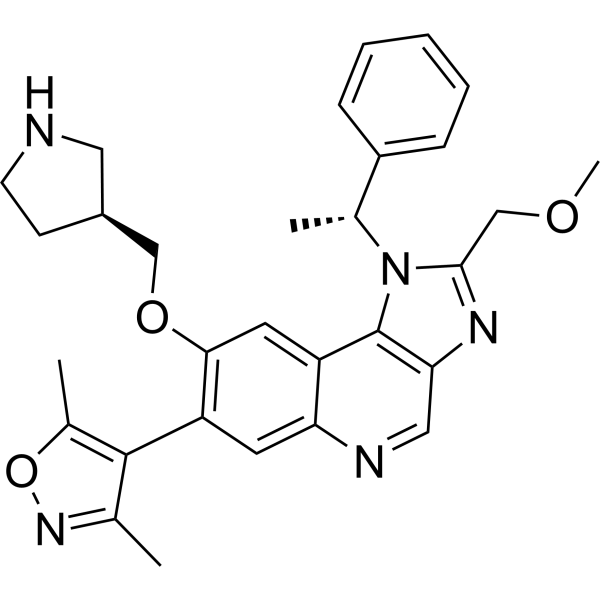
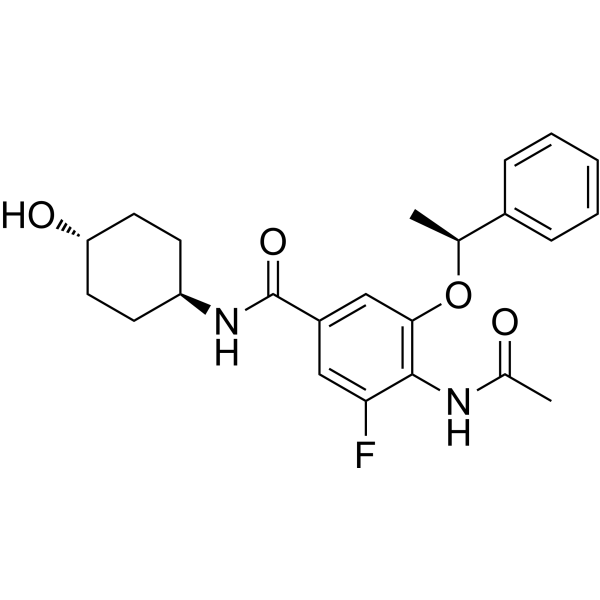
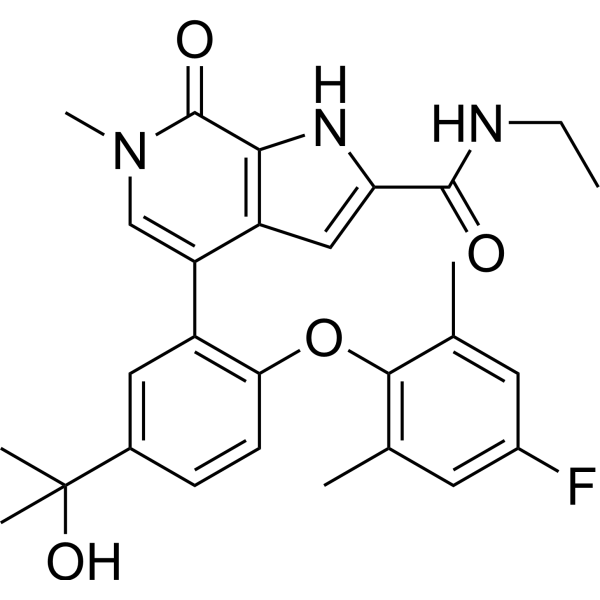 0 ImagesABBV-744 is a first-in-class, orally active and selective inhibitor of the BDII domain of BET family proteins with IC50 values ranging from 4 to 18 nM for BRD2, BRD3, BRD4 and BRDT. ABBV-744 is primarily metabolized by CYP3A4 with agent-like properties enable the investigation of its antitumor efficacy and tolerability.

-
QCA570
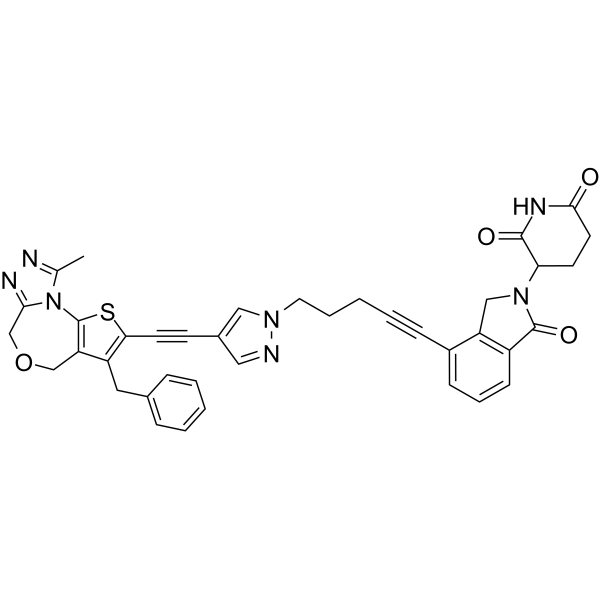 0 ImagesQCA570 is a pan-BET-BRD PROTAC degrader. QCA570 degrades BRD2/3/4 and BRDT via cereblon and the ubiquitin-proteasome pathway, inhibits the expression of c-MYC, EZH2 and Mcl-1, induces tumor cell apoptosis, cycle arrest and regression, and exerts a synergistic inhibitory effect on Osimertinib (HY-15772)-resistant EGFR-mutant non-small cell lung cancer. QCA570 can be used in the research of acute myeloid leukemia, acute lymphoblastic leukemia, bladder cancer and non-small cell lung cancer.
-
SIM1
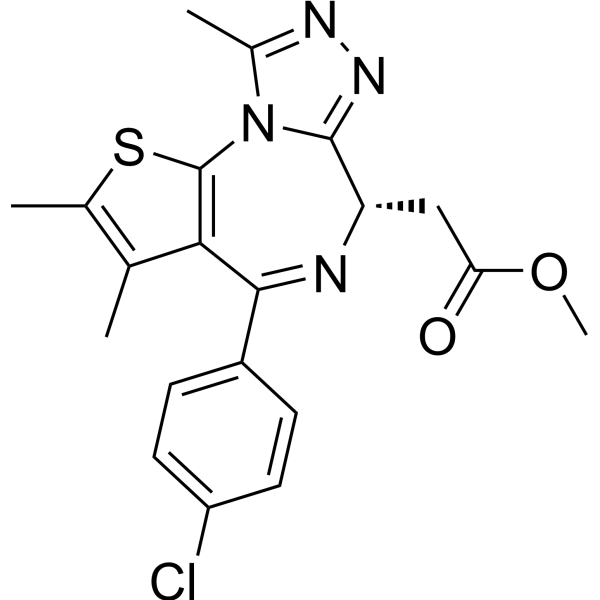
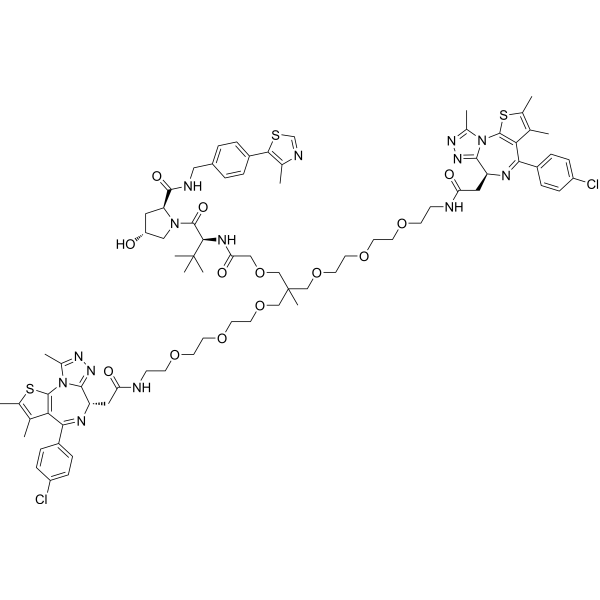 0 ImagesSIM1 is a potent von Hippel-Lindau (VHL)-based trivalent PROTAC capable of degradation for all BET family members, with preference for BRD2 degradation (IC50=1.1 nM; Kd=186 nM). SIM1 shows sustained anti-cancer activity.
-
IBG3
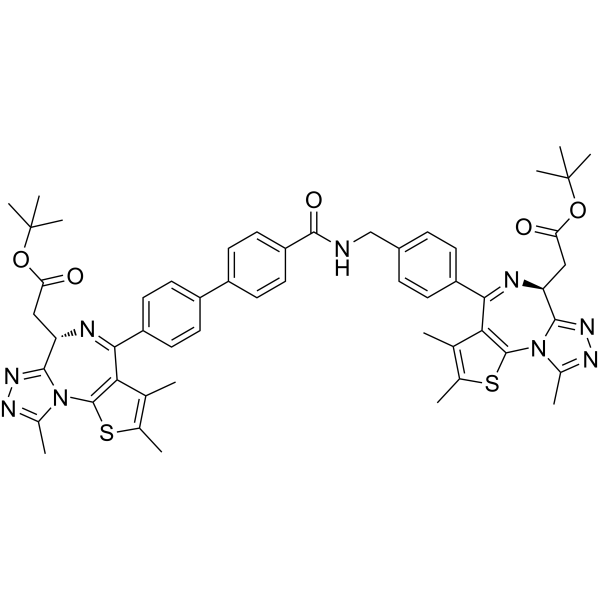 0 ImagesCat. No.: HY-160528Purity: 98.53%IBG3 is a bivalent molecular glue degrader targeting BRD2 and BRD4, with DC50 values of 8.6 pM and 6.7 pM, respectively. IBG3 exhibits selectivity for BRD2 and BRD4 over BRD3. By recruiting the DCAF16 E3 ligase and binding in cis to the tandem bromodomains of BRD2 and BRD4, IBG3 enhances BRD-DCAF16 binding affinity and promotes ubiquitination and proteasomal degradation, without degrading isolated bromodomains. Although IBG3 lacks degradation selectivity between PSMA-positive and PSMA-negative prostate cancer cells and demonstrates lower in vivo antitumor potency compared to the PSMA-targeting conjugate IBG-P3, it serves as a useful tool for prostate cancer research.
-
TMX1
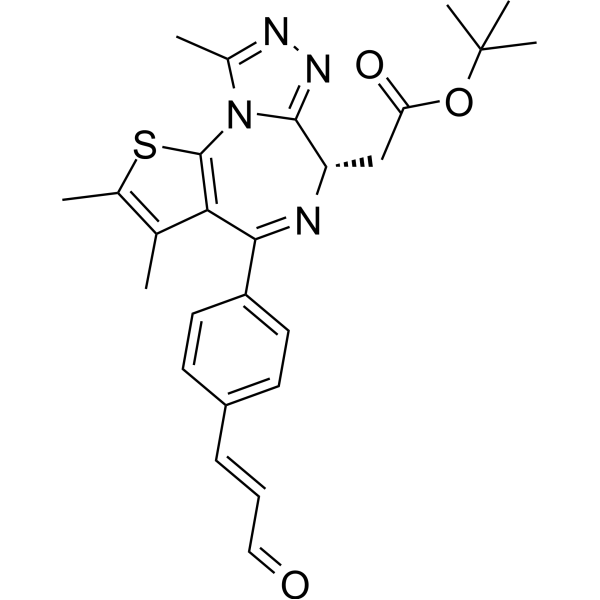 0 ImagesTMX1 is a covalent, selective BRD4 molecular glue degrader. TMX1 binds to the JQ1-binding site of BRD4BD2, forms covalent bonds with Cys58 of DCAF16 and Cys87 of GAK in a BRD4BD2-dependent template-assisted manner, stabilizes the BRD4-TMX1-DCAF16 ternary complex, and promotes the ubiquitination of BRD4 via the CRL4DCAF16 ubiquitin ligase complex. TMX1 induces selective degradation of BRD4, mild degradation of BRD2 and BRD3, as well as DCAF16-dependent cytotoxicity.
-
IBG1
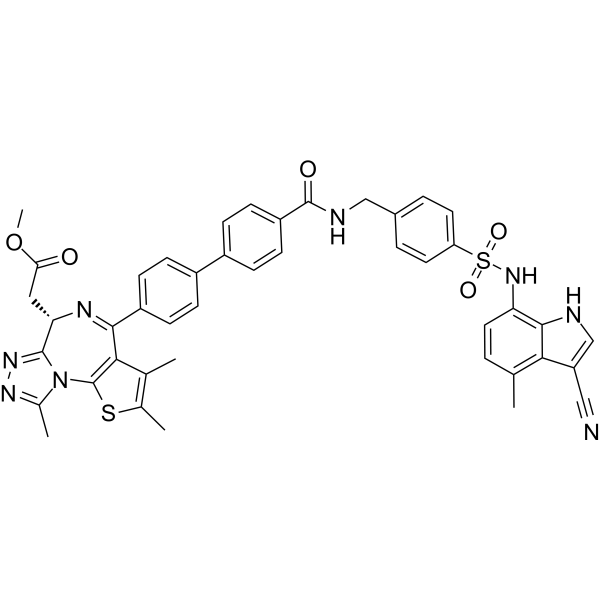 0 ImagesIBG1 is a bivalent molecular glue degrader targeting BRD2/BRD4, with IC50 values of 12.8 nM and 462 nM, respectively, and an EC50 of 44 nM. By binding to the adjacent BD1 and BD2 bromodomains of BRD2 and BRD4, IBG1 stabilizes the ternary complex formed with DCAF15, thereby driving CRL-mediated ubiquitination and proteasomal degradation. IBG1 induces cancer cell apoptosis and inhibits cancer cell growth in a DCAF15-dependent manner, and downregulates MYC expression through DCAF15-independent BET bromodomain inhibition. IBG1 can be used in research of various cancers including prostate cancer.
-
GSK973
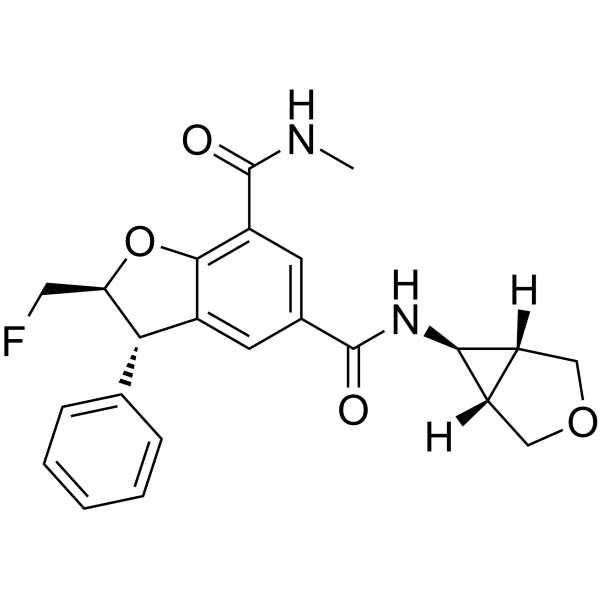 0 ImagesGSK973, a chemical probe, is a highly selective, orally bioavailable inhibitor of the BD2s (second bromodomains) of the BET family, with a pIC50 of 7.8 and a pKd of 8.7 for BRD4 BD2. GSK973 displays a 1600-fold selectivity for BRD4 BD2 over BRD4 BD1. GSK973 shows good potency against BRD2 BD2, BRD3 BD2, and BRDT BD2 (pIC50=7.4~7.8; pKd=8.3~8.5).
-
BETd-260
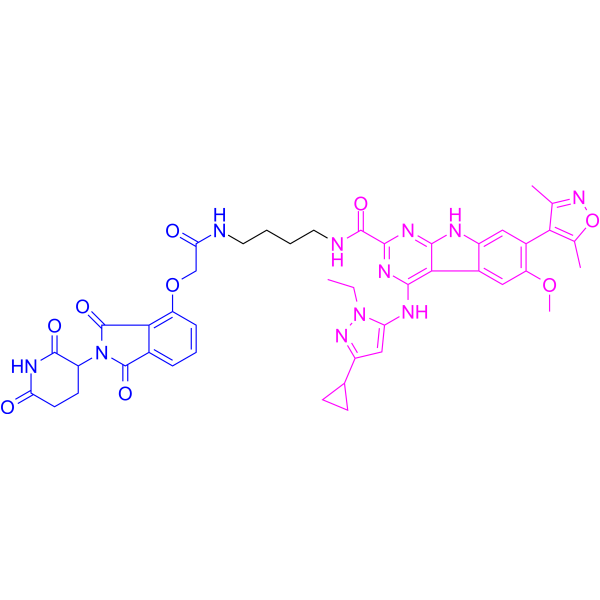
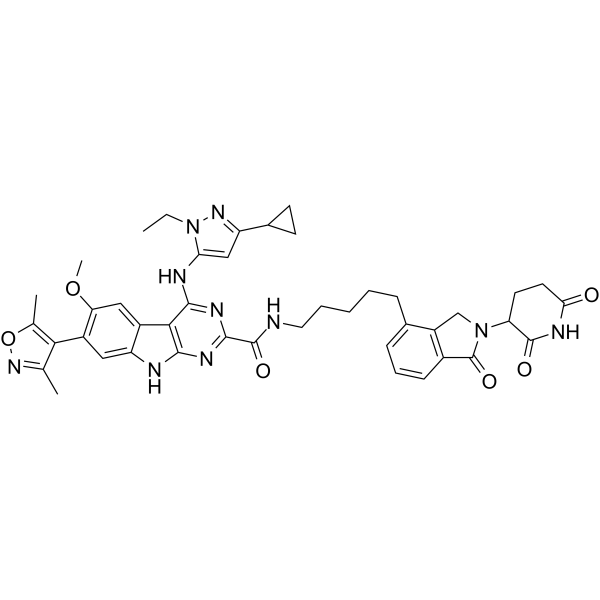 0 ImagesSynonyms: ZBC 260BETd-260 (ZBC 260) is a BET PROTAC degrader. BETd-260 recruits BRD2, BRD3, and BRD4 to the CUL4-RBX1-DDB1-CRBN E3 ubiquitin ligase complex, driving cereblon-, proteasome-, and NEDD8-activating enzyme-dependent ubiquitination and degradation, with a DC50 of approximately 30-100 pM in RS4;11 cells. BETd-260 induces cancer cell apoptosis via endogenous signaling pathways, regulates the expression of the Bcl-2 family, inhibits the oncogene c-Myc, and reduces cell viability. BETd-260 suppresses tumor growth in mouse xenograft models with good biosafety. BETd-260 can be used in research related to acute leukemia, hepatocellular carcinoma, osteosarcoma, and triple-negative breast cancer.
-
(S)-JQ-35
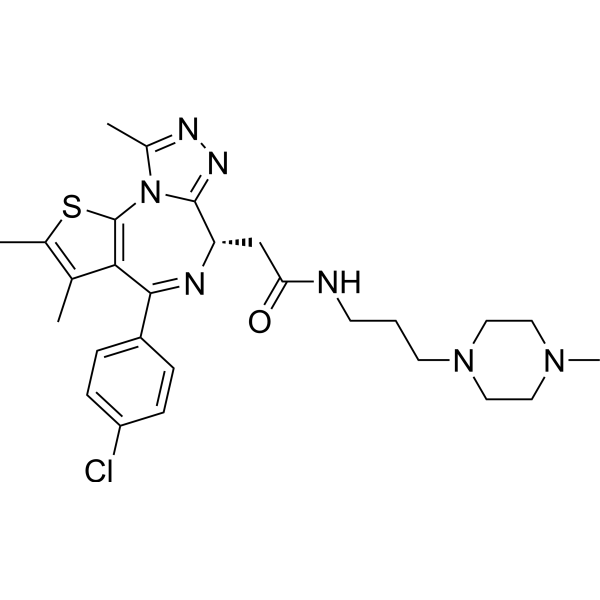 0 ImagesSynonyms: TEN-010(S)-JQ-35 (TEN-010) is an orally active, blood-brain barrier-permeable bromodomain inhibitor that selectively targets the bromodomain and extra-terminal domain (BET) protein family (BRD4, BRD3, BRD2 and BRDT). (S)-JQ-35 blocks the activation of Myc gene expression by BRD4, thereby inhibiting cancer cell proliferation and promoting cancer cell apoptosis. (S)-JQ-35 can be used in research related to NUT midline carcinoma and neuroblastoma.
-
HJB97
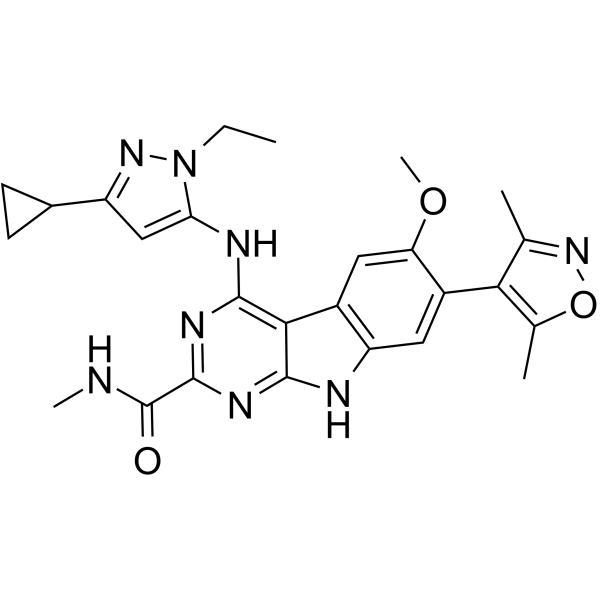 0 ImagesHJB97 is a high-affinity BET inhibitor with Ki values of 0.9 nM (BRD2 BD1), 0.27 nM (BRD2 BD2), 0.18 nM (BRD3 BD1), 0.21 nM (BRD3 BD2), 0.5 nM (BRD4 BD1), and 1.0 nM (BRD4 BD2). HJB97 can serve as a ligand for target protein (Ligands for Target Protein for PROTAC) for the development of PROTAC BET degraders with antitumor activity. HJB97 can be used for the synthesis of BETd-260 (HY-101519).
-
MZP-54
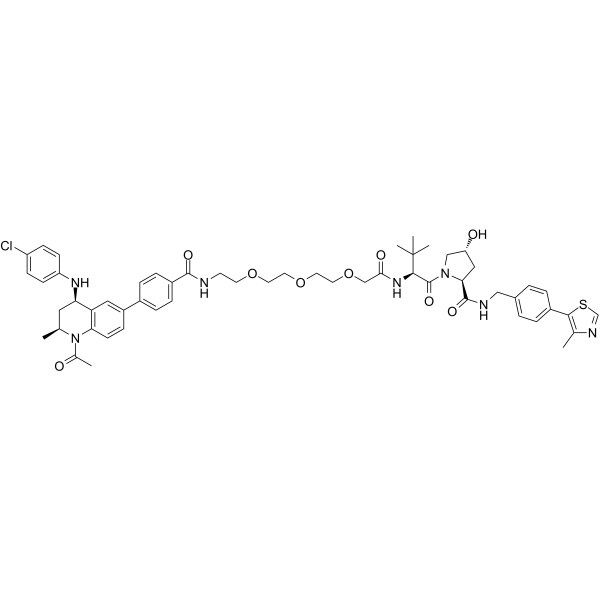 0 ImagesMZP-54 is a PROTAC degrader that selectively targets BRD3/BRD4, with a DC50 of < 0.05 μM in AML cells. MZP-54 recruits VHL to form a ternary complex, induces BRD3/BRD4 degradation via the ubiquitin-proteasome pathway, inhibits c-Myc expression, and exerts antiproliferative activity. MZP-54 can be used for the research of acute myeloid leukemia.
-
RVX-297
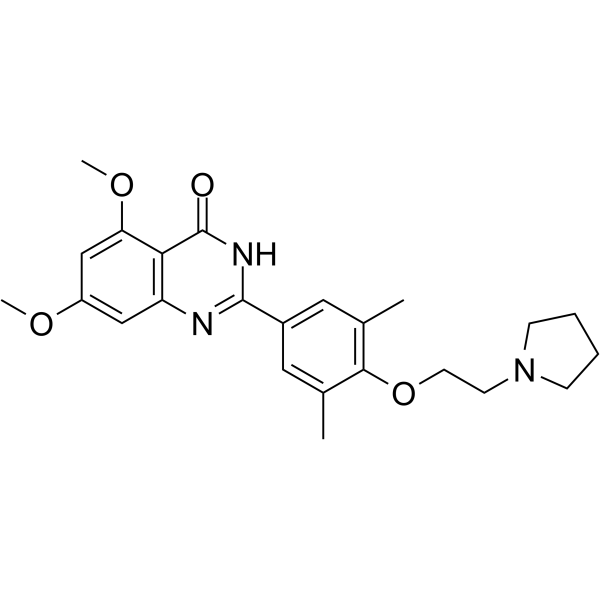 0 ImagesCat. No.: HY-114504CAS No.: 1044871-04-6RVX-297 is a potent, orally active BET bromodomain inhibitor with selectivity for BD2. RVX-297 shows IC50s of 0.08, 0.05, and 0.02 μM for BRD2(BD2), BRD3(BD2), and BRD4(BD2), respectively. RVX-297 suppresses inflammatory gene expression in multiple immune cell types. RVX-297 is effective in acute inflammation and autoimmunity models.




