




Topics
Target-related Cytokines
Cytokines are a class of small proteins secreted by immune cells and various tissue cells. By binding to specific receptors, they regulate immune responses, inflammation, tissue repair, and cell fate. Within the tumor microenvironment, dysregulated cytokine networks can either promote antitumor immunity or drive immunosuppression, chronic inflammation, and tumor progression, making cytokines important therapeutic targets in cancer immunotherapy. A variety of therapeutic strategies targeting cytokines or their receptors—including agonists, antagonists, neutralizing antibodies, and fusion proteins—are currently under clinical development and have demonstrated significant therapeutic potential in cancer, autoimmune, and inflammatory diseases[1,2].
Current cytokine-targeted drug development strategies mainly fall into three categories:
① Supplementing or enhancing immune-activating cytokines, such as IL-2, IL-12, and IFNs;
② Blocking pro-inflammatory or pro-tumorigenic cytokines, such as IL-6, TNF, IL-1β, and IL-23;
③ Engineering and targeted delivery of cytokines to improve pharmacokinetics, enhance therapeutic efficacy, and reduce systemic toxicity through approaches such as fusion proteins, PEGylation, antibody-mediated targeting, and local delivery.
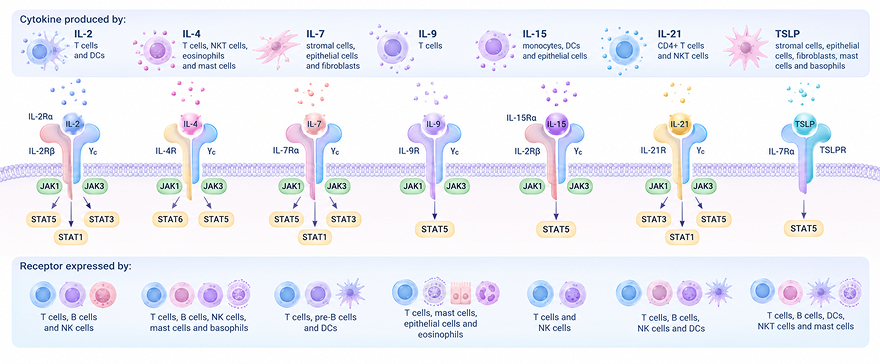
Figure 1. IL-2 family cytokines and their receptors[3].
IL-2 family cytokines are important immunoregulatory factors that control lymphocyte development, proliferation, and function. This family includes IL-2, IL-4, IL-7, IL-9, IL-15, and IL-21. Their receptors share the common γ chain (γc, CD132) as a signaling component and primarily regulate the differentiation, survival, and effector functions of T cells, B cells, and NK cells through the JAK-STAT pathway. These cytokines play critical roles in maintaining immune homeostasis and enhancing antitumor immunity[3].
In recent years, the IL-2 family has emerged as an important area of research in cancer immunotherapy and cell therapy. IL-2, one of the earliest cytokines used in cancer treatment, promotes the proliferation of effector T cells and NK cells. However, native IL-2 also activates regulatory T cells (Tregs) and is associated with substantial systemic toxicity. Consequently, engineered IL-2 variants, including IL-2 muteins, PEGylated IL-2, and fusion proteins, have become major areas of research and development[4,5,6]. IL-7 supports the survival of naïve and memory T cells and contributes to immune reconstitution[7,8]. IL-15 strongly promotes the expansion of NK cells and CD8⁺ T cells and has been widely investigated in cell therapy approaches such as CAR-T and CAR-NK therapies[9]. IL-21 enhances the cytotoxicity of CD8⁺ T cells and NK cells and may improve the tumor immune microenvironment. With advances in cytokine engineering and targeted delivery technologies, IL-2 family cytokines are increasingly becoming an important component of cancer immunotherapy[10,11].
The IL-6 family includes IL-6, IL-11, leukemia inhibitory factor (LIF), Oncostatin M (OSM), and other members. These cytokines commonly rely on gp130 (IL6ST) as a signaling receptor and exert their biological functions primarily through the JAK-STAT3, MAPK, and PI3K-AKT signaling pathways. They play important roles in inflammation, immune regulation, tissue repair, and cell differentiation[12,13]. The IL-6 family is closely associated with tumor development and progression. Among its members, persistent IL-6-mediated activation of STAT3 signaling promotes tumor cell proliferation, angiogenesis, immune evasion, and therapeutic resistance, making IL-6 one of the most extensively studied cytokine targets. IL-11 and LIF can also promote the development and progression of various cancers through gp130-STAT3 signaling, whereas OSM exhibits context-dependent pro-tumorigenic or antitumor effects in different cancers. Targeted intervention of signaling axes involving IL-6/IL-6R, LIF, and gp130, as well as their combination with immunotherapy, has become an important area of research in cancer treatment[14,15,16,17].
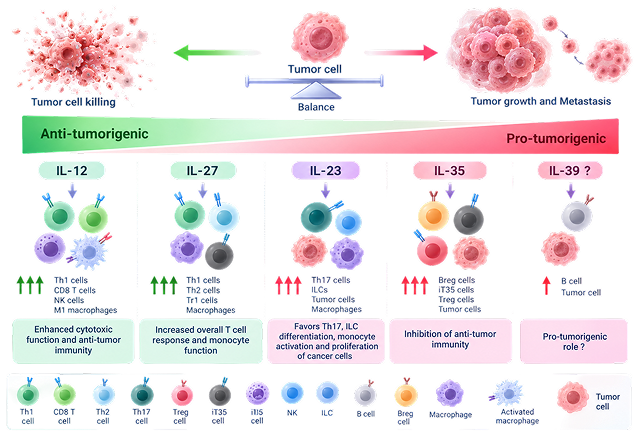
Figure 2. The role of IL-12 family cytokines in regulating effector immunity and immunosuppression during tumor development and progression[20].
The IL-12 family comprises heterodimeric cytokines including IL-12, IL-23, IL-27, IL-35, and IL-39, which play important roles in regulating both innate and adaptive immunity. IL-12 exhibits potent immune-activating and antitumor activities, but systemic administration can cause severe toxicity. Consequently, engineered delivery and localized expression have become major areas of research and development. IL-23 contributes to chronic inflammation and tumor development, and IL-23 blockade has emerged as an important immunotherapeutic strategy. IL-27 has both immune-activating and immunosuppressive functions, and its therapeutic potential remains under investigation. IL-35 primarily mediates immunosuppression and is closely associated with tumor immune evasion. Research on IL-39 remains at an early stage. Although its pro-inflammatory and pro-tumorigenic effects have been preliminarily reported, its biological functions and mechanisms of action in humans require further validation[18,19,20,21].
The IL-10 family includes IL-10, IL-19, IL-20, IL-22, IL-24, and IL-26, among others, and plays important roles in immune homeostasis and tissue repair. IL-10 has a well-established anti-inflammatory role; however, in cancer, it may both suppress chronic inflammation and contribute to immune evasion, resulting in context-dependent biological effects. IL-22 and IL-24 are involved in tissue repair, inflammatory regulation, and tumor-associated processes, and their signaling pathways and therapeutic potential continue to attract research interest[22].
The interferon (IFN) family is divided into three major types: Type I, Type II, and Type III interferons. Type I interferons (IFN-α/β) exhibit antiviral and antitumor activities and have been widely used in the treatment of cancers such as melanoma and renal cell carcinoma. Type II interferon (IFN-γ) enhances antigen presentation and activates T cells and NK cells, making it an important regulator of antitumor immunity. Type III interferons primarily act on epithelial tissues and participate in mucosal antiviral defense. Their relatively restricted receptor distribution may provide potential therapeutic advantages[23,24].
The TNF family is an important group of immunoregulatory cytokines that includes TNF-α, TRAIL, FasL, CD40L, BAFF, APRIL, RANKL, and other members. By binding to members of the TNF receptor (TNFR) superfamily, these cytokines activate signaling pathways including NF-κB, MAPK, and caspases, thereby regulating inflammation, apoptosis, immune cell activation, and tissue homeostasis. TNF family members can promote antitumor immunity but may also contribute to chronic inflammation and tumor immune evasion, making them important therapeutic targets in cancer and autoimmune diseases. Therapeutic agents and immunotherapeutic strategies targeting TNF-α, CD40L, TRAIL, and other TNF family members continue to advance[25]. (To explore more content on the TNF family, please visit the TNF family topic page.)
| Category | Cytokine | Research Areas / Applications | Related Functions |
|---|---|---|---|
| IL-2 Family | T Cell Research / Cell Therapy | Promotes T cell and NK cell proliferation and activation | |
| IL-7 | T Cell Research / Cell Therapy | Promotes T cell survival and expansion | |
| IL-15 | NK Cell Research / Cell Therapy | Promotes NK cell and CD8⁺ T cell proliferation and activation | |
| IL-21 | T/NK Cell Research | Enhances T/NK cell effector functions | |
| IL-6 Family | IL-6 | Inflammation / Cancer / JAK-STAT3 | Regulates inflammatory responses and activates STAT3 signaling |
| IL-11 | Cancer / Tissue Repair | Promotes cell proliferation and tissue repair | |
| IL-12 Family | IL-12 | CAR-T / Cancer Immunology | Activates T/NK cells and enhances antitumor immunity |
| IL-23 | Breast Cancer / Colorectal Cancer | Involved in the regulation of inflammation and tumor progression | |
| IL-27 | Prostate Cancer / Pancreatic Cancer | Enhances NK cell activation and promotes tumor cell death | |
| IL-35 | Colon Cancer / NSCLC / Melanoma | Involved in immunosuppression and regulation of the tumor microenvironment | |
| IL-39 | Pancreatic Cancer | Activates STAT1/STAT3 signaling and regulates tumor cell proliferation | |
| IL-10 Family | IL-10 | Inflammation / Immune Regulation / Cancer | Suppresses inflammatory responses and regulates immune tolerance |
| IFN Family | IFN-α/β | Viral Infection / Cancer / Immune Regulation | Mediates antiviral responses and regulates immunity |
| IFN-γ | Cancer / Infection / Immune Regulation | Activates macrophages and enhances Th1-type immunity | |
| IFN-λ | Viral Infection / Mucosal Immunity | Mediates antiviral and mucosal immune responses | |
| TNF Family | TNF | Inflammation / Autoimmune Diseases / Cancer | Mediates inflammation, immune activation, and apoptosis |
| RANKL | Bone Metabolism / Immunology | Regulates osteoclast differentiation and bone resorption | |
| BAFF | B Cells / Autoimmune Diseases | Promotes B cell survival, differentiation, and antibody production |
 LinkedIn
 Researchgate
 Instagram
 X
X Facebook
 WhatsApp
 Reddit
 Mail
MailReferences
[1]. Zhong Nan Da Xue Xue Bao Yi Xue Ban. 2023 Dec 28;48(12):1899-1913.
[2]. Nat Rev Clin Oncol. 2022 Apr;19(4):237-253.
[3]. Nat Rev Immunol. 2009 Jul;9(7):480-90.
[4]. Nat Commun. 2026 Jun 22;17(1):5314.
[5]. J Clin Invest. 2024 Mar 1;134(5):e173107. [Content Brief]
[6]. Sci Immunol. 2020 Aug 14;5(50):eaba5264.
[7]. Int J Mol Sci. 2022 Sep 8;23(18):10412.
[8]. Front Immunol. 2021 Dec 10;12:680442.
[9]. Annu Rev Immunol. 1999;17:19-49.
[10]. Cytokine. 2024 Jan;173:156437.
[11]. Cells. 2023 Sep 14;12(18):2276.
[12]. Cytokine Growth Factor Rev. 2012 Jun;23(3):85-97.
[13]. Semin Immunol. 2014 Feb;26(1):13-9
[14]. Cold Spring Harb Perspect Biol. 2018 Feb 1;10(2):a028415. [Content Brief]
[15]. Exerc Immunol Rev. 2010;16:77-85.
[16]. Nat Rev Immunol. 2018 Dec;18(12):773-789. [Content Brief]
[17]. J Clin Invest. 2011 Sep;121(9):3375-83.
[18]. Nat Nanotechnol. 2024 Apr;19(4):565-575.
[19]. Asian Pac J Cancer Prev. 2025 Sep 1;26(9):3299-3307.
[20]. Cancers (Basel). 2021 Jan 6;13(2):167.
[21]. Front Immunol. 2020 Oct 15;11:575597. [Content Brief]
[22]. Annu Rev Immunol. 2011;29:71-109.
[23]. Signal Transduct Target Ther. 2024 Oct 9;9(1):282.
