



Psoriasis
-
Psoriasis (104)

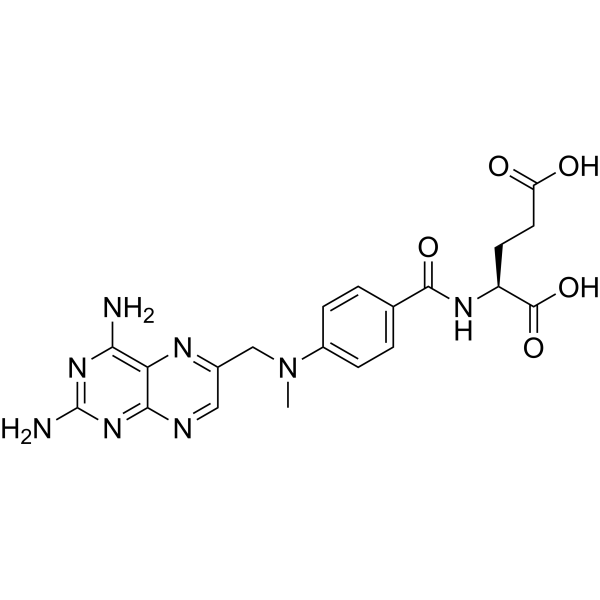
- Formula: C20H22N8O5
- Molecular Weight: 454.44
Methotrexate (Amethopterin; CL14377; WR19039) is an orally active antifolate (Antifolate). Methotrexate inhibits dihydrofolate reductase (DHFR), blocks tetrahydrofolate production, suppresses purine/pyrimidine synthesis and transmethylation, and causes intracellular accumulation of AICAR. Methotrexate promotes extracellular adenosine release, regulates the cytokine network, and inhibits the alarmin function of HMGB1. Methotrexate induces apoptosis and cytotoxicity, upregulates the expression of iNOS and COX-2, suppresses hippocampal neurogenesis, and induces pulmonary fibrosis. Methotrexate is used in the research of various immune and inflammation-related diseases such as arthritis, psoriasis, systemic lupus erythematosus, as well as pulmonary fibrosis and breast cancer.

- Formula: C172H265N43O51
- Molecular Weight: 3751.20
Liraglutide is a glucagon-like peptide-1 (GLP-1) receptor agonist used clinically to treat type 2 diabetes mellitus.
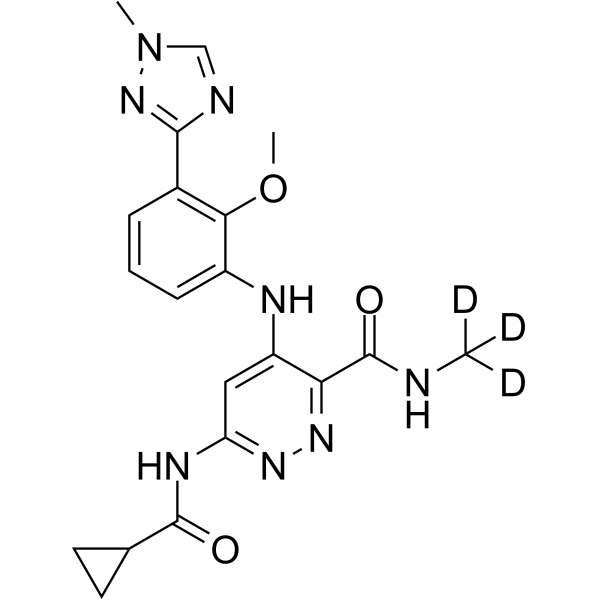
- Formula: C20H19D3N8O3
- Molecular Weight: 425.46
Deucravacitinib (BMS-986165) is an orally active allosteric inhibitor of tyrosine kinase 2 (TYK2), with an IC50 of 0.2 nM and a Ki of 0.02 nM against the JH2 domain of TYK2, and it exhibits selectivity over other JAK subtypes and most of the kinome. Deucravacitinib blocks IL-23, IL-12, p-STAT1/3 and Type I IFN signaling, and inhibits Th17/Th1-mediated psoriasis inflammation. Deucravacitinib can be used in research related to moderate-to-severe plaque psoriasis, inflammatory bowel disease and systemic lupus erythematosus.
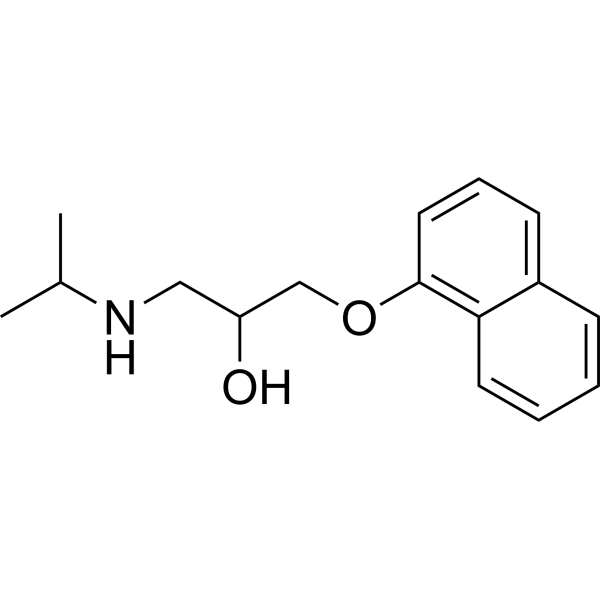
- Formula: C16H21NO2
- Molecular Weight: 259.34
Propranolol is a nonselective and BBB-permeable β-adrenergic receptor (βAR) antagonist, has high affinity for the β1AR and β2AR with Ki values of 1.8 nM and 0.8 nM, respectively. Propranolol inhibits [3H]-DHA binding to rat brain membrane preparation with an IC50 of 12 nM. Propranolol is used for the study of hypertension, pheochromocytoma, myocardial infarction, cardiac arrhythmias, angina pectoris, and hypertrophic cardiomyopathy.
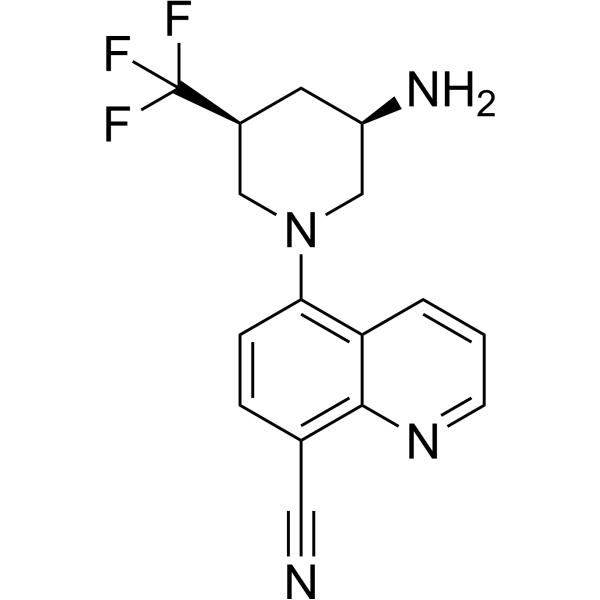
- Formula: C16H15F3N4
- Molecular Weight: 320.31
Enpatoran (M5049) is an orally active and selective TLR7/8 antagonist. Enpatoran inhibits the activation of the downstream type I interferon pathway. Enpatoran is used in studies of cutaneous lupus erythematosus, systemic lupus erythematosus with cutaneous manifestations, and psoriasis.
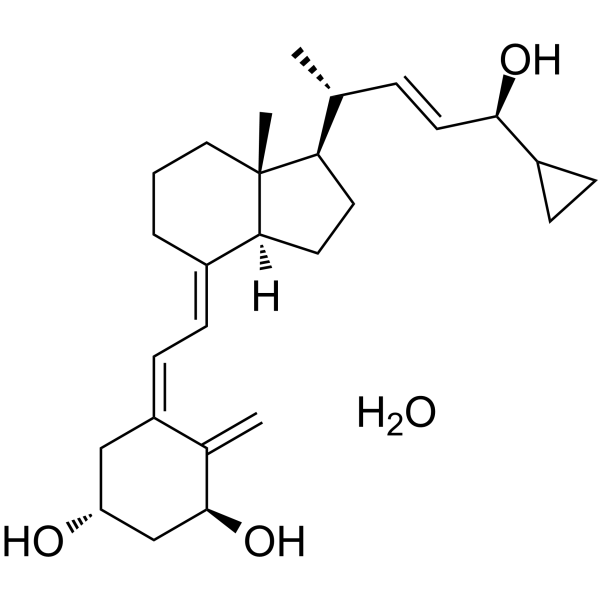
- Formula: C27H42O4
- Molecular Weight: 430.62
Calcipotriol monohydrate is a synthetic VitD3 analogue with a high affinity for the vitamin D receptor.
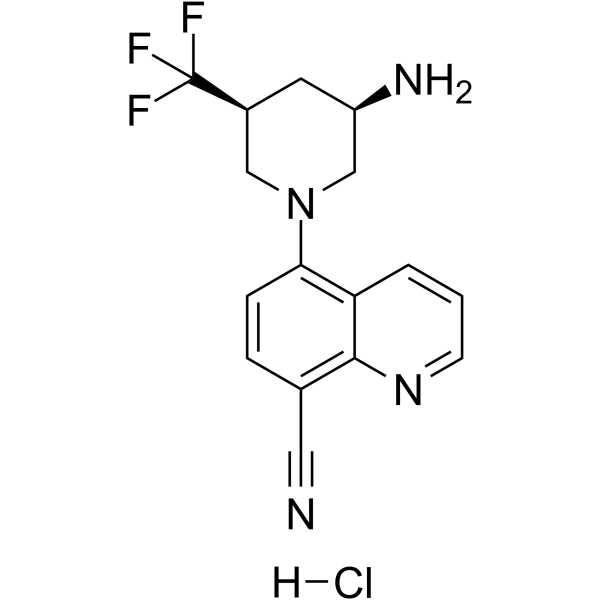
- Formula: C16H16ClF3N4
- Molecular Weight: 356.77
Enpatoran hydrochloride (M5049 hydrochloride) is an orally active and selective TLR7/8 antagonist. Enpatoran hydrochloride inhibits the activation of the downstream type I interferon pathway. Enpatoran hydrochloride is used in studies of cutaneous lupus erythematosus, systemic lupus erythematosus with cutaneous manifestations, and psoriasis.

- Molecular Weight: 144.44 kDa

- Molecular Weight: 144.06 kDa
Brodalumab (AMG 827) is a human anti-interleukin-17-receptor IgG2 monoclonal antibody that can be used for the research of moderate-to-severe plaque psoriasis and rheumatoid arthritis.

- Molecular Weight: 147.24 kDa
Bimekizumab (Anti-Human IL17A/IL-17F Recombinant Antibody) is a humanised monoclonal antibody, can selectively neutralises IL-17A and IL-17F. Both of them are pro-osteogenic with respect to human periosteum-derived cell (hPDC) differentiation. Thus Bimekizumab blocks the inflammation-driven osteogenic differentiation.

- Molecular Weight: 145.63 kDa

- Molecular Weight: 147.82 kDa
Secukinumab (AIN457) is a high affinity, human monoclonal antibody targeted against interleukin (IL)-17A. Secukinumab is the first-in-class anti-IL-17 agent used for the research of plaque psoriasis, ankylosing spondylitis and psoriatic arthritis.

- Molecular Weight: 145.92 kDa
Risankizumab (BI 655066) is a humanised IgG monoclonal antibody, targeting IL-23 p19 subunit (Kd <10 pM) and inhibiting IL-17 production induced by human IL-23 in mouse splenocytes (IC50 = 2 pM). Risankizumab can be used to research immunological and inflammatory disorders such as psoriasis vulgaris, psoriatic arthritis, generalized pustular psoriasis and erythrodermic psoriasis.

- Molecular Weight: 144.8 kDa
Guselkumab is a recombinant human IgG1 monoclonal antibody against the IL-23p19 subunit. Guselkumab binds to human and cynomolgus monkey IL-23 with Kd values of 3.3 and 1.9 pmol/L, respectively. Guselkumab inhibits production of cytokines lying downstream of the IL-23 signaling pathway and can be used for psoriatic arthritis research.
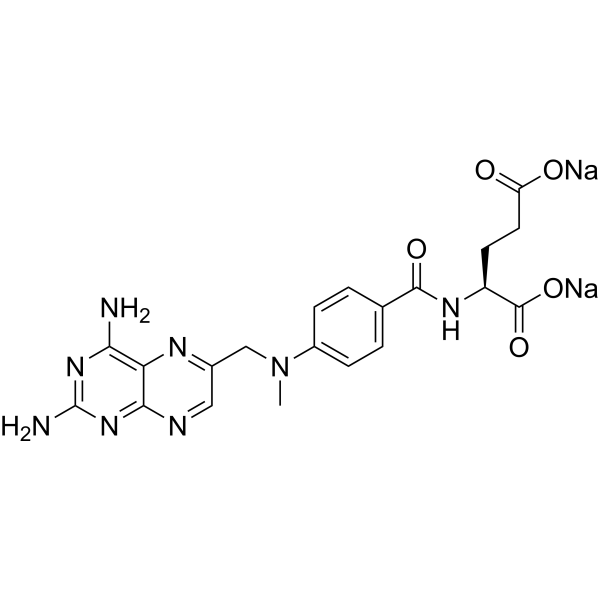
- Formula: C20H20N8Na2O5
- Molecular Weight: 498.40
Methotrexate disodium (Amethopterin disodium; CL14377 disodium; WR19039 disodium) is an orally active antifolate (Antifolate). Methotrexate disodium inhibits dihydrofolate reductase (DHFR), blocks tetrahydrofolate production, suppresses purine/pyrimidine synthesis and transmethylation, and causes intracellular accumulation of AICAR. Methotrexate disodium promotes extracellular adenosine release, regulates the cytokine network, and inhibits the alarmin function of HMGB1. Methotrexate disodium induces apoptosis and cytotoxicity, upregulates the expression of iNOS and COX-2, suppresses hippocampal neurogenesis, and induces pulmonary fibrosis. Methotrexate disodium is used in the research of various immune and inflammation-related diseases such as arthritis, psoriasis, systemic lupus erythematosus, as well as pulmonary fibrosis and breast cancer.

- Molecular Weight: 145.042 kDa
Vixarelimab (KPL-716) is a human anti-oncostatin M (OSM) receptor β subunit monoclonal antibody. Vixarelimab inhibits IL-31 and OSM signalling. Vixarelimab can be used in studies of inflammatory skin diseases such as atopic dermatitis and itchy nodular rash.

- Formula: C20H23NO4
- Molecular Weight: 341.40
Naltrexone is an orally active, long-acting opioid receptor (opioid receptor) antagonist. Naltrexone blocks the euphoric effects of exogenous opioids and reduces alcohol craving by blocking opioid receptors (μ, κ, and δ) as well as opioid growth factor receptors. Low doses of Naltrexone are used to relieve chronic pain, treat inflammatory diseases and inhibit tumor growth, while high doses or continuous administration exert pro-inflammatory or pro-proliferative effects. Naltrexone relieves intractable pruritus caused by psoriasis, atopic dermatitis and other conditions, and its combination with Bupropion (HY-B0403) inhibits food craving, thereby reducing body weight.
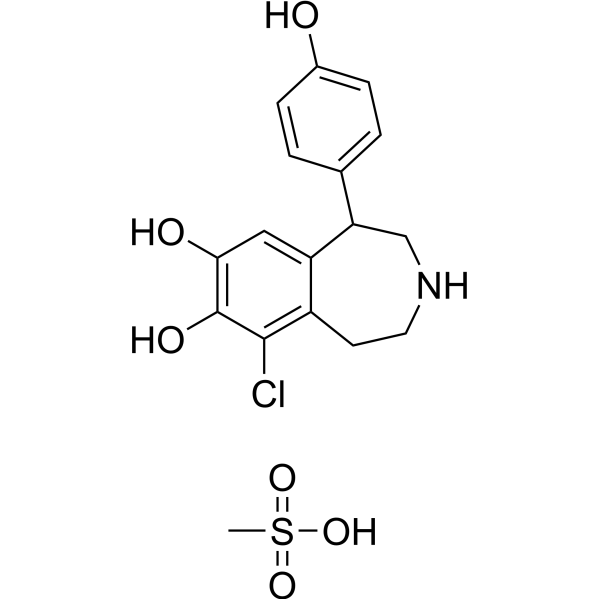
- Formula: C17H20ClNO6S
- Molecular Weight: 401.86
Fenoldopam (SKF-82526) mesylate is a selective dopamine D1 receptor agonist. Fenoldopam mesylate binds to rat D1B dopamine receptors (Kd = 11 nM) and human D1A receptors (Kd = 17 nM) in COS-7 cell membranes expressing the cloned receptors. Fenoldopam mesylate modulates dopamine receptor expression, induces vasorelaxation in vascular tissues, reverses glomerular hyperfiltration in rat models, increases intracellular cAMP levels, promotes DARPP-32 phosphorylation in small cell lung cancer (SCLC) cells, inhibits cytokine secretion, and downregulates T cell activation markers in activated human T cells. Fenoldopam mesylate can be used for research on hypertension, acute kidney injury, psoriasis, and small cell lung cancer.
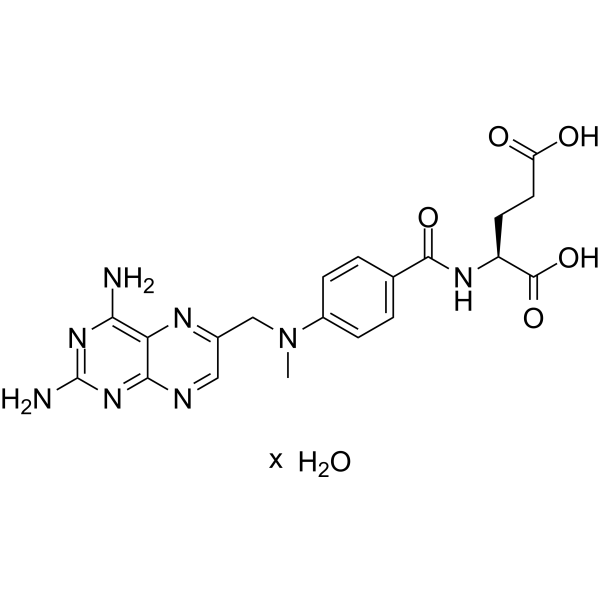
- Formula: C20H22N8O5.xH2O
Methotrexate hydrate (Amethopterin hydrate; CL14377 hydrate; WR19039 hydrate) is an orally active antifolate (Antifolate). Methotrexate hydrate inhibits dihydrofolate reductase (DHFR), blocks tetrahydrofolate production, suppresses purine/pyrimidine synthesis and transmethylation, and causes intracellular accumulation of AICAR. Methotrexate hydrate promotes extracellular adenosine release, regulates the cytokine network, and inhibits the alarmin function of HMGB1. Methotrexate hydrate induces apoptosis and cytotoxicity, upregulates the expression of iNOS and COX-2, suppresses hippocampal neurogenesis, and induces pulmonary fibrosis. Methotrexate hydrate is used in the research of various immune and inflammation-related diseases such as arthritis, psoriasis, systemic lupus erythematosus, as well as pulmonary fibrosis and breast cancer.
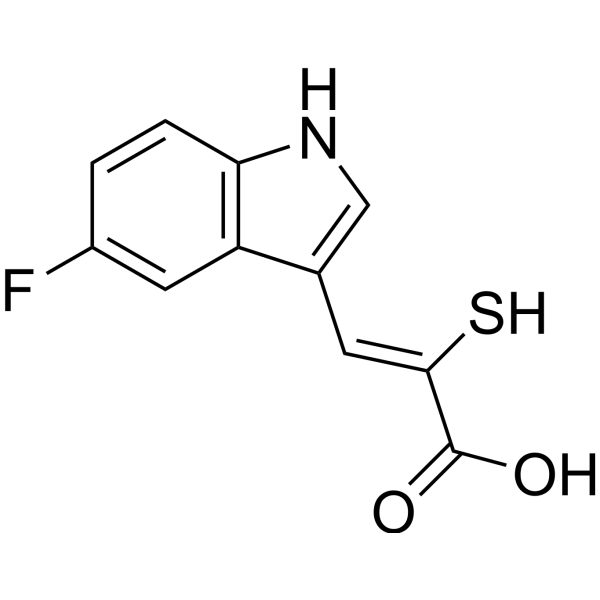
- Formula: C11H8FNO2S
- Molecular Weight: 237.25
PD 151746 is a selective calpain-1 inhibitor with an IC50 of 260 nM. PD 151746 binds μ-calpain Ca2+-binding sites, and shows selectivity over cathepsin B, papain, trypsin, thermolysin, and basal calcineurin. PD 151746 reduces Oxidized low-density lipoprotein (oxLDL)-induced cytotoxicity, apoptotic DNA fragmentation, and blocks IL-1α maturation. PD 151746 can be used for the research of atherosclerosis and psoriasis.



