



PDE11
PDE11A (phosphodiesterase 11A) is a dual-specificity cyclic nucleotide phosphodiesterase that hydrolyzes both cAMP and cGMP, thereby regulating second-messenger signaling and controlling the amplitude of downstream PKA- and cGMP-dependent pathways[1][2]. PDE11A participates in cellular signaling networks that govern endocrine function, metabolism, and tissue-specific physiological responses through modulation of intracellular cyclic nucleotide turnover[1][3]. Mechanistically, PDE11A contributes to the regulation of cAMP/cGMP signaling cascades, which influence transcriptional programs and cellular homeostasis across multiple organs[3][4]. In disease contexts, genetic defects and loss-of-function variants in PDE11A have been associated with adrenocortical disorders, including primary pigmented nodular adrenocortical disease, isolated micronodular adrenocortical disease, adrenocortical hyperplasia, and Cushing syndrome-related phenotypes, supporting a role for disrupted cyclic nucleotide signaling in adrenal tumorigenesis[1][3][5]. Experimental and pathological studies further demonstrate broad tissue expression of PDE11A, with particularly high expression reported in the prostate and detectable expression in adrenal, testicular, renal, hepatic, pancreatic, pituitary, and skeletal muscle tissues[3][5]. Compared with related phosphodiesterase isoforms, PDE11A displays distinct biochemical properties, limited sequence similarity to other PDE families, and four splice variants with tissue-specific expression patterns, highlighting unique regulatory functions that cannot be directly inferred from other dual-substrate PDEs[2][3][6]. For experimental applications, PDE11A-selective inhibitors such as BC11-38 have been developed as research tools to investigate PDE11A-dependent signaling and evaluate its potential as a therapeutic target in endocrine and neurobiological disease models[6][8].
References:
- [1]. PDE11 gene information from NCBI.
- [2]. Fawcett L, et al. Molecular cloning and characterization of a distinct human phosphodiesterase gene family: PDE11A. Proc Natl Acad Sci U S A. 2000 Mar 28;97(7):3702-7. [Content Brief]
- [3]. Kong G, et al. Functional characteristics and research trends of PDE11A in human diseases (Review). Mol Med Rep. 2022 Oct;26(4):298. [Content Brief]
- [4]. Kong G, et al. Functional characteristics and research trends of PDE11A in human diseases (Review). Mol Med Rep. 2022;26(4):298. [Content Brief]
- [5]. D'Andrea MR, et al. Expression of PDE11A in normal and malignant human tissues. J Histochem Cytochem. 2005 Jul;53(7):895-903. [Content Brief]
- [6]. Kelly MP. A Role for Phosphodiesterase 11A (PDE11A) in the Formation of Social Memories and the Stabilization of Mood. Adv Neurobiol. 2017;17:201-230. doi: 10.1007/978-3-319-58811-7_8. PMID: 28956334; PMCID: PMC5652326. et al. A Role for Phosphodiesterase 11A (PDE11A) in the Formation of Social Memories and the Stabilization of Mood. Adv Neurobiol. 2017;17:201-230. [Content Brief]
All Product Categories
-
PDE11 Related Products (13)
Related Products (13)

- 1
-
PF-05180999
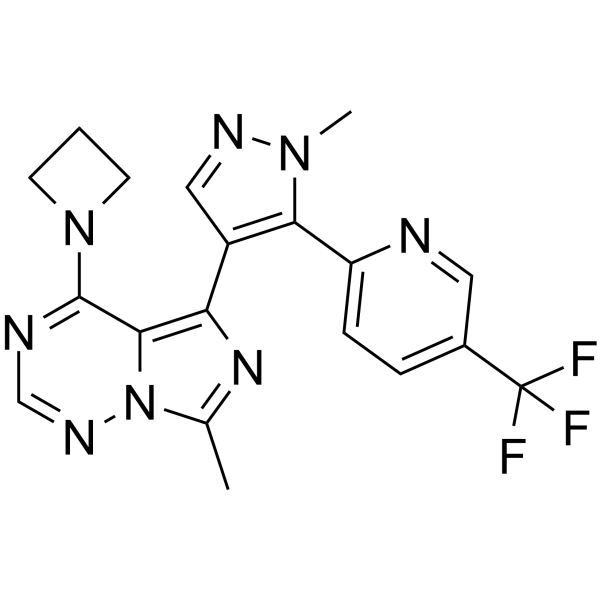 0 ImagesSynonyms: PF-999PF-05180999 (PF-999) is a phosphodiesterase 2A (PDE2A) inhibitor, with an IC50 of 1.6 nM.
-
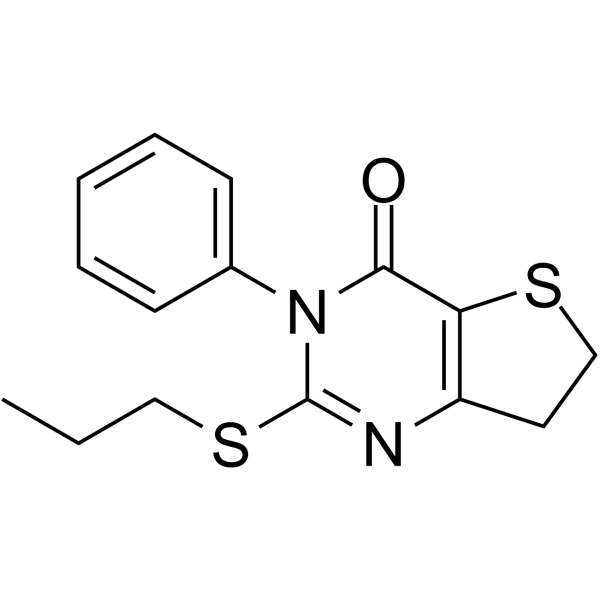
PF-04822163
 0 ImagesCat. No.: HY-120741CAS No.: 1798334-07-2PF-04822163 is an orally active, selective, and blood-brain barrier permeable PDE1 inhibitor with IC50 values of 2 nM, 2.4 nM, and 7 nM for PDE1A, PDE1B, and PDE1C respectively. PF-04822163 can be used in the research of attention deficit hyperactivity disorder or Parkinson's disease.
-
TPN729MA
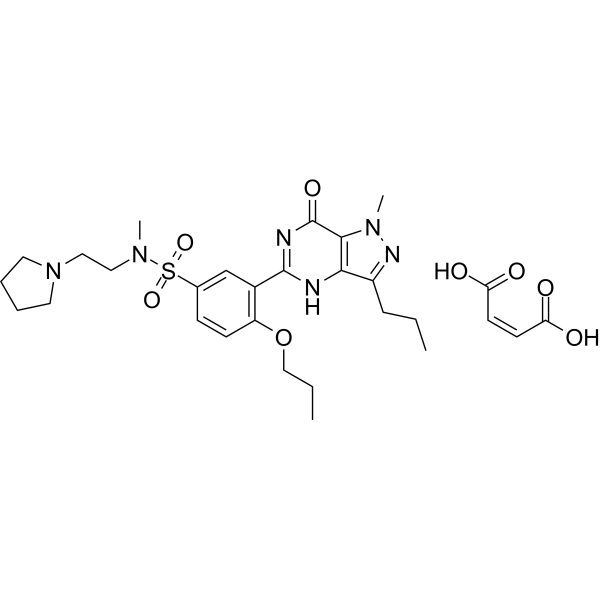 0 ImagesSynonyms: TPN729 maleateTPN729MA (TPN729 maleate) is a selective phosphodiesterase type 5 (PDE5) inhibitor with an IC50 value of 2.28 nM. TPN729MA affects erectile function and it can be used for the research of erectile dysfunction.
-
TPN729
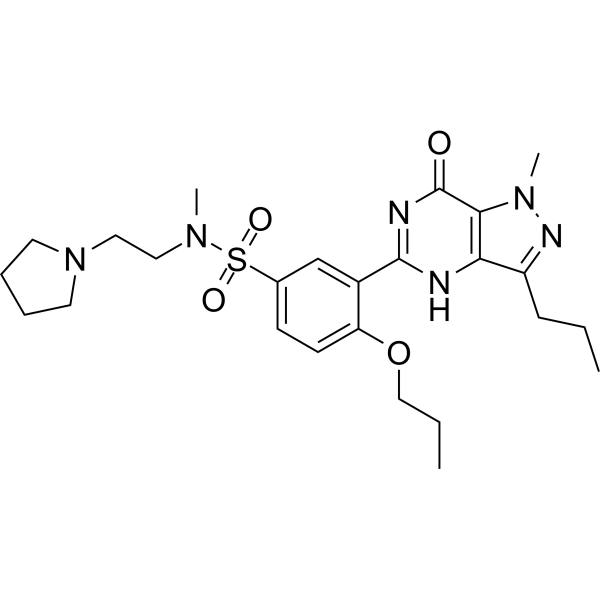 0 ImagesCat. No.: HY-116808CAS No.: 936951-20-1TPN729 is a selective phosphodiesterase type 5 (PDE5) inhibitor with an IC50 value of 2.28 nM. TPN729 affects erectile function and it can be used for the research of erectile dysfunction.

-
SLU-12091
 0 ImagesCat. No.: HY-189060CAS No.: 3065124-09-3SLU-12091 is a phosphodiesterase (PDE) inhibitor and the more potent enantiomer of rac-11. SLU-12091 inhibits the activities of hPDE5, hPDE11, hPDE2A1, hPDE3A, hPDE3B, hPDE4A1A and hPDE4D2. SLU-12091 inhibits the growth of Cryptosporidium parvum without inhibiting the growth of host cells at the highest concentration tested. SLU-12091 can be used for the research of cryptosporidiosis.
-
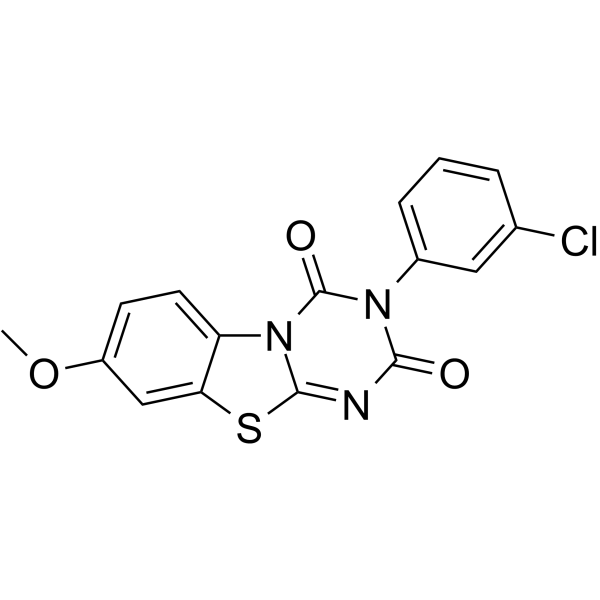
PDE4/5-IN-1
 0 ImagesCat. No.: HY-181774CAS No.: 1807631-43-1PDE4/5-IN-1 is a selective phosphodiesterase 4/5 (PDE4/5) dual inhibitor. PDE4/5-IN-1 functionally inhibits PDE5, PDE4B2, and PDE4D2 activity. PDE4/5-IN-1 relaxes isolated rat prostate tissue, enhances nitric oxide-induced relaxation in isolated rat prostate tissue, and reduces alpha-1 adrenoceptor-mediated contractile responses in isolated rat prostate tissue. PDE4/5-IN-1 inhibits proliferation of human hyperplastic prostate cells. PDE4/5-IN-1 can be used for the research of benign prostatic hyperplasia.
-
PDE11A4-IN-1
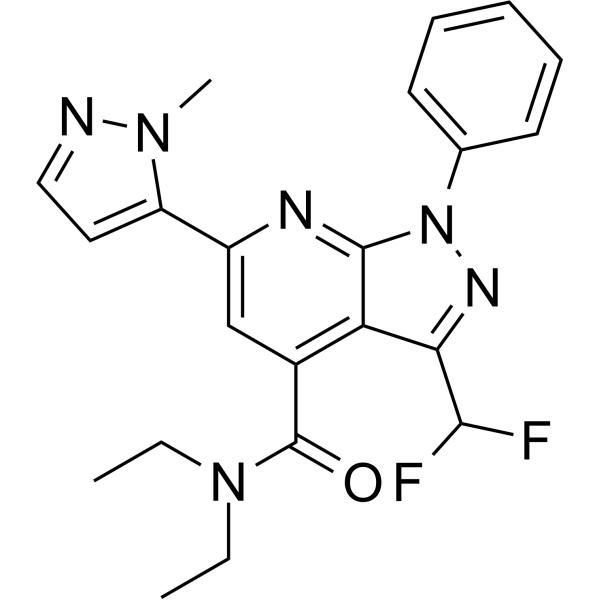 0 ImagesCat. No.: HY-156434CAS No.: 3027607-92-4PDE11A4-IN-1 is a selective, cell-permeable inhibitor of phosphodiesterase 11A4 (PDE11A4) with an IC50 of 12 nM. PDE11A4-IN-1 inhibits PDE11A4-mediated hydrolysis of cyclic adenosine monophosphate (cAMP) and cyclic guanosine monophosphate (cGMP) to the same extent. PDE11A4-IN-1 can be used in the research of age-related cognitive decline.
-
PDE5-IN-13
 0 ImagesCat. No.: HY-170435PDE5-IN-13 (Compound 14b) inhibits phosphodiesterase 5 (PDE5A) with an IC50 of 3 nM. PDE5-IN-13 is a potential candidate for PAH (pulmonary arterial hypertension) research. PDE5-IN-13 has high selectivity for targets over PDE1, PDE2, PDE3, PDE4, PDE7, PDE8, PDE9, PDE10, and PDE11. PDE5-IN-13 is orally active.
-
PDE3/4-IN-4
 0 ImagesCat. No.: HY-181088CAS No.: 3088024-27-2PDE3/4-IN-4 is an orally active PDE3A and PDE4B inhibitor with IC50 values of 10 nM and 9.4 nM, respectively. PDE3/4-IN-4 shows selective activity relative to most other PDE family members. PDE3/4-IN-4 modulates the cAMP/PKA/CREB signaling pathway. PDE3/4-IN-4 inhibits pro-inflammatory factor IL-6. PDE3/4-IN-4 reduces expression of inflammatory markers in liver tissue. PDE3/4-IN-4 attenuates liver fibrosis. PDE3/4-IN-4 limits liver damage in cholestatic and sepsis-induced liver disease mice models. PDE3/4-IN-4 can be used for the research of liver injury, cholestatic liver diseases, sepsis-induced liver injury.
-
TC-E 5005
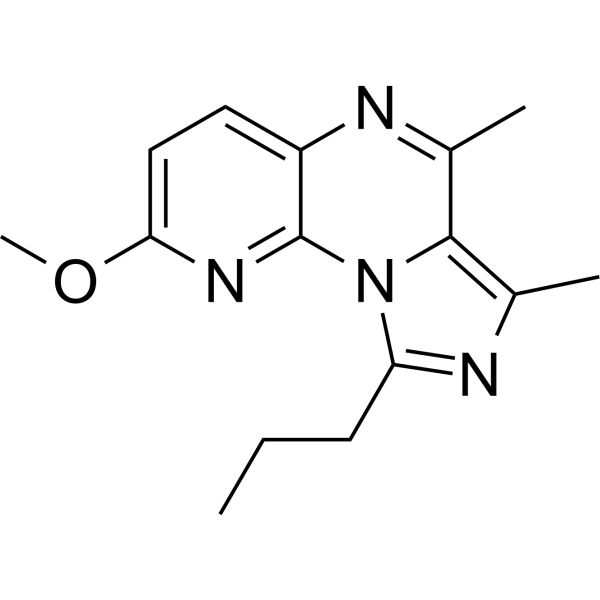 0 ImagesCat. No.: HY-10568CAS No.: 959705-64-7TC-E 5005 is a potent and selective PDE10A inhibitor with IC50 values of 7.28, 239, 779, 919, 3,100, and 3,700 nM for PDE10A, 2A, 11A, 5A, 7B and 3A, respectively. TC-E 5005 inhibits adrenergic and neurogenic smooth muscle contractions in the human prostate.
- 1



