



Non-Hodgkin Lymphoma
-
Non-Hodgkin Lymphoma (52)



- Molecular Weight: 145.2 kDa
Tocilizumab (Anti-Human IL6R, Humanized Antibody) is an anti-human interleukin-6 receptor (IL-6R) neutralizing antibody, prevents binding of IL-6 to the IL-6R, thereby inhibiting both classic and trans-signaling. Tocilizumab (Anti-Human IL6R, Humanized Antibody) can be used for the treatment of rheumatoid arthritis. Tocilizumab is remarkablely effective for the study of severe COVID-19 (coronavirus disease).
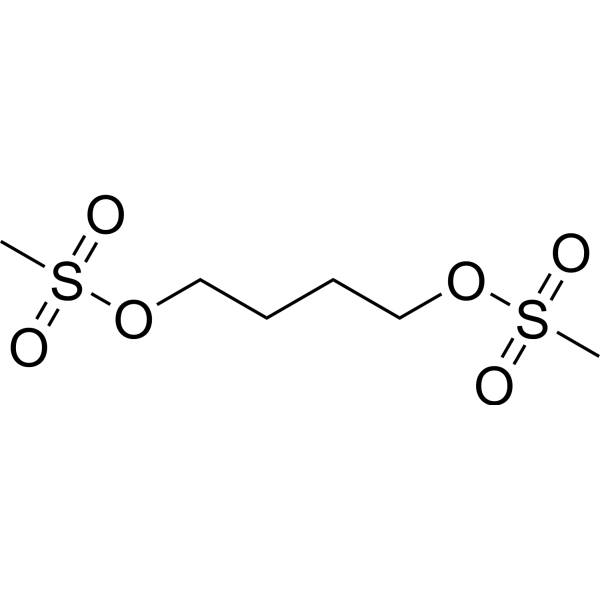
- Formula: C6H14O6S2
- Molecular Weight: 246.30
Busulfan is a potent alkylating antineoplastic agent. Busulfan causes DNA damage by cross-linking DNAs and DNA and proteins. Busulfan inhibits thioredoxin reductase. Busulfan induces apoptosis. Busulfan is an immunosuppressive and myeloablative chemotherapeutic agent.
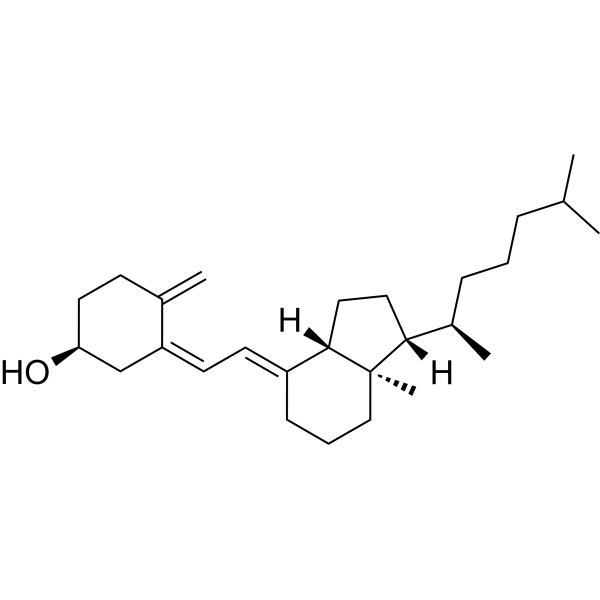
- Formula: C27H44O
- Molecular Weight: 384.64
Vitamin D3 (Cholecalciferol; Colecalciferol) is a naturally occuring form of vitamin D. Vitamin D3 induces cell differentiation and prevents proliferation of cancer cells.
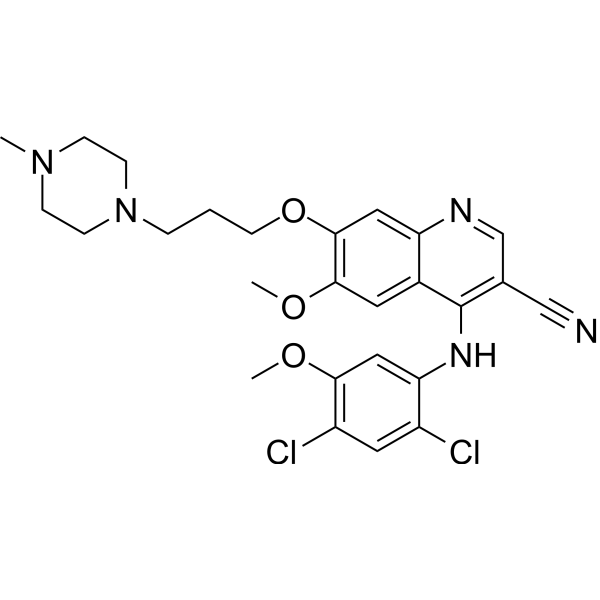
- Formula: C26H29Cl2N5O3
- Molecular Weight: 530.45
Bosutinib is an orally active Src/Abl tyrosine kinase inhibitor with IC50 of 1.2 nM and 1 nM, respectively.

- Molecular Weight: 144 kDa
Mosunetuzumab (BTCT-4465A) is a full-length, fully humanized immunoglobulin G1 (IgG1) T-cell-dependent bispecific (TDB) antibody targeting CD20 (B cells) and CD3 (T cells). Mosunetuzumab redirects T cells to engage and eliminate malignant B cells and can be used for the research of relapsed or refractory (R/R) B-cell non-Hodgkin lymphomas (B-NHLs). The Fc region of Mosunetuzumab incorporates a "knob-into-hole" structural modification and an N297G point mutation to achieve heterodimerization and eliminate Fc glycosylation, thereby effectively silencing antibody effector functions.

- Molecular Weight: 146.32 kDa
Obinutuzumab (GA101) a Type II CD20 humanized IgG1 monoclonal antibody in development for non-Hodgkin lymphoma.

- Molecular Weight: 146.28 kDa
Epcoritamab (GEN3013) is an bispecific IgG1 antibody redirecting T-cells toward CD3×CD20+ tumor cells. Epcoritamab induces potent T-cell-mediated cytotoxicity towards B-cell NHL cell lines.
- Molecular Weight: 7699 (free acid)
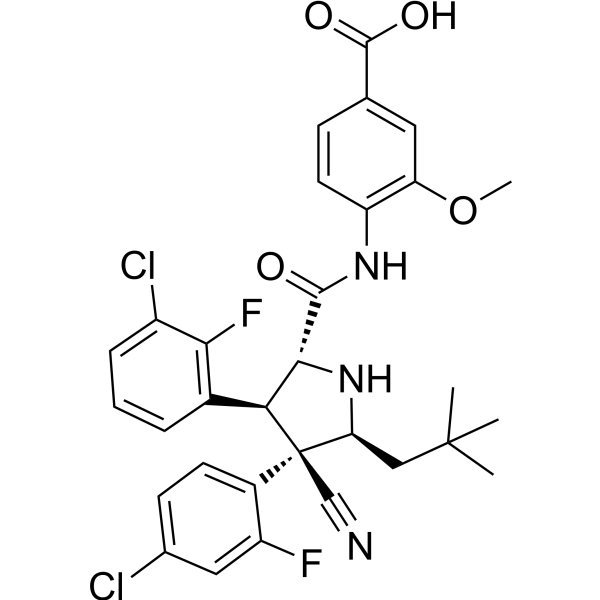
- Formula: C31H29Cl2F2N3O4
- Molecular Weight: 616.48
Idasanutlin (RG7388) is an orally bioavailable MDM2 inhibitor with an IC50 of 6 nM. Idasanutlin disrupts MDM2-p53 binding, stabilizes and activates p53, triggering cell cycle arrest, apoptosis, and reduced cancer cell viability. Idasanutlin reduces EGFR protein expression and phosphorylation, suppresses downstream SHP2, MEK1/2, ERK1/2, AKT, mTOR, p70(S6K1), and S6 signaling. Idasanutlin induces mitochondrial ROS production, drives p38 MAPK phosphorylation, upregulates NOXA, and mediates caspase-3-dependent apoptosis and gasdermin E-mediated pyroptosis. Idasanutlin can be used for the research of TP53-mutant non-small cell lung cancer, T-cell acute lymphoblastic leukemia, colorectal carcinoma, melanoma, diffuse large B-cell lymphoma, mantle cell lymphoma, non-Hodgkin lymphoma, severe fever with thrombocytopenia syndrome, neuroblastoma, acute lymphoblastic leukemia, relapsed or refractory acute myeloid leukemia, osteosarcoma, solid tumors, and hematological tumors.
- Molecular Weight: 143.47 kDa
Rituximab (anti-CD20) is an anti-CD20 chimeric monoclonal antibody used to treat certain autoimmune diseases and types of cancer.
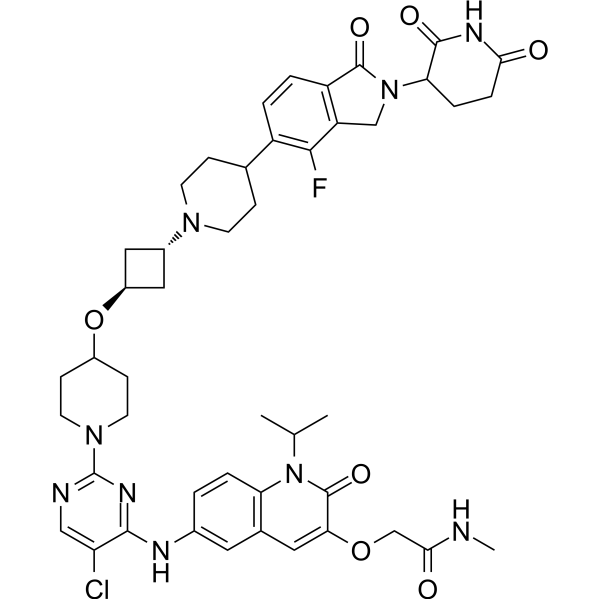
- Formula: C46H53ClFN9O7
- Molecular Weight: 898.42
ARV-393 is a BCL6 PROTAC degrader. ARV-393 forms a complex with BCL6 and Cereblon, induces BCL6 ubiquitination, and mediates BCL6 degradation via the ubiquitin-proteasome system. ARV-393 enhances CD20 expression, interferon pathway activity and antigen presentation. ARV-393 induces tumor growth inhibition and regression. ARV-393 can be used in research related to non-Hodgkin's lymphoma, high-grade B-cell lymphoma, diffuse large B-cell lymphoma, Burkitt's lymphoma and follicular lymphoma.

- Molecular Weight: 110.46 kDa
Surovatamig (AZD0486; TNB-486) is a fully human anti-CD19/CD3 IgG4 bispecific antibody. Surovatamig triggers T cell activation, releases cytotoxic granules, and induces T cell-dependent cellular cytotoxicity and tumor cell lysis. Surovatamig can reduces release of pro-inflammatory cytokines including IL-2, IFNγ, TNF. Surovatamig can be used for the research of cancer, such as B cell non-Hodgkin lymphoma.

- Molecular Weight: 145.5 kDa
Polatuzumab is a monoclonal antibody that targets CD79b on the surface of B cells. Polatuzumab can be used to synthesize the ADC Polatuzumab Vedotin (HY-132253), which has anti-tumor activity.
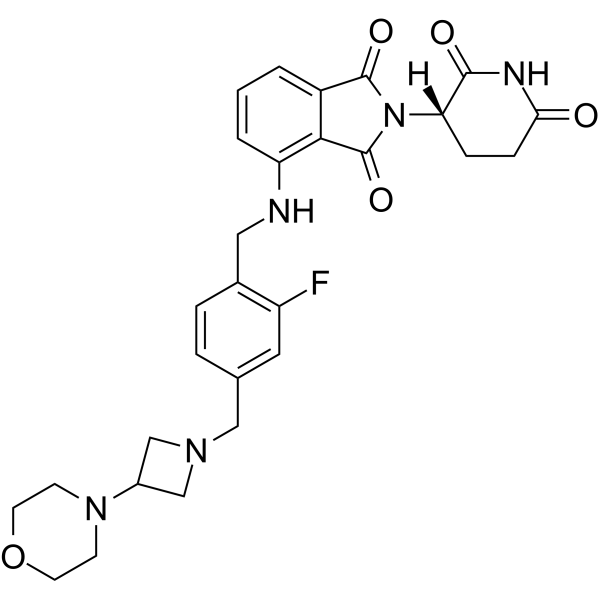
- Formula: C28H30FN5O5
- Molecular Weight: 535.57
Golcadomide (CC-99282) is a blood-brain barrier-permeable, orally active Cereblon (CRBN) E3 ligase modulator. Golcadomide induces Cereblon to form a closed active conformation, thereby recruiting and triggering the ubiquitin-mediated proteasomal degradation of transcription factors IKZF1, IKZF3, Ikaros and Aiolos. Golcadomide is applicable to research related to relapsed or refractory non-Hodgkin lymphoma, chronic lymphocytic leukemia/small lymphocytic lymphoma, and diffuse large B-cell lymphoma.

- Molecular Weight: 146.48 kDa
Inotuzumab (Humanized Anti-CD22 Recombinant Antibody) is a humanized IgG4κ antibody that targets human CD22. Inotuzumab can be linked to a toxic agent Ozogamicin as an antibody-drug conjugate (ADC), Inotuzumab ozogamicin (HY-P9959). Inotuzumab can be used for the research of acute lymphoblastic leukemia and non-Hodgkin lymphoma.

- Molecular Weight: 143.56 kDa
Basiliximab (CHI 621) is a recombinant chimeric murine/human IgG1 monoclonal anti-interleukin-2 receptor antibody. Basiliximab can be used for the research of renal transplantation.

- Molecular Weight: 146.2 kDa
Selicrelumab is an agonist CD40 antibody, induces changes in the tumor microenvironment. Selicrelumab can be used for the research of pancreatic cance and neoadjuvant study.

- Molecular Weight: 144.41 kDa
Emactuzumab(RG 7155) is a specific monoclonal antibody that inhibits colonystimulating factor 1 receptor (CSF1R) activation. Emactuzumab has high affinity for CSF-1R with Ki value of 0.2 nM to blocks CSF-1R dimerization. Emactuzumab can be used for the research of several diseases, such as diffuse-type tenosynovial giant cell tumour (dt-GCT) .



