



USP7
USP7 (ubiquitin-specific protease 7, HAUSP) is a cysteine deubiquitinase that regulates protein stability by removing ubiquitin from diverse substrates involved in cell-cycle control, genome maintenance, and stress responses[1][2]. Mechanistically, USP7 is a central component of the USP7-MDM2-p53 signaling axis, where it deubiquitinates both p53 and its negative regulator MDM2, thereby controlling p53-dependent transcriptional programs, cell-cycle arrest, and apoptosis[3][4][5]. Under basal conditions, USP7 preferentially stabilizes MDM2, whereas alterations in USP7 activity can shift the balance of p53 signaling and cellular stress responses[3][4]. Beyond p53 regulation, USP7 contributes to genome stability and chromatin-associated regulatory processes through deubiquitination of proteins involved in DNA damage responses and epigenetic control[2][6]. Dysregulated USP7 expression or activity has been associated with multiple human cancers, where elevated USP7 function supports tumor initiation, progression, and survival pathways[1][2][7]. Compared with related deubiquitinases, USP7 is distinguished by its extensive interaction network and its dual capacity to regulate both tumor suppressors and oncogenic factors within the same signaling circuitry[3][7]. For experimental applications, selective USP7 inhibitors have been developed and shown to promote MDM2 degradation, activate p53 signaling, and induce cell-cycle arrest or apoptosis in cancer models, supporting the use of USP7 as a therapeutic target and mechanistic research tool[1][8][9].
References:
- [1]. Qi SM, et al. Targeting USP7-Mediated Deubiquitination of MDM2/MDMX-p53 Pathway for Cancer Therapy: Are We There Yet? Front Cell Dev Biol. 2020 Apr 2;8:233. [Content Brief]
- [2]. Valles GJ, et al. USP7 Is a Master Regulator of Genome Stability. Front Cell Dev Biol. 2020 Aug 5;8:717. [Content Brief]
- [3]. Cottle DL, et al. Topical Aminosalicylic Acid Improves Keratinocyte Differentiation in an Inducible Mouse Model of Harlequin Ichthyosis. Cell Rep Med. 2020 Nov 17;1(8):100129. [Content Brief]
- [4]. Bhattacharya S, et al. Emerging insights into HAUSP (USP7) in physiology, cancer and other diseases. Signal Transduct Target Ther. 2018 Jun 29;3:17. [Content Brief]
- [5]. Wang Z, et al. USP7: Novel Drug Target in Cancer Therapy. Front Pharmacol. 2019 Apr 30;10:427. [Content Brief]
- [6]. Lewis JJ, et al. ChIP-Seq-Annotated Heliconius erato Genome Highlights Patterns of cis-Regulatory Evolution in Lepidoptera. Cell Rep. 2016 Sep 13;16(11):2855-2863. [Content Brief]
- [7]. Rabezanahary H, et al. Live virus neutralizing antibodies against pre and post Omicron strains in food and retail workers in Québec, Canada. Heliyon. 2024 May 21;10(10):e31026. [Content Brief]
- [8]. Ali SR, et al. Nerve Density and Neuronal Biomarkers in Cancer. Cancers (Basel). 2022 Oct 1;14(19):4817. [Content Brief]
- [9]. Zou Y, et al. Factor V G1691A is associated with an increased risk of retinal vein occlusion: a meta-analysis. Oncotarget. 2017 Sep 4;8(43):75467-75477. [Content Brief]
-
USP7 Related Products (23)
Related Products (23)

-
Antibodies (1)
- 1
- 2
-
BAY 11-7082
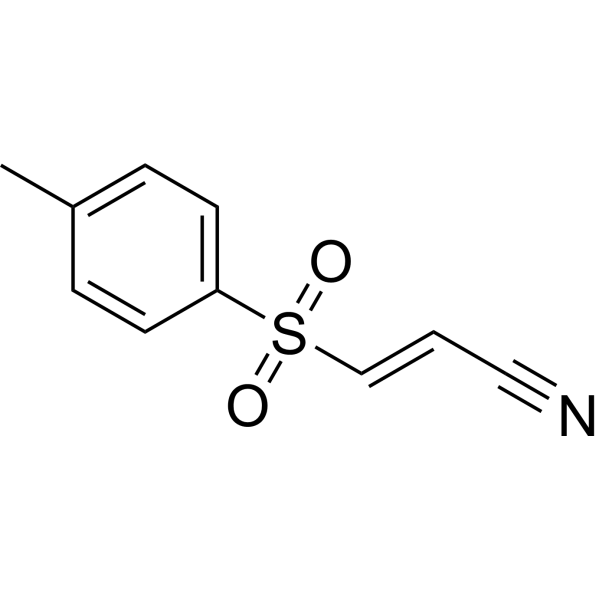 0 ImagesSynonyms: BAY 11-7821BAY 11-7082 is an IκBα phosphorylation and NF-κB inhibitor. BAY 11-7082 selectively and irreversibly inhibits the TNF-α-induced phosphorylation of IκB-α, and decreases NF-κB and expression of adhesion molecules. BAY 11-7082 inhibits ubiquitin-specific protease USP7 and USP21 (IC50=0.19, 0.96 μM, respectively). BAY 11-7082 inhibits gasdermin D (GSDMD) pore formation in liposomes and inflammasome-mediated pyroptosis and IL-1β secretion in human and mouse cells.
-
USP7-797
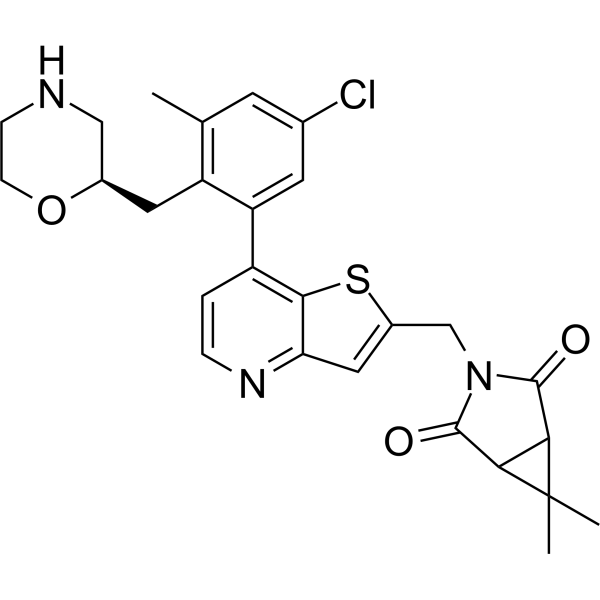 0 ImagesSynonyms: USP7-IN-7USP7-797 (USP7-IN-7) is an orally available, selective USP7 inhibitor (IC50=0.5 nmol/L) with antitumor activity. USP7-797 reduces the level of MDM2, thereby increasing the stability and activity of p53, leading to cell cycle arrest and apoptosis. USP7-797 has low nanomolar cytotoxicity against p53 mutant cancer cell lines, p53 wild-type hematological tumors, and neuroblastoma cell lines.
-
U7D-1
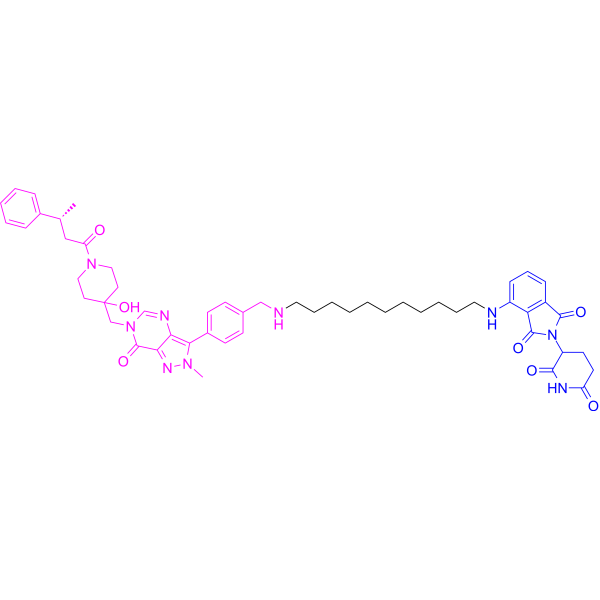 0 ImagesU7D-1 is a USP7 PROTAC degrader that induces selective proteasomal degradation of USP7. U7D-1 destabilizes and downregulates the expression of variant PRC1 complex subunits PCGF1, RING1A and PCGF6, and also slightly reduces the protein level of KDM2B. U7D-1 decreases cell viability, arrests neuroblastoma cells at the G0/G1 cell cycle phase, and downregulates the expression of target genes of PAX3::FOXO1 in FP-RMS cells. U7D-1 increases the level of cleaved PARP in FP-RMS cells, induces cell apoptosis, and upregulates the expression of muscle differentiation markers MYH1 and MYF5. U7D-1 inhibits the growth and proliferation of p53 wild-type and mutant cancer cells, and regulates the apoptosis pathway and E2F pathway. U7D-1 is applicable to studies on neuroblastoma, fusion-positive rhabdomyosarcoma, p53-mutant cancers and cancer-related research.
-
OAT-4828
 0 ImagesCat. No.: HY-183689CAS No.: 2947497-65-4OAT-4828 is an orally active ubiquitin-specific protease 7 (USP7) inhibitor with an IC50 of 32 nM. OAT-4828 induces antileukemic activity in B-cell-derived non-Hodgkin's lymphoma models via inhibition of USP7. OAT-4828 is applicable to research related to chronic lymphocytic leukemia.
-
LC-U7-44
 0 ImagesCat. No.: HY-183282LC-U7-44 is a potent USP7 inhibitor with an IC50 of 0.96 μM. LC-U7-44 binds to the hydrophobic catalytic pocket of USP7, forming hydrogen bonds with Gln297, Arg408, Asp295, Val296, and Gln351, and hydrophobic interactions with Leu406. LC-U7-44 exerts anti-proliferative effects on prostate cancer cells. LC-U7-44 can be used for the research of prostate cancer.
-
P6620
 0 ImagesCat. No.: HY-183078CAS No.: 2009272-81-3P6620 is an orally active USP7 inhibitor. P6620 specifically binds to USP7 and disrupts its interaction with LRRC41. P6620 exhibits anticancer activity against hepatocellular carcinoma. P6620 enhances the antitumor effect of Lenvatinib (HY-10981) in xenograft mouse models. P6620 can be used for the research of hepatocellular carcinoma.


-
USP7-IN-12
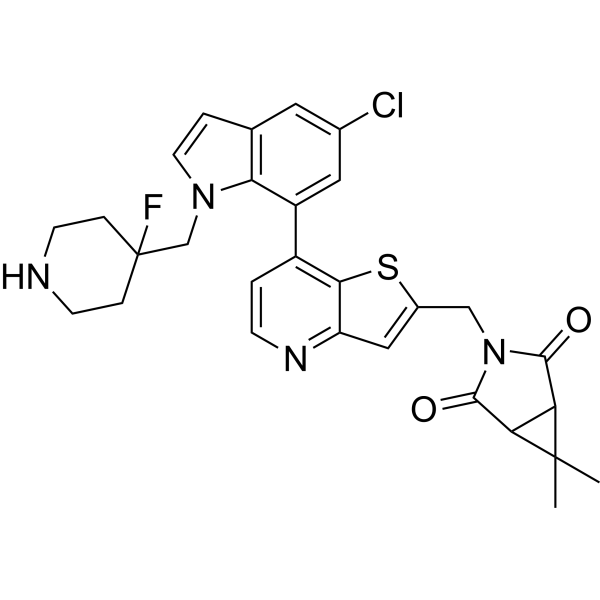 0 ImagesCat. No.: HY-153942CAS No.: 2763698-01-5USP7-IN-12 (compound 1) is a potent and orally active Usp7 inhibitor with an IC50 value of 3.67 nM. USP7-IN-12 shows antiproliferative activity.

-
PROTAC USP7 Degrader-2
 0 ImagesCat. No.: HY-180793CAS No.: 3056612-67-7PROTAC USP7 Degrader-2 (Compound D16) is an efficient and selective USP7 PROTAC degrader with a DC50 of 1.91 μM (in TE-12 cells). PROTAC USP7 Degrader-2 inhibits the migration of upper gastrointestinal tract (UGI) cancer cells and shows relatively weak anti-proliferative activity. PROTAC USP7 Degrader-2 can be used in the research of metastatic upper gastrointestinal cancer.


-
USP7-IN-16
 0 ImagesCat. No.: HY-159964CAS No.: 2166587-77-3USP7-IN-16 (Compound 61) is a selective USP7 inhibitor with IC50 values of 5.5 nM in the FLINT assay and 2.1 nM in MM.1S cells. USP7-IN-16 exhibits antitumor activity in mice and is a promising candidate for research in the field of oncology.

-
YCH3124
 0 ImagesCat. No.: HY-162794YCH3124 (compound Z33) is a USP7 inhibitor (IC50=41.9 nM) with antitumor activity. YCH3124 has good in vitro antiproliferative activity against various tumor cells including LNCaP (IC50=3.6 nM) and CHP-212 (IC50=9.9 nM). In addition, YCH3124 disrupts cell cycle progression by restricting G1 phase and induces apoptosis in CHP-212 cells.
-
XM-U-14
 0 ImagesCat. No.: HY-159175CAS No.: 3098519-83-3XM-U-14 is a selective PROTAC USP7 Degrader (DC50: 0.74 nM in inducing USP7 degradation in RS4;11 cell line). XM-U-14 upregulates the levels of p53 and p21. XM-U-14 also significantly inhibits acute lymphoblastic leukemia (ALL) cell growth (IC50: 0.5 nM and 8.3 nM for RS4;11 cells and Reh cells respectively). XM-U-14 induces apoptosis and cycle arrest. XM-U-14 inhibits tumor growth. (Blue: VHL ligand (HY-159465), Black: linker (HY-W539783); Pink: USP7 inhibitor (HY-159464)).

- 1
- 2




