



Squamous Cell Carcinoma
-
Squamous Cell Carcinoma (50)

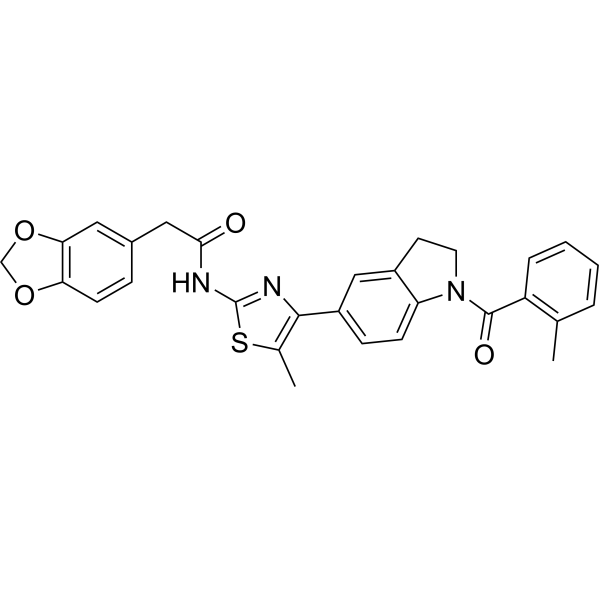
- Formula: C29H25N3O4S
- Molecular Weight: 511.59
ML385 is a potent and selective Nrf2 inhibitor with an IC50 of 1.9 μM. ML385 directly binds to the Neh1 domain of NRF2, interferes with the binding of the MAFG-NRF2 protein complex to the antioxidant response element (ARE) DNA sequence, thereby blocking the expression of downstream target genes of NRF2. ML385 can be used in studies related to adult T-cell leukemia, breast cancer, myocardial ischemia/reperfusion injury, non-small cell lung cancer, esophageal squamous cell carcinoma, head and neck squamous cell carcinoma, and lung squamous cell carcinoma.

- Molecular Weight: 153714 (average)
HLX43 is an antibody-drug conjugate (ADC) targeting PD-L1. HLX43 consists of a human monoclonal antibody anti-PD-L1 antibody Opucolimab (HY-P99785) with the drug-linker conjugate being DL-01 (HY-155870A). HLX43 exerts superior anticancer efficacy with safety profile in vivo. HLX43 can be used for non-small cell lung cancer (NSCLC), head and neck squamous cell carcinoma (HNSCC), esophageal squamous cell carcinoma (ESCC), melanoma (MEL), ovarian cancer (Ovc) research.

- Molecular Weight: 146.11 kDa
Anti-Mouse PD-1 Antibody (S-5001) is a selective inhibitor targeting PD-1, blocking the PD-1/PD-L1 immune checkpoint axis through competitive binding to PD-1. Anti-Mouse PD-1 Antibody (S-5001) works by reversing the tumor immunosuppressive microenvironment and reactivating the anti-tumor activity of cytotoxic T lymphocytes. It can be used in research on tumors such as melanoma and HPV-positive oropharyngeal squamous cell carcinoma. Anti-Mouse PD-1 Antibody (S-5001) is often combined with photothermal therapy, chemotherapy, etc., to enhance efficacy.

- Formula: C58H69N5O18
- Molecular Weight: 1124.19
FOSL1 degrader 1 is a FOSL1 PROTAC degrader with a DC50 of 2.3 μM. FOSL1 degrader 1 induces proteasomal degradation of FOSL1. FOSL1 degrader 1 eliminates cancer stem cells in head and neck squamous cell carcinoma. FOSL1 degrader 1 suppresses head and neck squamous cell carcinoma tumorigenesis. FOSL1 degrader 1 can be used for the research of head and neck squamous cell carcinoma.
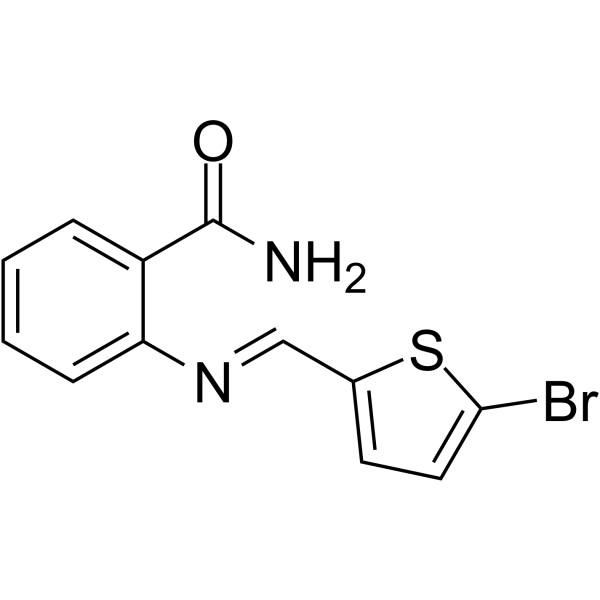
- Formula: C12H9BrN2OS
- Molecular Weight: 309.18
BTYNB is a structure-specific nucleic acid binder and IGF2BP1 inhibitor (with an IC50 of 5 μM against hBTYNB). BTYNB disrupts the IGF2BP1-RNA interaction and blocks its binding to oncogenic mRNAs such as c-Myc, MDM2, PD-L1. BTYNB completely blocks the INHBA-Smad2/3 pathway, disrupts the MYCN/IGF2BP1 loop, and thereby induces apoptosis and cell cycle arrest, effectively inhibiting the proliferation and survival of cancer cells. In addition, BTYNB acts as an immune activator and tumor microenvironment modulator, enhances T cell-mediated tumor killing, and produces significant synergistic effects with inhibitors of PD-1, BRD and BIRC5. BTYNB can be used in relevant research on various malignant tumors including ovarian cancer, neuroblastoma, leukemia and melanoma.
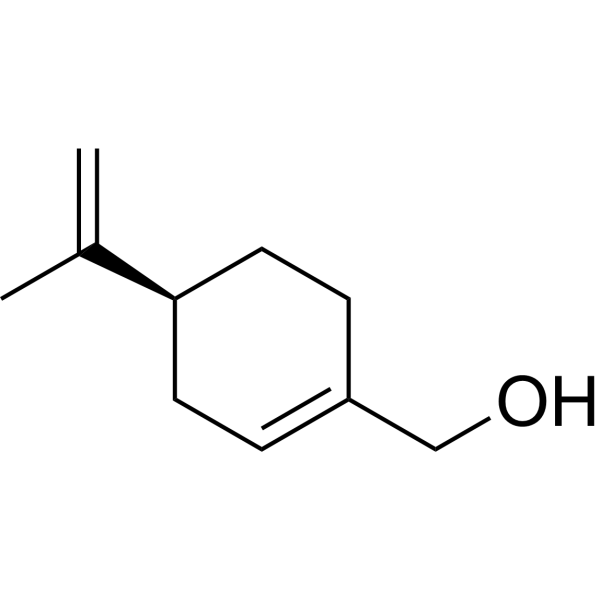
- Formula: C10H16O
- Molecular Weight: 152.24
(S)-(-)-Perillyl alcohol, a monoterpene, is an orally active farnesyl transferase and geranylgeranyl transferase inhibitor. (S)-(-)-Perillyl alcohol up-regulates the mannose-6-phosphate receptor, facilitating TGF-β1 activation and cytostasis,. (S)-(-)-Perillyl alcohol induces apoptosis in cancer cells, modulates cyclin D1 and AP-1 activity. (S)-(-)-Perillyl alcohol exhibits antitumor activity against sarcoma tumors in mice. (S)-(-)-Perillyl alcohol can be used for the research of squamous cell carcinoma of the esophagus and sarcoma 180.
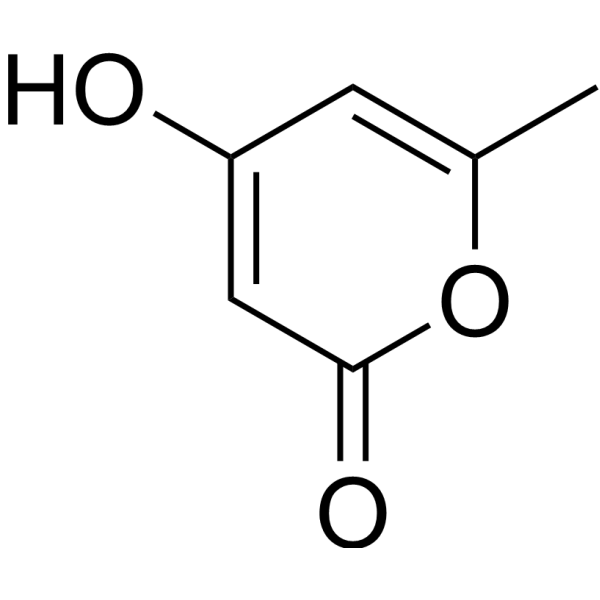
- Formula: C6H6O3
- Molecular Weight: 126.11
4-Hydroxy-6-methyl-2-pyrone is an intermediate. 4-Hydroxy-6-methyl-2-pyrone can be used for the synthesis of Hispidin (HY-100618) and antibacterial agents. 4-Hydroxy-6-methyl-2-pyrone can be used for research on bacterial infections, fungal infections, pancreatic adenocarcinoma, squamous cell carcinoma, and tuberculosis.

- Formula: C46H80N12O12·xC2H4O2
- Molecular Weight: 993.20 (free base)
PRAME peptide (425-433) acetate is a proteasome-degraded peptide derived from the cancer-testis antigen PRAME (Preferentially Expressed Antigen in Melanoma). PRAME peptide (425-433) acetate is restricted by HLA-A*02:01 and can serve as a target for bispecific T cell engager therapy in the context of major histocompatibility complex I presentation. PRAME peptide (425-433) acetate shows application potential in various malignant tumors and is widely suitable for research related to solid tumors, melanoma, ovarian cancer, endometrial cancer, and lung cancer (including lung adenocarcinoma and lung squamous cell carcinoma). PRAME peptide (425-433) acetate can be used to explore disease of triple-negative breast cancer, diffuse large B-cell lymphoma, and head and neck squamous cell carcinoma.

- Molecular Weight: 151659 (average)
Tilatamig samrotecan (AZD9592) is an anti-EGFR/c-MET antibody-drug conjugate (ADC). Tilatamig samrotecan consists of an anti-EGFR/c-MET antibody with the drug-linker conjugate being AZ14170133 (HY-145399) (a topoisomerase I (TOP1i) inhibitor payload). Tilatamig samrotecan induces multiple DNA damage response pathway markers (like ATM, ATR, γH2AX). Tilatamig samrotecan selectively binds to EGFR and c-MET, delivering the cytotoxic payload. Tilatamig samrotecan exerts anti-tumor activity in vivo. Tilatamig samrotecan can be used for non-small cell lung cancer (NSCLC) and head and neck squamous cell carcinoma (HNSCC) research.
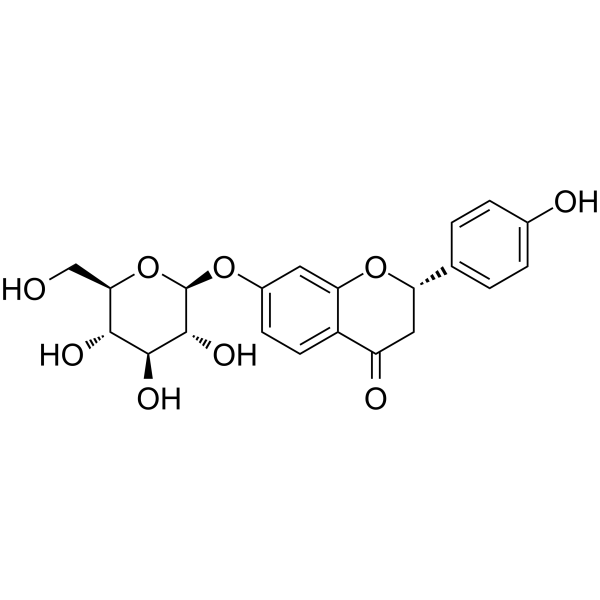
- Formula: C21H22O9
- Molecular Weight: 418.39
Neoliquiritin is a flavonoid and flavanone-derived cytotoxic agent with anticancer activity and neuroprotective effects. Neoliquiritin exhibits excellent tumor specificity, exerting a more pronounced killing effect on cancer cells compared with normal oral cells. Neoliquiritin also exerts neuroprotective effects by inhibiting ATP depletion and the elevation of caspase 3/7 activity. Widely present in the roots of Glycyrrhiza uralensis, Glycyrrhiza inflata and Glycyrrhiza glabra, Neoliquiritin can be applied to studies on human oral squamous cell carcinoma, leukemia, Parkinson's disease and other conditions.

- Molecular Weight: 178.105 kDa
Ficerafusp alfa (BCA-101) is a bispecific antibody targeting EGFR and TGFβ, with a Kd of 2.58 nM against EGFR and a Kd of 61.3 nM against TGFβ1. Ficerafusp alfa binds to EGFR, inhibits EGFR phosphorylation, blocks EGF-dependent cell proliferation, and mediates antibody-dependent cellular cytotoxicity against EGFR-positive tumor cells. Ficerafusp alfa sequesters TGFβ via its TGFβRII ECD domain, neutralizes the activity of TGFβ and TGFβ1, and blocks TGFβ-dependent processes, including epithelial-mesenchymal transition, cell invasion, and differentiation of inducible regulatory T cells. Ficerafusp alfa is applicable to research related to head and neck squamous cell carcinoma, advanced solid tumors, squamous non-small cell lung cancer, anal squamous cell carcinoma, colorectal cancer, and pancreatic cancer.

- Molecular Weight: 147.12 kDa
RO-5429083 (RG-7356) is a humanized monoclonal antibody targeting CD44. RO-5429083 binds to the extracellular domain of CD44 and inhibits constitutive EGFR phosphorylation. RO-5429083 suppresses tumor growth in xenograft models and can be used in research related to head and neck squamous cell carcinoma and acute myeloid leukemia.
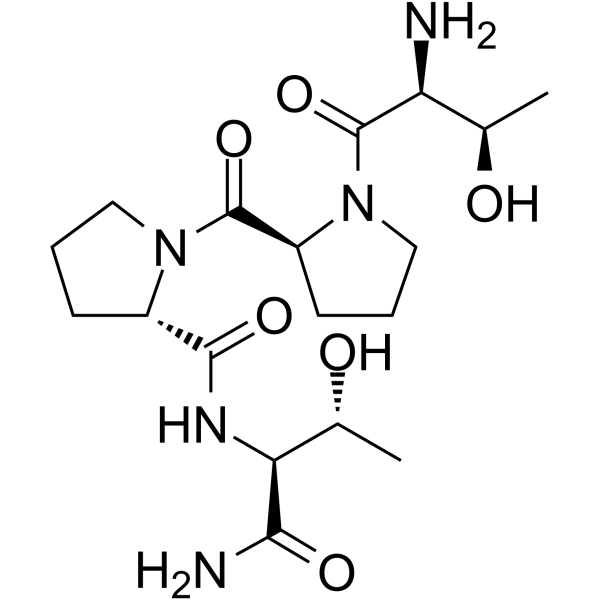
- Formula: C18H31N5O6
- Molecular Weight: 413.47
Rapastinel (GLYX-13) is a potent NMDAR modulator capable of crossing the blood-brain barrier, and it exhibits extremely high affinity for human NMDAR (EC50=0.0017-9.9 nM). Rapastinel enhances ERK signaling and activates the mTOR pathway, thereby upregulating the expression of BDNF and VGF, and inducing significant neuroplastic changes such as enhanced LTP and increased mature dendritic spine density in the hippocampus. Rapastinel moderately elevates the efflux of dopamine, norepinephrine and 5-HT in the prefrontal cortex, and uniquely avoids side effects of traditional antidepressants such as dissociation, addiction or sedation. Rapastinel is applicable to the research of major depressive disorder and hepatocellular carcinoma.

- Formula: C19H13F3N2O2
- Molecular Weight: 358.31
DHQZ-17 is a HNF4A inhibitor. DHQZ-17 triggers apoptosis in head and neck squamous cell carcinoma cells. DHQZ-17 can be used for the research of head & neck squamous cell carcinoma.

- Formula: C14H25Cl2N3O2
- Molecular Weight: 338.27
Y-27632 hydrochloride hydrate is a ROCK inhibitor with Ki values of 220 nM and 300 nM for ROCK1 and ROCK2, respectively. Y-27632 hydrochloride hydrate exerts anti-inflammatory and immunomodulatory effects in systemic lupus erythematosus models by inhibiting the ROCK/NF-κB pathway. Y-27632 hydrochloride hydrate enhances autophagy by inhibiting the AKT/mTOR pathway, thereby inducing apoptosis apoptosis in oral squamous cell carcinoma. Y-27632 hydrochloride hydrate induces the formation of tunneling nanotubes in ARPE-19 cells and significantly enhances mitochondrial transfer through these channels. Y-27632 hydrochloride hydrate promotes neurite outgrowth in PC12 cells by activating the Rac1/NOX1/ROS/AKT/PAK1 signaling cascade.
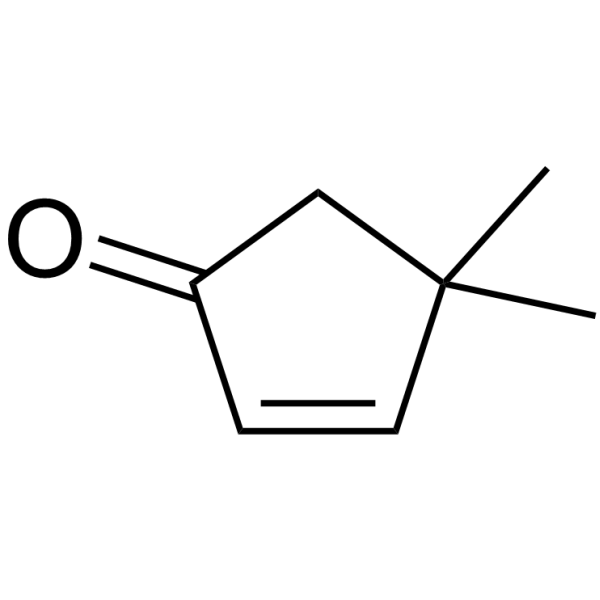
- Formula: C7H10O
- Molecular Weight: 110.15
4,4-Dimethyl-2-cyclopenten-1-one (4,4-Dimethylcyclopent-2-enone) is a β-unsubstituted cyclic α,β-unsaturated ketone and anticancer agent. 4,4-Dimethyl-2-cyclopenten-1-one does not activate Caspase 3, 8 or 9, nor does it induce internucleosomal DNA fragmentation. 4,4-Dimethyl-2-cyclopenten-1-one exhibits anticancer activity against oral squamous cell carcinoma and promyelocytic leukemia.

- Formula: C17H11Cl2N3O
- Molecular Weight: 344.19
TFAP2β modulator-1 (compound A6) is a potent TFAP2β modulator that promotes TFAP2β condensation by inducing conformational changes in the intrinsically disordered region. TFAP2β modulator-1 promotes TFAP2β condensation, induces apoptosis, and exhibits anti-tumor functions in esophageal squamous cell carcinoma (ESCC) cells, mouse models, and organoids. TFAP2β modulator-1 can be used for ESCC research.

- Formula: C25H34N8O
- Molecular Weight: 462.59
EP652 is a METTL3 inhibitor and antitumor agent with IC50 values of 2 nM, <10 nM, and 37 nM in SPA, intracellular, and ATPlite assays, respectively. EP652 exhibits high selectivity against 40 other methyltransferases and FTO, and possesses favorable pharmacokinetic parameters. EP652 reduces intracellular N6-methyladenosine (m6A) levels in mRNA. EP652 inhibits tumor growth and progression of both hematologic malignancies and solid tumors. EP652 can be used for the research of acute myeloid leukemia, ovarian cancer, non-small cell lung cancer, and hypopharyngeal squamous cell carcinoma.

- Formula: C151H222N44O40S6
- Molecular Weight: 3486.04
Defensin HNP-3 human is an α-defensin stored in the azurophilic granules of human neutrophils. Defensin HNP-3 human exerts broad-spectrum bactericidal, antifungal and antiviral activities mainly by forming bacterial membrane pores, and acts as a chemoattractant for monocytes and T cells. Defensin HNP-3 human maintains epithelial integrity to support periodontal tissue homeostasis, and exerts concentration-dependent effects on epithelial cell proliferation, adhesion and bacterial adhesion. Defensin HNP-3 human targets solid tumors and leukemia by inducing single-strand DNA breaks and membrane permeabilization in tumor cells via electrostatic binding and pore formation. Defensin HNP-3 human is abundant in human tongue squamous cell carcinoma and neutrophils infiltrating oral squamous cell carcinoma. Defensin HNP-3 human can be applied to research related to periodontitis and human tongue squamous cell carcinoma.
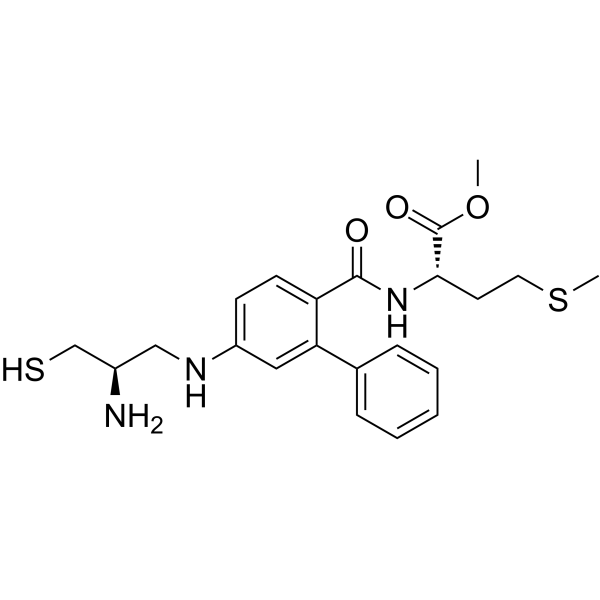
- Formula: C22H29N3O3S2
- Molecular Weight: 447.61
FTI-277 is a farnesyltransferase (FTase) inhibitor. FTI-277 inhibits Ras farnesylation, blocks the phosphorylation of downstream ERK1/2 and mTOR, and reduces membrane-bound active N-ras protein. FTI-277 activates caspase 3, upregulates Bim expression, induces cell apoptosis, suppresses regulatory T cell expansion, enhances macrophage phagocytosis, and improves bacterial clearance. FTI-277 activates the PI3K/Akt signaling pathway, inhibits osteoblast differentiation, and reduces the proliferation ability of neuroblastoma cells. FTI-277 can be used in research related to head and neck squamous cell carcinoma, neuroblastoma, sepsis, and vascular calcification.



