



Anti-Mouse PD-1 Antibody (S-5001)
Based on 1 publication(s) in Google Scholar
Anti-Mouse PD-1 Antibody (S-5001) is a selective inhibitor targeting PD-1, blocking the PD-1/PD-L1 immune checkpoint axis through competitive binding to PD-1. Anti-Mouse PD-1 Antibody (S-5001) works by reversing the tumor immunosuppressive microenvironment and reactivating the anti-tumor activity of cytotoxic T lymphocytes. It can be used in research on tumors such as melanoma and HPV-positive oropharyngeal squamous cell carcinoma. Anti-Mouse PD-1 Antibody (S-5001) is often combined with photothermal therapy, chemotherapy, etc., to enhance efficacy.
For research use only. We do not sell to patients.
- Purity : 99.50%
- Molecular Weight:146.11 kDa
-
Storage:
Please store the product under the recommended conditions in the Certificate of Analysis.


To place orders, for customer services and technical support, please contact: MedChemExpress USA
Tel: 609-228-6898 E-mail: [email protected] [email protected]


-
 Biological Activity
-
Chemical Information
- Protocols
- Purity & Documentation
- References
-
 Help & FAQs


Publications Citing Use of MedChemExpress (MCE) Anti-Mouse PD-1 Antibody (S-5001)
More

Biological Activity
Description
Isotype
Mouse IgG1 (D265A) kappa
Recommend Isotype Controls
Species Reactivity
Mouse
In Vivo
MedChemExpress (MCE) has not independently confirmed the accuracy of these methods. They are for reference only.
Gene ID
Accession
Conjugated
Unconjugated
Reconsititution
The product can be reconstituted/diluted with sterile PBS or saline.
Application
in vivo blocking of PD-1/PD-L signaling
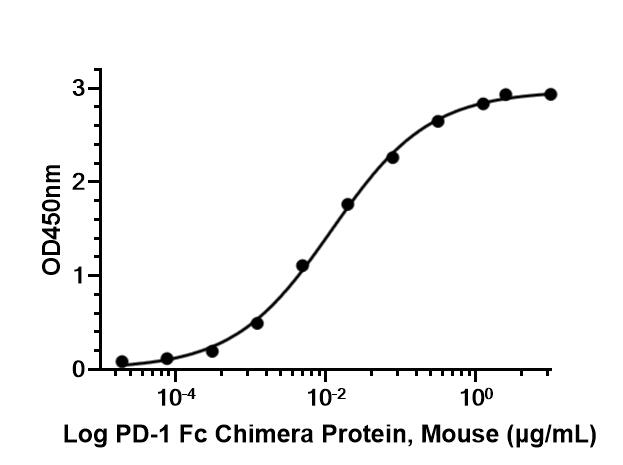
Verified Bioactivity


Chemical Information
-
Appearance Liquid
-
Molecular Weight 146.11 kDa
-
Color Colorless to light yellow
-
SMILES
[Anti-Mouse PD-1 Antibody (S-5001)]
-
Shipping
Shipping with dry ice.
-
Formulation
Please refer to the lot-specific COA for specific buffer information.
-
Storage
Please store the product under the recommended conditions in the Certificate of Analysis.


Publications (1)
-
Journal Impact Factor
-
Most Recent
-
Mater Today Bio
Metformin glycyrrhetinic acid binary injectable hydrogel for synergistic tumor immunotherapy via spatiotemporal microenvironment remodeling. [Abstract]2025 Dec 27:36:102749. PMID: 41560796

Protocols
-
Research Protocol for Cancer Immunology
Cancer immunology studies how the immune system recognizes, suppresses, edits, or fails to eliminate malignant cells through tumor antigen release, antigen presentation, T-cell priming, immune trafficking, tumor-cell killing, and feedback inhibition in the tumor microenvironment. The cancer-immunity cycle links tumor antigenicity, dendritic-cell priming, CD8+ T-cell infiltration, cytotoxic function, and immune-checkpoint regulation to tumor rejection or immune escape. Immune-checkpoint pathways such as PD-1/PD-L1 and CTLA-4 suppress antitumor T-cell activity and can be therapeutically blocked, but many tumors remain resistant because of poor antigen presentation, weak T-cell infiltration, suppressive myeloid cells, regulatory T cells, and tumor-intrinsic immune-exclusion programs. Unresolved questions include which immune-cell states predict response, how tumor-intrinsic pathways exclude immune cells, how myeloid suppression limits checkpoint blockade, and which combination strategies
-
Cell Viability Determination by MTT Colorimetric Assay
The following protocol uses the MTT colorimetric assay as a classic literature-established method for assessing cell viability/metabolic activity in cultured mammalian cells. MTT[3-(4,5-dimethylthiazol-2-yl)-2,5-diphenyltetrazolium bromide] is reduced by metabolically active cells to a colored formazan product; the amount of formazan is quantified spectrophotometrically and provides an indirect measure of metabolically active viable cells. Importantly, MTT reduction reflects cellular oxidoreductase/metabolic activity rather than an absolute direct count of living cells, so changes in cellular metabolism can alter the signal independently of cell number.


Purity & Documentation
-
Data Sheet (259 KB)
-
SDS (251 KB)
- English - EN (251 KB)
- Français - FR (251 KB)
- Deutsch - DE (251 KB)
- Norwegian - NO (251 KB)
- Español - ES (251 KB)
- Swedish - SV (251 KB)
- Italian - IT (251 KB)
- Korean - KR (251 KB)
- Portuguese - PT (251 KB)
-
Inhibitory Antibodies User Guide (603 KB)
References

Calculators
Concentration (start) × Volume (start) = Concentration (final) × Volume (final)


Anti-Mouse PD-1 Antibody (S-5001) Related Classifications
HY-P99144A Related Classifications
 Powered by Bioz