



ATM
ATM is a serine/threonine protein kinase and a crucial nexus for the cellular response to DNA double-stranded breaks[1]. Mechanistically, ATM signals to cell-cycle and DNA-repair components by phosphorylating downstream targets including p53, CHK2, NBS1, and BRCA1[2]. Transcription- and topoisomerase I-induced DNA double-strand breaks also activate ATM in post-mitotic neurons and lymphocytes, linking ATM signaling to transcription-associated genome stress[3]. In disease context, ATM mutations cause ataxia-telangiectasia, which includes neurodegeneration, immune dysfunction, radiosensitivity, and cancer predisposition[1]. Compared with related PIKK isoforms, ATM, ATR, and DNA-PK jointly control the DNA damage response, but ATR and DNA-PK can compensate for ATM absence in ataxia-telangiectasia[4]. DNA-PK differs functionally because DNA-PKcs and Ku are essential for double-strand break repair through non-homologous end joining[5]. For experimental applications, loss or inhibition of ATM activity increases sensitivity to ionizing radiation and chemotherapeutic agents that elicit DNA double-strand breaks[2]. KU55933 sensitized cells to the topoisomerase IIα inhibitor NK314, supporting ATM inhibition as a tool for studying DNA repair-dependent drug response[6].
References:
- [1]. McKinnon PJ. ATM and ataxia telangiectasia. EMBO Rep. 2004 Aug;5(8):772-6. doi: 10.1038/sj.embor.7400210. PMID: 15289825; PMCID: PMC1299121. et al. ATM and ataxia telangiectasia. EMBO Rep. 2004 Aug;5(8):772-6. [Content Brief]
- [2]. Harnor S, et al. Modulation of the DNA-Damage Response by Inhibitors of the Phosphatidylinositol 3-Kinase Related Kinase (PIKK) Family[M]//Cancer II. Cham: Springer International Publishing, 2017: 189-189.
- [3]. Sordet O, et al. Ataxia telangiectasia mutated activation by transcription- and topoisomerase I-induced DNA double-strand breaks. EMBO Rep. 2009 Aug;10(8):887-93. [Content Brief]
- [4]. Schlam-Babayov S, et al. It takes three to the DNA damage response tango. Mol Cell Oncol. 2021 Feb 8;8(2):1881395. [Content Brief]
- [5]. Matsumoto Y, et al. DNA-Dependent Protein Kinase Catalytic Subunit: The Sensor for DNA Double-Strand Breaks Structurally and Functionally Related to Ataxia Telangiectasia Mutated. Genes (Basel). 2021 Jul 27;12(8):1143. [Content Brief]
- [6]. Guo L, et al. DNA-dependent protein kinase and ataxia telangiectasia mutated (ATM) promote cell survival in response to NK314, a topoisomerase IIα inhibitor. Mol Pharmacol. 2011 Aug;80(2):321-7. [Content Brief]
-
ATM Related Products (34)
Related Products (34)

-
Antibodies (3)
- 1
- 2
-
Berzosertib
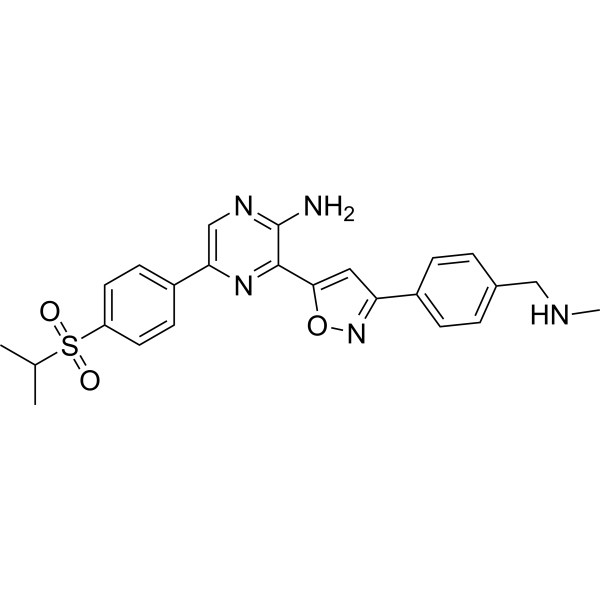 0 ImagesSynonyms: VE-822; VX-970; M6620Berzosertib (VE-822) is an orally active, CNS-penetrant, and selective ATR kinase inhibitor. Berzosertib blocks ATR kinase activity, abrogates G2/M cell cycle checkpoint, impairs DNA damage repair. Berzosertib induces apoptosis, inhibnits conlony migration, inhibits cell proliferation, and activates cGAS-STING axes in cancer cells. Berzosertib can be used for the research of cancers, such as head and neck squamous cell carcinoma, and colorectal cancer.
-
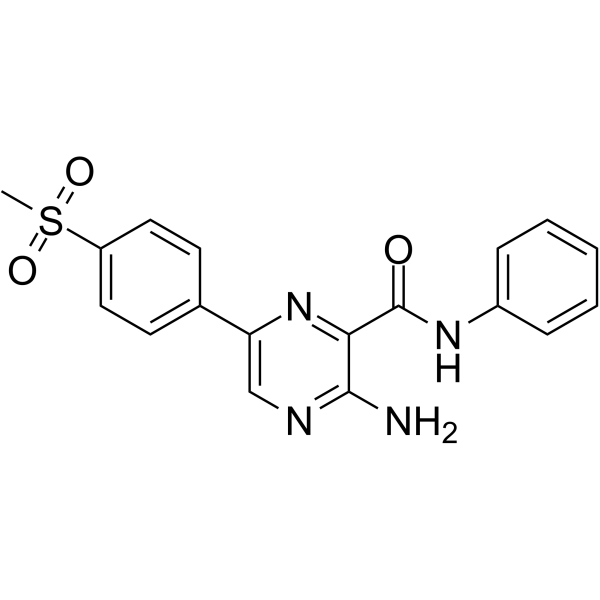
Elrelesertib
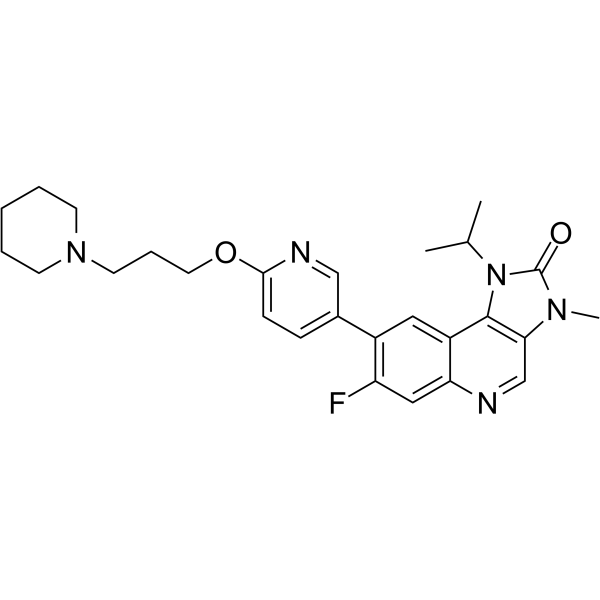 0 ImagesSynonyms: AZD1390Elrelesertib (AZD1390) is an orally active, brain-penetrant ATM kinase inhibitor with IC50 values of 0.78 nM. Elrelesertib blocks ATM-dependent DNA damage response, inhibits ATM autophosphorylation and downstream Chk2, Rad50 phosphorylation, and accumulates at DNA breaks. Elrelesertib acts as a radiosensitizer, induces apoptosis, genomic instability, G2-M cell cycle arrest, ROS elevation, and mitochondrial membrane potential alteration. Elrelesertib has low efflux liability against P-gp and BCRP. Elrelesertib can be used for the research of central nervous system malignancies, glioblastoma multiforme, glioma, lung cancer brain metastases, and breast cancer.
-
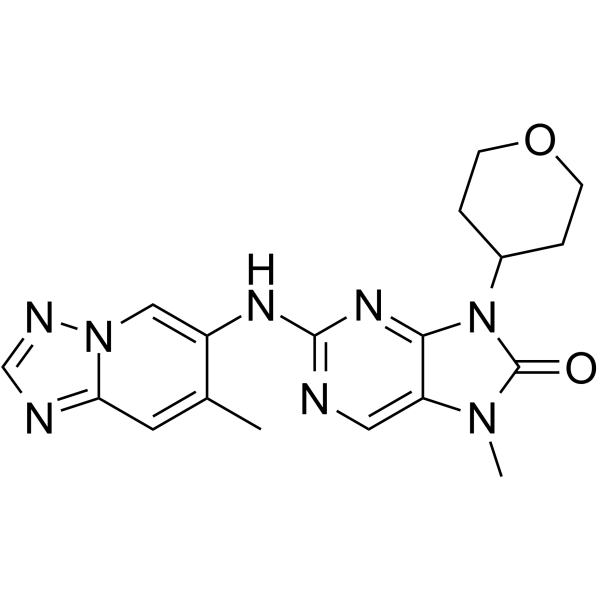
M3541
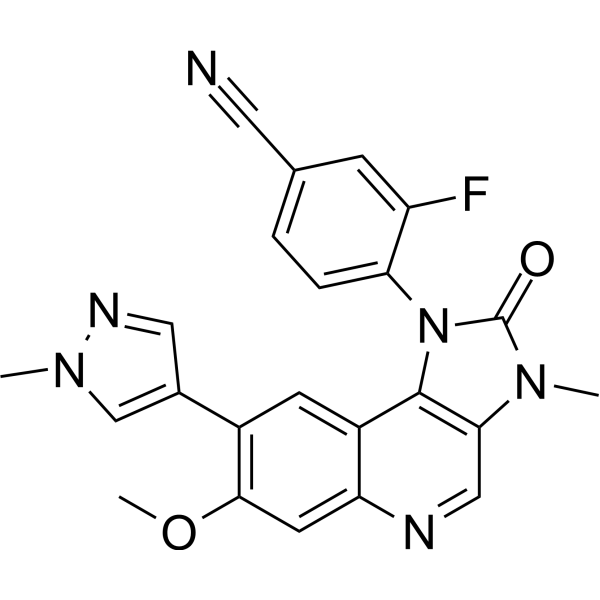 0 ImagesM3541 is an orally effective DNA-dependent protein kinase (DNA-PK) inhibitor. M3541 inhibits ionizing radiation-induced ATM autophosphorylation and phosphorylation of downstream substrates (KAP1, CHK2, p53), blocks DSB end resection and homologous recombination repair, and simultaneously induces non-homologous end joining, G2-M phase arrest, polyploidization, and cell death. M3541 can be used for research on solid tumors, acute myeloid leukemia, non-small cell lung cancer, triple-negative breast cancer, etc..
-
Berzosertib hydrochloride
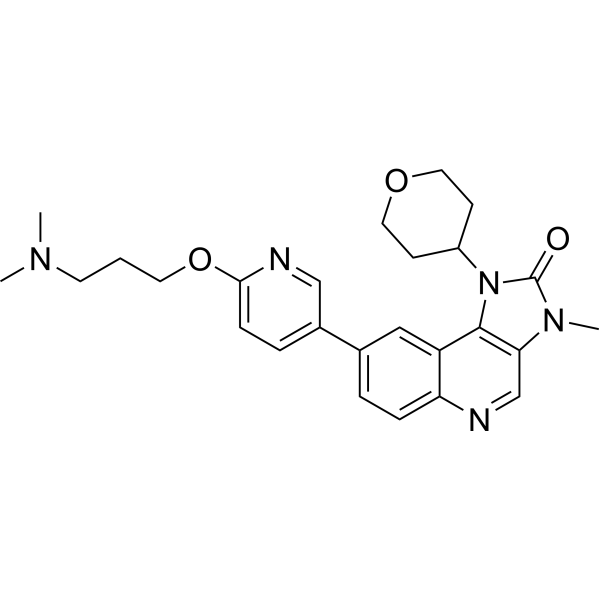
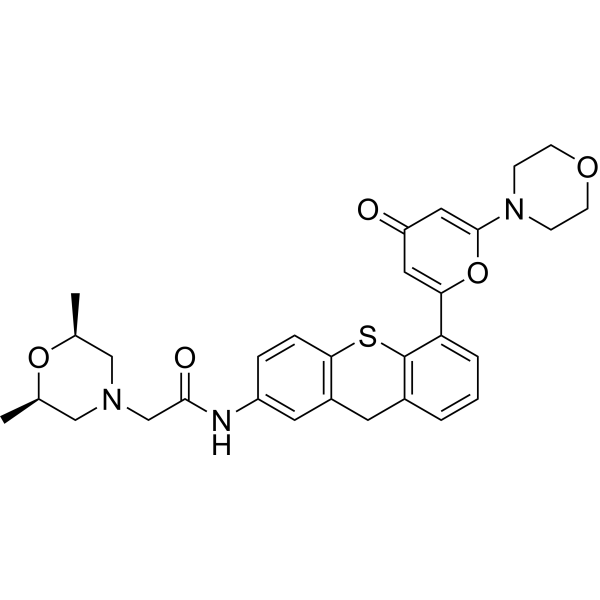
 0 ImagesSynonyms: VE-822 hydrochloride; VX-970 hydrochloride; M6620 hydrochlorideBerzosertib (VE-822) hydrochloride is an orally active, CNS-penetrant, and selective ATR kinase inhibitor. Berzosertib hydrochloride blocks ATR kinase activity, abrogates G2/M cell cycle checkpoint, impairs DNA damage repair. Berzosertib hydrochloride induces apoptosis, inhibnits conlony migration, inhibits cell proliferation, and activates cGAS-STING axes in cancer cells. Berzosertib hydrochloride can be used for the research of cancers, such as head and neck squamous cell carcinoma, and colorectal cancer.
-
Camonsertib
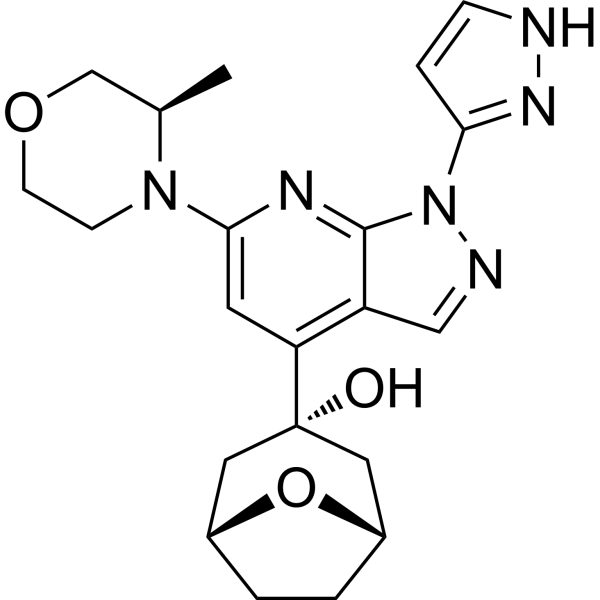 0 ImagesSynonyms: RP-3500; ATR inhibitor 4Camonsertib (RP-3500) is an orally active, selective ATR kinase inhibitor (ATRi) with an IC50 of 1.00 nM in biochemical assays. Camonsertib shows 30-fold selectivity for ATR over mTOR (IC50=120 nM) and >2,000-fold selectivity over ATM, DNA-PK, and PI3Kα kinases. Camonsertib has potent antitumor activity.
-
Lartesertib
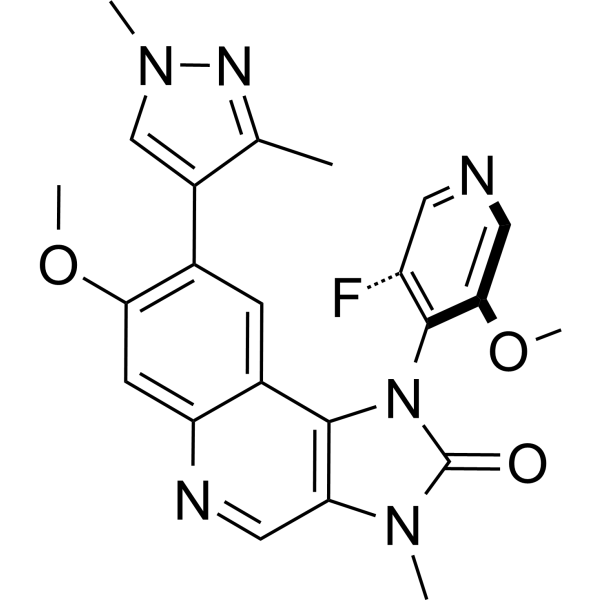 0 ImagesSynonyms: M4076; ATM Inhibitor-5Lartesertib (M4076) is an inhibitor of the serine/threonine protein kinase ATM with high potency. Lartesertib can inhibit the growth of multiple hematopoietic cell lines. Additionally, when combined with the ATR inhibitor Tuvusertib (HY-111451), Lartesertib can promote the death of tumor cells, activate the immune signaling pathway, and exhibit anti-tumor activity.
-
Ro 90-7501
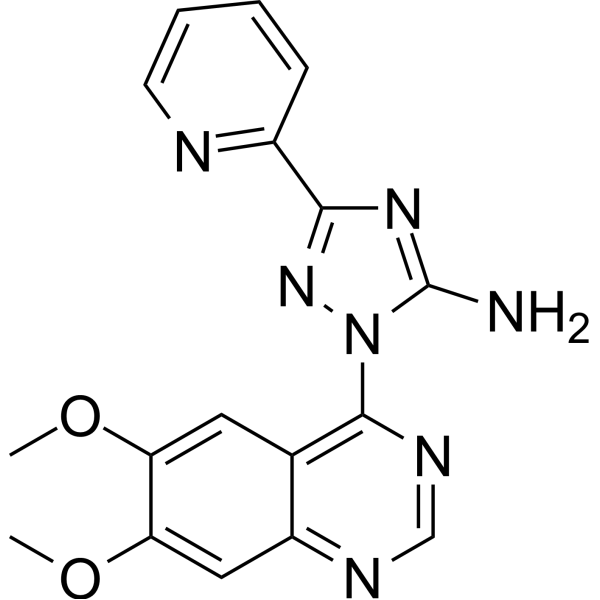
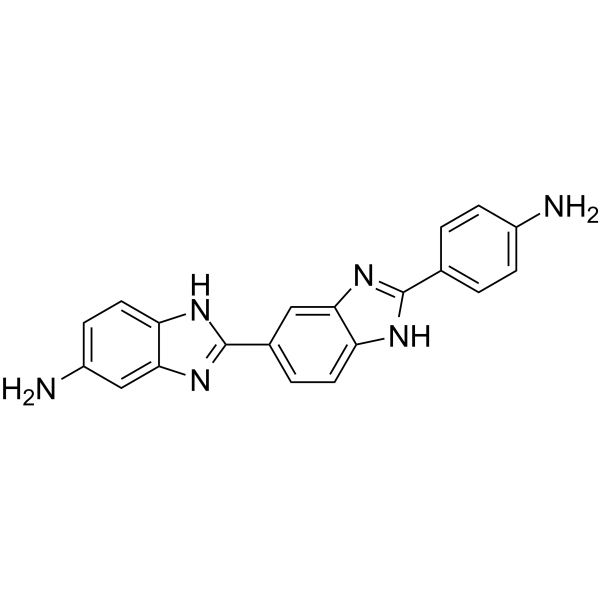 0 ImagesRo 90-7501 is an amyloid β42 (Aβ42) fibril assembly inhibitor that reduces Aβ42-induced cytotoxicity (EC50 of 2 μM). Ro 90-7501 inhibits ATM phosphorylation and DNA repair. RO 90-7501 selectively enhances toll-like receptor 3 (TLR3) and RIG-I-like receptor (RLR) ligand-induced IFN-β gene expression and antiviral response. Ro 90-7501 also inhibits protein phosphatase 5 (PP5) in a TPR-dependent manner. Ro 90-7501 has significant radiosensitizing effects on cervical cancer cells.
-
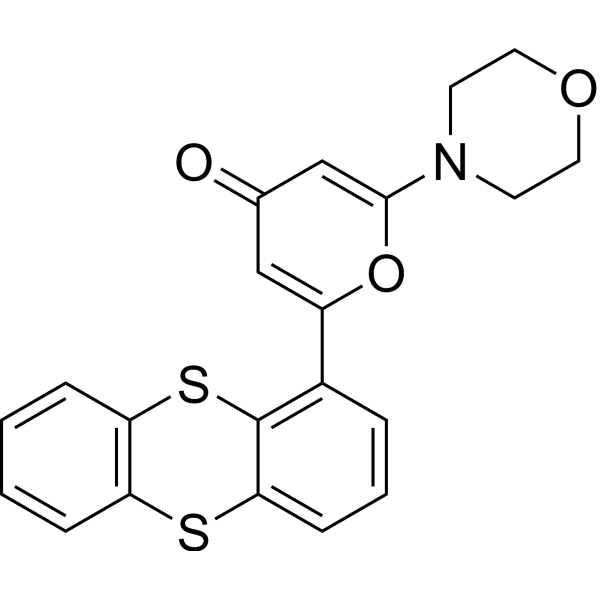
AZ31
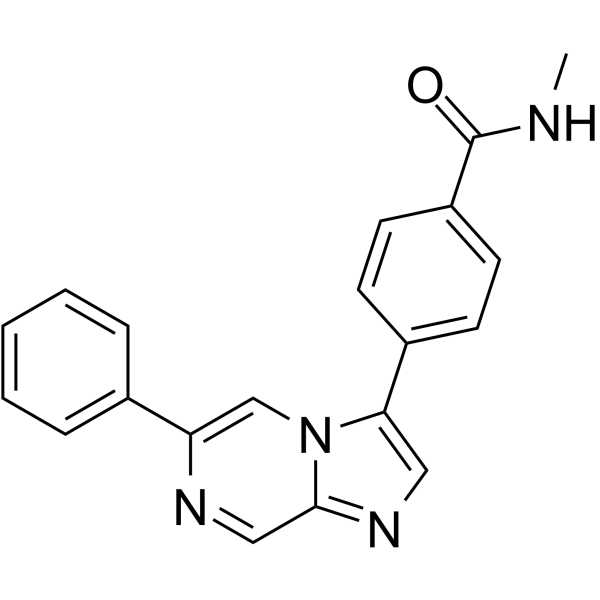
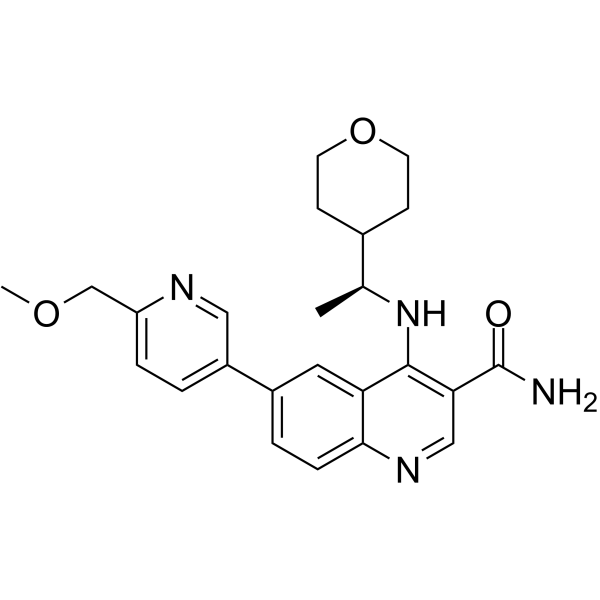 0 ImagesAZ31 is a a potent, highly selective, and orally active ATM inhibitor with an IC50 of <1.2 nM for ATM enzyme, and an IC50 of 46 nM for ATM in cell. AZ31 shows excellent selectivity over ATR (>500-fold) and excellent PIKK-family selectivity and pan-kinase selectivity. AZ31 is a potent radiosensitizer in vitro, it can be used for the research of cancer.
-
PROTAC ATM degrader-1
 0 ImagesPROTAC ATM degrader-1 is a ATM PROTAC degrader with a KD value of 1.17 nM. PROTAC ATM degrader-1 triggers DNA damage response, cell cycle arrest, and apoptosis in cancer cells via the ubiquitin-proteasome-dependent degradation pathway. PROTAC ATM degrader-1 can be used for research on colorectal cancer.
-
ATM Inhibitor-1
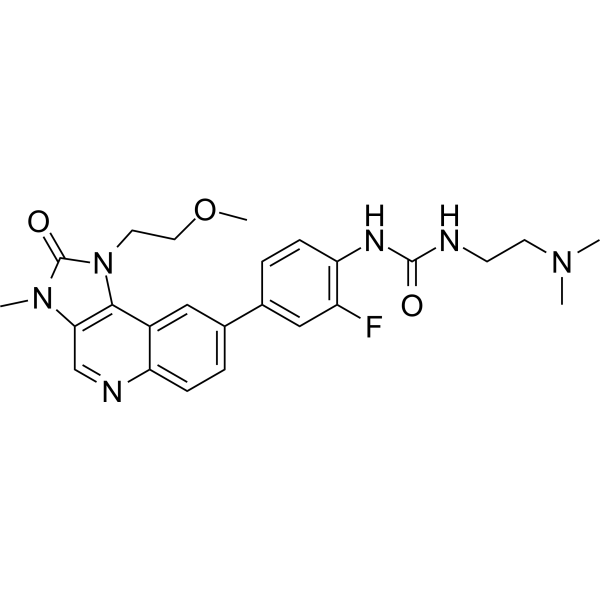
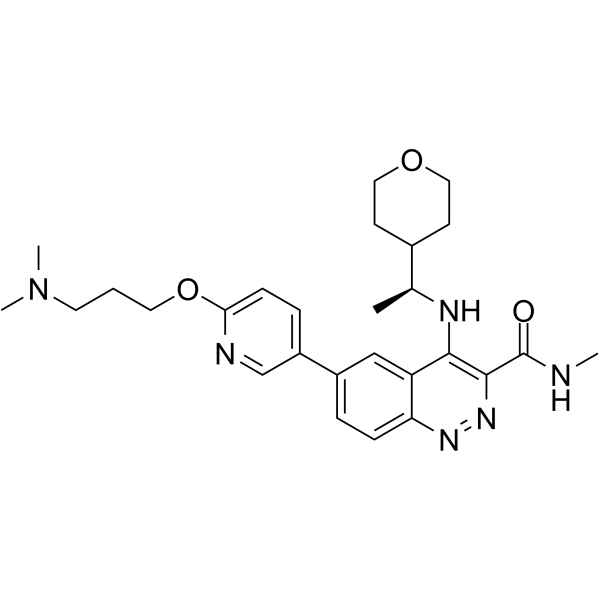 0 ImagesCat. No.: HY-112614CAS No.: 2135639-94-8ATM Inhibitor-1 is a highly potent, selective and orally active ATM inhibitor, with an IC50 of 0.7 nM, shows weak activity against mTOR (IC50, 21 μM), DNAPK (IC50, 2.8 μM), PI3Kα (IC50, 3.8 μM), PI3Kβ (IC50, 10.3 μM), PI3Kγ (IC50, 3 μM) and PI3Kδ (IC50, 0.73 μM). ATM Inhibitor-1 exhibits anti-tumor activity.
- 1
- 2




