



BTYNB
Based on 1 publication(s) in Google Scholar
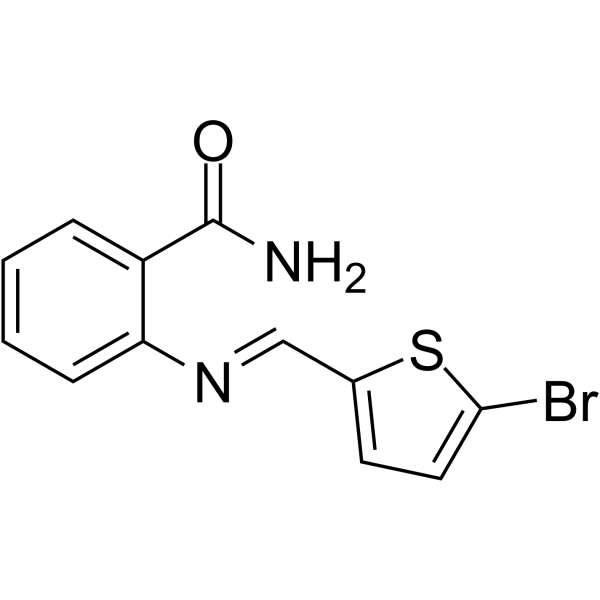
BTYNB is a structure-specific nucleic acid binder and IGF2BP1 inhibitor (with an IC50 of 5 μM against hBTYNB). BTYNB disrupts the IGF2BP1-RNA interaction and blocks its binding to oncogenic mRNAs such as c-Myc, MDM2, PD-L1. BTYNB completely blocks the INHBA-Smad2/3 pathway, disrupts the MYCN/IGF2BP1 loop, and thereby induces apoptosis and cell cycle arrest, effectively inhibiting the proliferation and survival of cancer cells. In addition, BTYNB acts as an immune activator and tumor microenvironment modulator, enhances T cell-mediated tumor killing, and produces significant synergistic effects with inhibitors of PD-1, BRD and BIRC5. BTYNB can be used in relevant research on various malignant tumors including ovarian cancer, neuroblastoma, leukemia and melanoma.
연구목적의 판매만을 진행합니다. 환자를 대상으로 한 판매는 하지 않습니다.
- Purity : 98.0%
- CAS No.: 304456-62-0
- 화학식: C12H9BrN2OS
- 분자량:309.18
-
보관:
4°C, protect from light
* In solvent : -80°C, 6 months; -20°C, 1 month (protect from light)

To place orders, for customer services and technical support, please contact: MedChemExpress USA
Tel: 609-228-6898 E-mail: [email protected] [email protected]


-
 Biological Activity
-
Chemical Information
-
용액&용해도
- Protocol
- 순도&문서
- References
-
 Help & FAQs


-
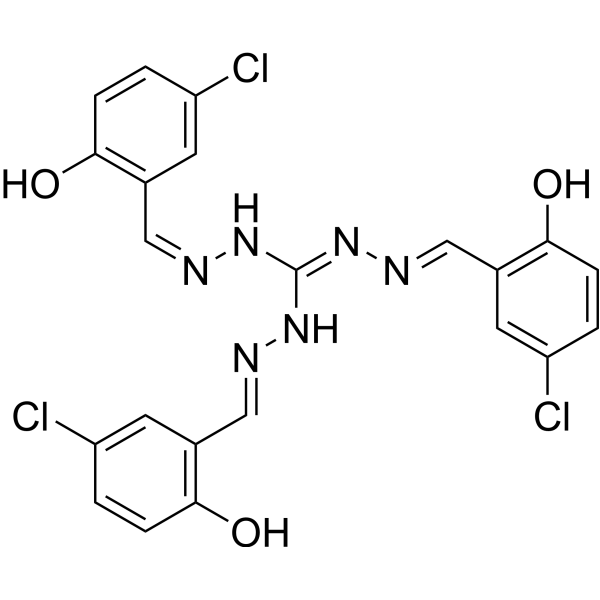
HY-153274
CWI1-2IGF2BP2 Inhibitor -
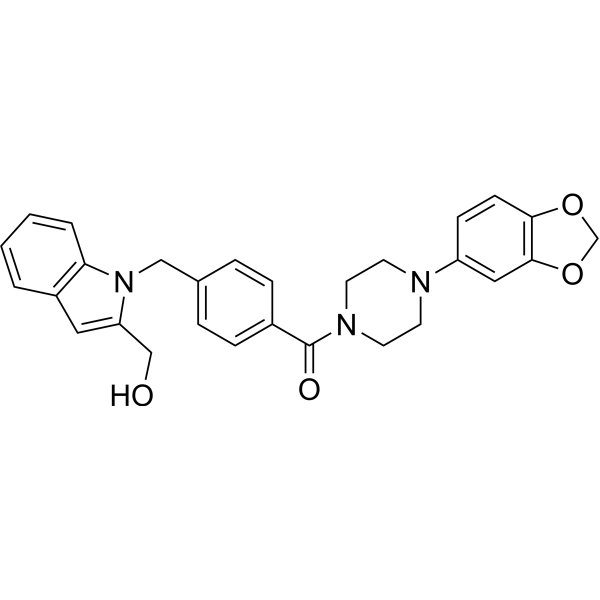
HY-144873
AVJ16IGF2BP1 Inhibitor -
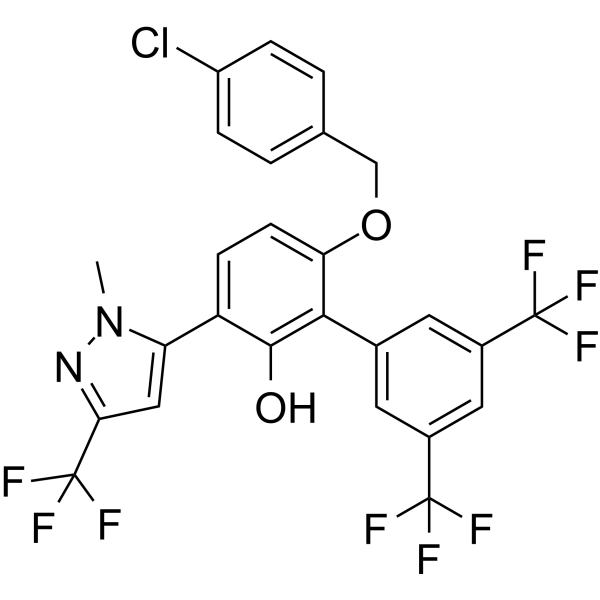
HY-129600
MYCi361c-Myc Inhibitor -
HY-N0416
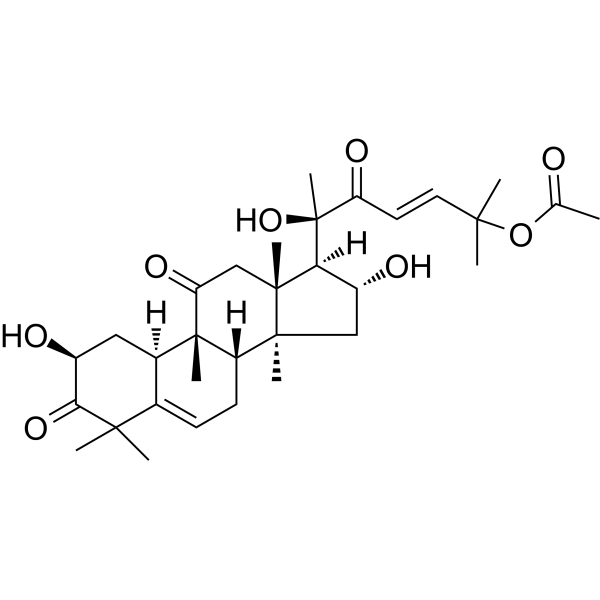
Cucurbitacin BBioactive Tetracyclic Triterpenoid -
HY-12702
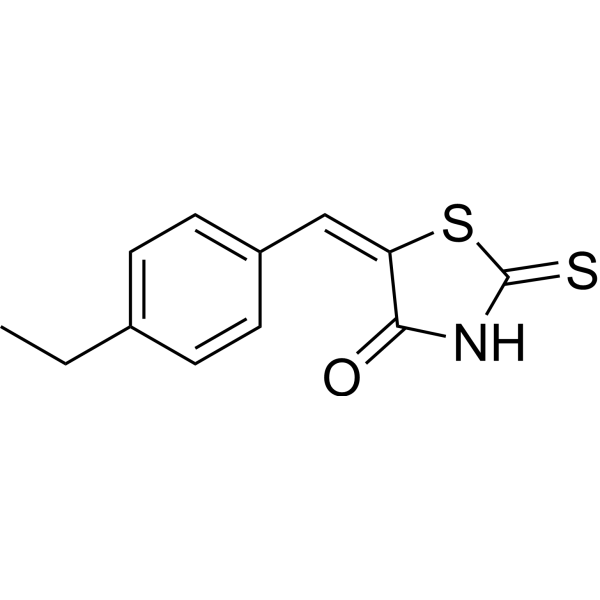
10058-F4c-Myc Inhibitor -
HY-16291
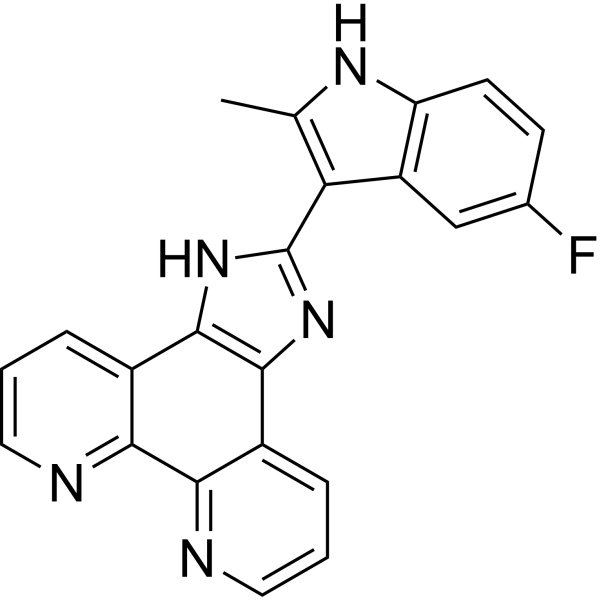
APTO-253 -
HY-100996
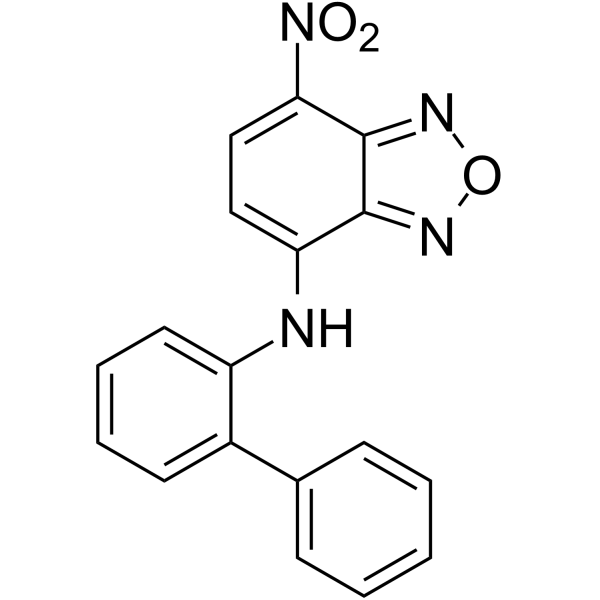
10074-G5c-Myc-Max Inhibitor -
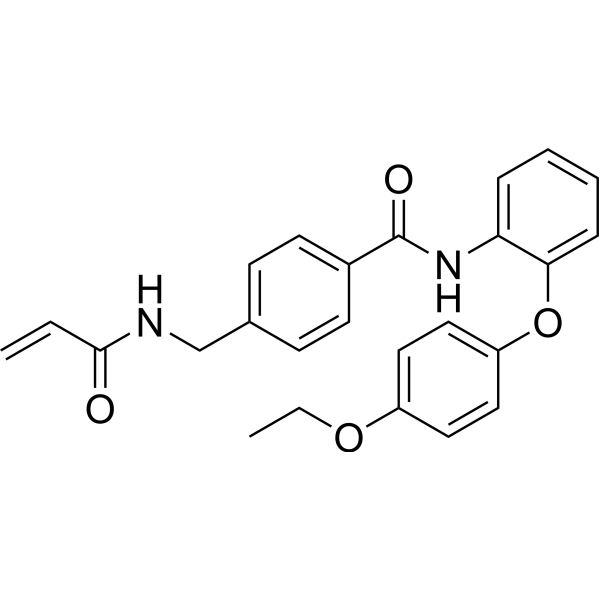
HY-134761
EN4Covalent Ligand of c-MYC -
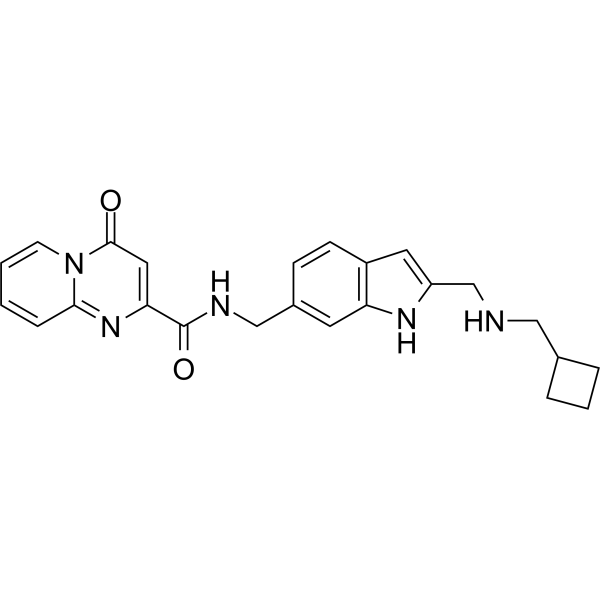
HY-156677
STC-15METTL3 Inhibitor -
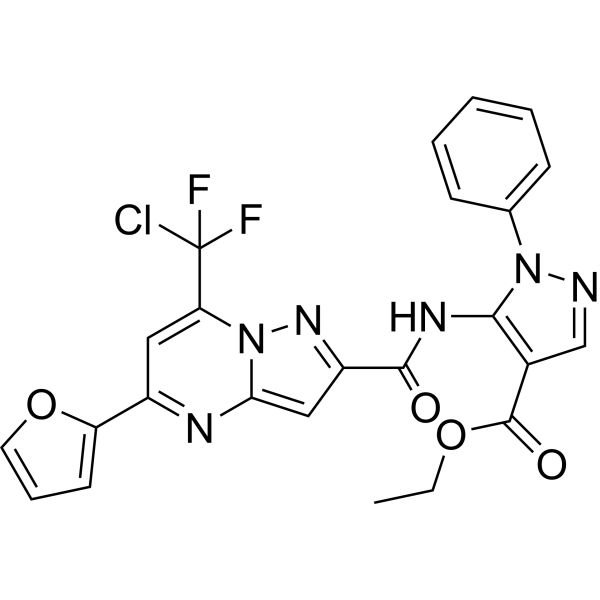
HY-100669
Mycro 3Myc-Max Inhibitor -
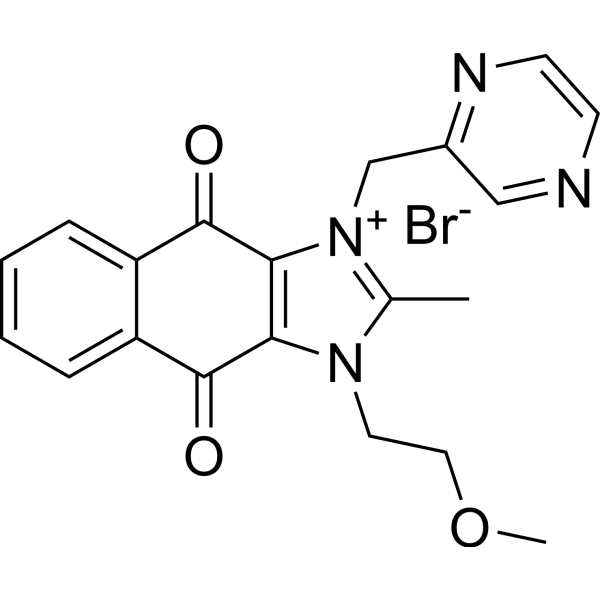
HY-10194
Sepantronium bromideSurvivin Inhibitor -
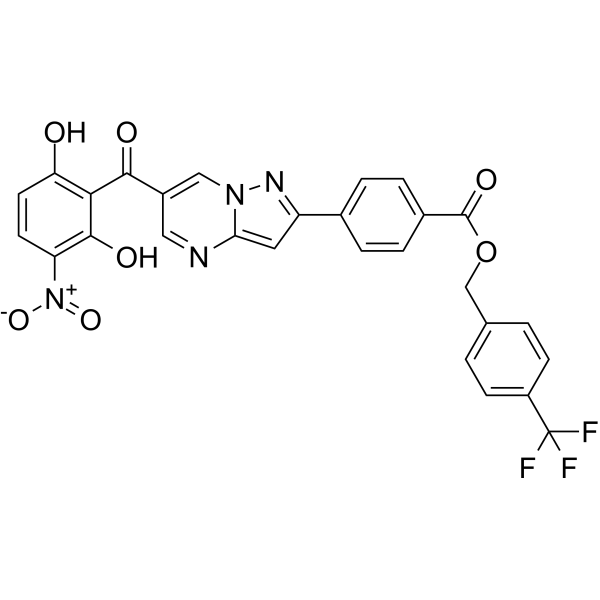
HY-155489
DDO-2728ALKBH5 Inhibitor
Publications Citing Use of MedChemExpress (MCE) BTYNB
More

Biological Activity
제품 설명
IC50 & Target
IC50: 5 μM (IMP1 c-Myc mRNA internation)[1]
Cellular Effect
|
Cell Line

|
Type | Value | Description | References |
|---|---|---|---|---|
| HL-60 | IC50 |
21.56 μM
Compound: 2; BTYNB
|
Antiproliferative activity against human HL-60 cells assessed as reduction in cell viability incubated for 24 hrs by MTT assay
Antiproliferative activity against human HL-60 cells assessed as reduction in cell viability incubated for 24 hrs by MTT assay
|
[PMID: 38382391] |
| K562 | IC50 |
6.76 μM
Compound: 2; BTYNB
|
Antiproliferative activity against human K562 cells assessed as reduction in cell viability incubated for 24 hrs by MTT assay
Antiproliferative activity against human K562 cells assessed as reduction in cell viability incubated for 24 hrs by MTT assay
|
[PMID: 38382391] |
In Vitro
BTYNB (20 μM; 24-36 h) significantly inhibits the migration and invasion of KYSE30 and TE1 ESCC cells in vitro[2].
BTYNB (10 μM; 48 h) significantly increases apoptosis in KYSE30 and TE1 ESCC cells[2].
BTYNB (0.38-24 µM; 72 h) combined with Mivebresib exhibits strong synergy in reducing BE(2)-C human neuroblastoma cell viability after 72 hours of treatment[3].
BTYNB (7-21 μM; 24 h) induces mild apoptosis in human HL60 and K562 leukemic cells after 24 h of treatment, accompanied by significant upregulation of the pro-apoptotic gene BAK[4].
BTYNB (7-21 μM; 24 h) induces S-phase cell cycle arrest in human K562 leukemic cells (with no effect on HL60 cells) after 24 h of treatment, accompanied by significant upregulation of the cell cycle arrest gene p21 in both cell lines[4].
MedChemExpress (MCE) has not independently confirmed the accuracy of these methods. They are for reference only.
-
Cell Line:KYSE30, TE1 esophageal squamous cell carcinoma (ESCC) cells
-
Concentration:20 μM
-
Incubation Time:36 h (KYSE30 cells); 24 h (TE1 cells)
-
Result:Reduced the relative cell area covered by invading KYSE30 cells to approximately 30% of control levels.
Reduced the relative cell area covered by migrating KYSE30 cells to approximately 40% of control levels.
Reduced the relative cell area covered by invading TE1 cells to approximately 20% of control levels.
Reduced the relative cell area covered by migrating TE1 cells to approximately 10% of control levels.
In Vivo
MedChemExpress (MCE) has not independently confirmed the accuracy of these methods. They are for reference only.
-
Animal Model:C57BL/6NCrl mice (female, 6 weeks old, intraperitoneal injection of 5 × 10⁶ ID8/Trp53-/- cells)[1]
-
Dosage:40 mg/kg (monotherapy); 40 mg/kg (combination with anti-PD-1 antibody 8 mg/kg)
-
Administration:i.p.; twice weekly
-
Result:Improved median survival by ~30% compared to the control group and by 15% compared to anti-PD-1 monotherapy when combined with anti-PD-1 antibody.
Reduced tumor cell dominance in ascitic fluid to 67% when combined with anti-PD-1 antibody.
Shifted tumor cells to an immune-responsive phenotype when combined with anti-PD-1 antibody.
Increased immune cell accumulation in ascites (with a higher proportion of cytotoxic T cells than BTYNB monotherapy) when combined with anti-PD-1 antibody.
- Multiplex immunofluorescence IHC
- Detection of Apoptosis
- TUNEL staining for apoptotic DNA fragmentation
- Flow cytometric DNA-content cell-cycle staining
- Annexin V plus membrane-impermeant dye apoptosis staining
- BrdU Incorporation Assay
- Multiplex immunohistochemistry
- Apoptosis Solutions
- Protocol for Cell Cycle
- Research Protocol for Cancer Immunology
- Cell Viability Determination by MTT Colorimetric Assay


Chemical Information
-
CAS No. 304456-62-0
-
Appearance Solid
-
분자량 309.18
-
화학식 C12H9BrN2OS
-
Color White to light yellow
-
SMILES
O=C(C1=CC=CC=C1/N=C/C2=CC=C(S2)Br)N
-
선적
Room temperature in continental US; may vary elsewhere.
-
보관
4°C, protect from light
* In solvent : -80°C, 6 months; -20°C, 1 month (protect from light)


Publications (1)
-
Journal Impact Factor
-
Most Recent


용액&용해도
In Vitro:
DMSO : 62.5 mg/mL (202.15 mM; Need ultrasonic; Hygroscopic DMSO has a significant impact on the solubility of product, please use newly opened DMSO)
Please refer to the solubility information to select the appropriate solvent. Once prepared, please aliquot and store the solution to prevent product inactivation from repeated freeze-thaw cycles.
Storage method and period of stock solution: -80°C, 6 months; -20°C, 1 month (protect from light). When stored at -80°C, please use it within 6 months. When stored at -20°C, please use it within 1 month.
Please refer to the solubility information to select the appropriate solvent. Once prepared, please aliquot and store the solution to prevent product inactivation from repeated freeze-thaw cycles.
Storage method and period of stock solution: -80°C, 6 months; -20°C, 1 month (protect from light). When stored at -80°C, please use it within 6 months. When stored at -20°C, please use it within 1 month.
Concentration (start) × Volume (start) = Concentration (final) × Volume (final)
In Vivo:
Select the appropriate dissolution method based on your experimental animal and administration route.
- For the following dissolution methods, please ensure to first prepare a clear stock solution using an In Vitro approach and then sequentially add co-solvents:
- To ensure reliable experimental results, the clarified stock solution can be appropriately stored based on storage conditions. As for the working solution for In Vivo experiments, it is recommended to prepare freshly and use it on the same day.
- The percentages shown for the solvents indicate their volumetric ratio in the final prepared solution. If precipitation or phase separation occurs during preparation, heat and/or sonication can be used to aid dissolution.
Add each solvent one by one: 10% DMSO 40% PEG300 5% Tween-80 45% Saline
Solubility: ≥ 2.5 mg/mL (8.09 mM); Clear solution
This protocol yields a clear solution of ≥ 2.5 mg/mL (saturation unknown).
Taking 1 mL working solution as an example, add 100 μL DMSO stock solution (25.0 mg/mL) to 400 μL PEG300, and mix evenly; then add 50 μL Tween-80 and mix evenly; then add 450 μL Saline to adjust the volume to 1 mL.
Preparation of Saline: Dissolve 0.9 g sodium chloride in ddH₂O and dilute to 100 mL to obtain a clear Saline solution.
Add each solvent one by one: 10% DMSO 90% (20% SBE-β-CD in Saline)
Solubility: ≥ 2.5 mg/mL (8.09 mM); Clear solution
This protocol yields a clear solution of ≥ 2.5 mg/mL (saturation unknown).
Taking 1 mL working solution as an example, add 100 μL DMSO stock solution (25.0 mg/mL) to 900 μL 20% SBE-β-CD in Saline, and mix evenly.
Preparation of 20% SBE-β-CD in Saline (4°C, storage for one week): 2 g SBE-β-CD powder is dissolved in 10 mL Saline, completely dissolve until clear.
In Vivo Dissolution Calculator
Please enter the basic information of animal experiments:
-
-
-
-
Recommended: Prepare an additional quantity of animals to account for potential losses during experiments.
Please enter your animal formula composition:
-
%DMSO +
Recommended: Keep the proportion of DMSO in working solution below 2% if your animal is weak.
-
%+
-
+%Tween-80 + +
-
%Saline +
The co-solvents required include: DMSO, . All of co-solvents are available by MedChemExpress (MCE). , Tween 80. All of co-solvents are available by MedChemExpress (MCE).
Working solution concentration: 0.22 mg/mL
Method for preparing stock solution: mg drug dissolved in μL DMSO. Stock solution concentration: mg/mL. * In solvent : -80°C, 6 months; -20°C, 1 month (protect from light)
1. Take μL DMSO stock solution;
2. Add μL .
μL , mix evenly;
3. Then add μL Tween 80, mix evenly;
4. Then add μL
Please ensure that the stock solution in the first step is dissolved to a clear state, and add co-solvents in sequence. You can use ultrasonic heating (ultrasonic cleaner, recommended frequency 20-40 kHz), vortexing, etc. to assist dissolution.


순도&문서
-
Data Sheet (283 KB)
-
SDS (393 KB)
- English - EN (393 KB)
- Français - FR (393 KB)
- Deutsch - DE (393 KB)
- Norwegian - NO (393 KB)
- Español - ES (393 KB)
- Swedish - SV (393 KB)
- Italian - IT (393 KB)
- Korean - KR (393 KB)
- Portuguese - PT (393 KB)
-
Handling Instructions (2659 KB)
References
[1]. Bley N, et al. Inhibition of RNA-binding proteins enhances immunotherapy in ovarian cancer. Signal Transduct Target Ther. 2025;10(1):419. Published 2025 Dec 25. [Content Brief]
[4]. Jamal A, et al. BTYNB, an inhibitor of RNA binding protein IGF2BP1 reduces proliferation and induces differentiation of leukemic cancer cells. Saudi J Biol Sci. 2023;30(3):103569. [Content Brief]
[5]. Mahapatra L, et al. A Novel IMP1 Inhibitor, BTYNB, Targets c-Myc and Inhibits Melanoma and Ovarian Cancer Cell Proliferation. Transl Oncol. 2017;10(5):818-827. [Content Brief]


Complete Stock Solution Preparation Table
Please refer to the solubility information to select the appropriate solvent. Once prepared, please aliquot and store the solution to prevent product inactivation from repeated freeze-thaw cycles.
Storage method and period of stock solution: -80°C, 6 months; -20°C, 1 month (protect from light). When stored at -80°C, please use it within 6 months. When stored at -20°C, please use it within 1 month.
| Optional Solvent | Concentration Solvent Mass | 1 mg | 5 mg | 10 mg | 25 mg |
|---|---|---|---|---|---|
| DMSO | 1 mM | 3.2344 mL | 16.1718 mL | 32.3436 mL | 80.8590 mL |
| 5 mM | 0.6469 mL | 3.2344 mL | 6.4687 mL | 16.1718 mL | |
| 10 mM | 0.3234 mL | 1.6172 mL | 3.2344 mL | 8.0859 mL | |
| 15 mM | 0.2156 mL | 1.0781 mL | 2.1562 mL | 5.3906 mL | |
| 20 mM | 0.1617 mL | 0.8086 mL | 1.6172 mL | 4.0430 mL | |
| 25 mM | 0.1294 mL | 0.6469 mL | 1.2937 mL | 3.2344 mL | |
| 30 mM | 0.1078 mL | 0.5391 mL | 1.0781 mL | 2.6953 mL | |
| 40 mM | 0.0809 mL | 0.4043 mL | 0.8086 mL | 2.0215 mL | |
| 50 mM | 0.0647 mL | 0.3234 mL | 0.6469 mL | 1.6172 mL | |
| 60 mM | 0.0539 mL | 0.2695 mL | 0.5391 mL | 1.3477 mL | |
| 80 mM | 0.0404 mL | 0.2021 mL | 0.4043 mL | 1.0107 mL | |
| 100 mM | 0.0323 mL | 0.1617 mL | 0.3234 mL | 0.8086 mL |


BTYNB Related Classifications
HY-124447 Related Classifications
 Powered by Bioz