



Neoliquiritin
Based on 1 publication(s) in Google Scholar
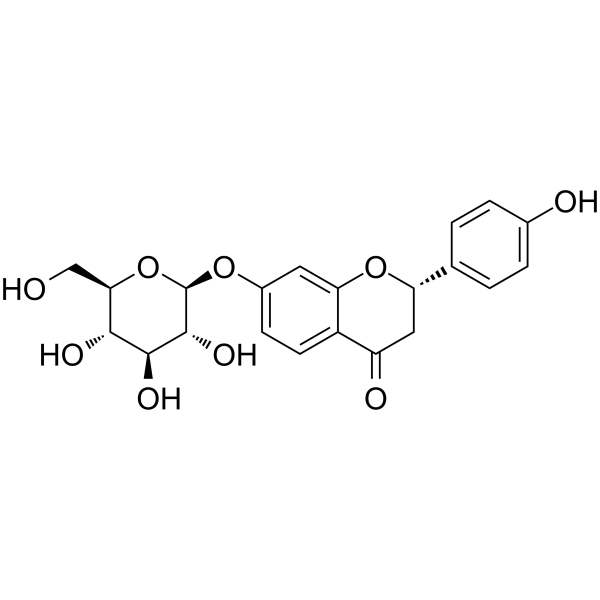
Neoliquiritin is a flavonoid and flavanone-derived cytotoxic agent with anticancer activity and neuroprotective effects. Neoliquiritin exhibits excellent tumor specificity, exerting a more pronounced killing effect on cancer cells compared with normal oral cells. Neoliquiritin also exerts neuroprotective effects by inhibiting ATP depletion and the elevation of caspase 3/7 activity. Widely present in the roots of Glycyrrhiza uralensis, Glycyrrhiza inflata and Glycyrrhiza glabra, Neoliquiritin can be applied to studies on human oral squamous cell carcinoma, leukemia, Parkinson's disease and other conditions.
For research use only. We do not sell to patients.
- Purity : 99.85%
- CAS No.: 5088-75-5
- Formula: C21H22O9
- Molecular Weight:418.39
-
Storage:
4°C, protect from light
* In solvent : -80°C, 6 months; -20°C, 1 month (protect from light)

To place orders, for customer services and technical support, please contact: MedChemExpress USA
Tel: 609-228-6898 E-mail: [email protected] [email protected]


-
 Biological Activity
-
Chemical Information
-
Solvent & Solubility
- Protocols
- Purity & Documentation
- References
-
 Help & FAQs



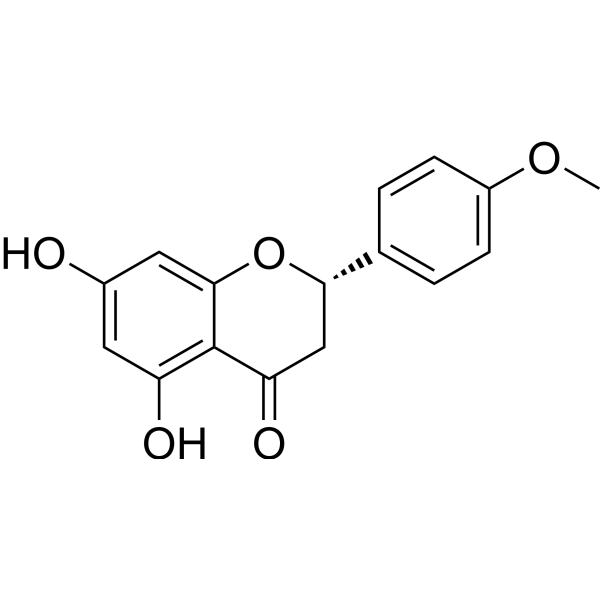
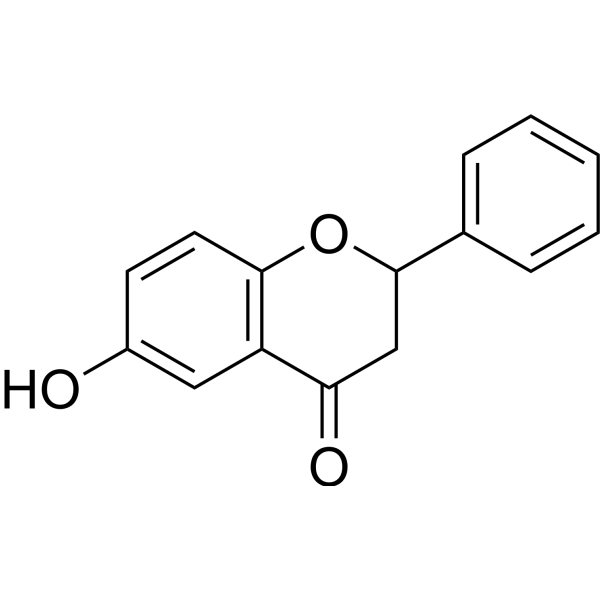
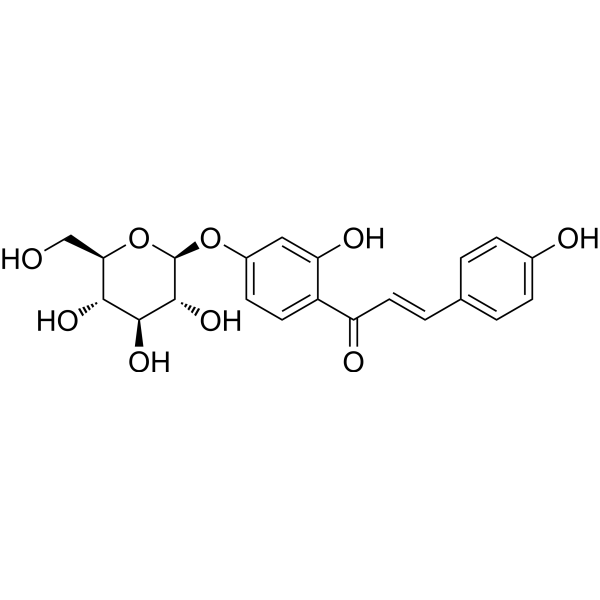
Publications Citing Use of MedChemExpress (MCE) Neoliquiritin
MoreAll Caspase Isoforms
More

Biological Activity
Description
IC50 & Target
|
Caspase 3 |
Caspase-7 |
In Vitro
Neoliquiritin (48 h after 48 h initial cell seeding) shows moderate, cell-dependent cytotoxicity against HSC-2, HSC-3, HSC-4, HL-60 tumor cells and HGF, HPC, HPLF normal cells, with a tumor-specificity index of 0.264[2].
Neoliquiritin (2.5-10 µg/mL; 24 h) significantly increases the viability of SH-SY5Y cells[3].
Neoliquiritin (2.5-10 µg/mL; 2 h pre-treatment, followed by 24 h incubation with MPP+) significantly protects SH-SY5Y cells from MPP+-induced neurotoxicity, restoring cell viability to ~80% of control[3].
Neoliquiritin (2.5 µg/mL; 2 h pre-treatment, followed by 24 h incubation with MPP+) significantly attenuates MPP+-induced elevation of caspase 3/7 activity in SH-SY5Y cells[3].
MedChemExpress (MCE) has not independently confirmed the accuracy of these methods. They are for reference only. Further protocols information, click here.
-
Cell Line:human neuroblastoma SH-SY5Y cells
-
Concentration:2.5 µg/mL; 5 µg/mL; 10 µg/mL
-
Incubation Time:24 h
-
Result:Increased cell viability significantly relative to control at 2.5 µg/mL.
Increased cell viability significantly relative to control at 5 µg/mL.
Increased cell viability significantly relative to control at 10 µg/mL.
-
Cell Line:human neuroblastoma SH-SY5Y cells exposed to MPP+
-
Concentration:2.5 µg/mL; 5 µg/mL; 10 µg/mL
-
Incubation Time:2 h pre-treatment, followed by 24 h incubation with MPP+
-
Result:Restored cell viability to ~80% of control relative to MPP+-treated cells at 2.5 µg/mL.
Restored cell viability to ~80% of control relative to MPP+-treated cells at 5 µg/mL.
Restored cell viability to ~80% of control relative to MPP+-treated cells at 10 µg/mL.
-
Cell Line:human neuroblastoma SH-SY5Y cells exposed to MPP+
-
Concentration:2.5 µg/mL
-
Incubation Time:2 h pre-treatment, followed by 24 h incubation with MPP+
-
Result:Reduced caspase 3/7 activity to ~1.5-fold of control relative to MPP+-treated cells.
In Vivo
MedChemExpress (MCE) has not independently confirmed the accuracy of these methods. They are for reference only.
-
Animal Model:Kunming mice with Non-alcoholic fatty liver disease (male, 8 weeks old, 20 g)[1]
-
Dosage:87.5 mg/kg; 175 mg/kg; 350 mg/kg
-
Administration:p.o.; daily; 4 weeks
-
Result:Reduced hepatic TG to 166.22 μmol/g, and reduced relative area of hepatic fat vacuoles by 73.68% at 87.5 mg/kg.
Reduced hepatic MDA to 2.12 nmol/g, hepatic cholesterol to 0.100 mmol/g, hepatic TG to 147.33 μmol/g, and reduced relative area of hepatic fat vacuoles by 79.53% at 175 mg/kg.
Reduced hepatic MDA to 1.99 nmol/g, hepatic cholesterol to 0.096 mmol/g, hepatic TG to 128.45 μmol/g, and reduced relative area of hepatic fat vacuoles by 85.14% at 350 mg/kg.


Chemical Information
-
CAS No. 5088-75-5
-
Appearance Solid
-
Molecular Weight 418.39
-
Formula C21H22O9
-
Color White to yellow
-
SMILES
O=C1C[C@@H](C2=CC=C(O)C=C2)OC3=CC(O[C@H]4[C@@H]([C@H]([C@@H]([C@@H](CO)O4)O)O)O)=CC=C13
-
Structure Classification
-
Initial Source
-
Shipping
Room temperature in continental US; may vary elsewhere.
-
Storage
4°C, protect from light
* In solvent : -80°C, 6 months; -20°C, 1 month (protect from light)


Publications (1)
-
Journal Impact Factor
-
Most Recent
-
Bioorg Med Chem
Identification of a novel Aurora B inhibitor using the AI-driven drug screening and docking-based traditional screening. [Abstract]2025 Sep 27:131:118423. PMID: 41033076


Solvent & Solubility
In Vitro:
DMSO : 250 mg/mL (597.53 mM; ultrasonic and warming and heat to 60°C; Hygroscopic DMSO has a significant impact on the solubility of product, please use newly opened DMSO)
Please refer to the solubility information to select the appropriate solvent. Once prepared, please aliquot and store the solution to prevent product inactivation from repeated freeze-thaw cycles.
Storage method and period of stock solution: -80°C, 6 months; -20°C, 1 month (protect from light). When stored at -80°C, please use it within 6 months. When stored at -20°C, please use it within 1 month.
Please refer to the solubility information to select the appropriate solvent. Once prepared, please aliquot and store the solution to prevent product inactivation from repeated freeze-thaw cycles.
Storage method and period of stock solution: -80°C, 6 months; -20°C, 1 month (protect from light). When stored at -80°C, please use it within 6 months. When stored at -20°C, please use it within 1 month.
Concentration (start) × Volume (start) = Concentration (final) × Volume (final)
In Vivo:
Select the appropriate dissolution method based on your experimental animal and administration route.
- For the following dissolution methods, please ensure to first prepare a clear stock solution using an In Vitro approach and then sequentially add co-solvents:
- To ensure reliable experimental results, the clarified stock solution can be appropriately stored based on storage conditions. As for the working solution for In Vivo experiments, it is recommended to prepare freshly and use it on the same day.
- The percentages shown for the solvents indicate their volumetric ratio in the final prepared solution. If precipitation or phase separation occurs during preparation, heat and/or sonication can be used to aid dissolution.
Add each solvent one by one: 10% DMSO 40% PEG300 5% Tween-80 45% Saline
Solubility: ≥ 2.08 mg/mL (4.97 mM); Clear solution
This protocol yields a clear solution of ≥ 2.08 mg/mL (saturation unknown).
Taking 1 mL working solution as an example, add 100 μL DMSO stock solution (20.8 mg/mL) to 400 μL PEG300, and mix evenly; then add 50 μL Tween-80 and mix evenly; then add 450 μL Saline to adjust the volume to 1 mL.
Preparation of Saline: Dissolve 0.9 g sodium chloride in ddH₂O and dilute to 100 mL to obtain a clear Saline solution.
Add each solvent one by one: 10% DMSO 90% (20% SBE-β-CD in Saline)
Solubility: ≥ 2.08 mg/mL (4.97 mM); Clear solution
This protocol yields a clear solution of ≥ 2.08 mg/mL (saturation unknown).
Taking 1 mL working solution as an example, add 100 μL DMSO stock solution (20.8 mg/mL) to 900 μL 20% SBE-β-CD in Saline, and mix evenly.
Preparation of 20% SBE-β-CD in Saline (4°C, storage for one week): 2 g SBE-β-CD powder is dissolved in 10 mL Saline, completely dissolve until clear.
In Vivo Dissolution Calculator
Please enter the basic information of animal experiments:
-
-
-
-
Recommended: Prepare an additional quantity of animals to account for potential losses during experiments.
Please enter your animal formula composition:
-
%DMSO +
Recommended: Keep the proportion of DMSO in working solution below 2% if your animal is weak.
-
%+
-
+%Tween-80 + +
-
%Saline +
The co-solvents required include: DMSO, . All of co-solvents are available by MedChemExpress (MCE). , Tween 80. All of co-solvents are available by MedChemExpress (MCE).
Working solution concentration: 0.22 mg/mL
Method for preparing stock solution: mg drug dissolved in μL DMSO. Stock solution concentration: mg/mL. * In solvent : -80°C, 6 months; -20°C, 1 month (protect from light)
1. Take μL DMSO stock solution;
2. Add μL .
μL , mix evenly;
3. Then add μL Tween 80, mix evenly;
4. Then add μL
Please ensure that the stock solution in the first step is dissolved to a clear state, and add co-solvents in sequence. You can use ultrasonic heating (ultrasonic cleaner, recommended frequency 20-40 kHz), vortexing, etc. to assist dissolution.

Protocols
-
Human pluripotent stem cell midbrain dopaminergic neuron differentiation
Human pluripotent stem cells are directed toward midbrain dopaminergic neurons by first inducing a neural floor-plate-like progenitor state, then patterning cells with ventralizing SHH signaling and midbrain/WNT-FGF cues, and finally maturing progenitors into neurons expressing dopaminergic markers such as TH, NURR1/NR4A2, PITX3, DAT/SLC6A3, VMAT2/SLC18A2, GIRK2/KCNJ6, FOXA2, LMX1A, and EN1. The main readouts are loss of pluripotency, acquisition of FOXA2+/LMX1A+ midbrain floor-plate progenitors, emergence of βIII-tubulin+/MAP2+ neurons, and production of TH+ dopaminergic neurons with molecular, dopamine-release, and electrophysiological features of midbrain dopaminergic identity.
-
Apoptosis Solutions
Apoptosis is a regulated, generally non-lytic cell-death pathway that removes unwanted, damaged, infected, or abnormal cells through coordinated morphological changes, caspase activation, DNA fragmentation, and membrane remodeling. The intrinsic apoptosis pathway is controlled mainly by mitochondrial outer membrane permeabilization, BCL-2 family proteins, cytochrome c release, apoptosome formation, caspase-9 activation, and downstream executioner caspase-3/7 activation. The extrinsic apoptosis pathway is initiated by death receptors such as Fas, TNFR, and TRAIL receptors, which recruit adaptor proteins and activate caspase-8 before engaging executioner caspases or mitochondrial amplification through BID cleavage. Apoptosis is linked to many phenotypes, including cancer cell killing, tissue homeostasis, immune regulation, neurodegeneration, infection response, and treatment-induced cytotoxicity; unresolved questions include how apoptosis interacts with necroptosis, pyroptosis, ferroptos
-
Cell Viability Determination by MTT Colorimetric Assay
The following protocol uses the MTT colorimetric assay as a classic literature-established method for assessing cell viability/metabolic activity in cultured mammalian cells. MTT[3-(4,5-dimethylthiazol-2-yl)-2,5-diphenyltetrazolium bromide] is reduced by metabolically active cells to a colored formazan product; the amount of formazan is quantified spectrophotometrically and provides an indirect measure of metabolically active viable cells. Importantly, MTT reduction reflects cellular oxidoreductase/metabolic activity rather than an absolute direct count of living cells, so changes in cellular metabolism can alter the signal independently of cell number.


Purity & Documentation
-
Data Sheet (278 KB)
-
SDS (252 KB)
- English - EN (252 KB)
- Français - FR (252 KB)
- Deutsch - DE (252 KB)
- Norwegian - NO (252 KB)
- Español - ES (252 KB)
- Swedish - SV (252 KB)
- Italian - IT (252 KB)
- Korean - KR (252 KB)
- Portuguese - PT (252 KB)
-
Handling Instructions (2659 KB)
References


Complete Stock Solution Preparation Table
Please refer to the solubility information to select the appropriate solvent. Once prepared, please aliquot and store the solution to prevent product inactivation from repeated freeze-thaw cycles.
Storage method and period of stock solution: -80°C, 6 months; -20°C, 1 month (protect from light). When stored at -80°C, please use it within 6 months. When stored at -20°C, please use it within 1 month.
| Optional Solvent | Concentration Solvent Mass | 1 mg | 5 mg | 10 mg | 25 mg |
|---|---|---|---|---|---|
| DMSO | 1 mM | 2.3901 mL | 11.9506 mL | 23.9011 mL | 59.7529 mL |
| 5 mM | 0.4780 mL | 2.3901 mL | 4.7802 mL | 11.9506 mL | |
| 10 mM | 0.2390 mL | 1.1951 mL | 2.3901 mL | 5.9753 mL | |
| 15 mM | 0.1593 mL | 0.7967 mL | 1.5934 mL | 3.9835 mL | |
| 20 mM | 0.1195 mL | 0.5975 mL | 1.1951 mL | 2.9876 mL | |
| 25 mM | 0.0956 mL | 0.4780 mL | 0.9560 mL | 2.3901 mL | |
| 30 mM | 0.0797 mL | 0.3984 mL | 0.7967 mL | 1.9918 mL | |
| 40 mM | 0.0598 mL | 0.2988 mL | 0.5975 mL | 1.4938 mL | |
| 50 mM | 0.0478 mL | 0.2390 mL | 0.4780 mL | 1.1951 mL | |
| 60 mM | 0.0398 mL | 0.1992 mL | 0.3984 mL | 0.9959 mL | |
| 80 mM | 0.0299 mL | 0.1494 mL | 0.2988 mL | 0.7469 mL | |
| 100 mM | 0.0239 mL | 0.1195 mL | 0.2390 mL | 0.5975 mL |


Neoliquiritin Related Classifications
HY-N2123 Related Classifications
 Powered by Bioz