



Caspase 12
Caspase-12 belongs to the inflammatory caspase group, but its biology differs from caspase-1, -4, -5, and -11 because it can attenuate endotoxin-induced cytokine production rather than directly promote cytokine maturation[1][2]. Mechanistically, human full-length Caspase-12 reduced lipopolysaccharide-stimulated cytokine production in ex vivo whole blood and was linked to severe sepsis risk in African American individuals[1]. In viral immunity, mouse Caspase-12 controlled West Nile virus infection by regulating TRIM25-mediated RIG-I ubiquitination and type I interferon production[3]. ER-stress studies connect Caspase-12 with apoptosis, because overexpressed full-length caspase-12 underwent processing and ER-stress models showed caspase-12-associated caspase-3 activation[4][5]. In intestinal inflammation, IKKα loss increased unfolded protein response and caspase-12 activation, reducing protective IL-18 secretion during acute colitis[6]. Compared with caspase-1 and caspase-11, however, triple-knockout mouse data found no additional caspase-12 contribution to LPS response, apoptosis, necroptosis, or tunicamycin-induced ER stress in that model[7]. For experimental applications, caspase-12 inhibition with Z-ATAD-FMK reduced oxygen-glucose-deprivation injury, apoptosis, NLRP3, caspase-1, IL-1β, and cleaved caspase-3 in primary astrocytes[8].
References:
- [1]. Saleh M, et al. Differential modulation of endotoxin responsiveness by human caspase-12 polymorphisms. Nature. 2004 May 6;429(6987):75-9. [Content Brief]
- [2]. Martinon F, et al. Inflammatory caspases and inflammasomes: master switches of inflammation. Cell Death Differ. 2007 Jan;14(1):10-22. [Content Brief]
- [3]. Wang P, et al. Caspase-12 controls West Nile virus infection via the viral RNA receptor RIG-I. Nat Immunol. 2010 Oct;11(10):912-9. [Content Brief]
- [4]. Kalai M, et al. Regulation of the expression and processing of caspase-12. J Cell Biol. 2003 Aug 4;162(3):457-67. [Content Brief]
- [5]. Hitomi J, et al. Apoptosis induced by endoplasmic reticulum stress depends on activation of caspase-3 via caspase-12. Neurosci Lett. 2004 Mar 4;357(2):127-30. [Content Brief]
- [6]. Diamanti MA, et al. IKKα controls ATG16L1 degradation to prevent ER stress during inflammation. J Exp Med. 2017 Feb;214(2):423-437. [Content Brief]
- [7]. Salvamoser R, et al. Characterisation of mice lacking the inflammatory caspases-1/11/12 reveals no contribution of caspase-12 to cell death and sepsis. Cell Death Differ. 2019 Jun;26(6):1124-1137. [Content Brief]
- [8]. Liu L, et al. Inhibiting Caspase-12 Mediated Inflammasome Activation protects against Oxygen-Glucose Deprivation Injury in Primary Astrocytes. Int J Med Sci. 2020 Jul 19;17(13):1936-1945. [Content Brief]
All Product Categories
-
Caspase 12 Related Products (3)
Related Products (3)

-
Tauroursodeoxycholate
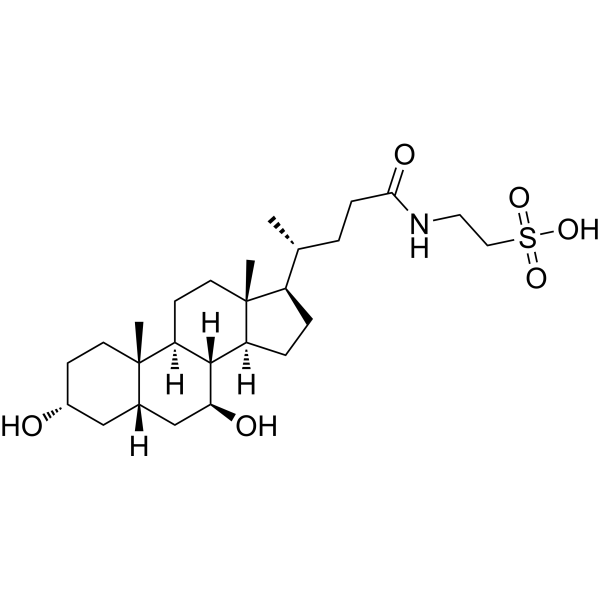 0 ImagesSynonyms: Tauroursodeoxycholic acid; TUDCA; UR 906
-
Tauroursodeoxycholate sodium
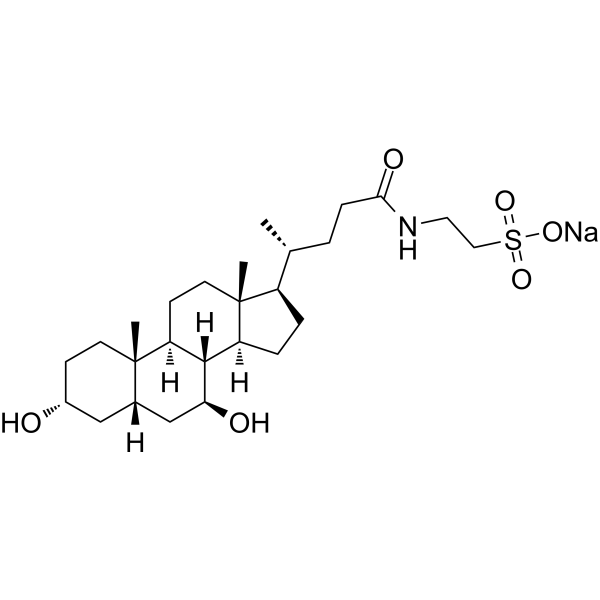 0 ImagesSynonyms: Tauroursodeoxycholic acid sodium; TUDCA sodium; UR 906 sodium



