



Caspase 4
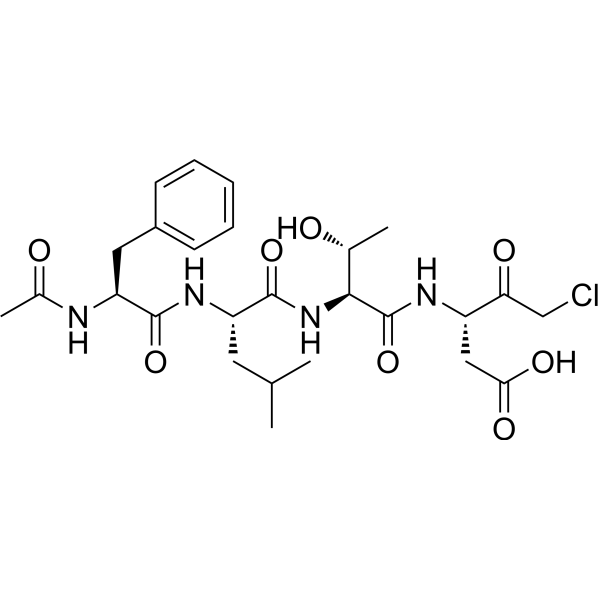
Caspase-4 is a human inflammatory caspase that directly senses cytosolic lipopolysaccharide and activates non-canonical inflammasome signaling[1]. Mechanistically, activated caspase-4 cleaves gasdermin D, whose N-terminal fragment forms membrane pores that drive pyroptosis and support inflammatory cytokine release[2]. In human macrophage models, Shiga toxin 2/LPS activates caspase-4, GSDMD, mitochondrial ROS, and the NLRP3 inflammasome to promote IL-1β production and pyroptosis[3]. Caspase-4 also interacts with TRAF6 and mediates LPS-induced NF-κB-dependent production of IL-8 and CCL4 in THP-1 monocytic cells[4]. Compared with related isoforms, caspase-4 and caspase-5 are human orthologues of murine caspase-11, but caspase-4 detects tetra-acylated LPS and cytosolic Francisella novicida in human macrophages[5]. In human monocytes, caspase-4 and caspase-5 mediate IL-1α and IL-1β release after LPS stimulation, while caspase-5 undergoes rapid processing and caspase-4 remains uncleaved[6]. For experimental applications, intracellular LPS serves as a caspase-4 agonistic trigger, whereas LEVD-fmk and Ac-FLTD-CMK have been used to suppress caspase-4/5 or caspase-4-associated inflammasome activation[6][7].- Caspase-4 links cytosolic LPS sensing to GSDMD cleavage, pyroptosis, and cytokine release[1][2]. - Caspase-4 differs from caspase-5 by activation behavior, pathogen sensing, and cleavage status[5][6].
References:
- [1]. Shi J, et al. Inflammatory caspases are innate immune receptors for intracellular LPS. Nature. 2014 Oct 9;514(7521):187-92. [Content Brief]
- [2]. Zhao Y, et al. Inflammatory Caspases: Activation and Cleavage of Gasdermin-D In Vitro and During Pyroptosis. Methods Mol Biol. 2018;1714:131-148. [Content Brief]
- [3]. Platnich JM, et al. Shiga Toxin/Lipopolysaccharide Activates Caspase-4 and Gasdermin D to Trigger Mitochondrial Reactive Oxygen Species Upstream of the NLRP3 Inflammasome. Cell Rep. 2018 Nov 6;25(6):1525-1536.e7. [Content Brief]
- [4]. Lakshmanan U, et al. Caspase-4 interacts with TNF receptor-associated factor 6 and mediates lipopolysaccharide-induced NF-kappaB-dependent production of IL-8 and CC chemokine ligand 4 (macrophage-inflammatory protein-1 ). J Immunol. 2007 Dec 15;179(12):8480-90. [Content Brief]
- [5]. Lagrange B, et al. Human caspase-4 detects tetra-acylated LPS and cytosolic Francisella and functions differently from murine caspase-11. Nat Commun. 2018 Jan 16;9(1):242. [Content Brief]
- [6]. Viganò E, et al. Human caspase-4 and caspase-5 regulate the one-step non-canonical inflammasome activation in monocytes. Nat Commun. 2015 Oct 28;6:8761. [Content Brief]
- [7]. Tian XX, et al. NLRP6-caspase 4 inflammasome activation in response to cariogenic bacterial lipoteichoic acid in human dental pulp inflammation. Int Endod J. 2021 Jun;54(6):916-925. [Content Brief]
All Product Categories
-
Caspase 4 관련 제품 (11)
관련 제품 (11)

- 1
-
Terfenadine
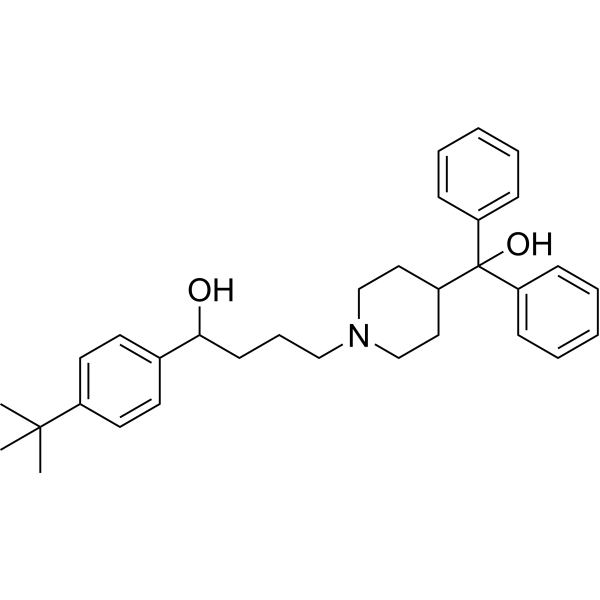 0 ImagesSynonyms: (±)-Terfenadine; MDL-991Terfenadine ((±)-Terfenadine) is a potent open-channel blocker of hERG with an IC50 of 204 nM. Terfenadine, an H1 histamine receptor antagonist, acts as a potent apoptosis inducer in melanoma cells through modulation of Ca2+ homeostasis. Terfenadine induces ROS-dependent apoptosis, simultaneously activates Caspase-4, -2, -9.
-
VRT-043198
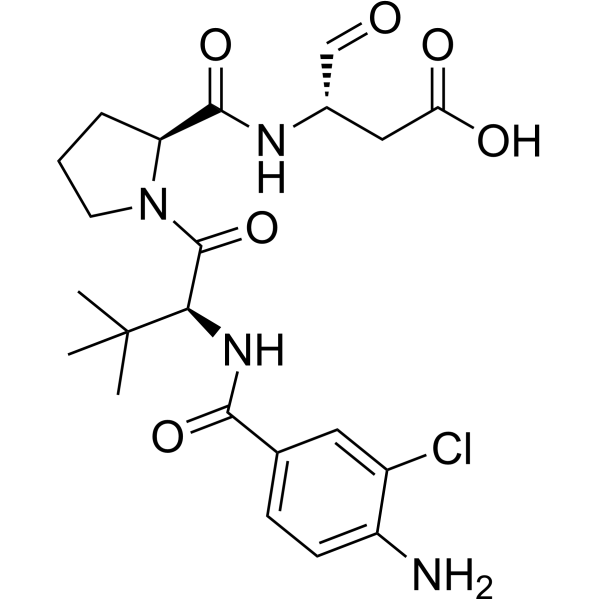 0 ImagesCat. No.: HY-112226CAS No.: 244133-31-1VRT-043198, the agent metabolite of VX-765 (Belnacasan), is a potent, selective and blood-brain barrier permeable inhibitor of interleukin-converting enzyme/caspase-1 subfamily caspases. VRT-043198 exhibits Ki values of 0.8 nM and 0.6 nM for ICE/caspase-1 and caspase-4, respectively.

-
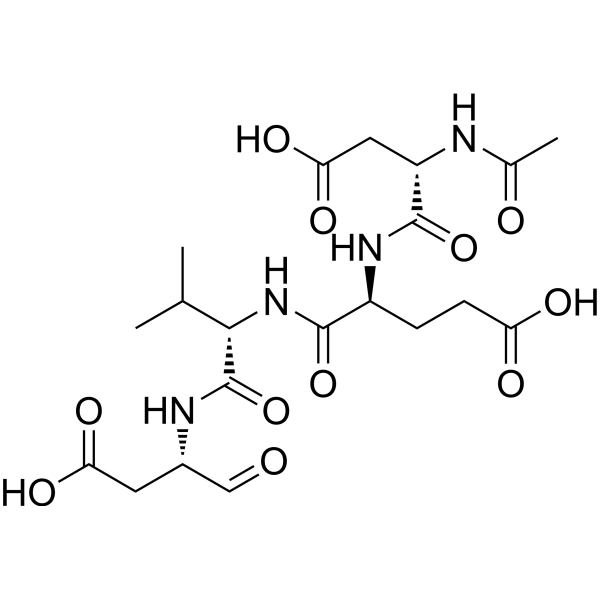
Ac-LEVD-CHO
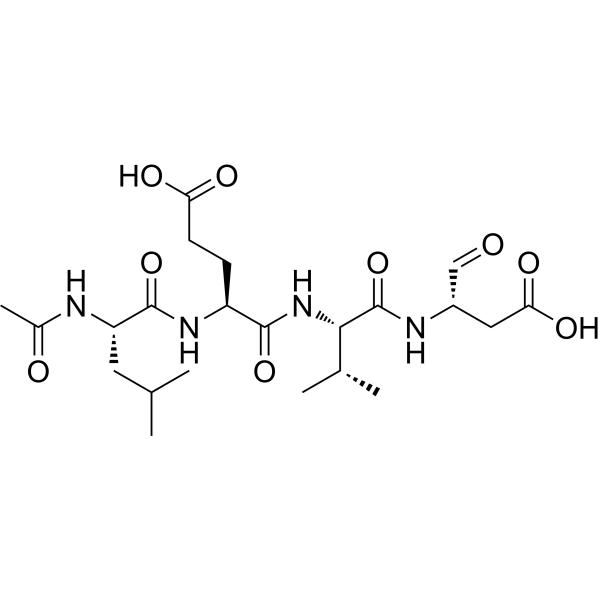 0 ImagesAc-LEVD-CHO is a caspase-4 inhibitor. Ac-LEVD-CHO is a peptide with the sequence of Ac-Leu-Glu-Val-Asp-al.
-
ML132
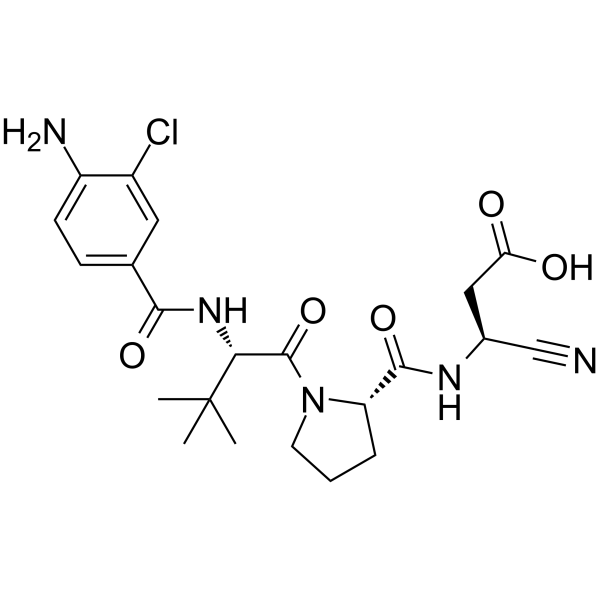 0 ImagesSynonyms: NCGC-00183434ML132 (NCGC-00183434) is a selective caspase 1 inhibitor with an IC50 value of 0.023 nM. ML132 has good stability and can be used as a caspase 1 molecular probe. ML132 is applicable to research in the fields of anticancer and anti-inflammatory studies.
-
Fenbufen
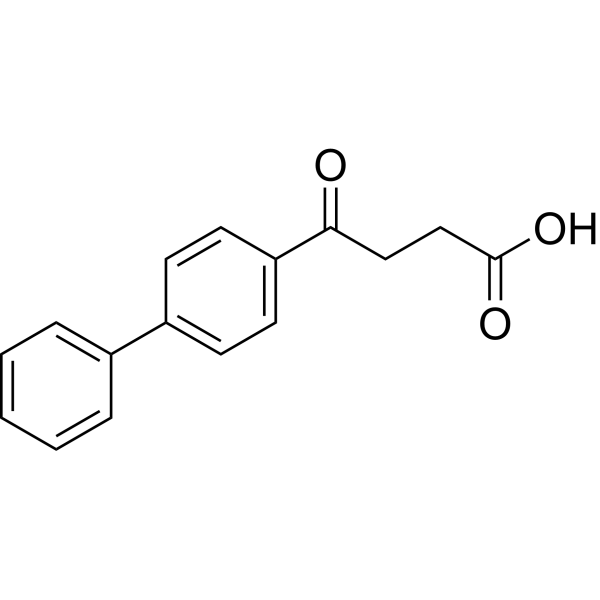 0 ImagesSynonyms: CL-82204Fenbufen (CL-82204) is an orally active non-steroidal anti-inflammatory drug (NSAID), with analgetic and antipyretic effects. Fenbufen has potent activity in a variety of animal model, including carageenin edema, UV erythema and adjuvant arthritis. Fenbufen has inhibitory activities against COX-1 and COX-2 with IC50s of 3.9 μM and 8.1 μM, respectively. Fenbufen is a caspases (caspase-1, 3, 4, 5, 9) inhibitor.
-
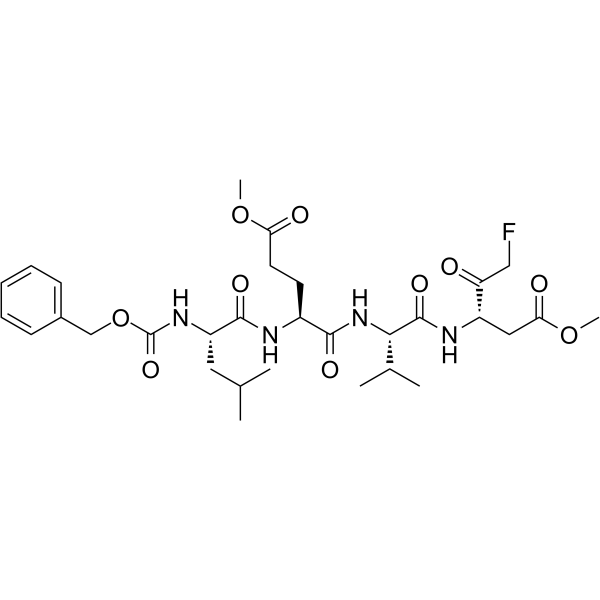
Z-LEED-FMK
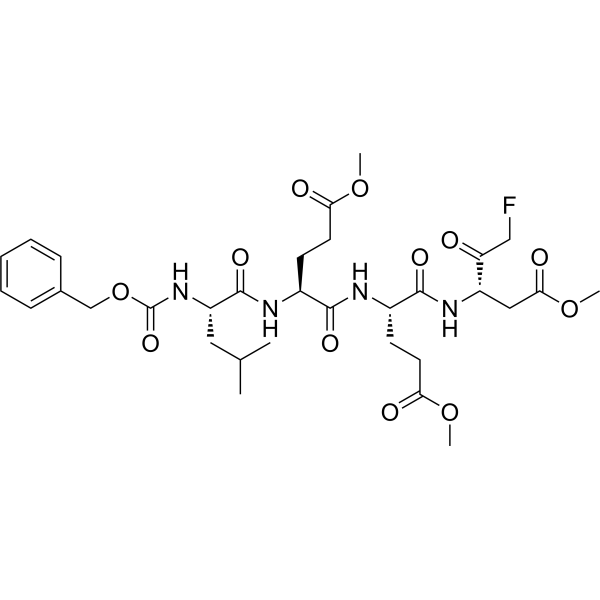 0 ImagesCat. No.: HY-P5122CAS No.: 1135688-38-8Z-LEED-FMK is a caspase-13 and caspase-4 inhibitor. Z-LEED-FMK also inhibits caspase-1 processing in S. typhimurium-infected macrophages.
-
Ac-AAVALLPAVLLALLAP-LEVD-CHO
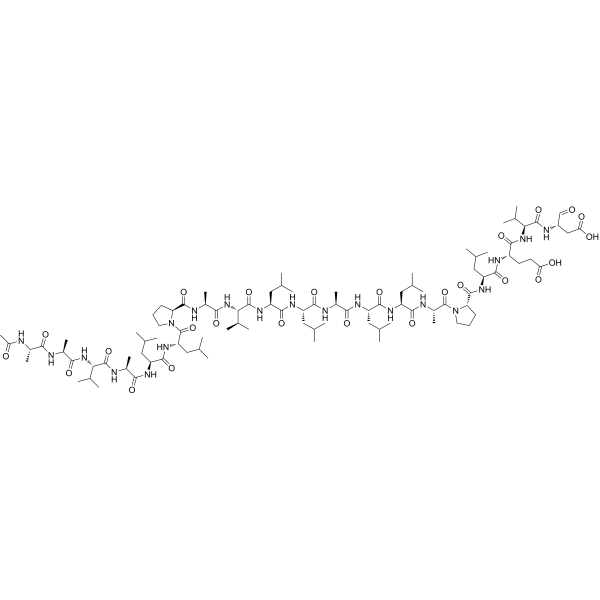 0 ImagesCat. No.: HY-P5955CAS No.: 886462-82-4Ac-AAVALLPAVLLALLAP-LEVD-CHO is a cell-permeable caspase-4 inhibitor that has antitumor activity.
- 1



